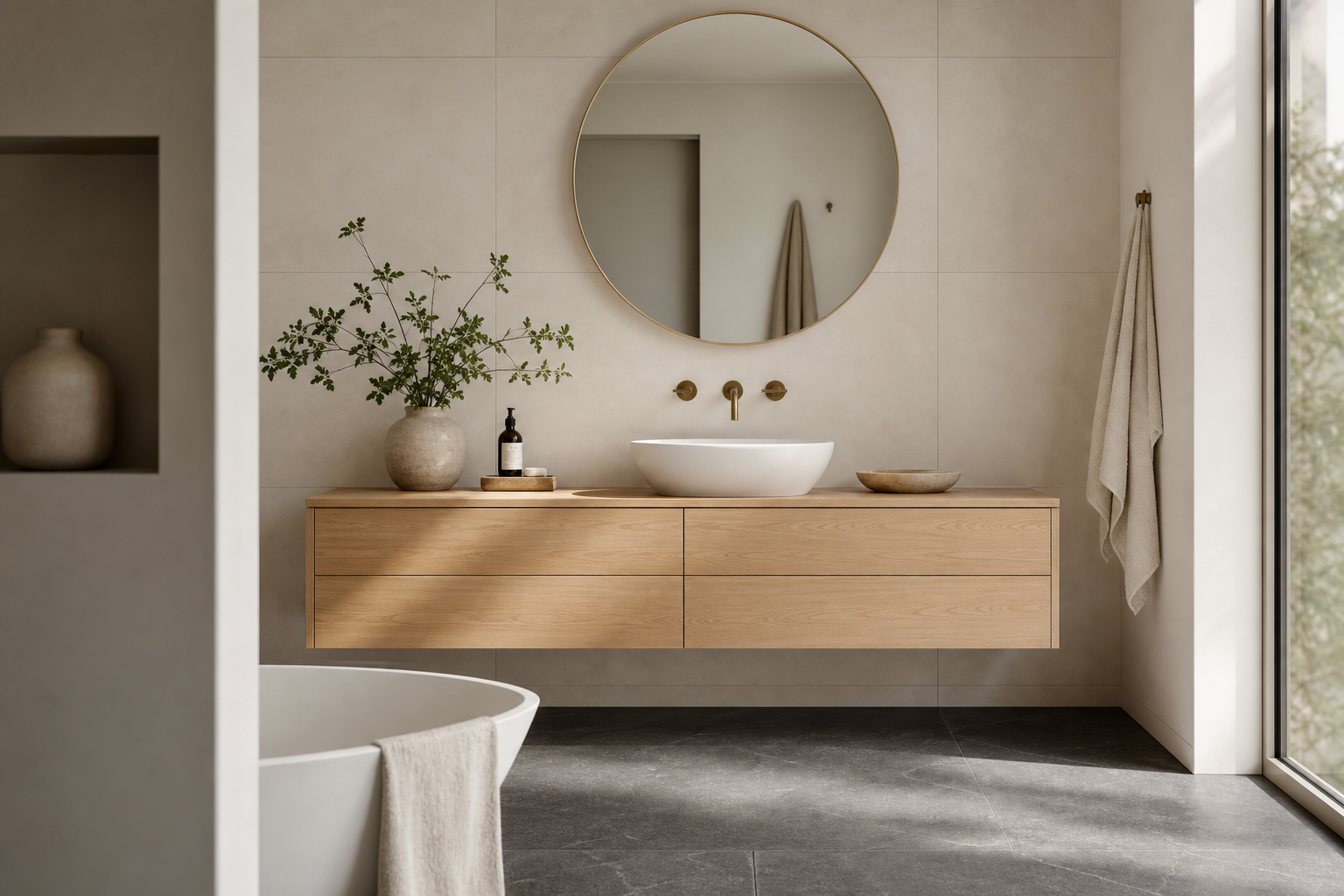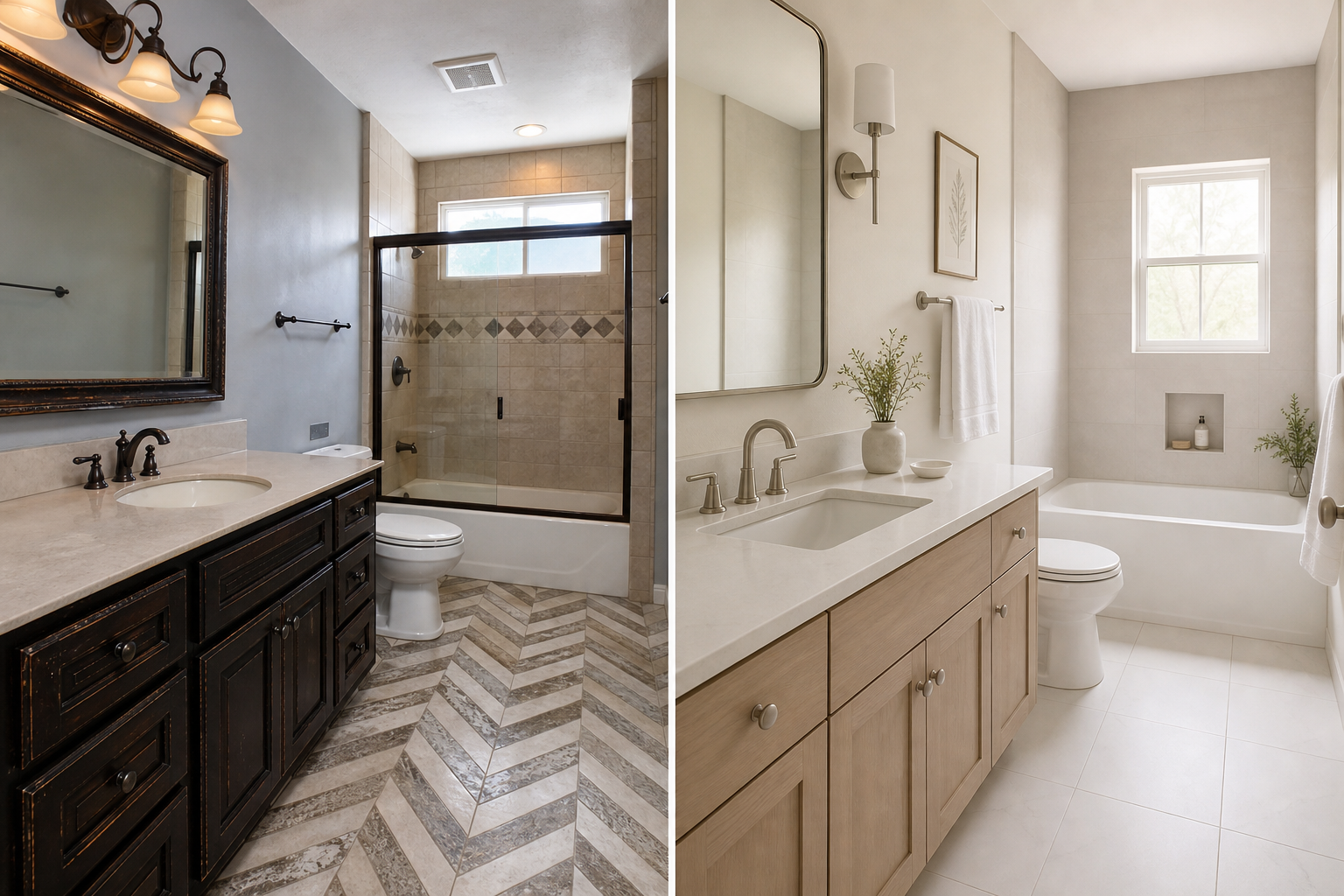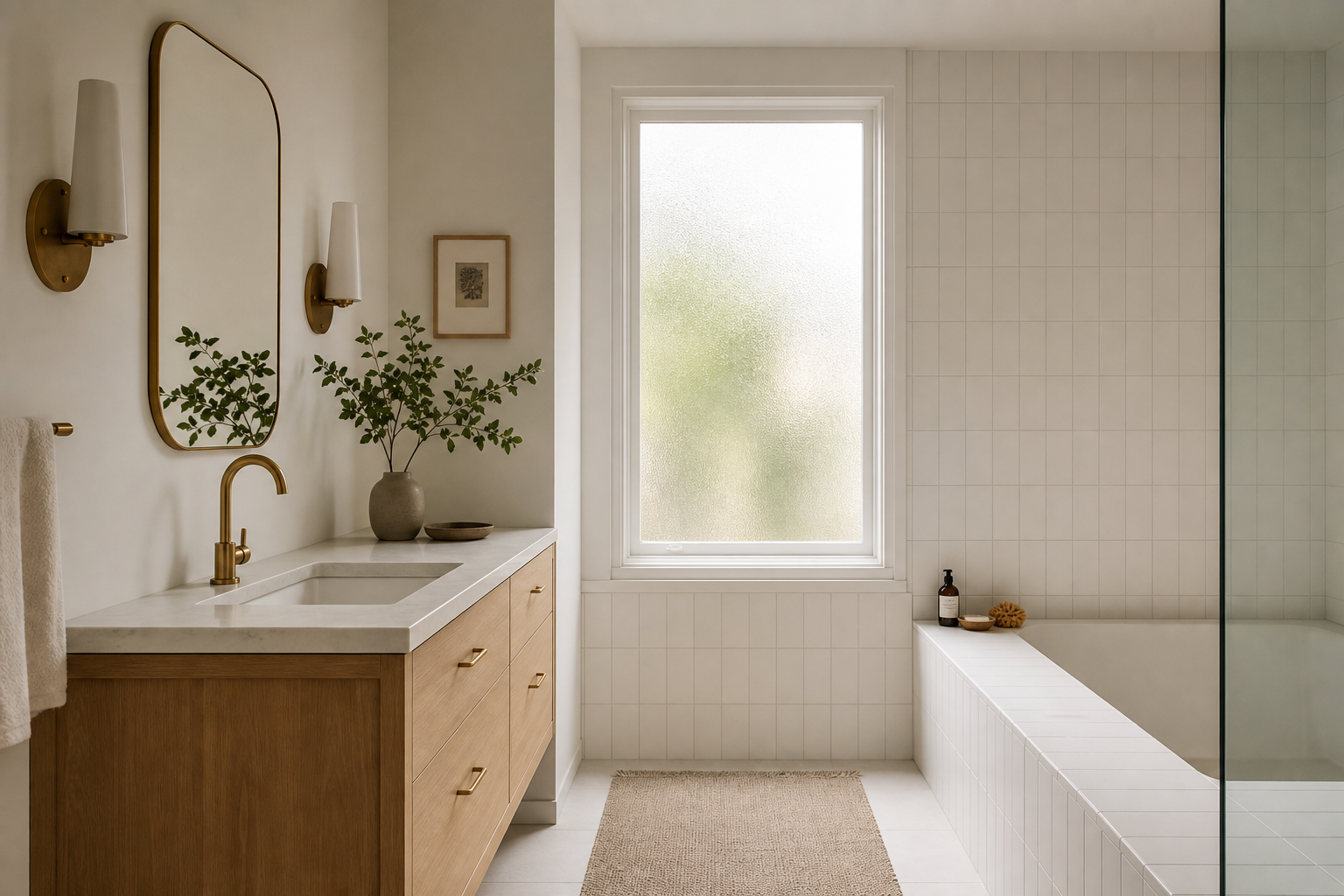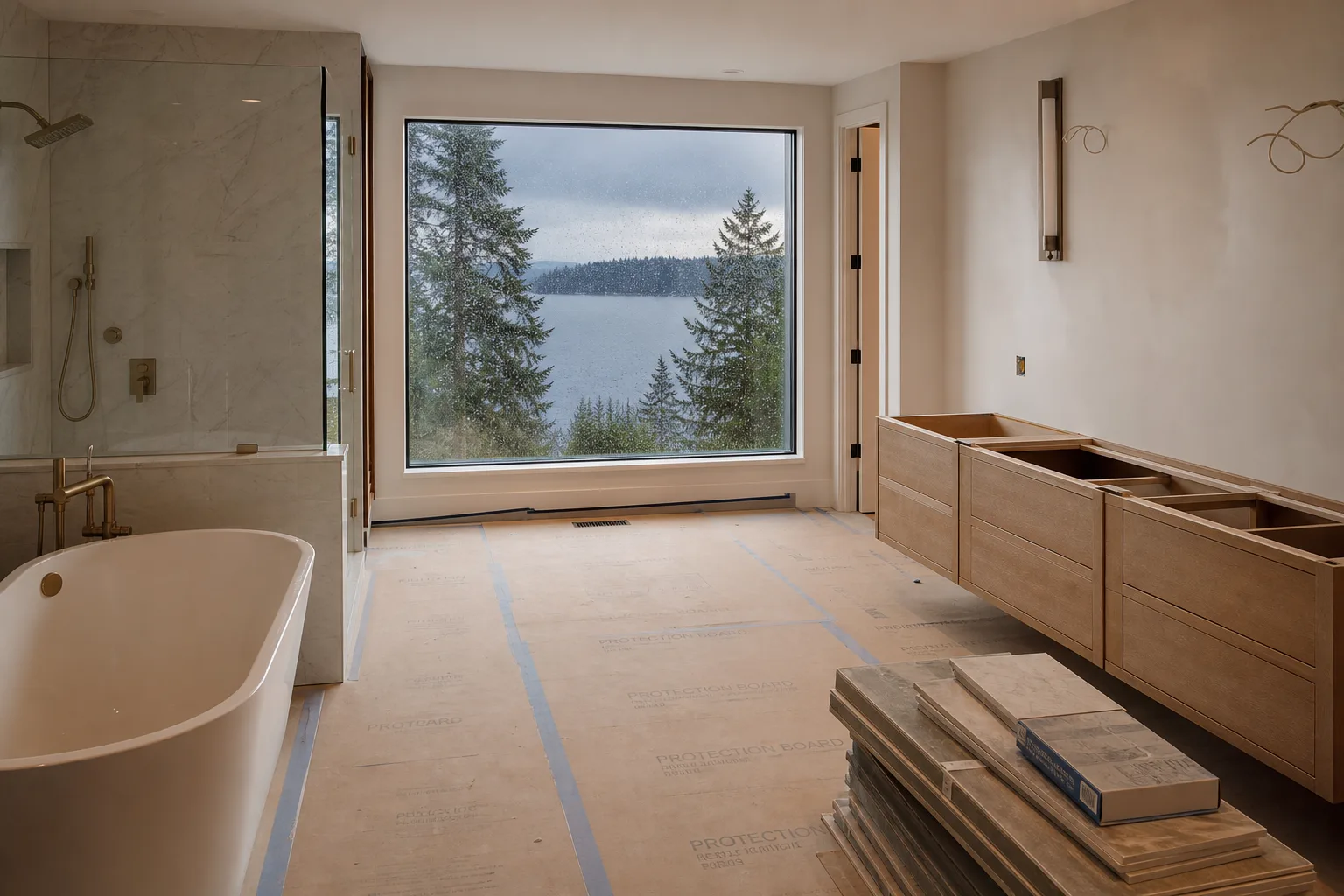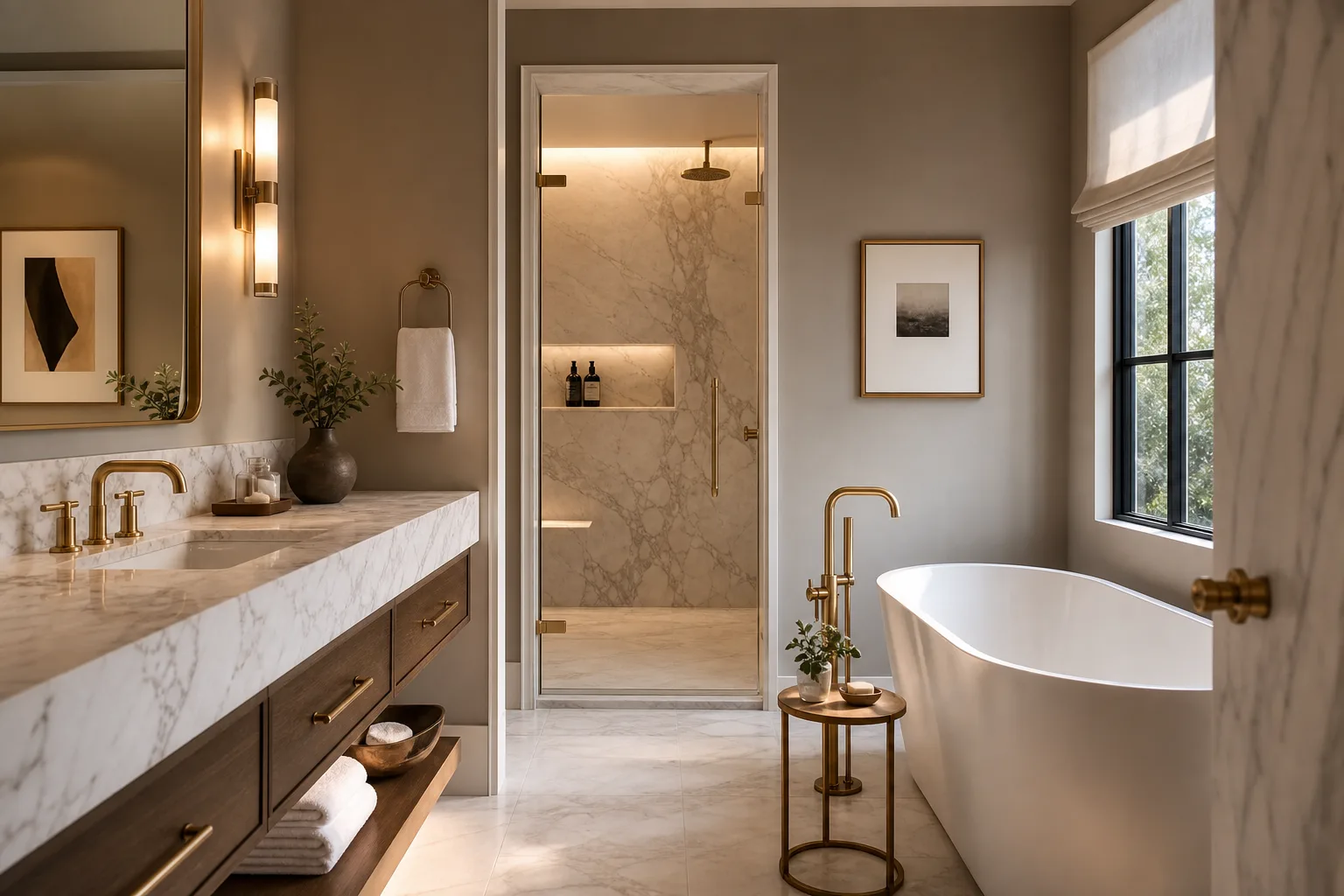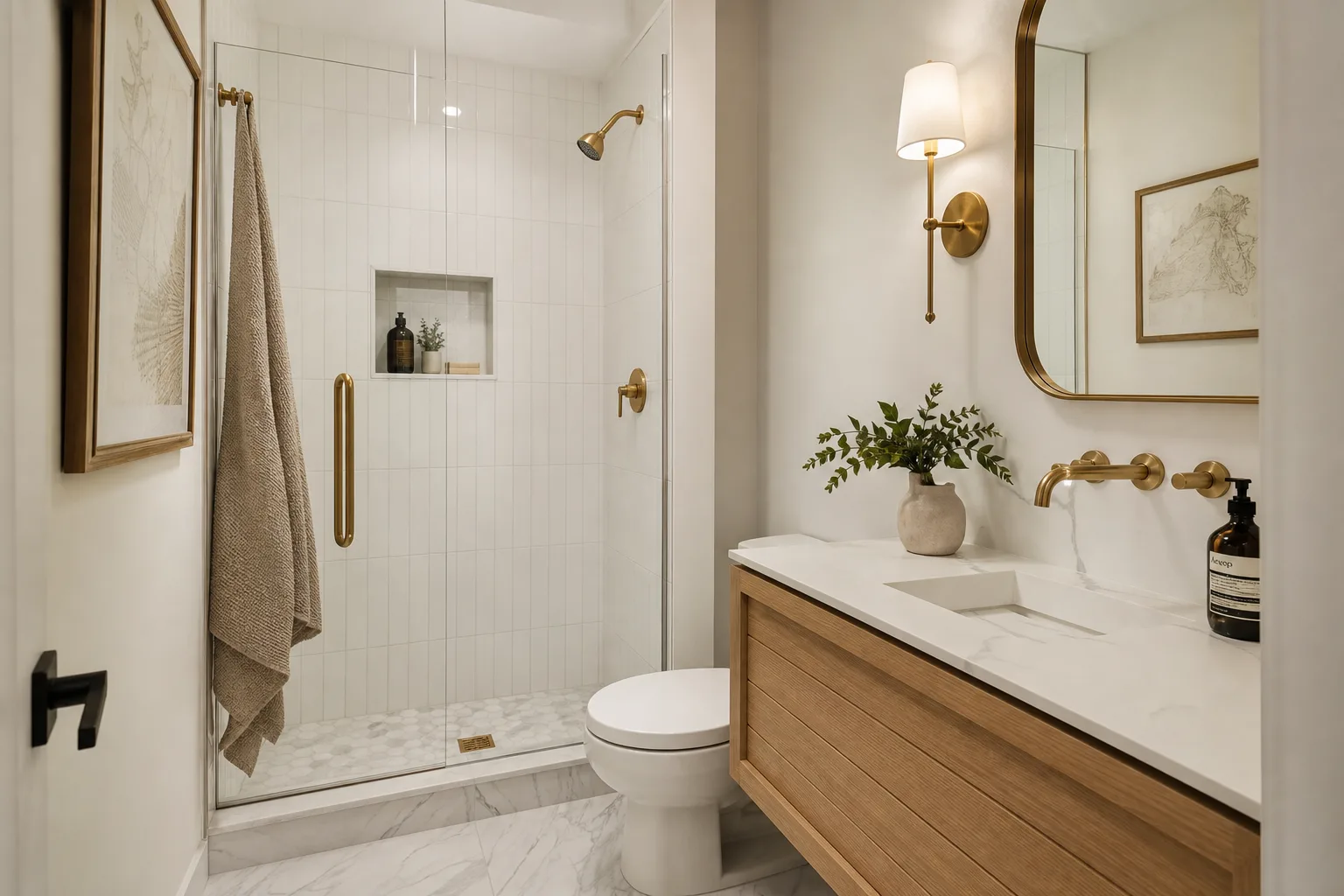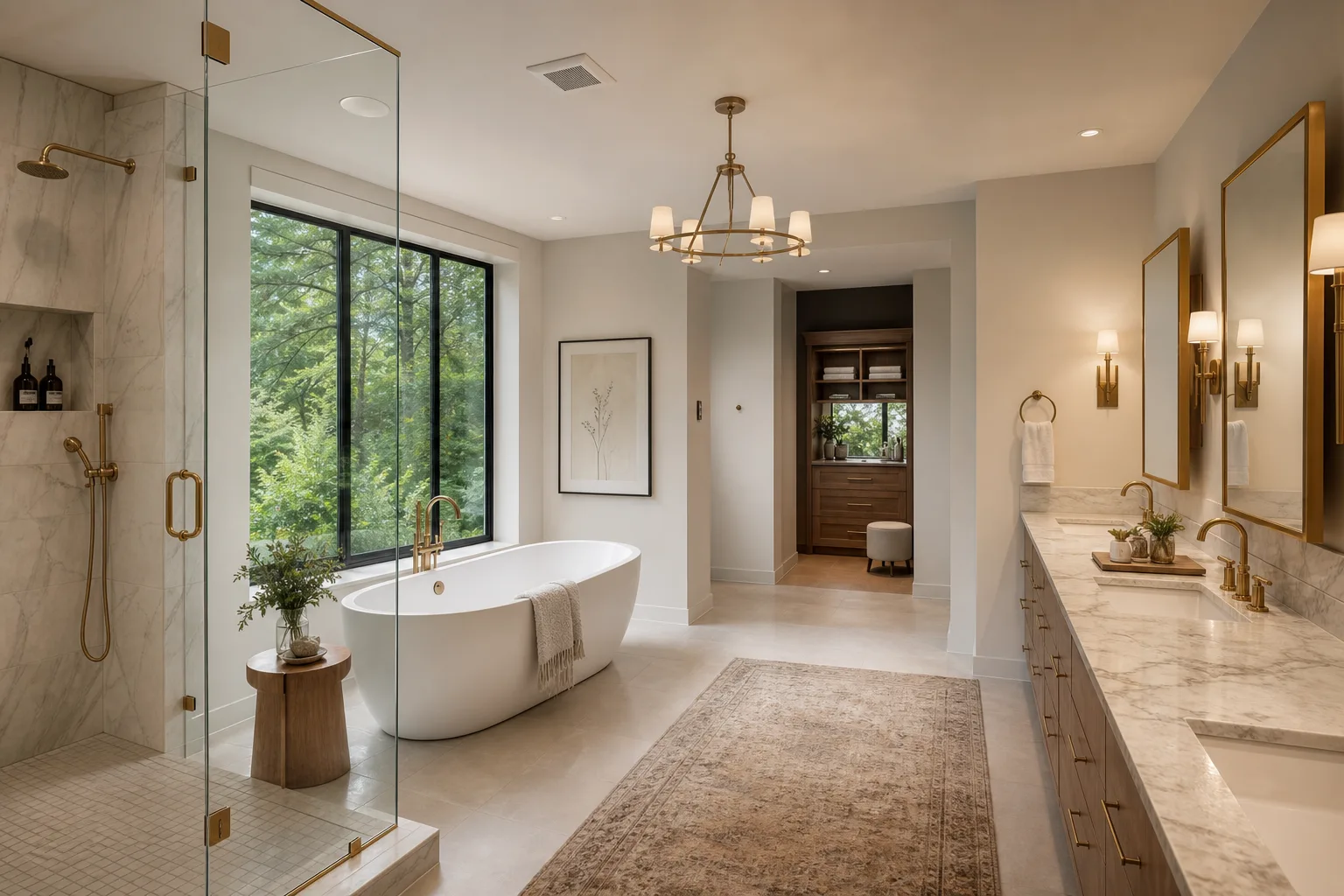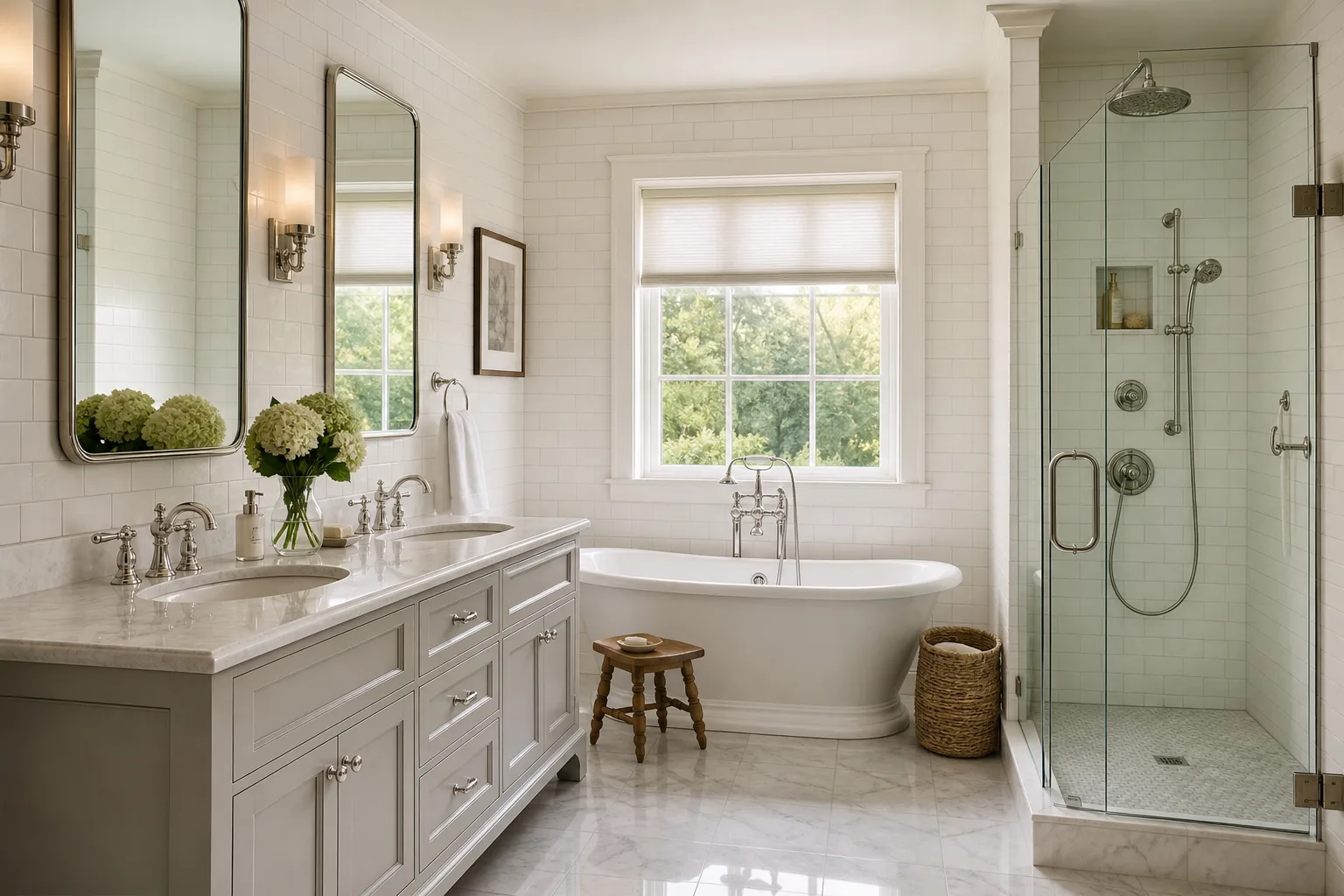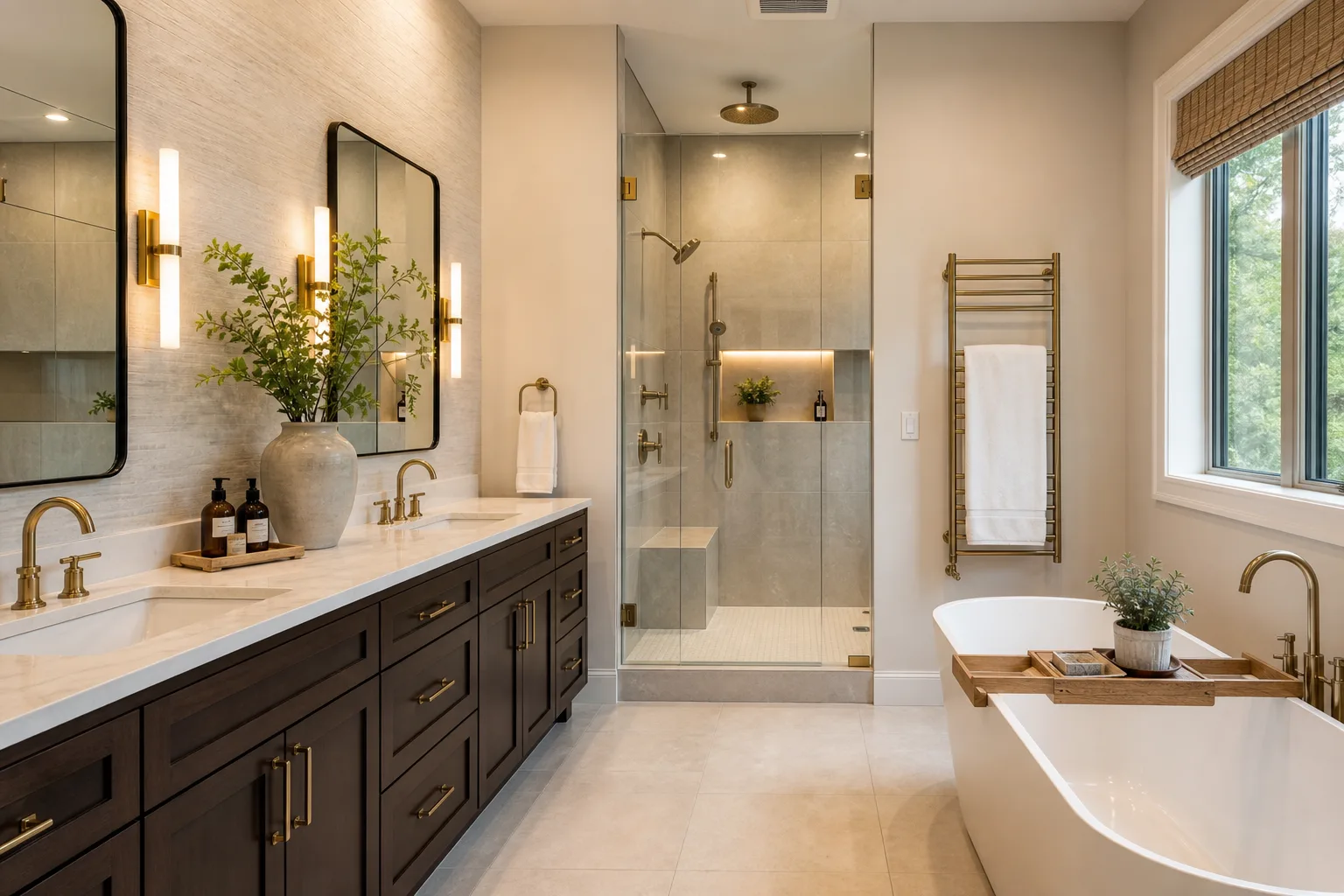
The bathroom that feels warm in February is not the one with the most BTUs. It is the one where the floor is warm to bare feet, the light is not blue-white, the materials have thermal mass and visual warmth, and the room dries between uses. Most of that is design and specification, not heating systems.
This claim matters in the Pacific Northwest because February here is not just cold. It is wet, gray, and dim for weeks at a time. A bathroom in this climate faces a compound problem: low outdoor temperatures, high indoor humidity from long hot showers, limited daylight, and surfaces (tile, glass, porcelain) that hold cold and condense moisture. A room that solves only the temperature problem while ignoring light, materials, and drying behavior will still feel hostile on a dark morning even if the thermostat reads seventy.
Warmth, in the lived sense, is the absence of several small discomforts happening at once. Design can address most of them before a heating contractor is involved.
Warmth Is Not the Same as Heating
Heating is infrastructure: BTUs delivered to a space through a radiator, a duct, a floor mat, or a wall heater. Warmth is perception: how the room feels to a person standing in it with bare feet at seven a.m.
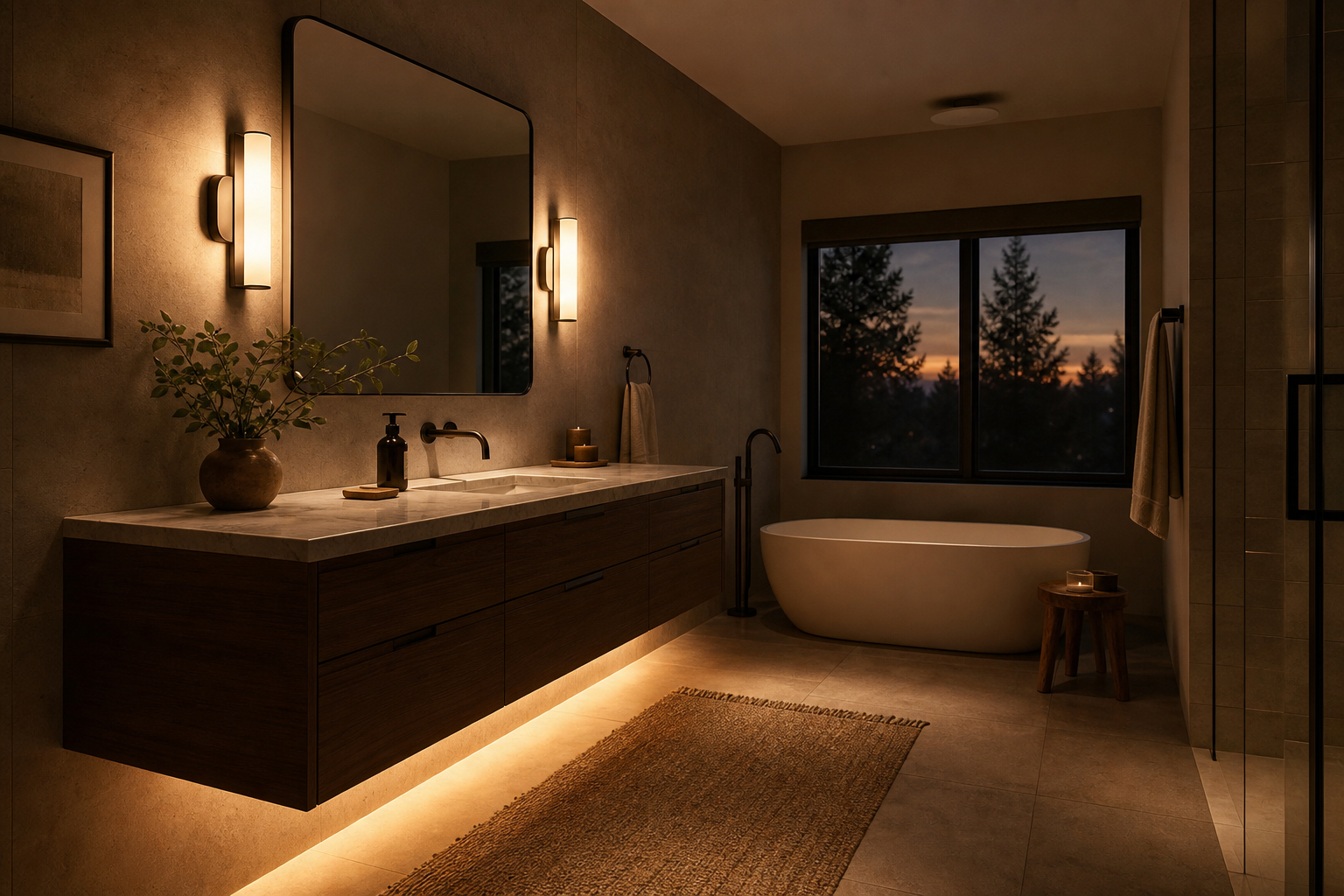
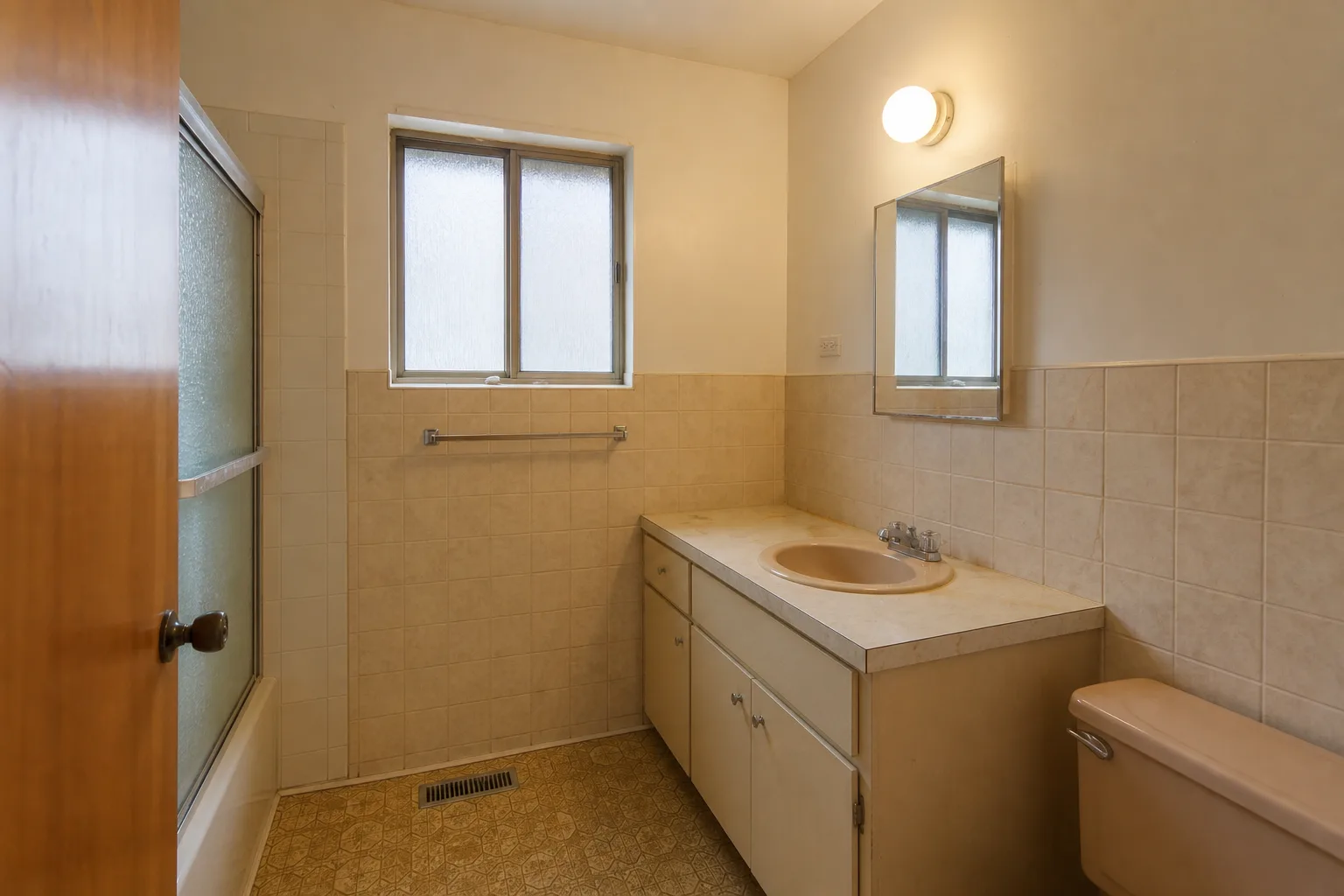
The two overlap but do not coincide. A bathroom can be adequately heated and still feel cold because the floor is forty-degree tile, the mirror is fogged, the light is five thousand Kelvin, and the surfaces are glossy and blue-gray. Another bathroom can feel warm with modest heat because the floor radiates underfoot, the light is amber and layered, the materials absorb rather than reflect cold visually, and the air is dry enough that surfaces do not clammy to the touch.
Gerbec Kitchen and Bath, working in a cold-climate region comparable to the Pacific Northwest, notes that heated floors eliminate the chill of ceramic and porcelain tile. That is true and incomplete. The floor is one surface. The walls, the ceiling, the mirror, and the air quality all contribute to whether the room feels welcoming or punishing.
When we spec a primary bath in this climate, we treat the heating question separately from the warmth question. Warmth is material and light. Heating is the infrastructure behind it.
The Floor Is the First Contact
Bare feet on cold tile is the defining February bathroom experience in this region. The floor is the first surface the body meets, and tile, stone, and porcelain conduct heat away from skin faster than wood, vinyl, or carpet. The sensation is not just cold. It is shock, followed by a hurry to find slippers.
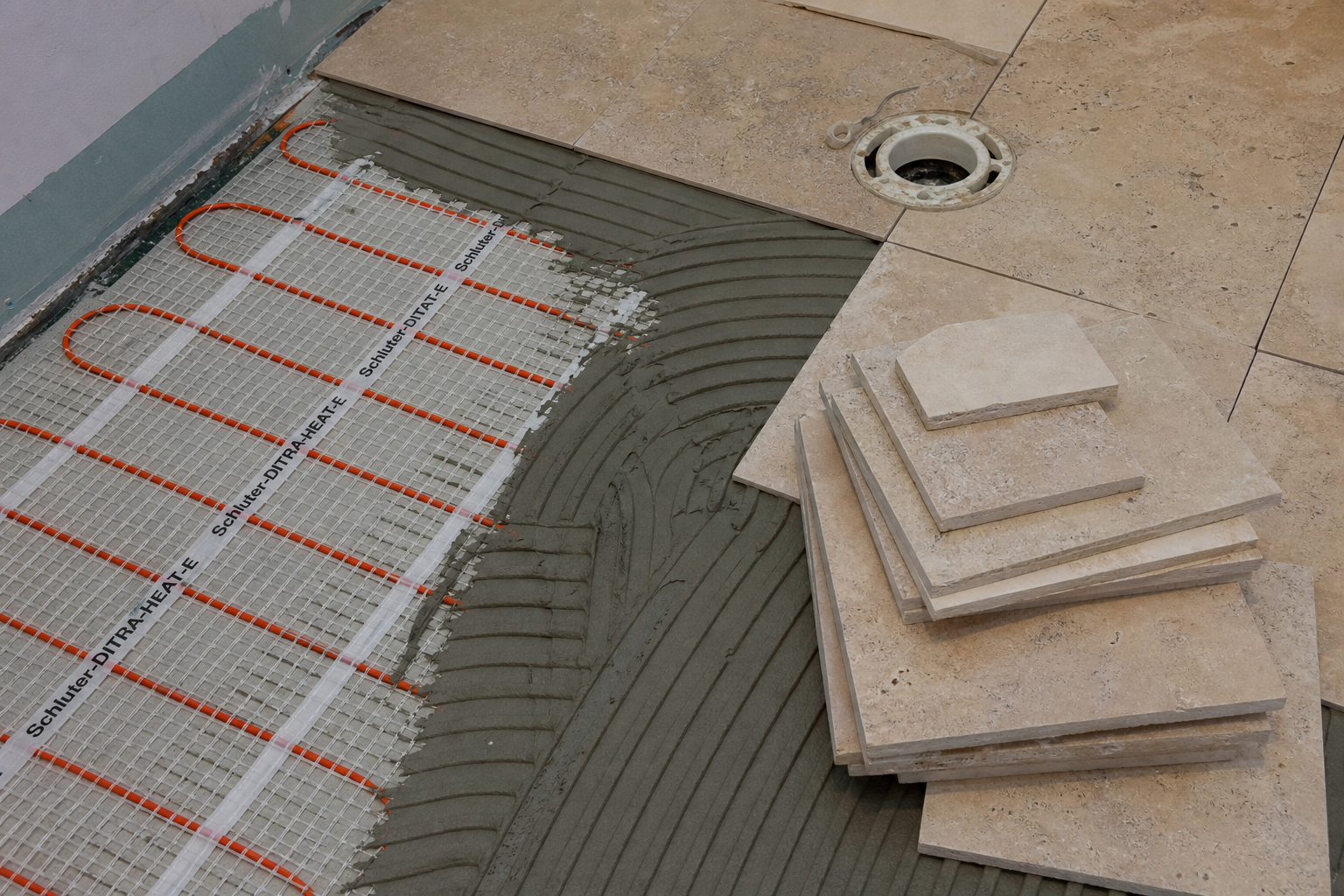
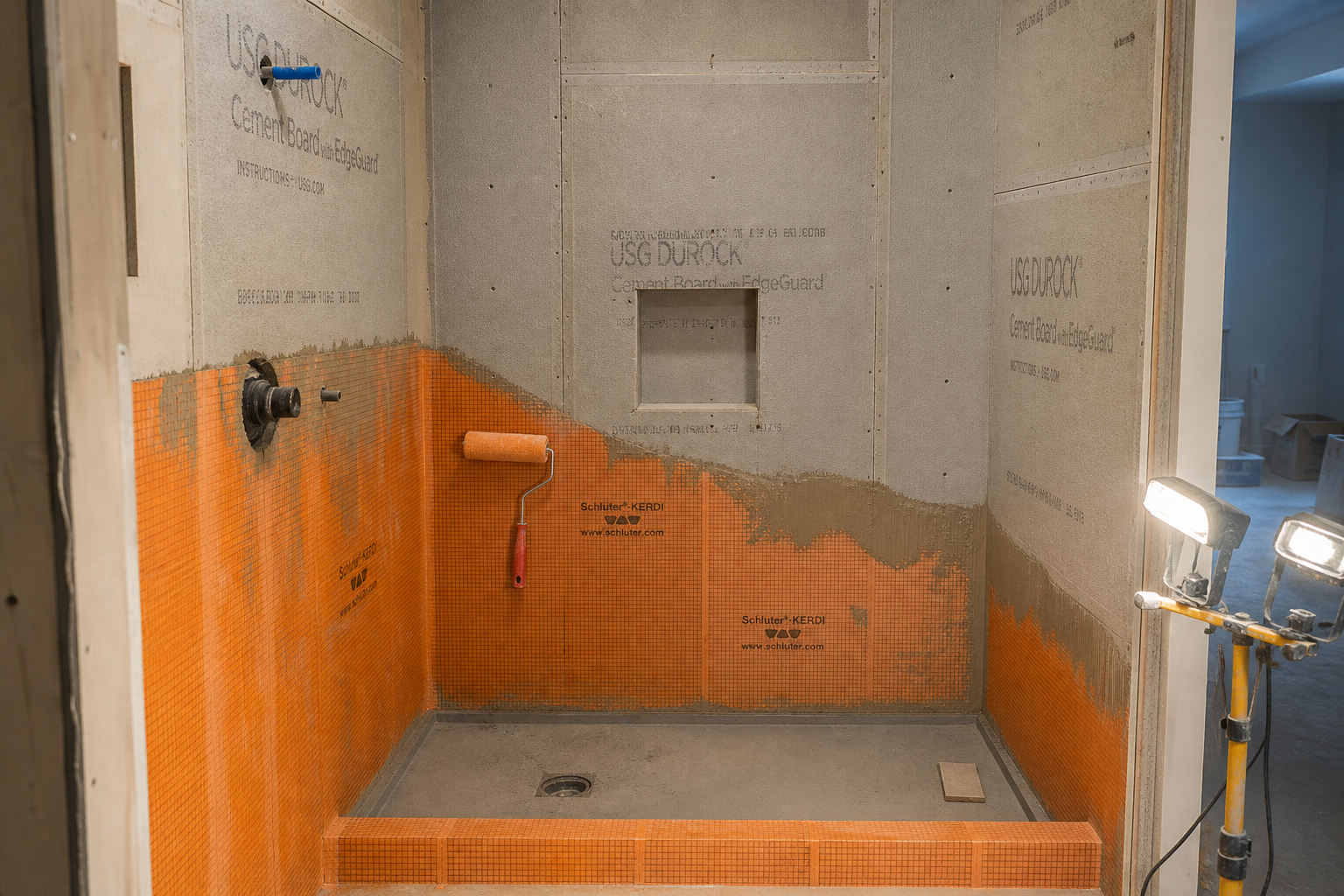
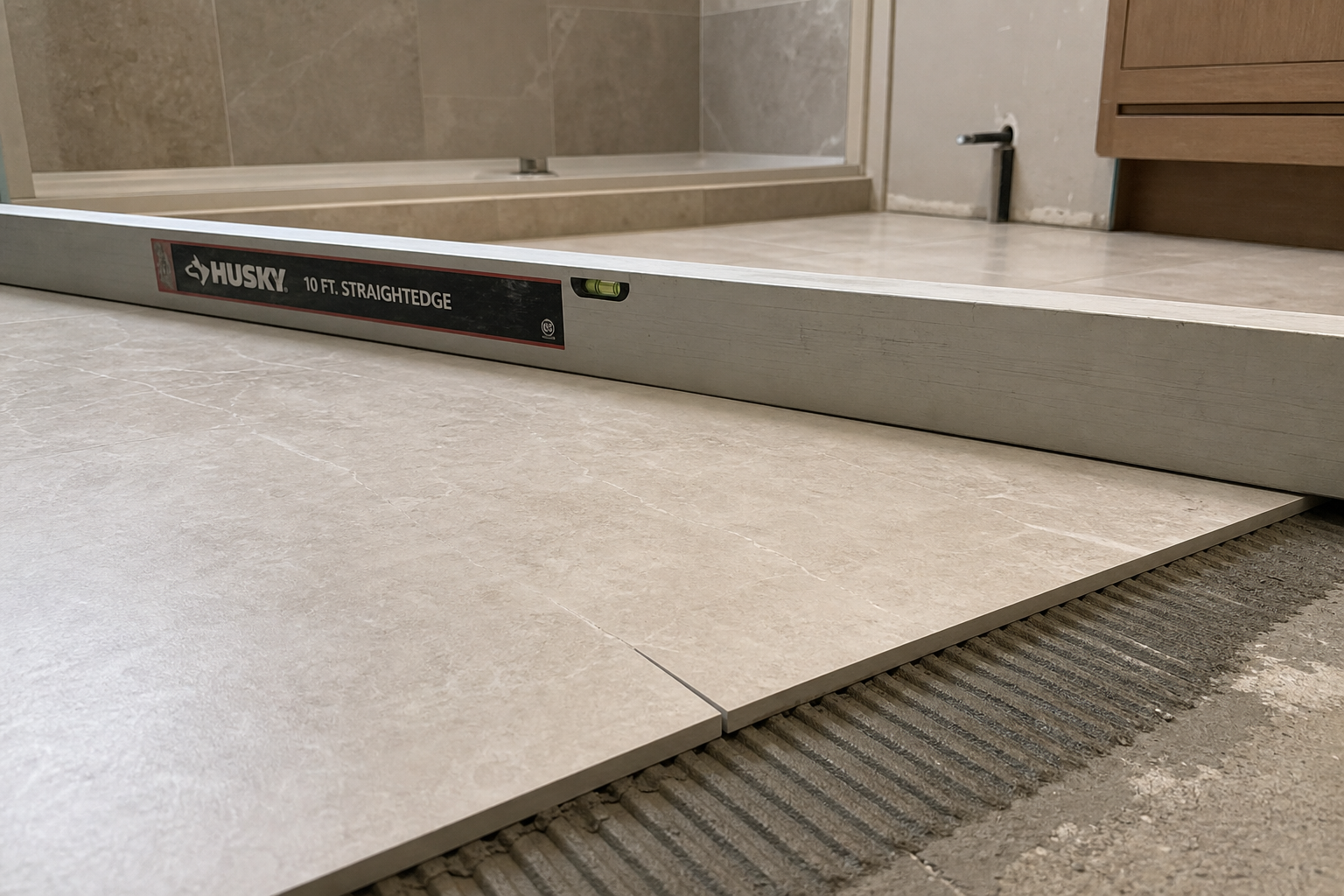
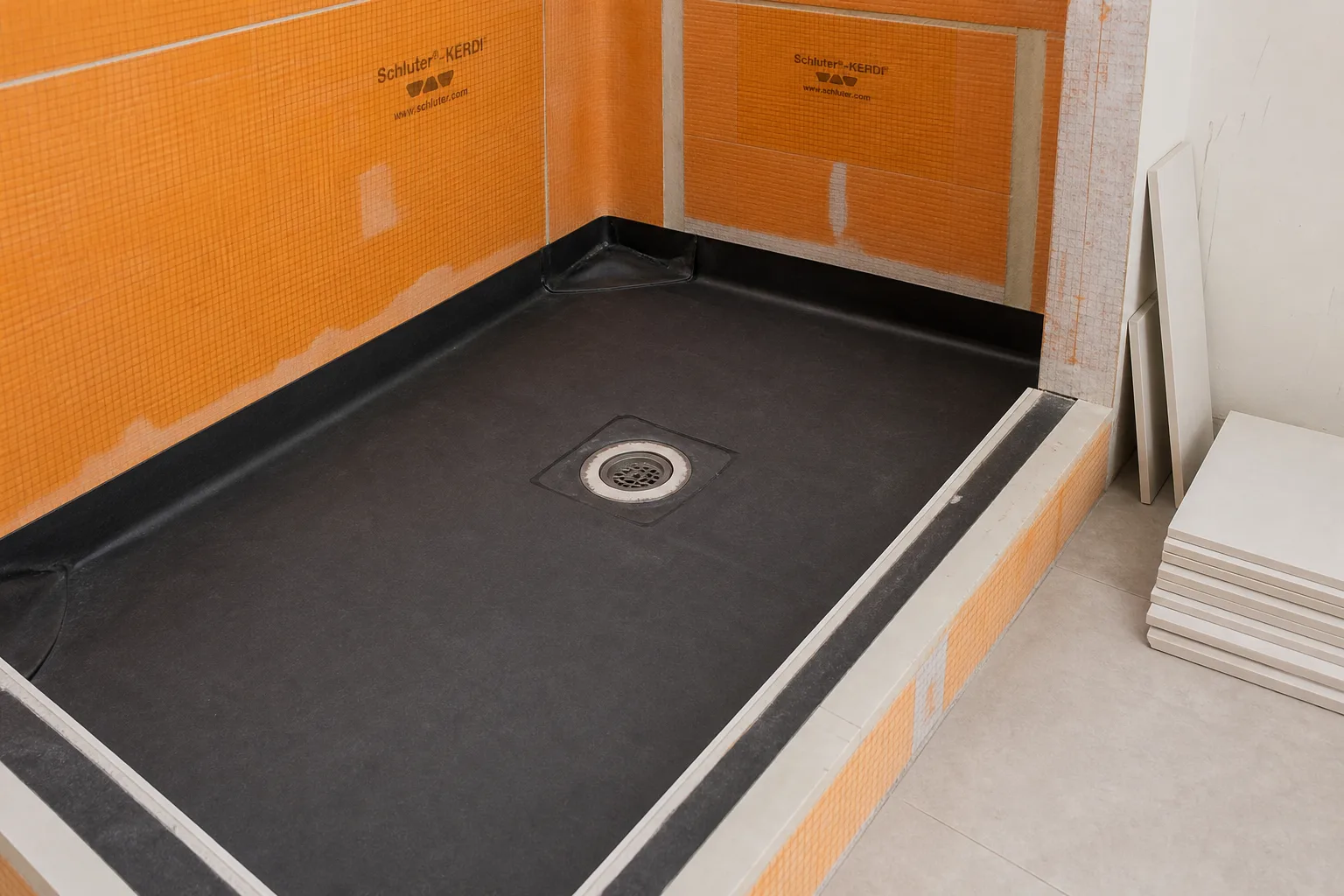
Radiant floor heating addresses the contact problem directly. Electric mats or hydronic tubing under tile raise the surface temperature so the floor reads as neutral or warm rather than as a heat sink. The effect is disproportionate to the energy involved because the foot is highly sensitive and because warming the floor changes the coldest surface in the room.
Not every bathroom needs radiant heat. Powder rooms with small floor area and infrequent bare-foot use may not justify the cost. Primary baths where the household stands on tile every morning usually do. The decision belongs in the specification phase, not as an afterthought once tile is selected.
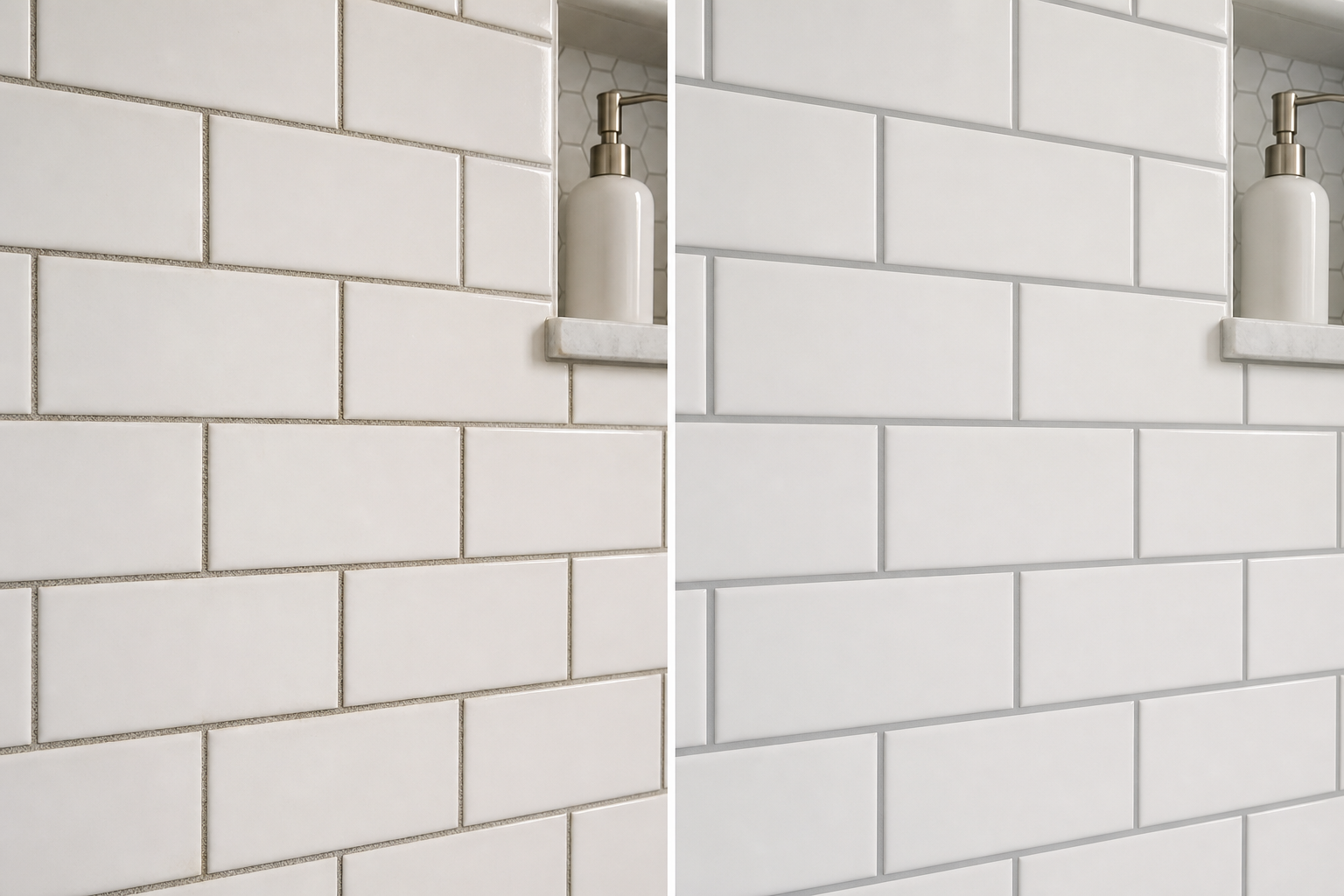
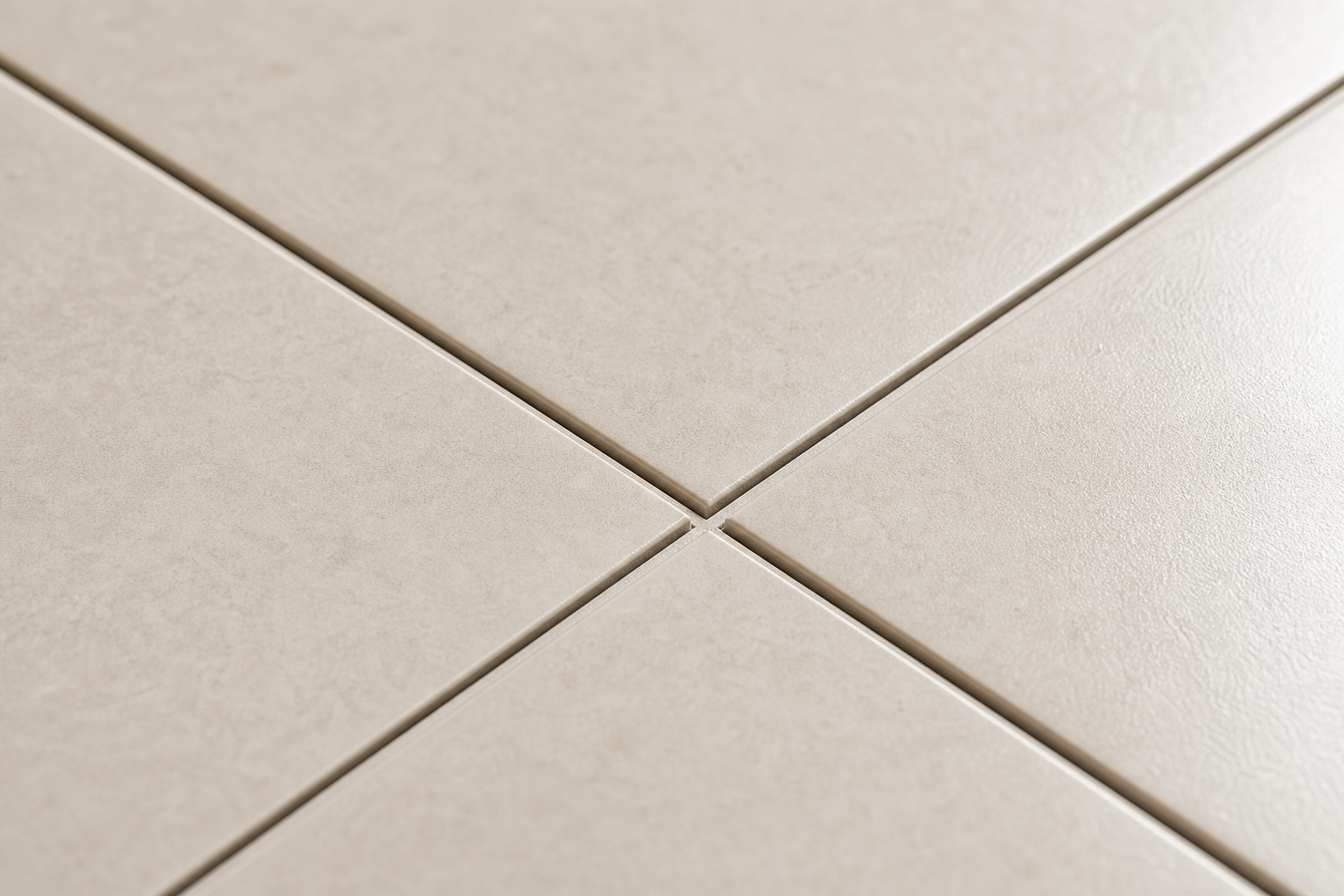
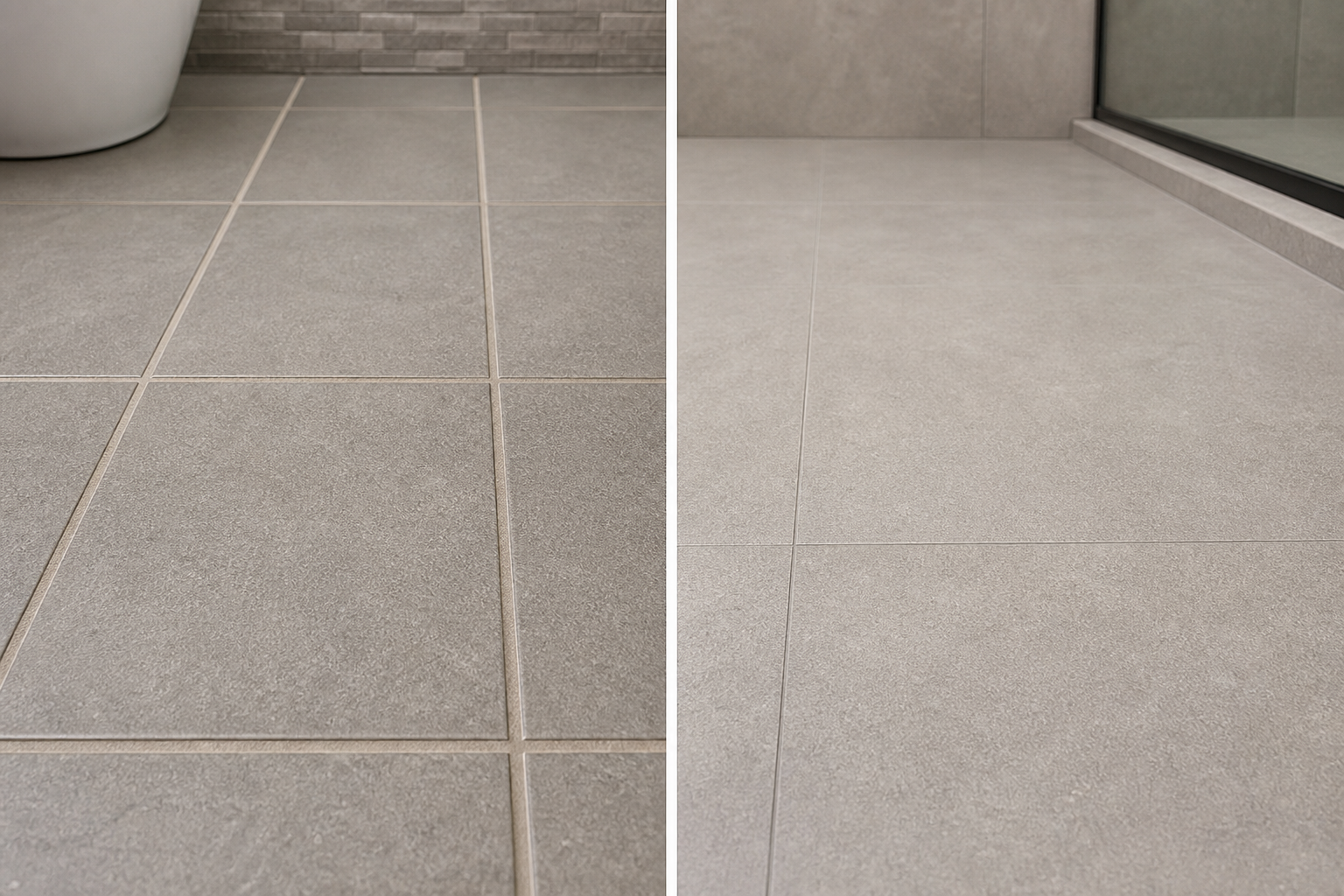
Where radiant heat is not specified, material choice still matters. Engineered materials with warmer undertones, smaller tile formats with more grout lines (grout is slightly warmer to the touch than polished porcelain), and bath mats placed where feet land are partial compensations. They do not equal a heated floor. They are better than nothing.
Light Quality Does More Work Than People Expect
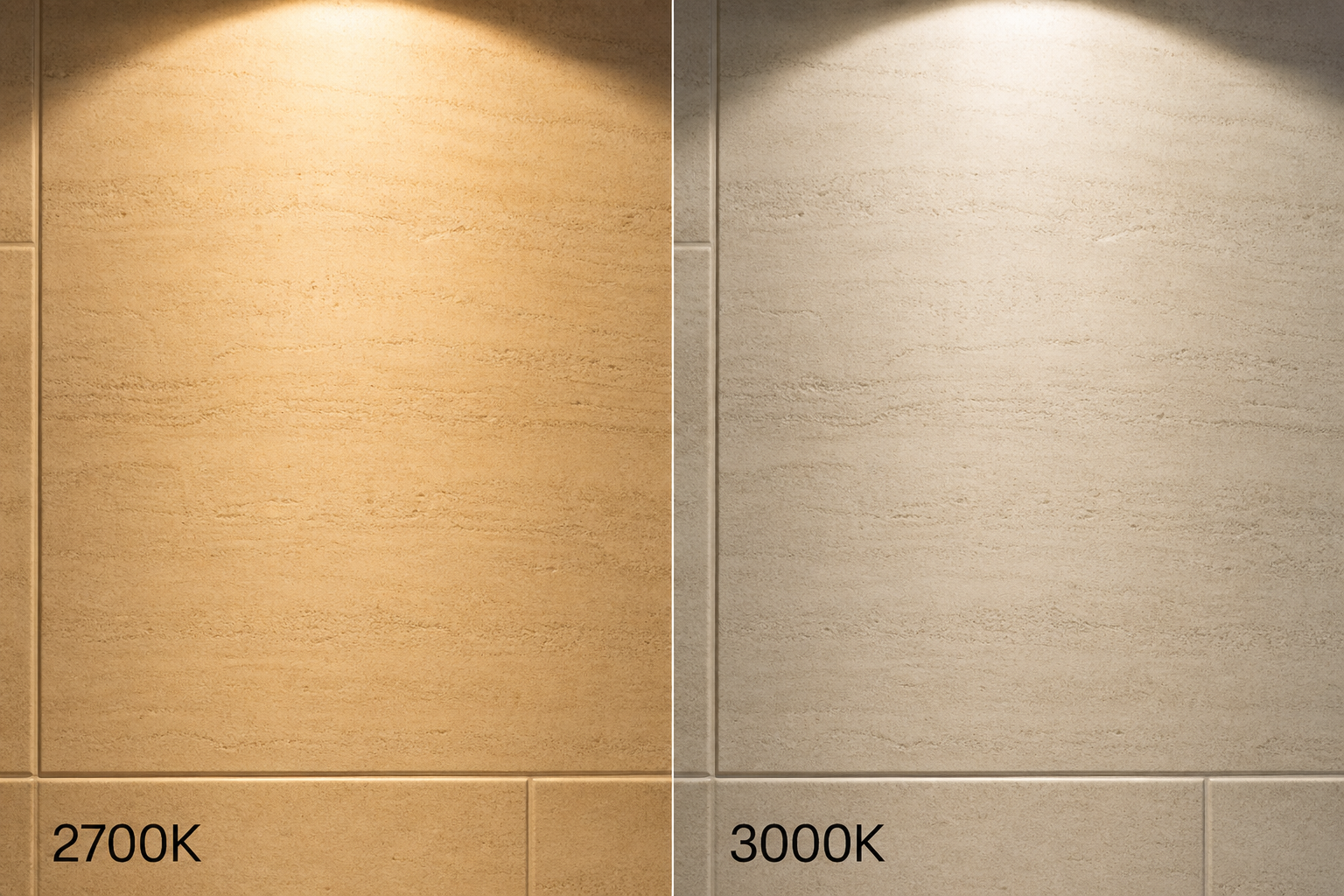
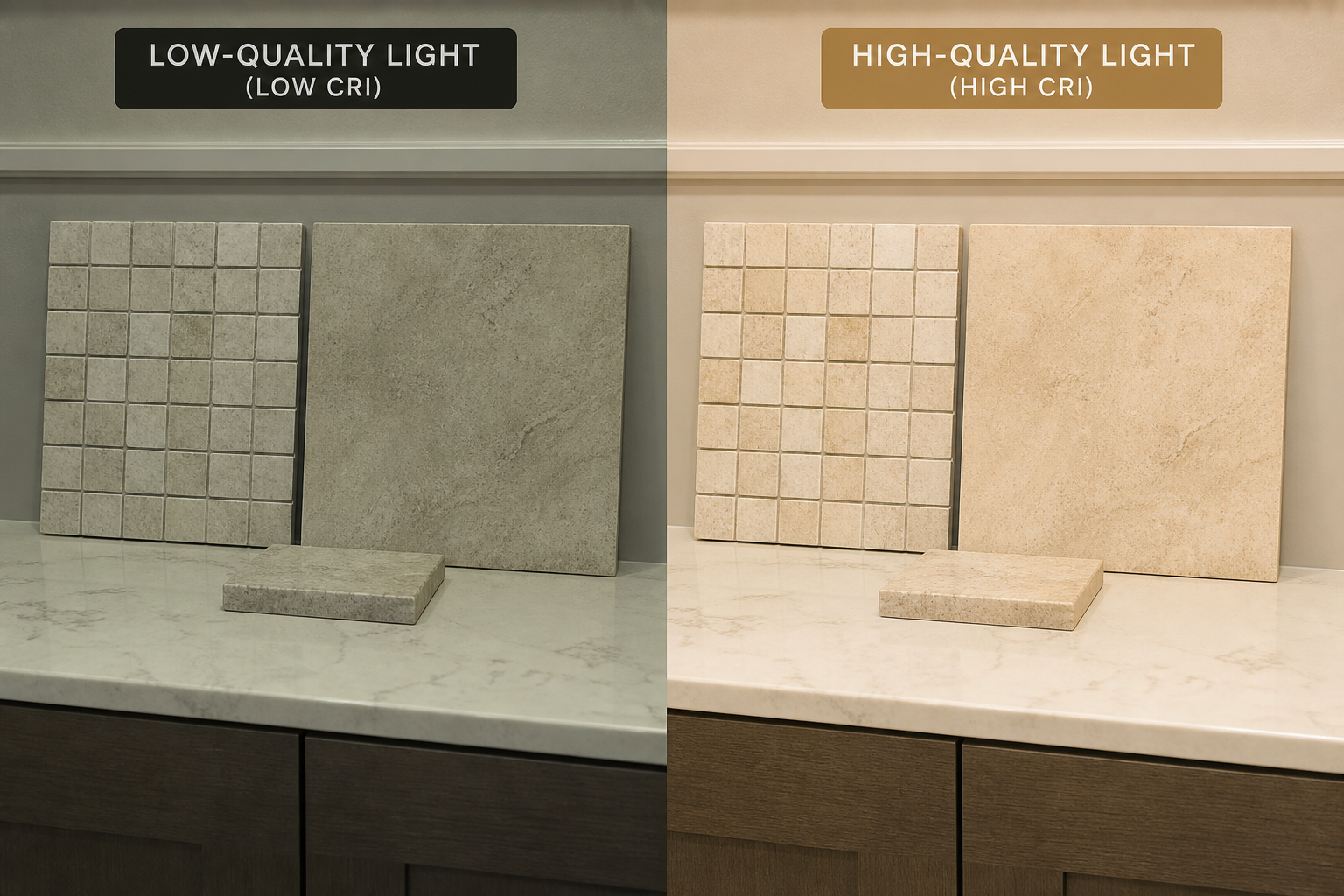
A gray February morning delivers cool, flat daylight through a north-facing bathroom window, or no useful daylight at all. Artificial light fills the gap. If that artificial light is four thousand Kelvin or higher, the room reads clinical. Skin looks pale. Warm materials look gray. The psychological temperature of the room drops even if the air temperature is fine.
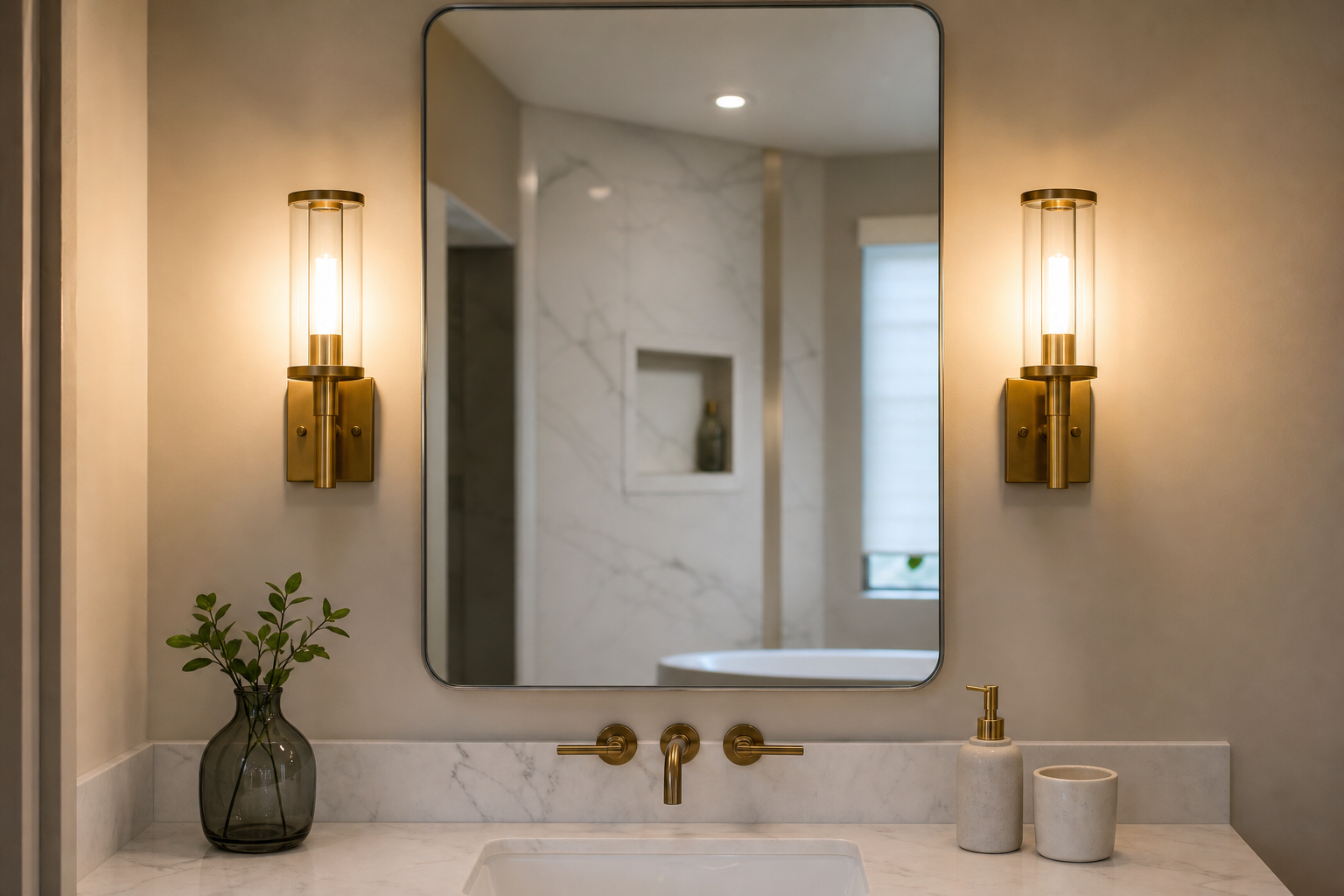
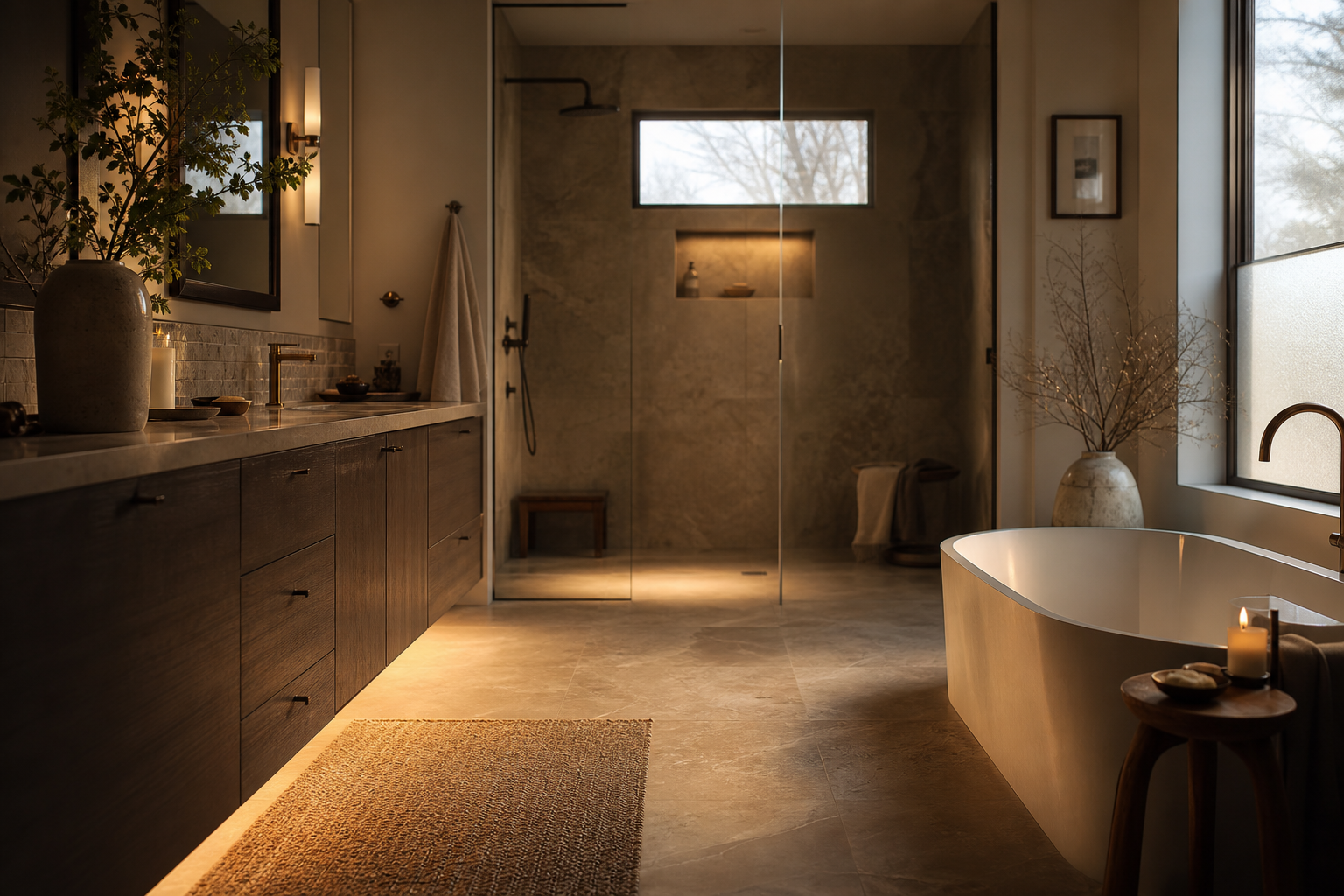
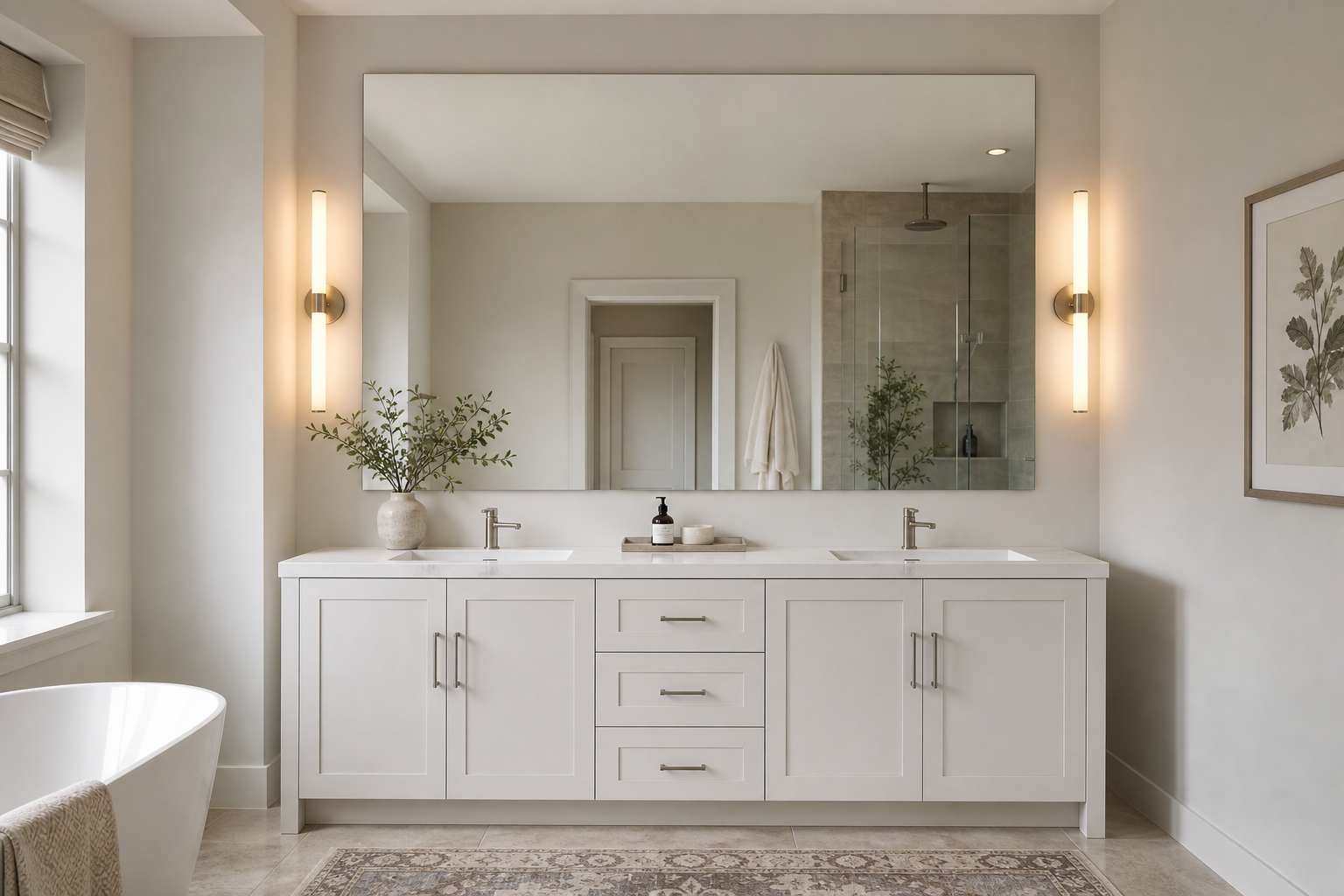
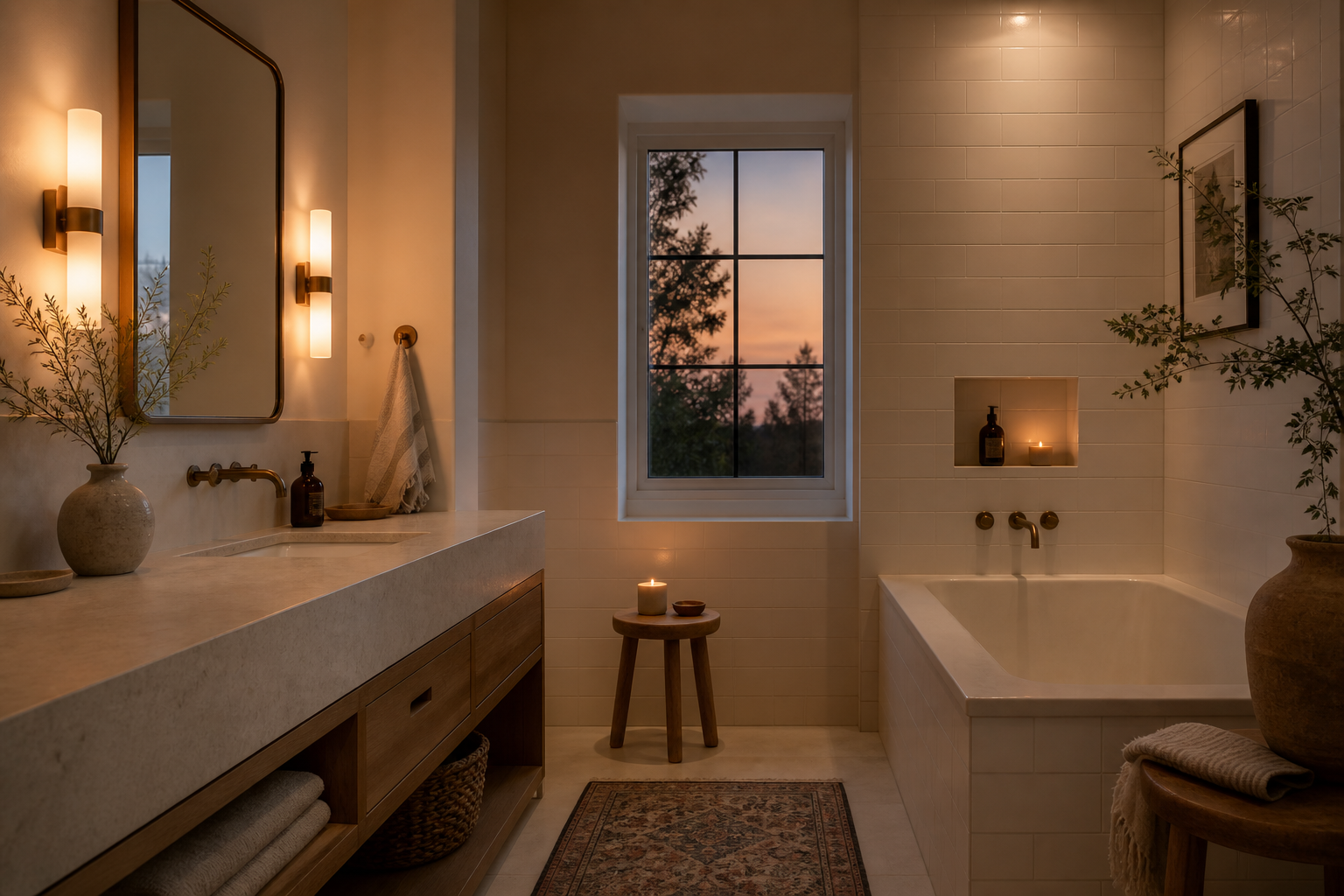
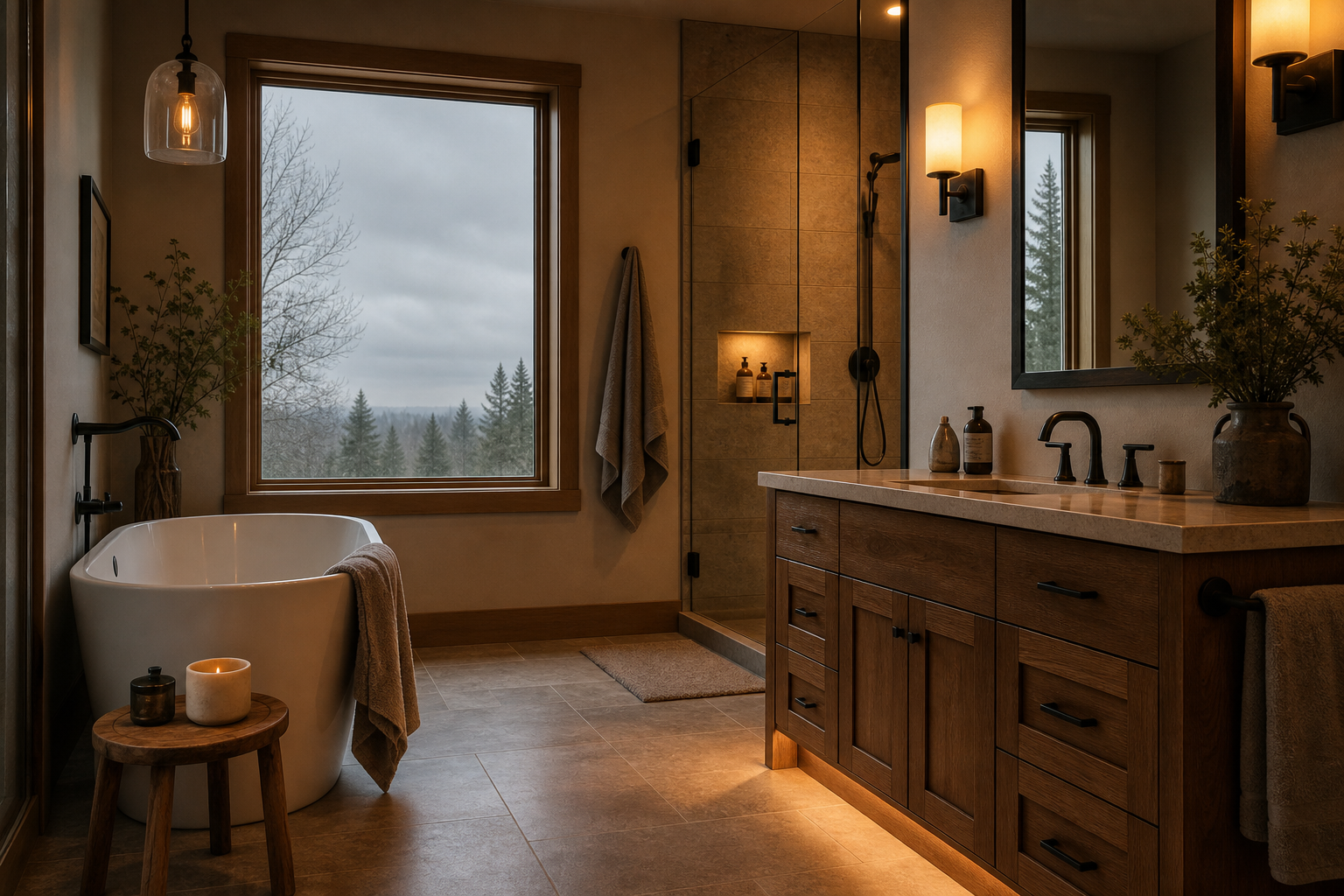
Warmth in light is a specification, not a mood. Twenty-seven hundred to three thousand Kelvin with a Color Rendering Index of ninety or above produces a room that feels inhabited rather than institutional. Layered lighting helps further: dim ambient light for early morning, brighter task light at the mirror, optional accent at the bath. A single overhead fixture at high color temperature defeats material warmth regardless of what is on the walls.
Orenjihome's warm-light bathroom guidance recommends treating lighting as a design material and layering ambient, task, and accent sources rather than relying on one ceiling fixture. The principle applies directly to Pacific Northwest winters, where artificial light is the primary light for months.
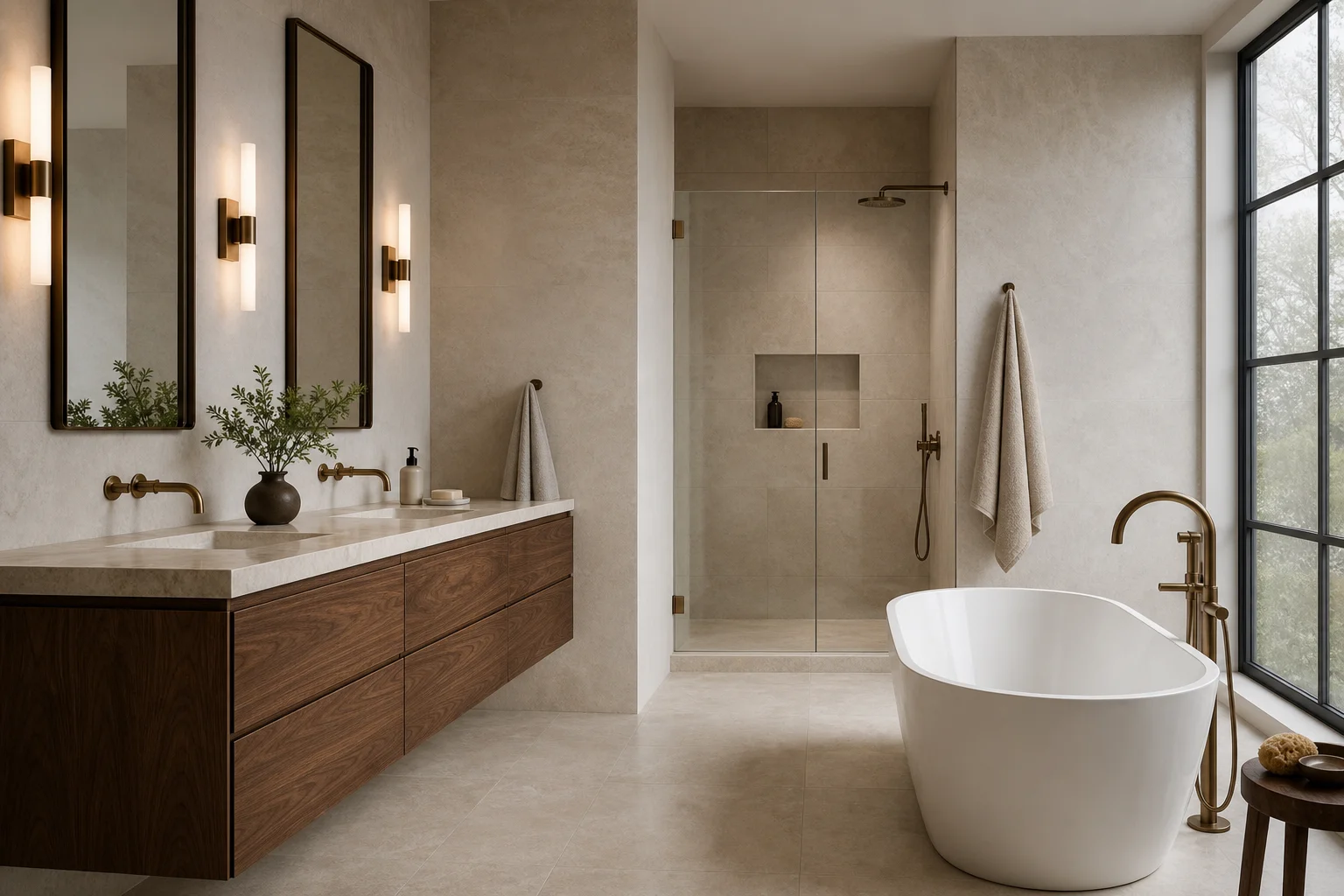
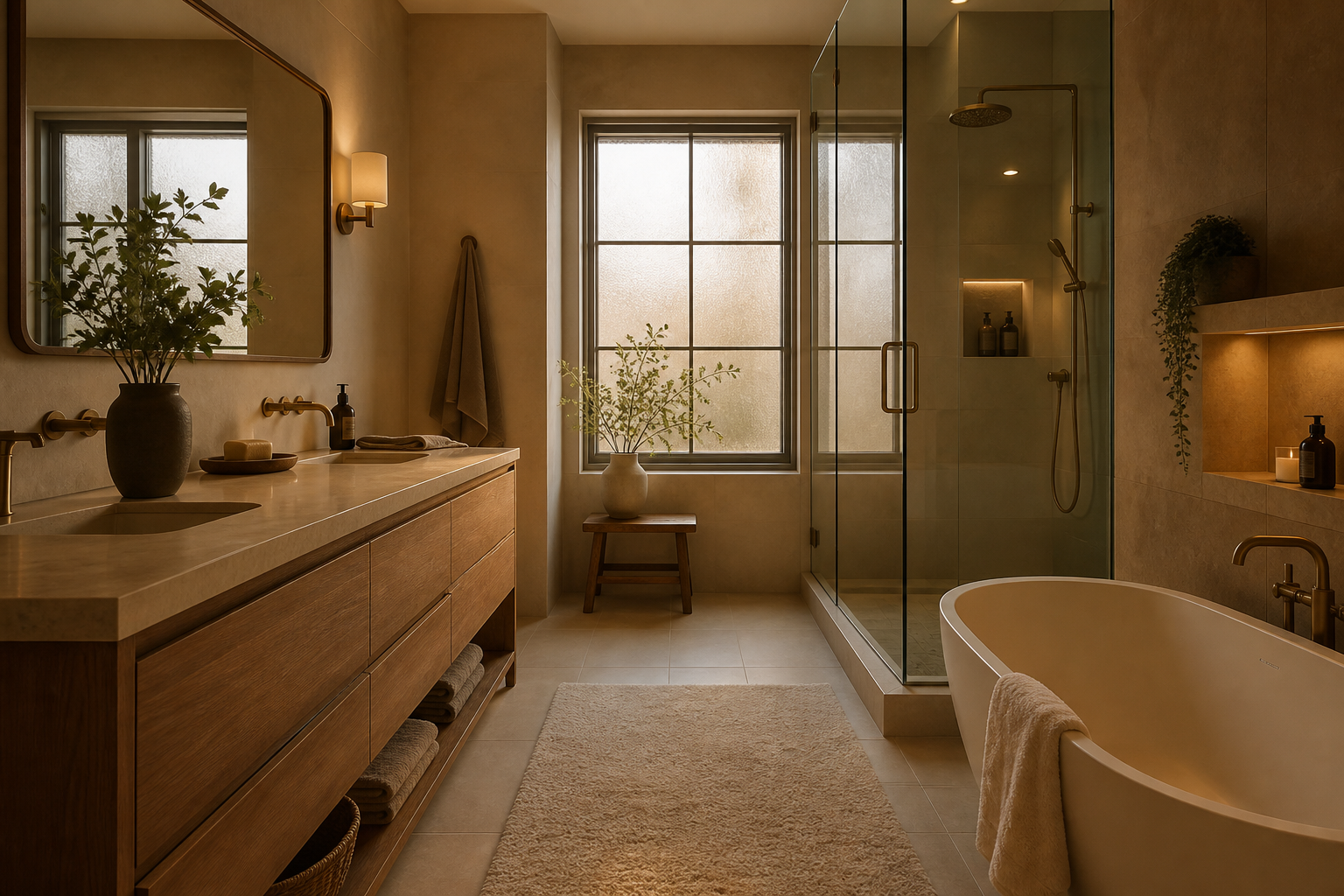
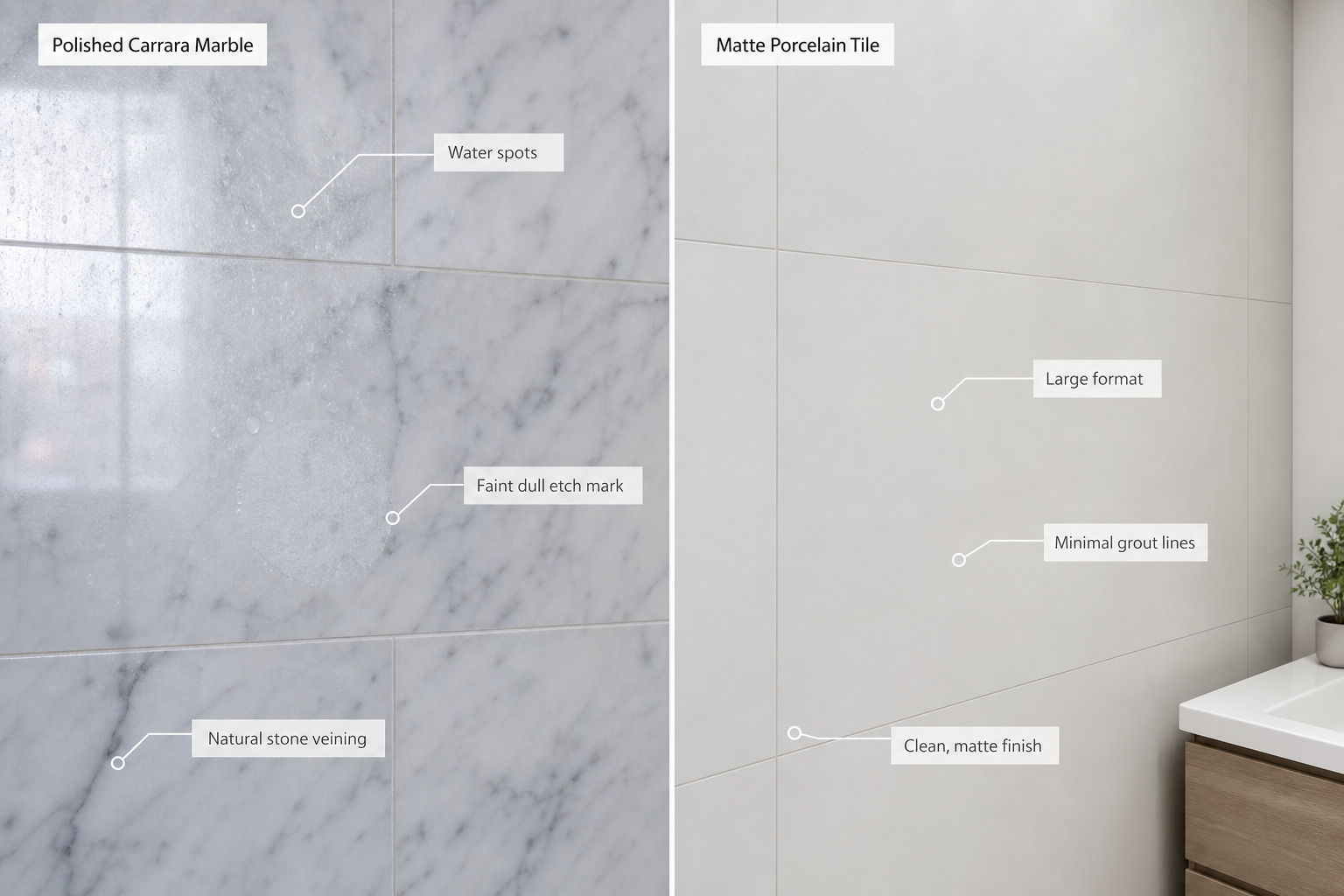
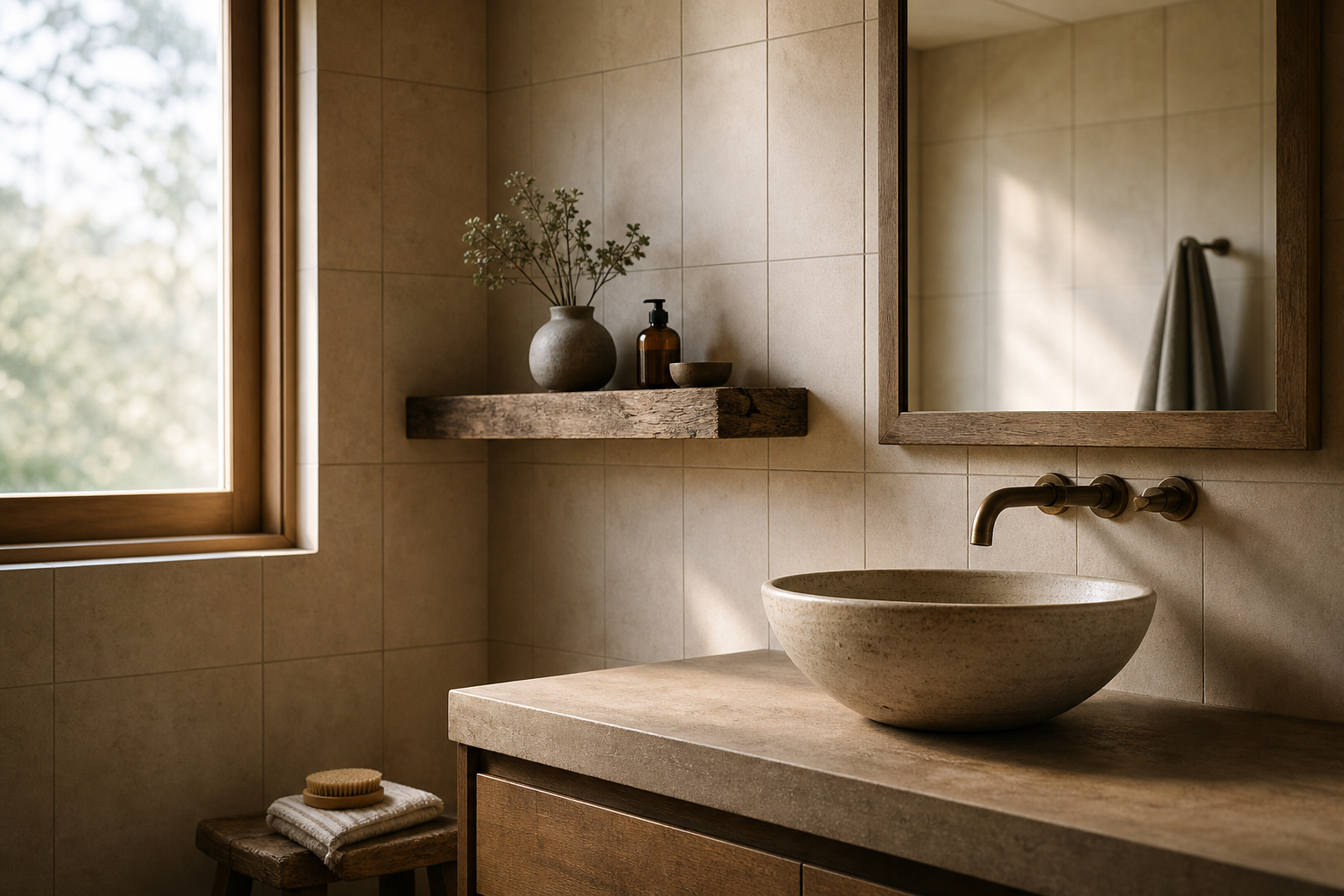
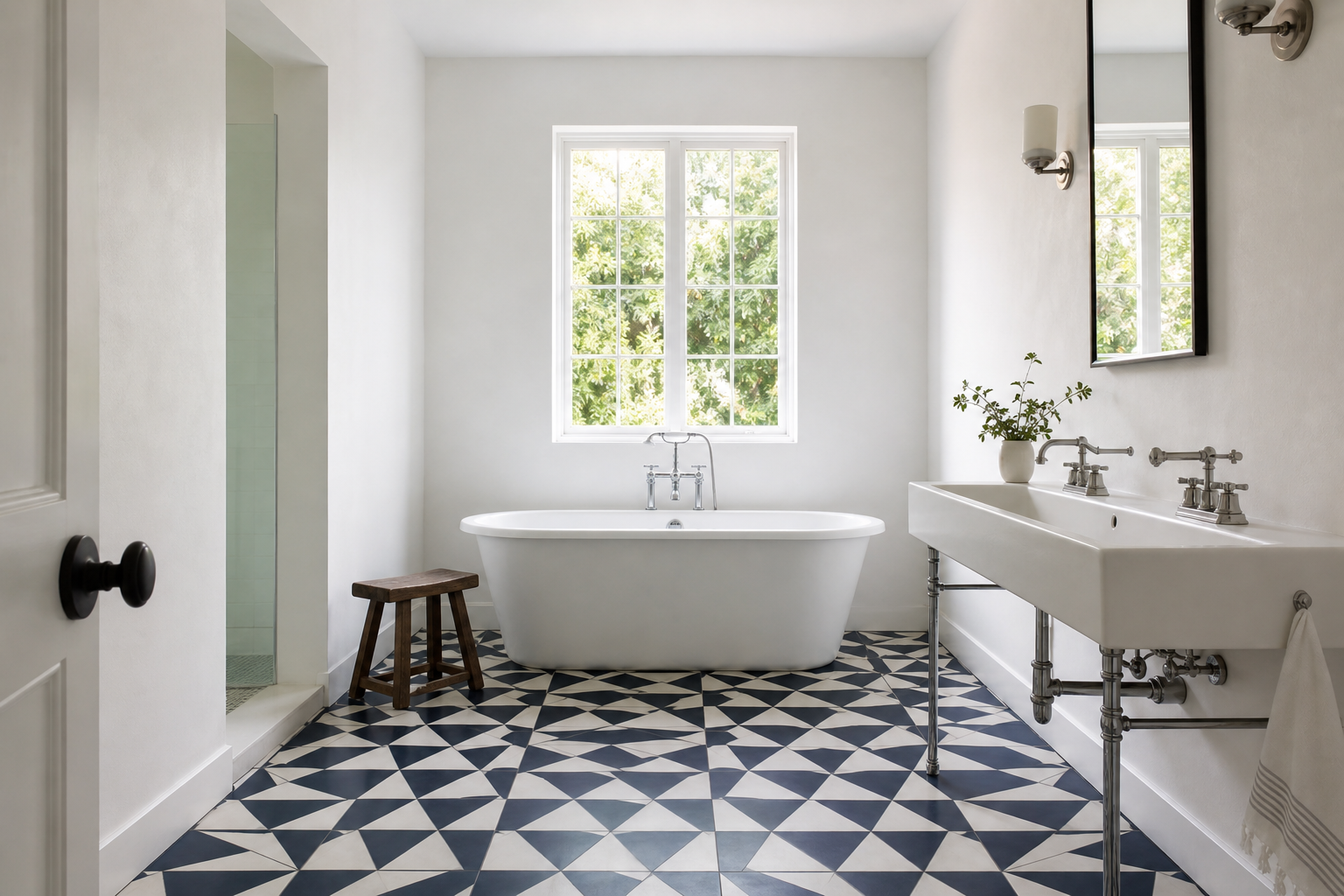
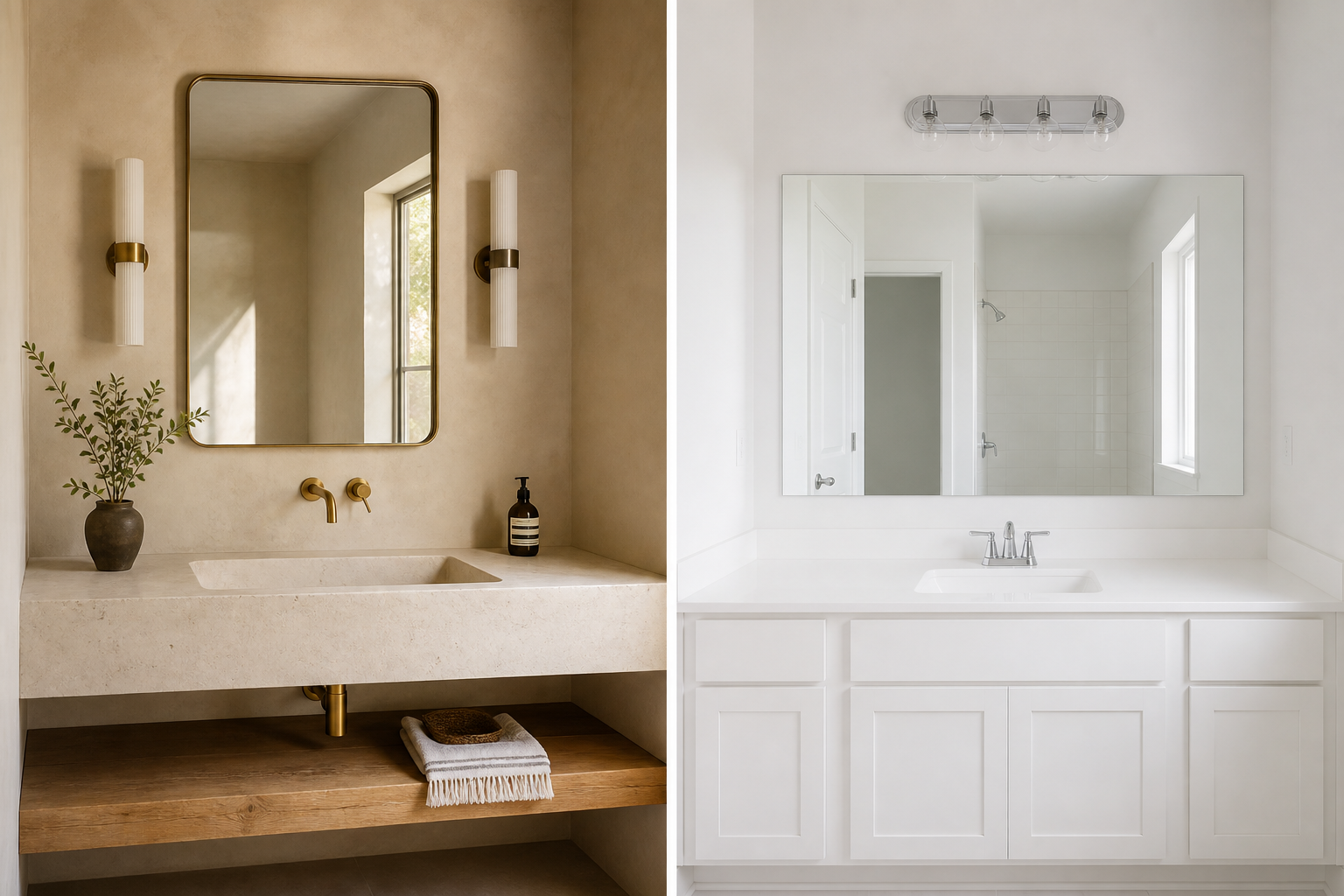
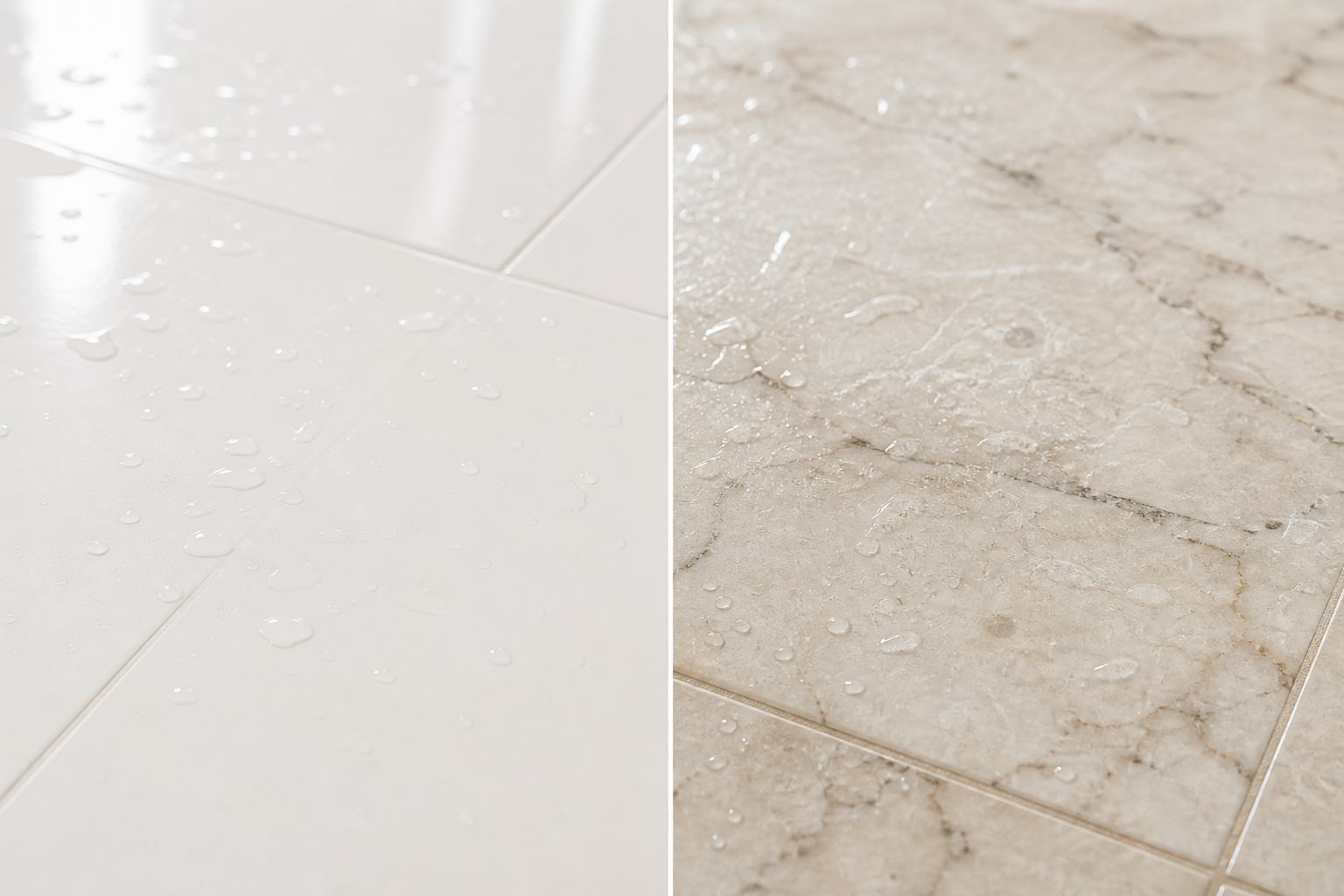
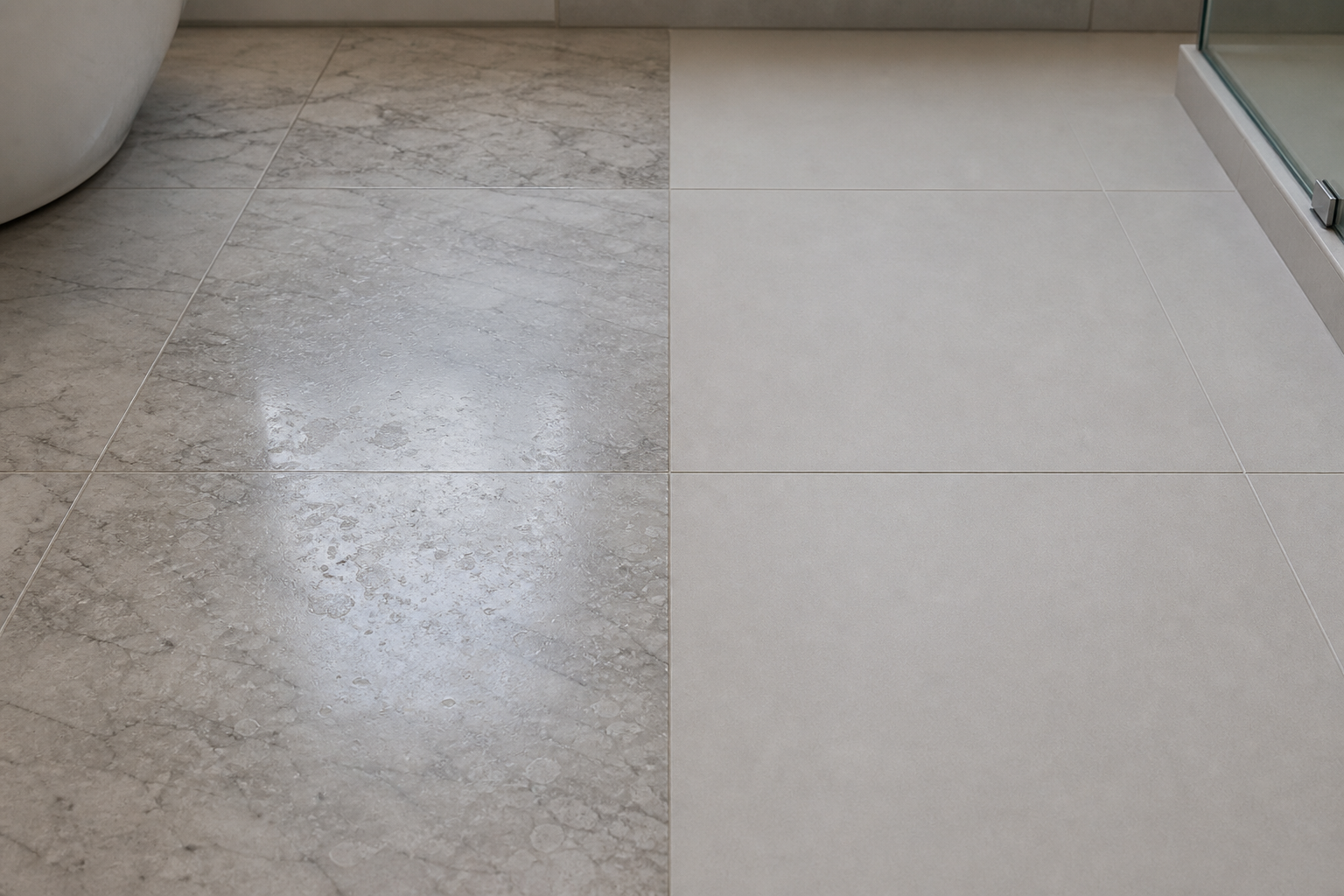
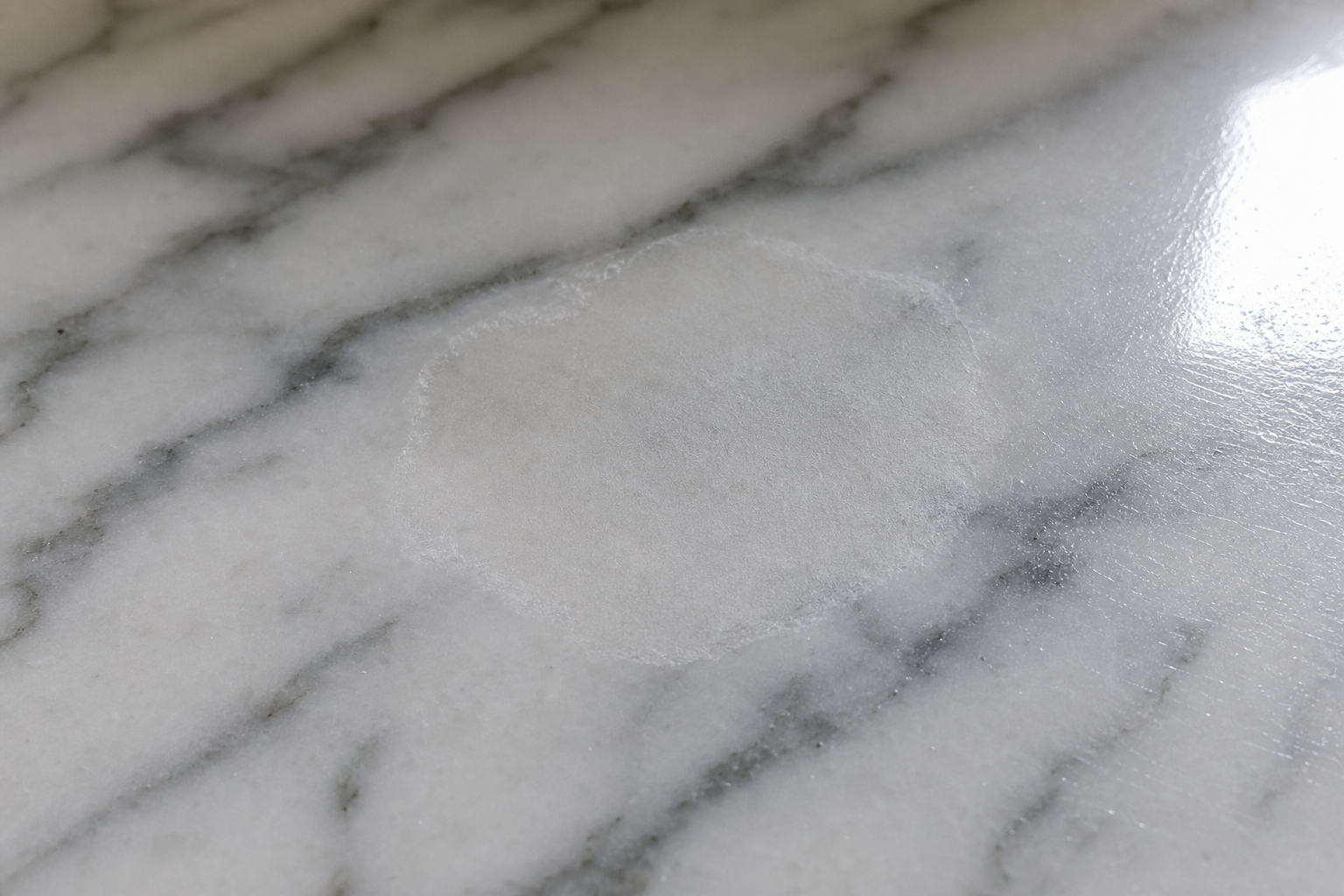
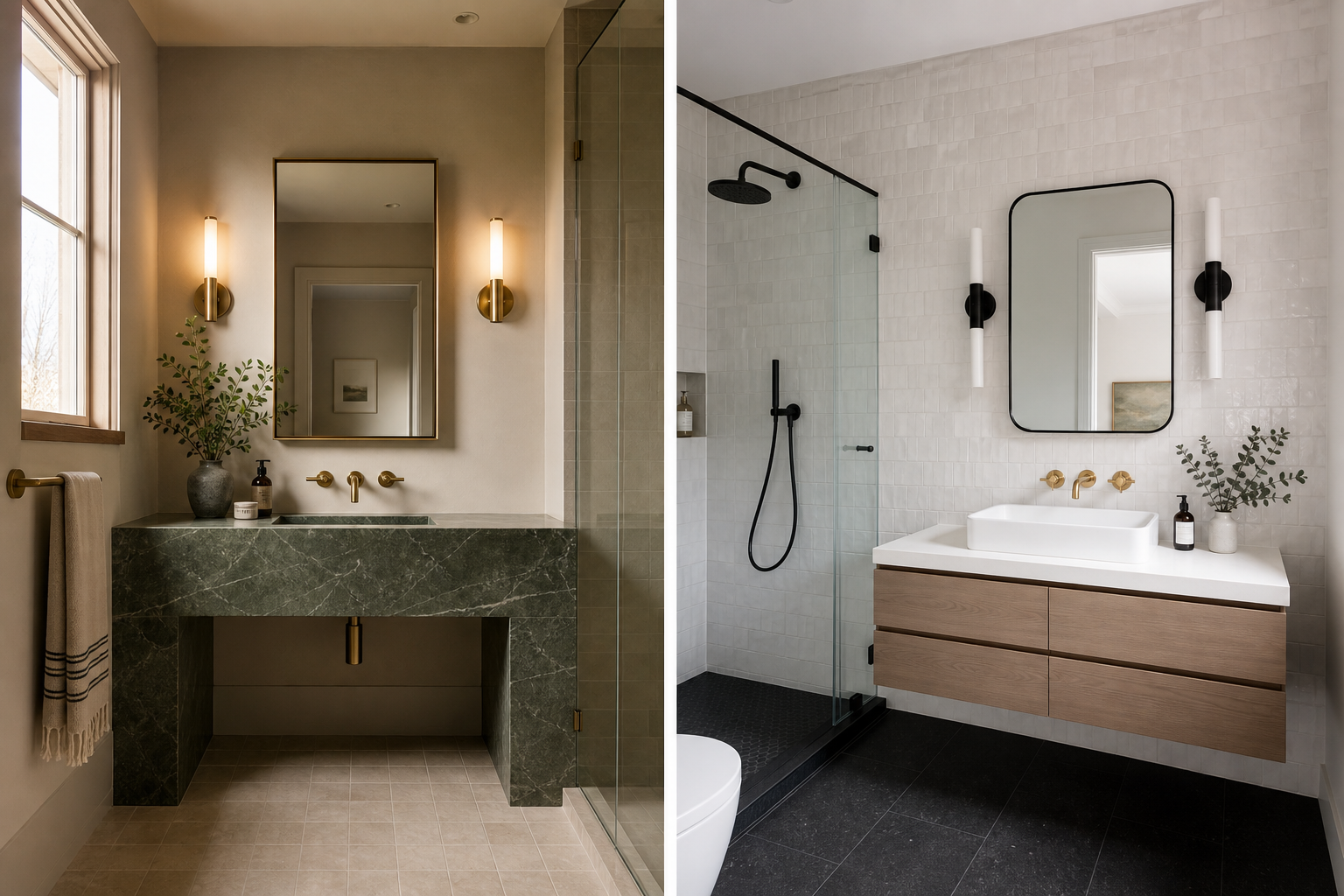
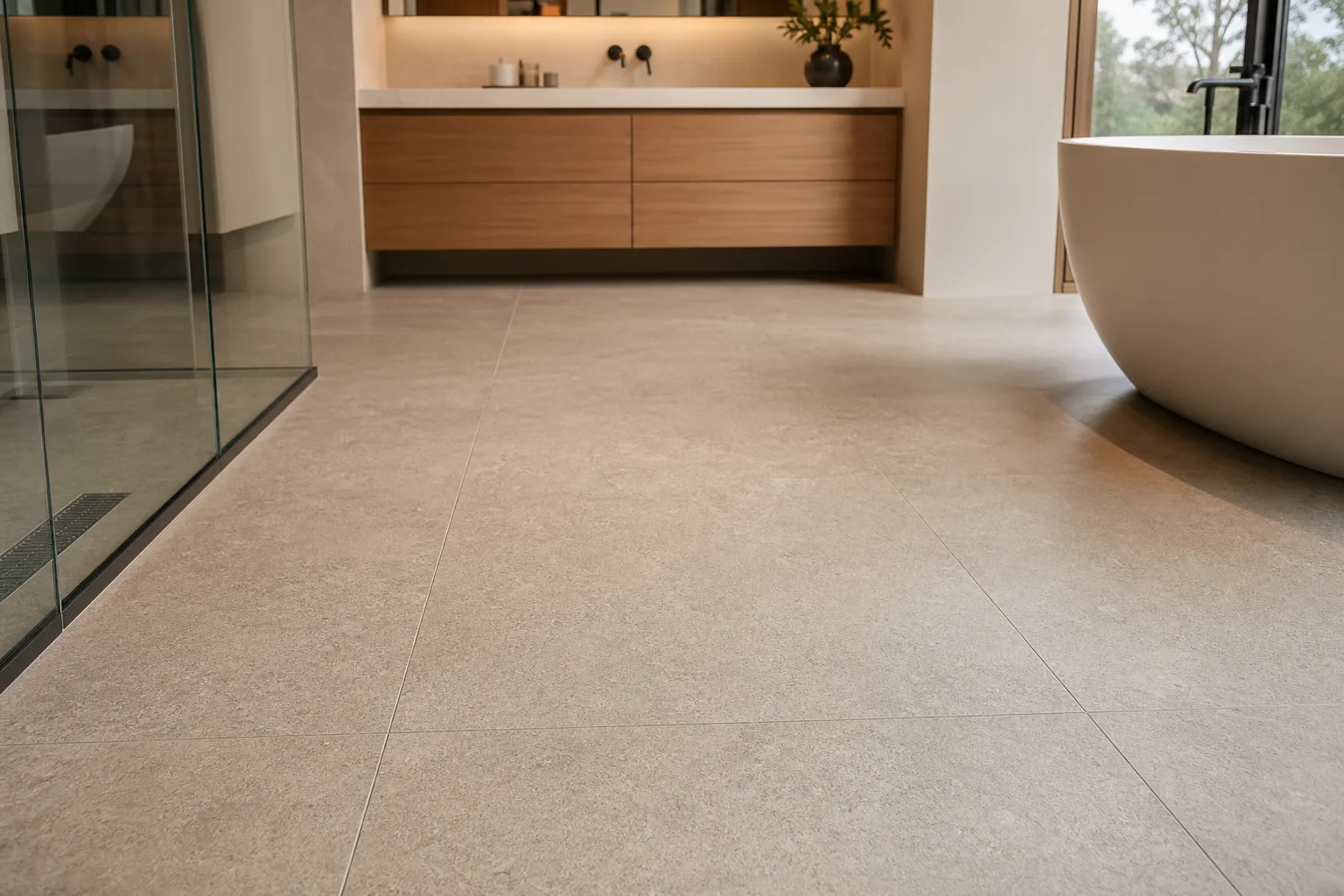
Visual warmth also comes from what the light hits. Matte and honed surfaces absorb light softly. High-gloss tile and large frameless mirrors reflect cool light sharply. A room full of glossy gray tile under cool LED will feel colder than a room with honed stone and wood accents under warm LED, even at the same air temperature.
Materials Carry Thermal and Visual Weight
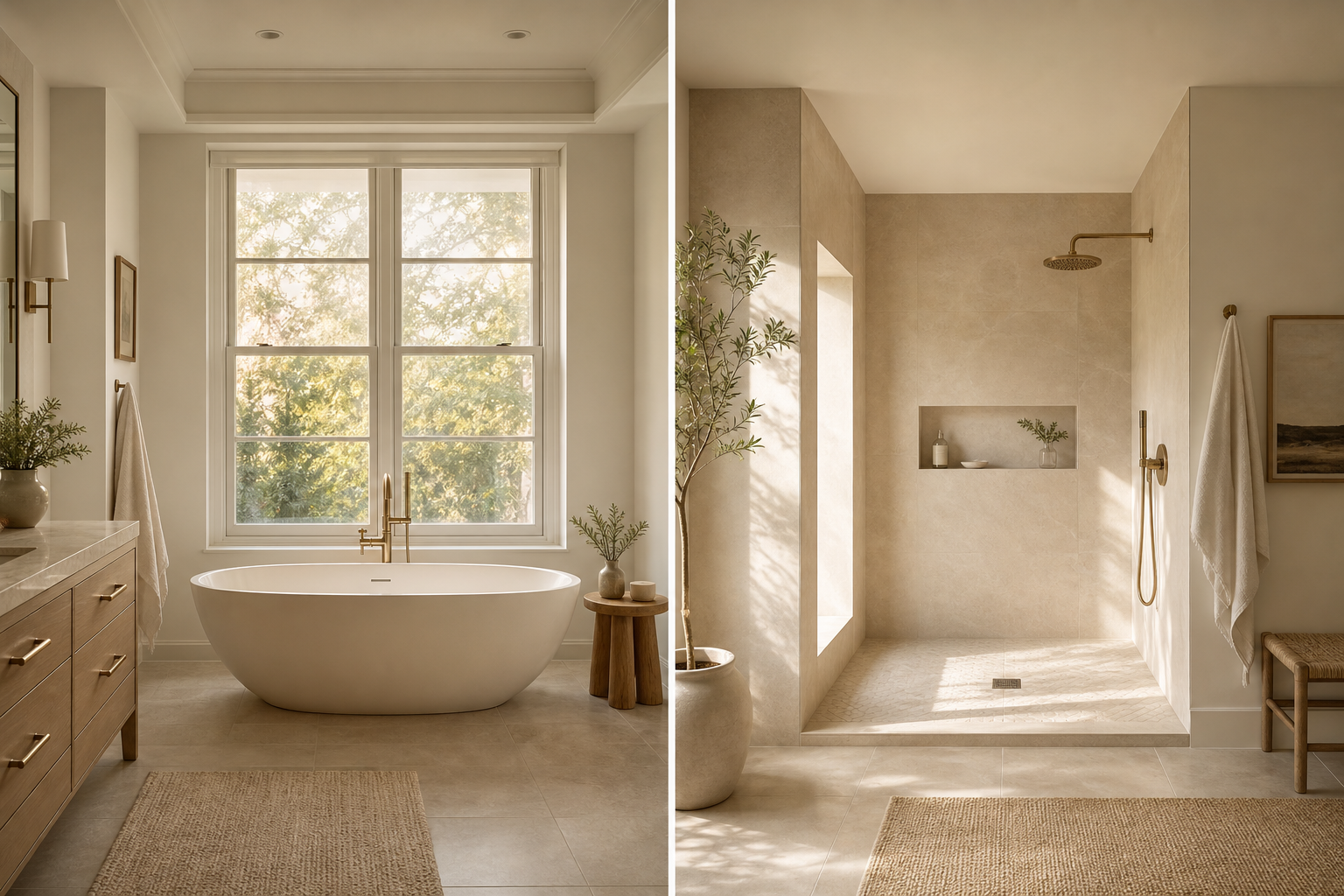
Thermal mass is the capacity of a material to store and release heat. Stone and tile have high thermal mass. They feel cold when cold and hold warmth when warm. That is why radiant heat pairs so well with stone floors: the mass stores the heat and releases it slowly.
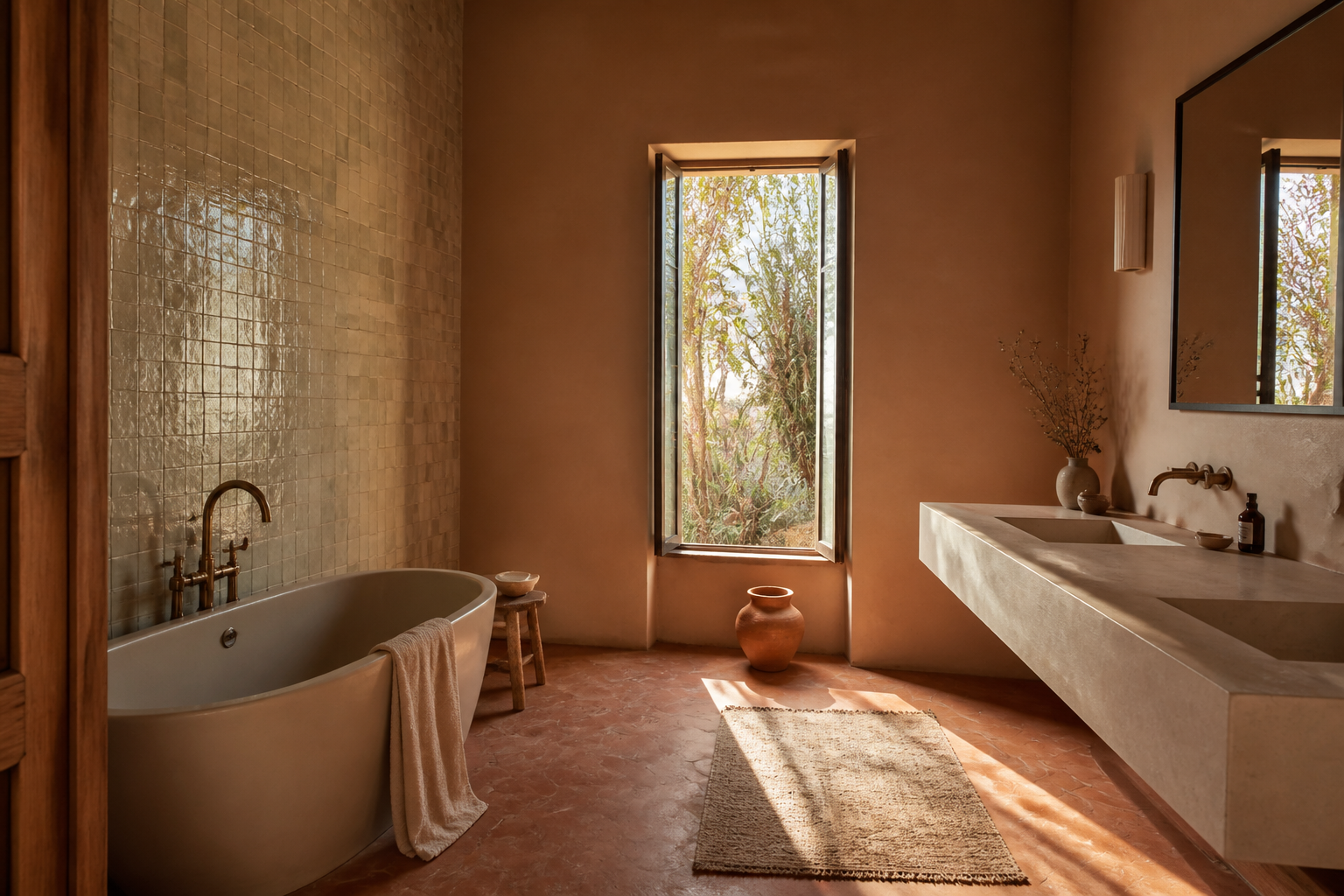
Visual warmth is separate. A gray porcelain floor can be physically warm from radiant heat and still look cold. A limestone with honey undertones can be unheated and still look warm under the right light. The best February bathrooms address both: materials that can be warmed physically and that read warm visually.
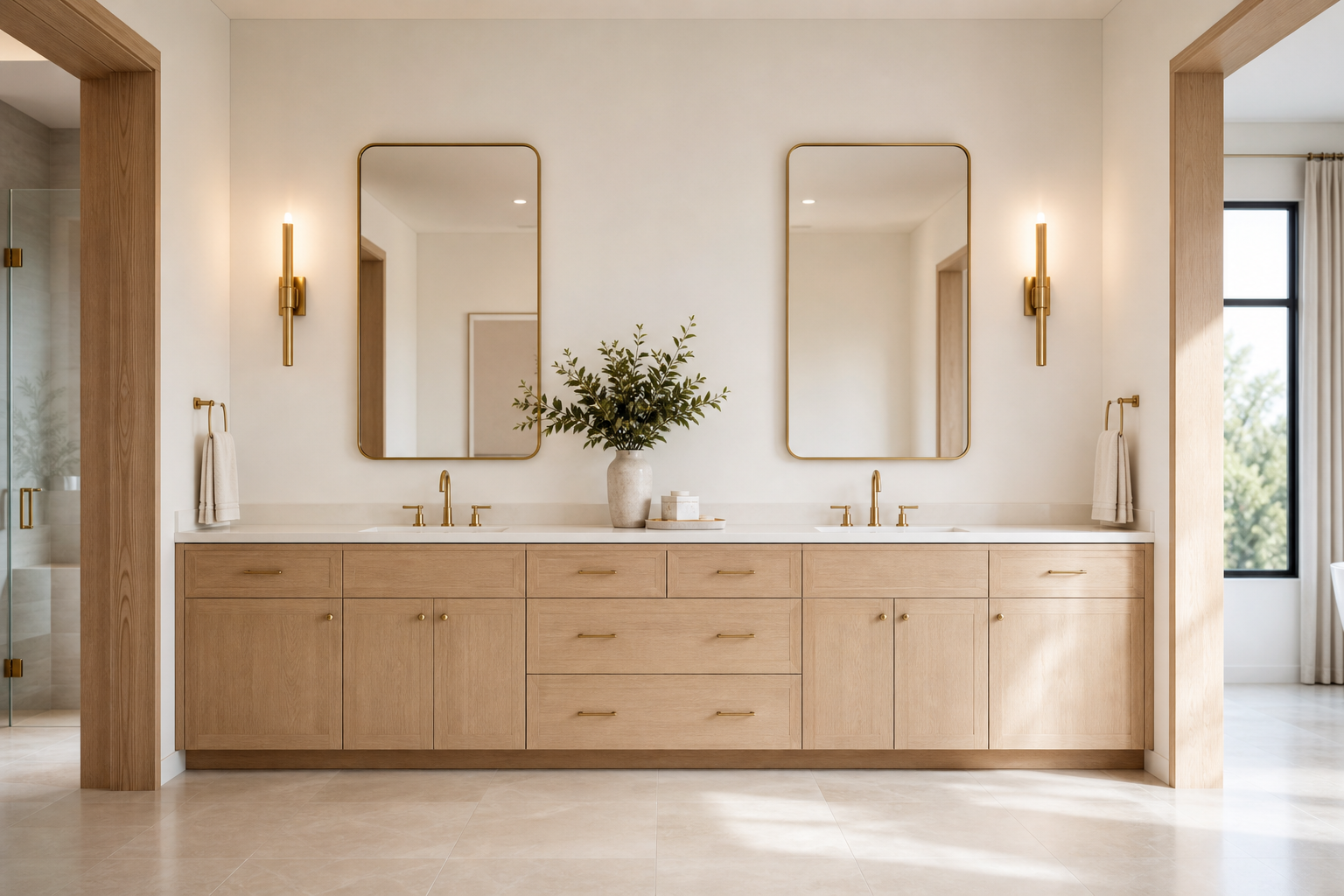
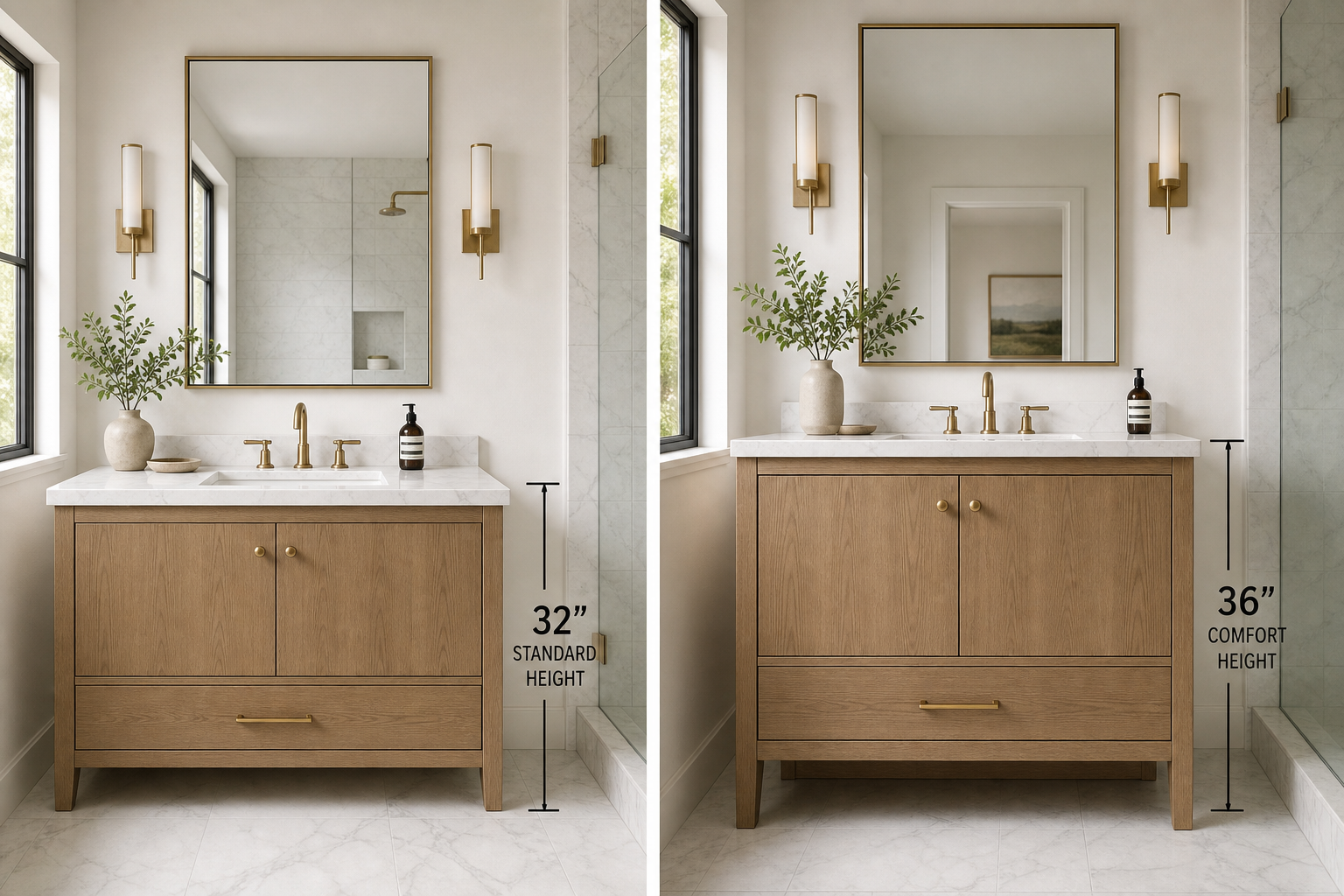
Wood belongs in this conversation with conditions. Untreated oak or pine in a splash zone will swell, stain, and fail. Thermally modified ash, teak, or properly sealed cabinetry-grade wood on a vanity or shelf adds visual warmth without pretending to be a wet-area material. The wood should be placed where it can dry, sealed appropriately, and protected from standing water. Used correctly, it changes the room's character more than any paint color.
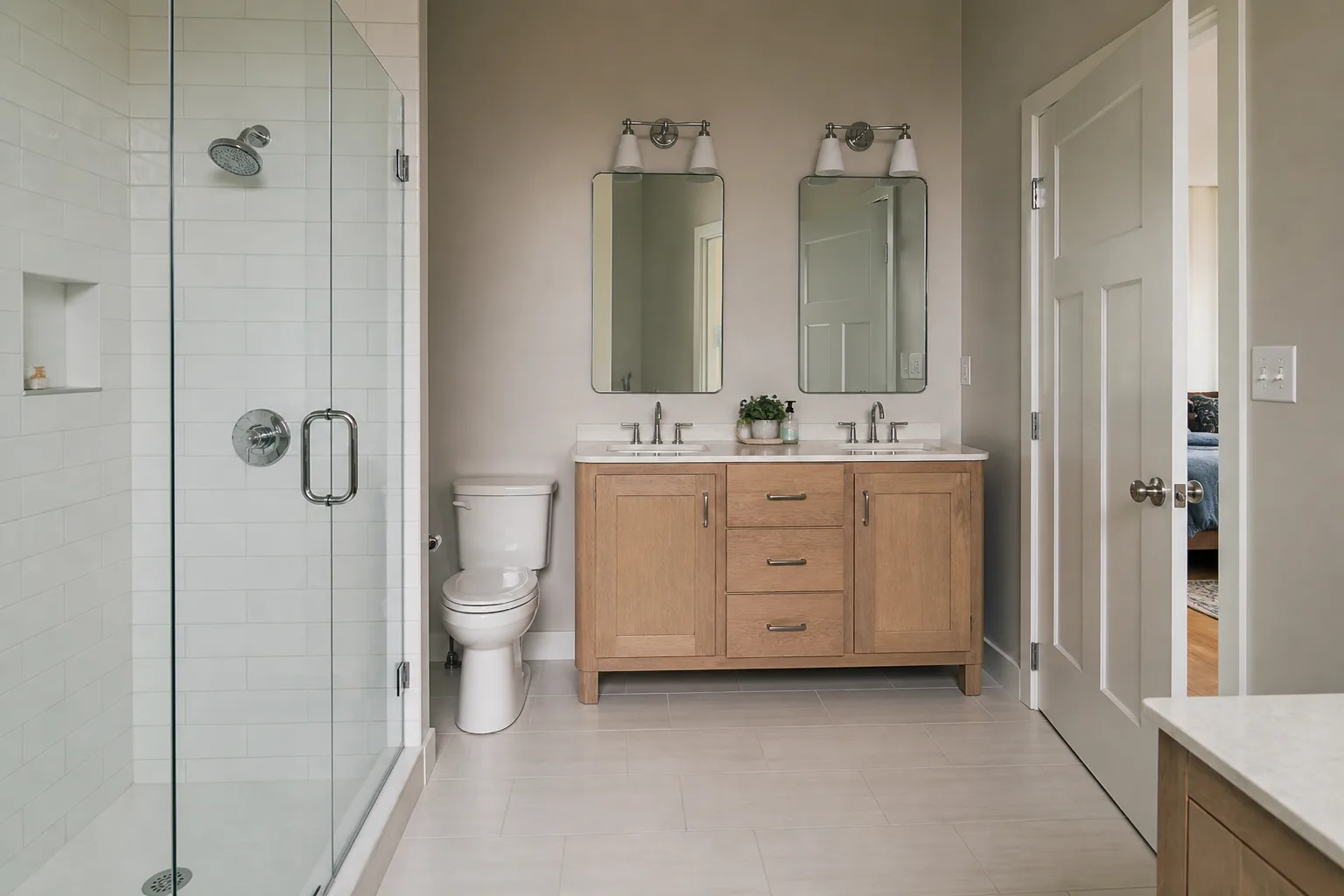
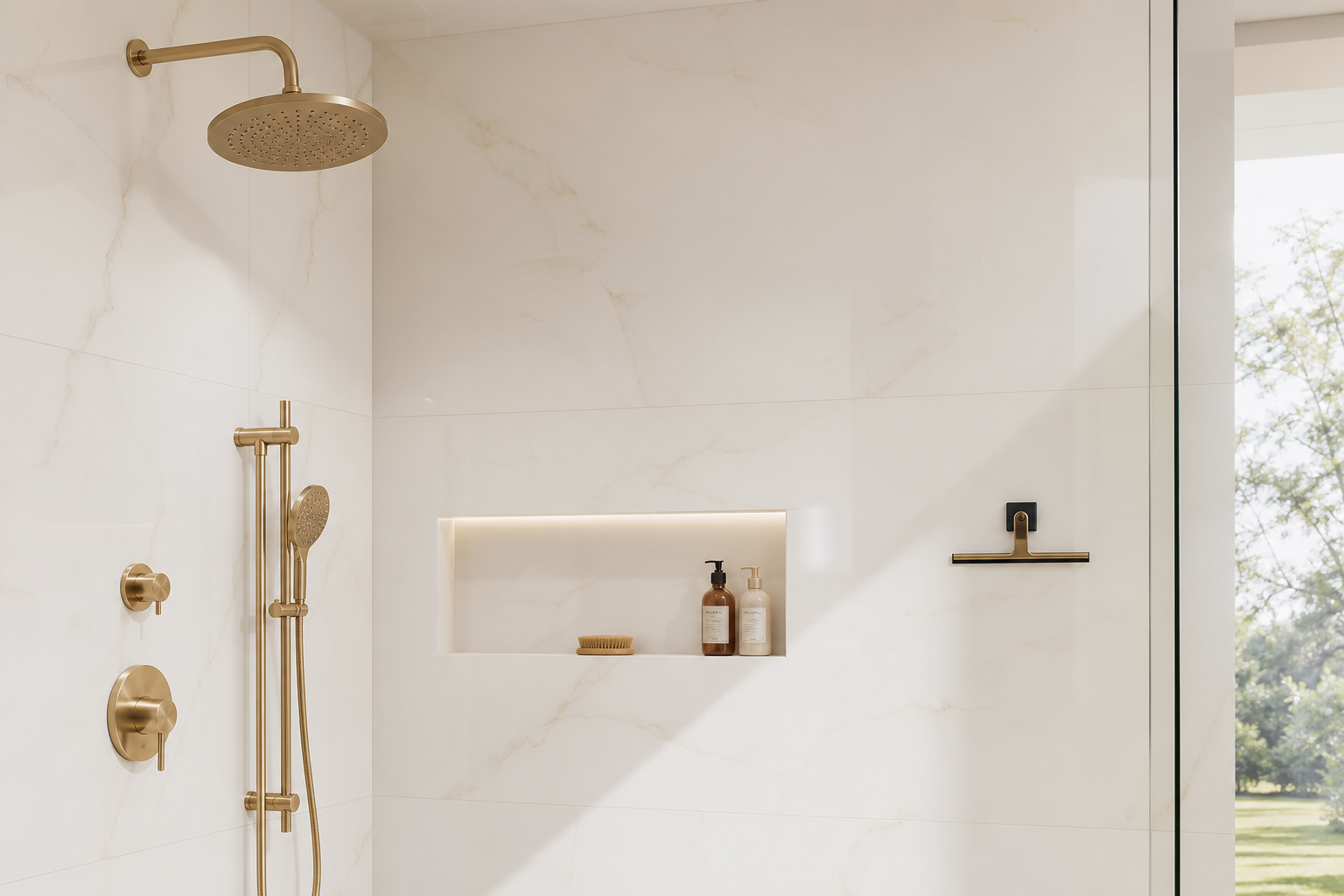
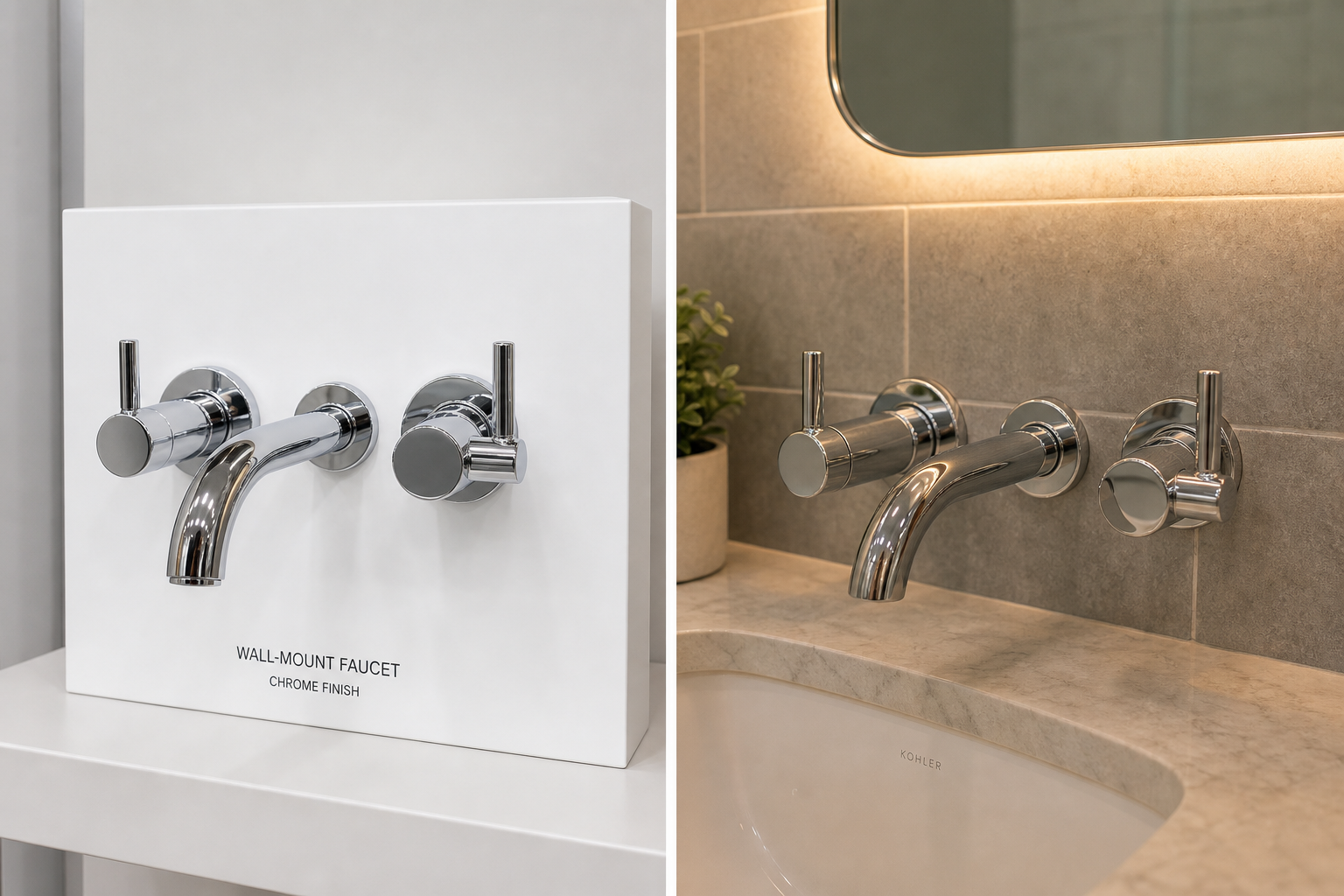
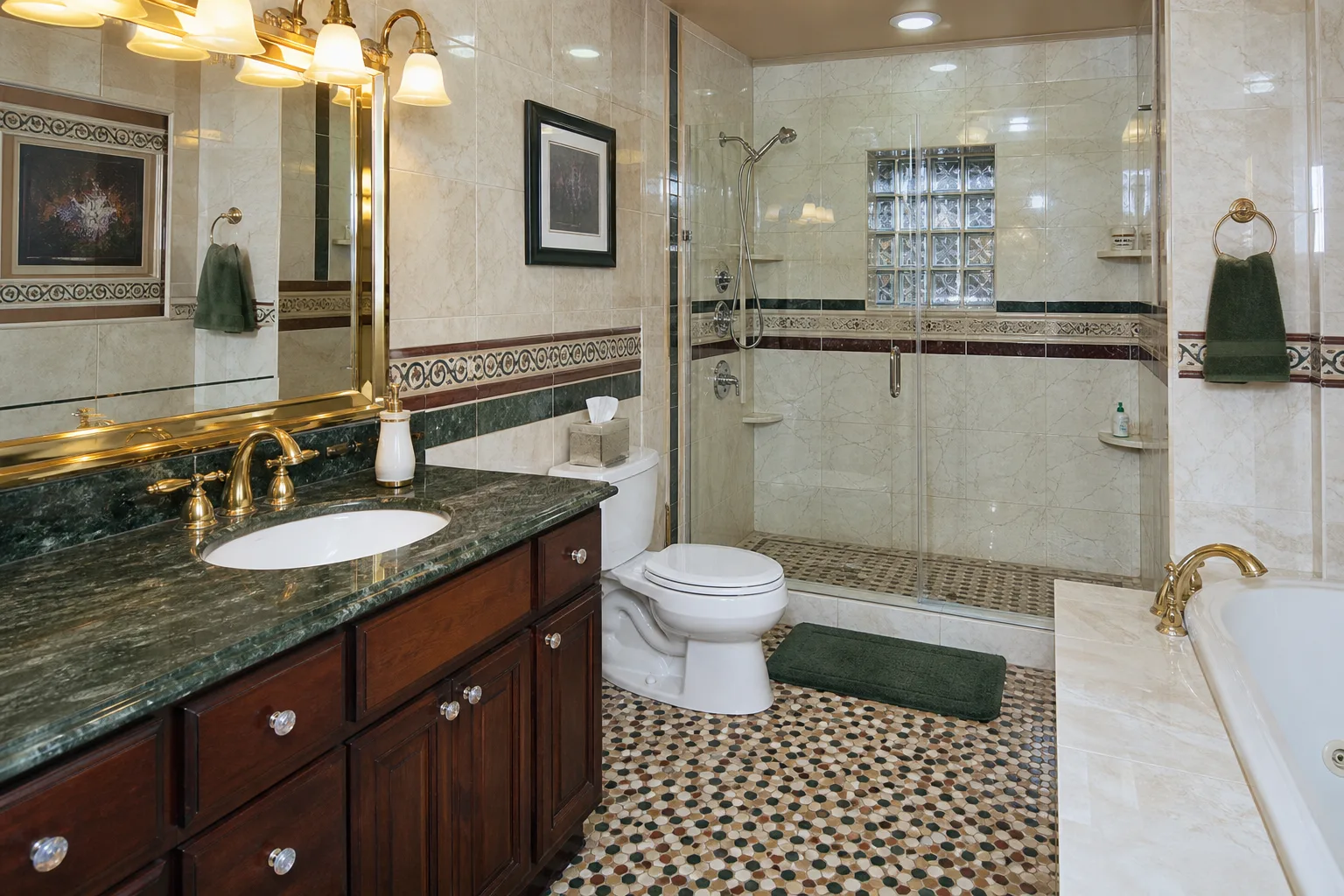
Brass and unlacquered bronze hardware read warm. Chrome and polished nickel read cool. The difference is subtle on a sample board and obvious on a gray morning when every cue matters.
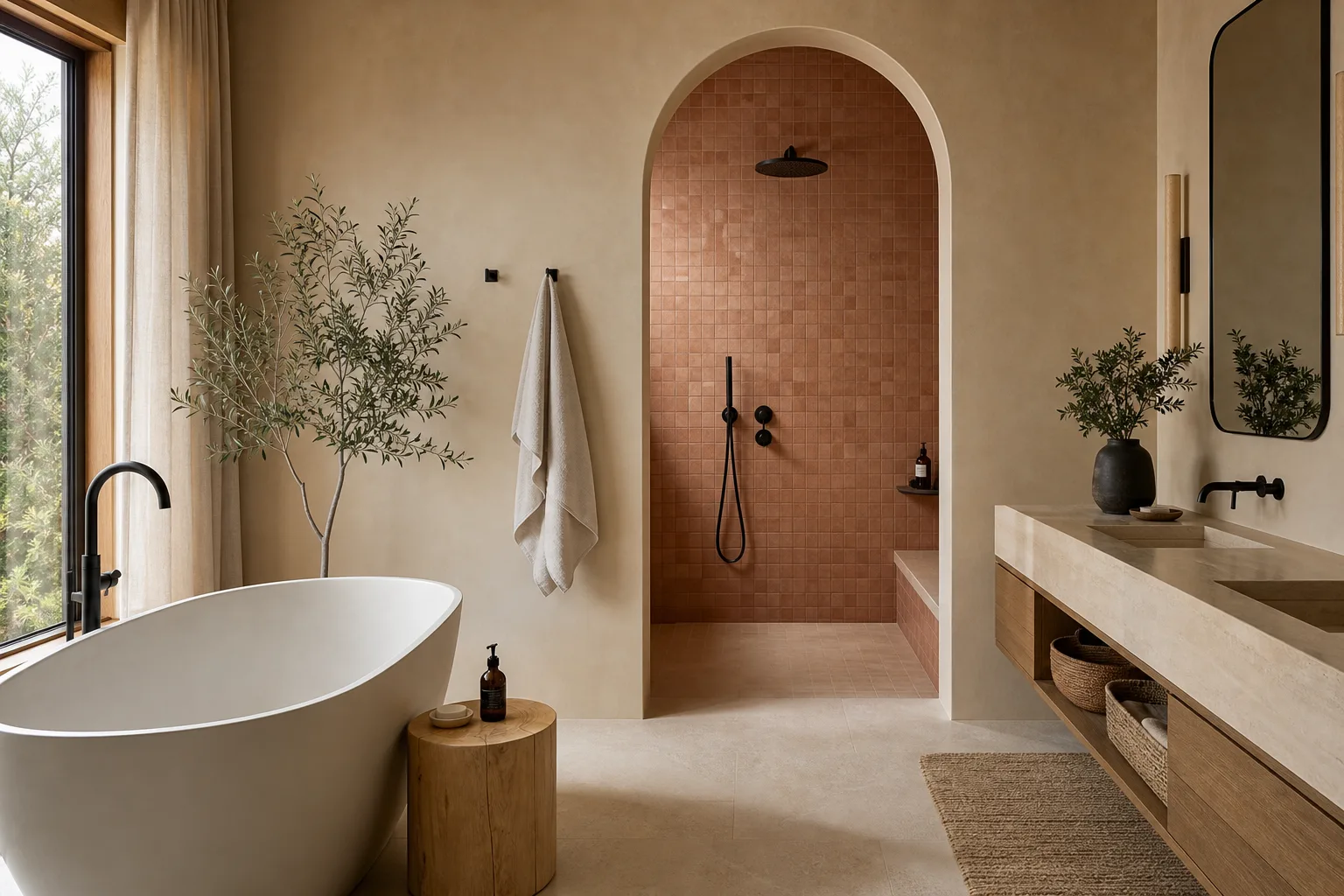
Color follows the same logic. Warm whites, soft grays with beige undertones, and muted clay tones hold up better psychologically in dim winter light than bright white or blue-gray palettes that depend on strong daylight to look intentional.
A Warm Room Must Also Be a Dry Room
Warmth and dampness are opposites in perception. A bathroom that steams up during every shower and never fully dries will feel clammy even with a heated floor and warm light. In the Pacific Northwest, where windows stay closed for months, ventilation is not optional.
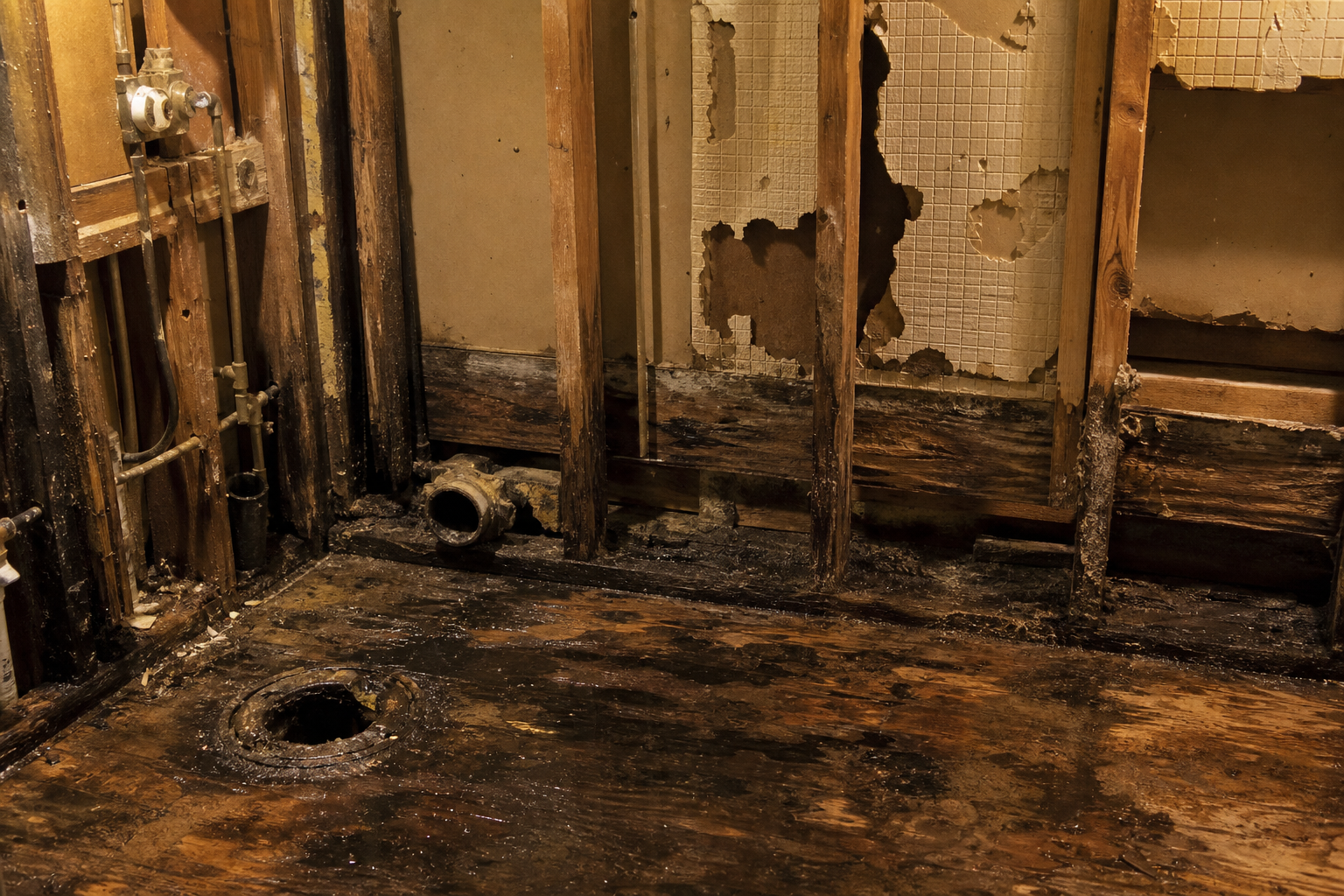
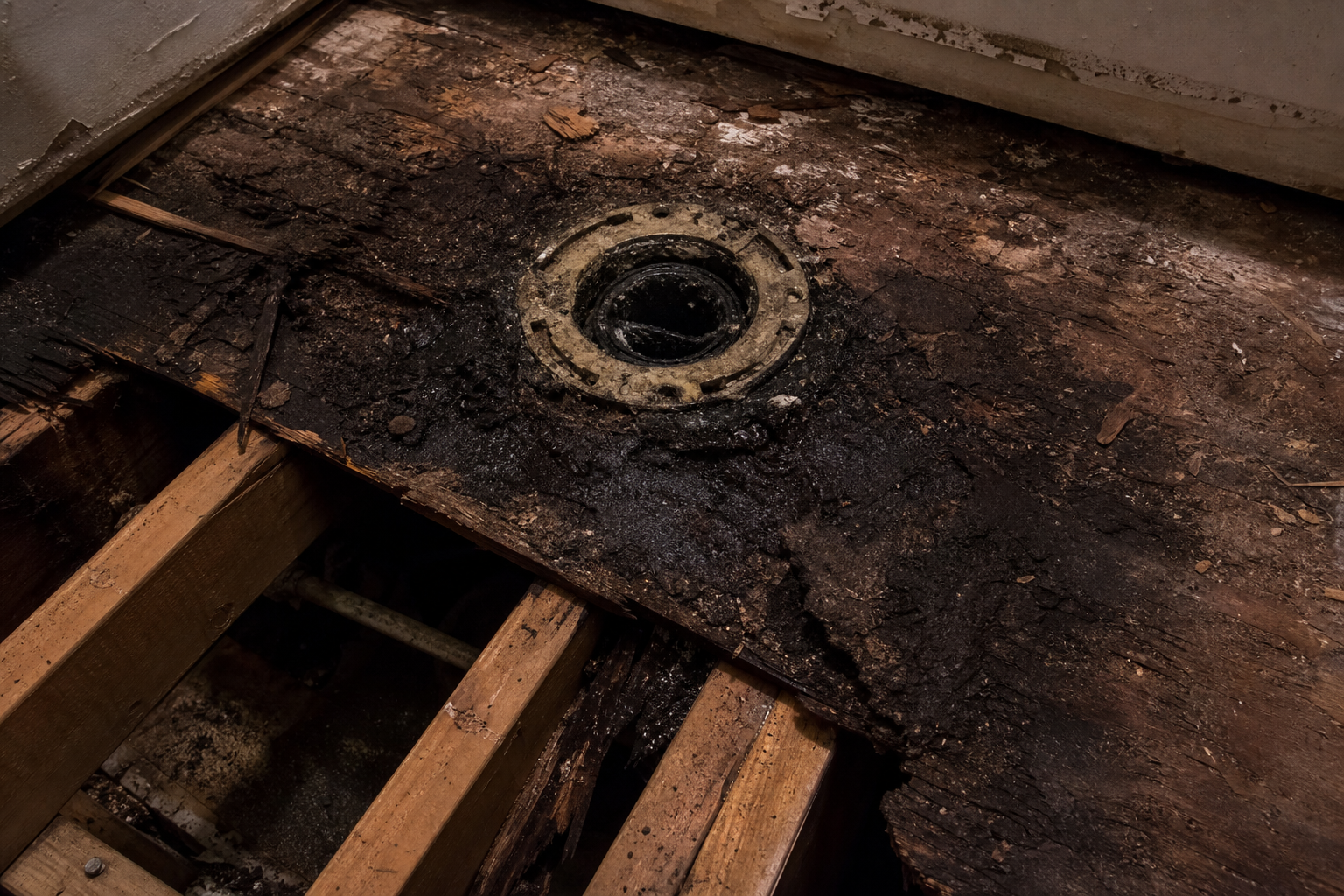
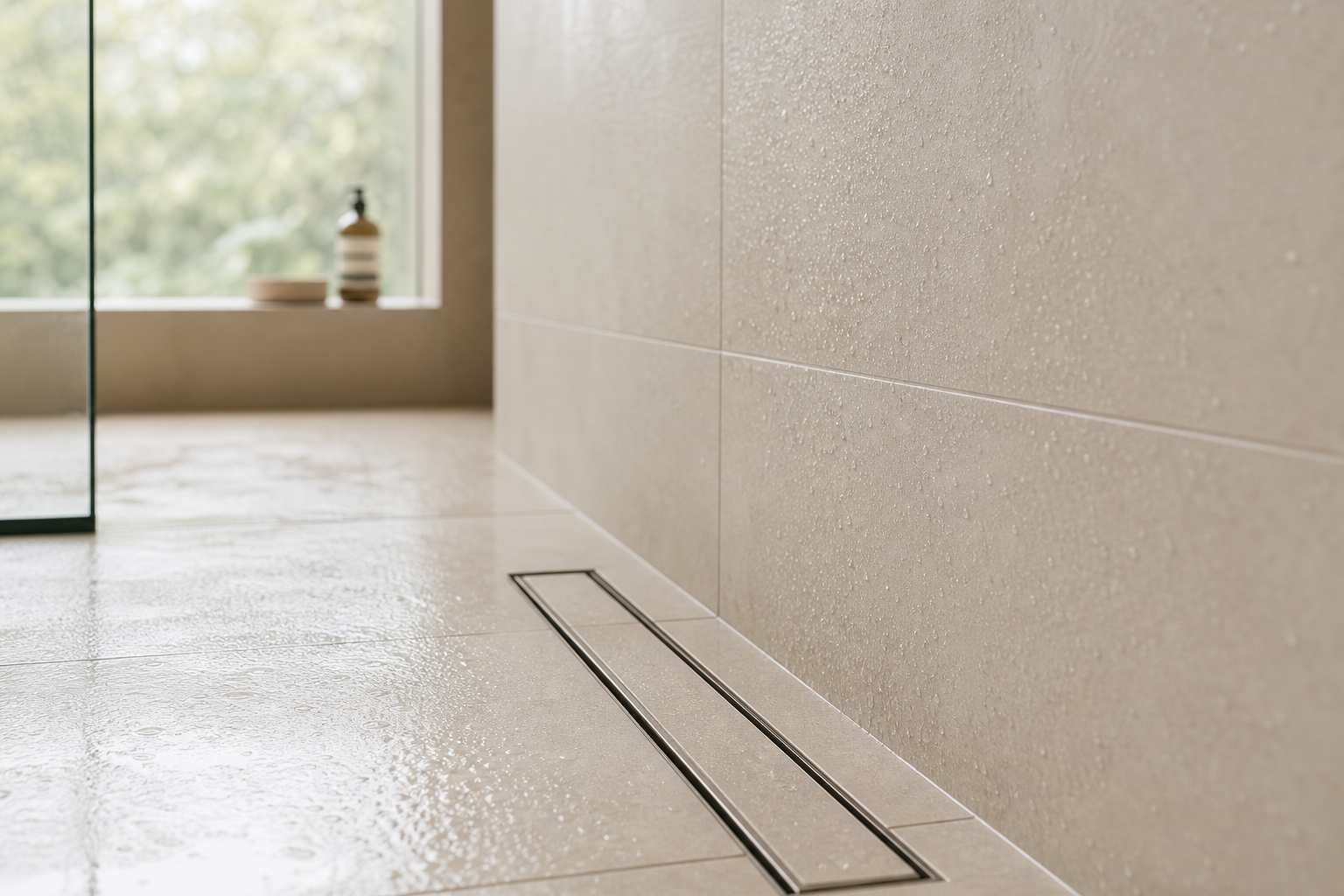
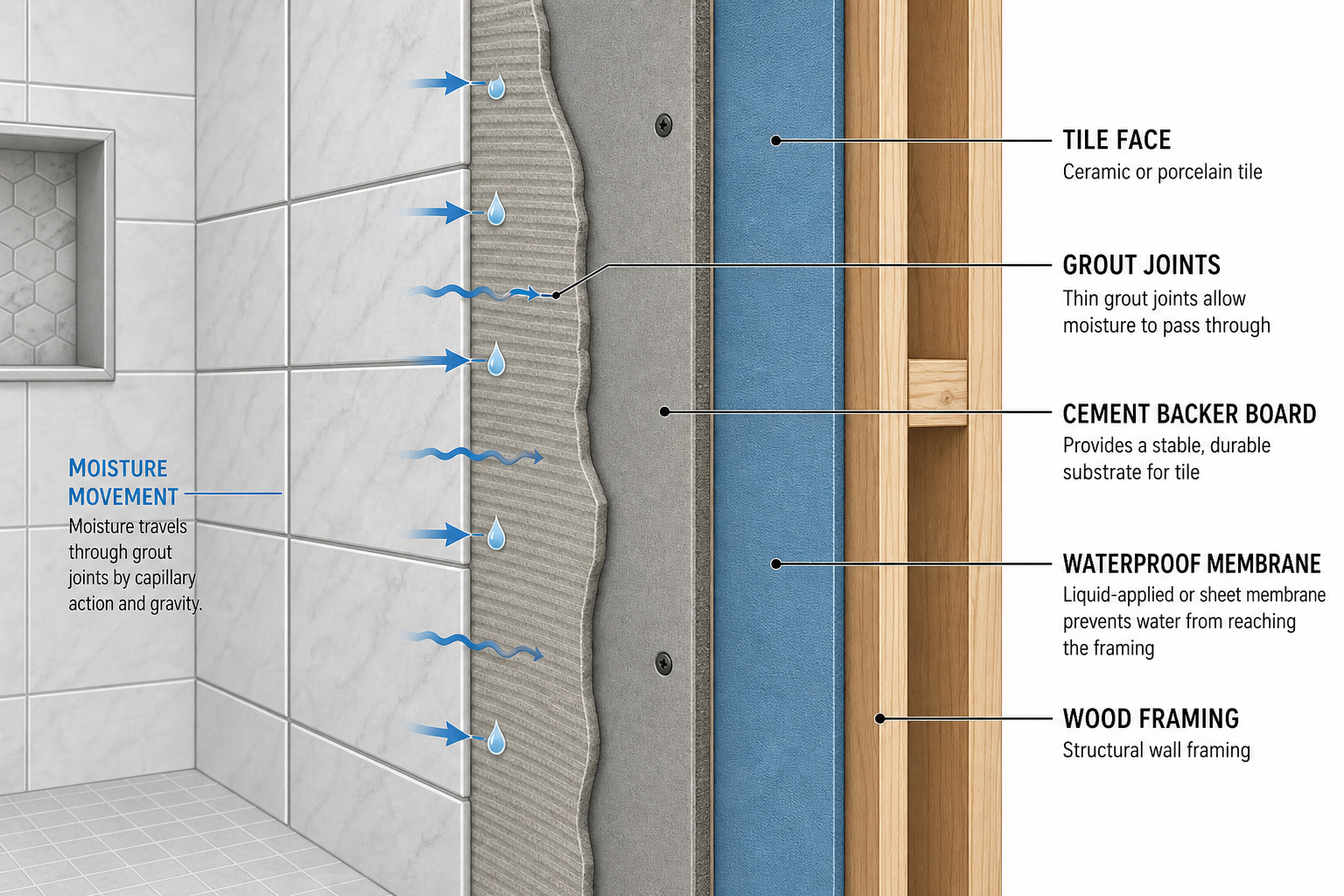
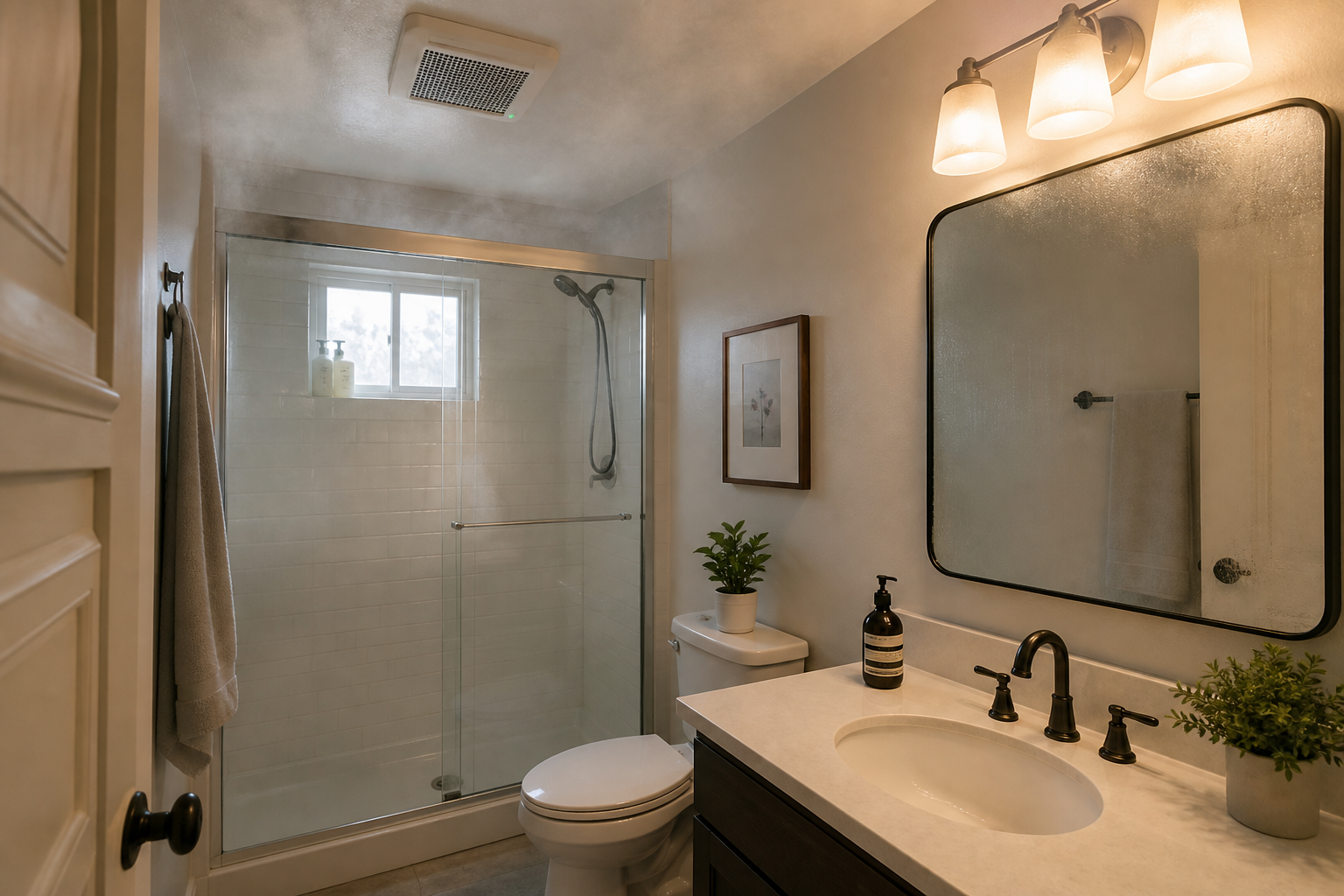
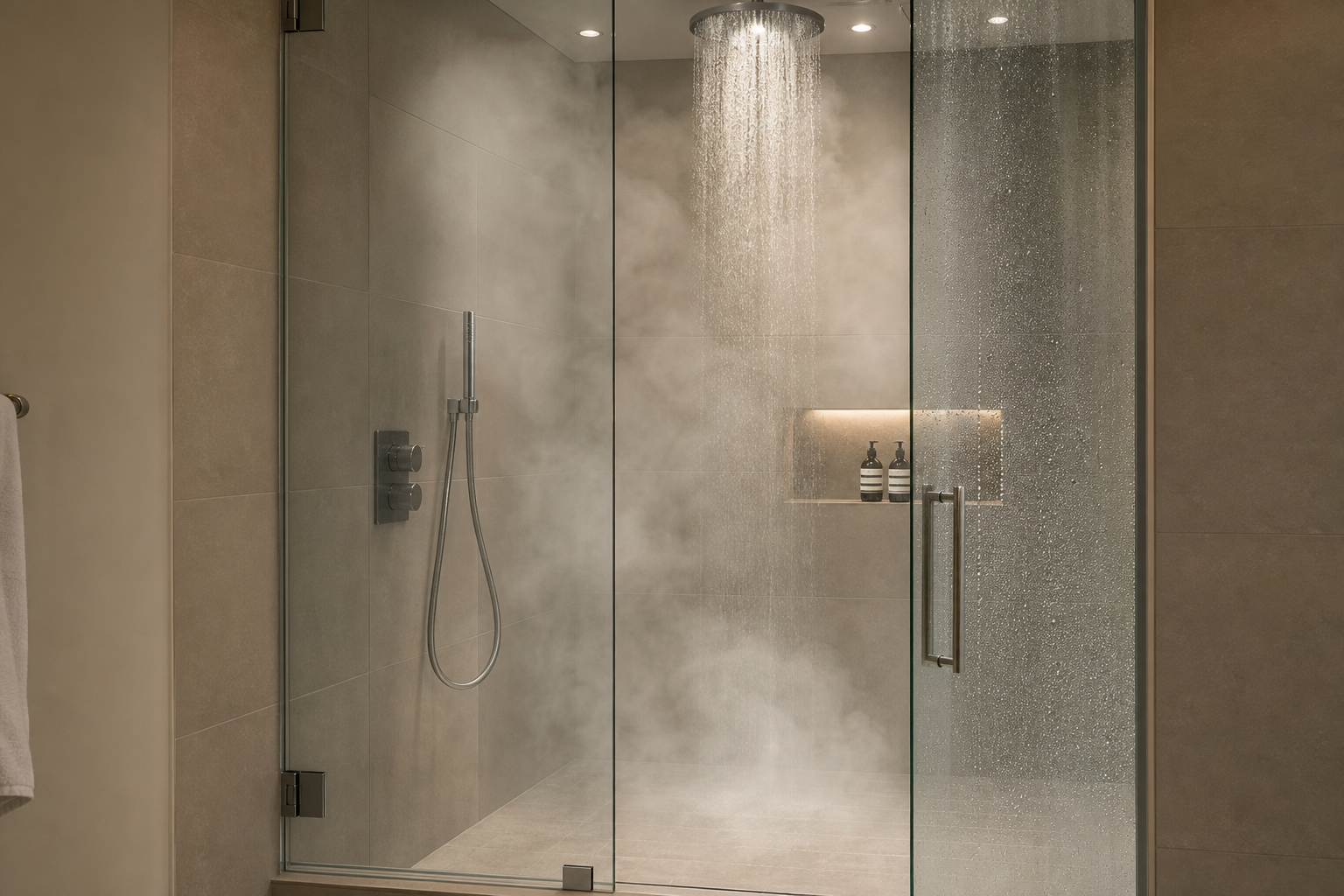
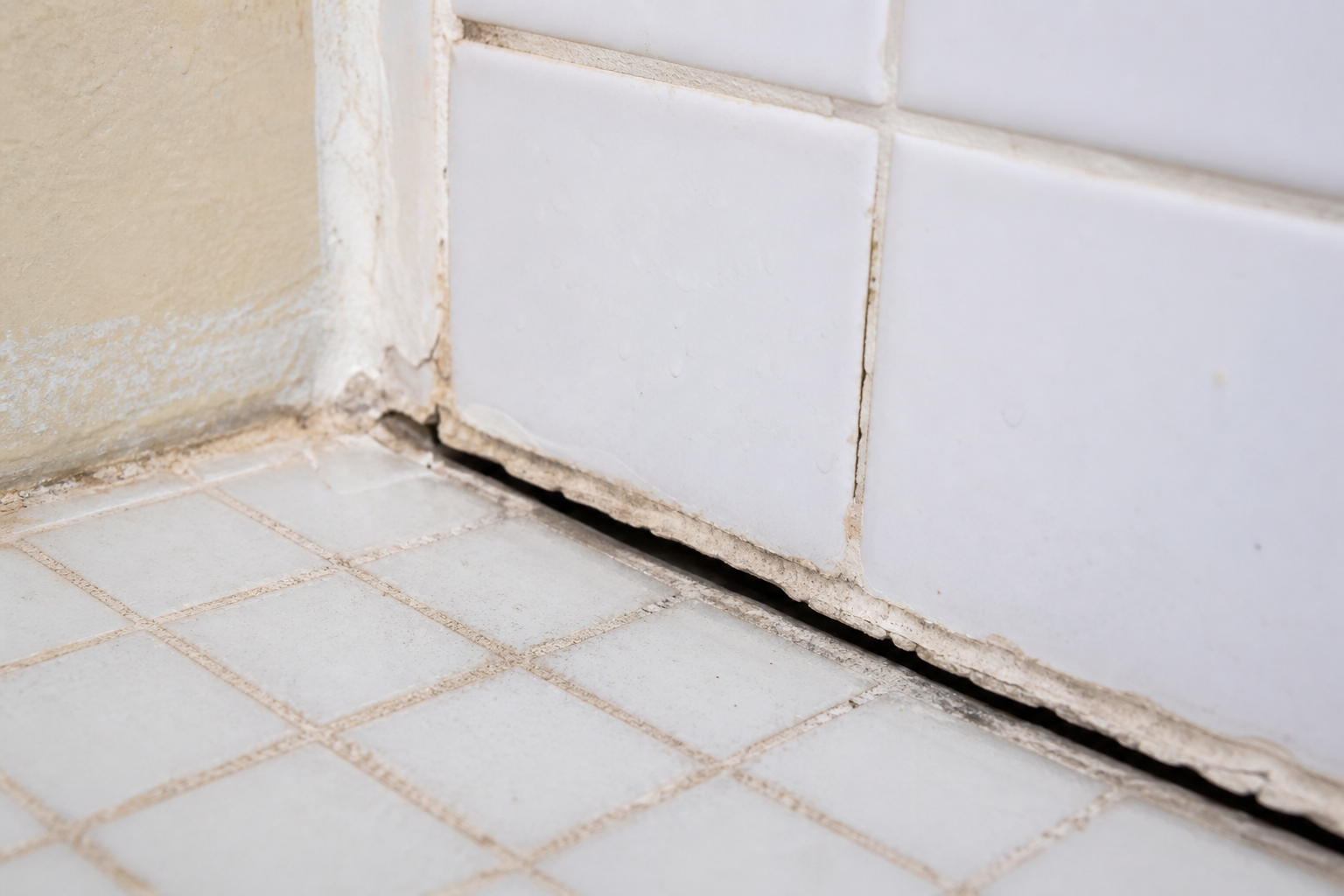
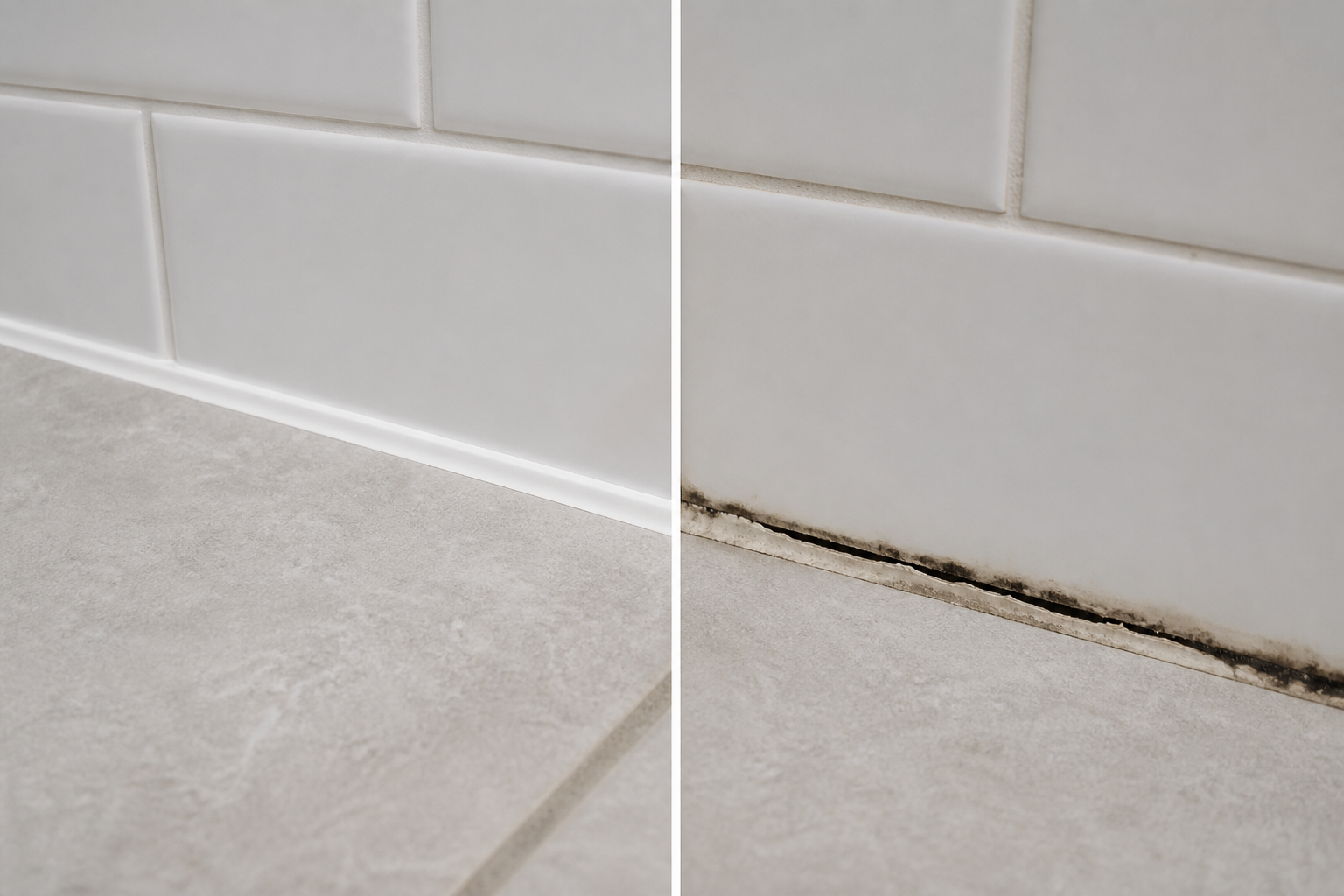
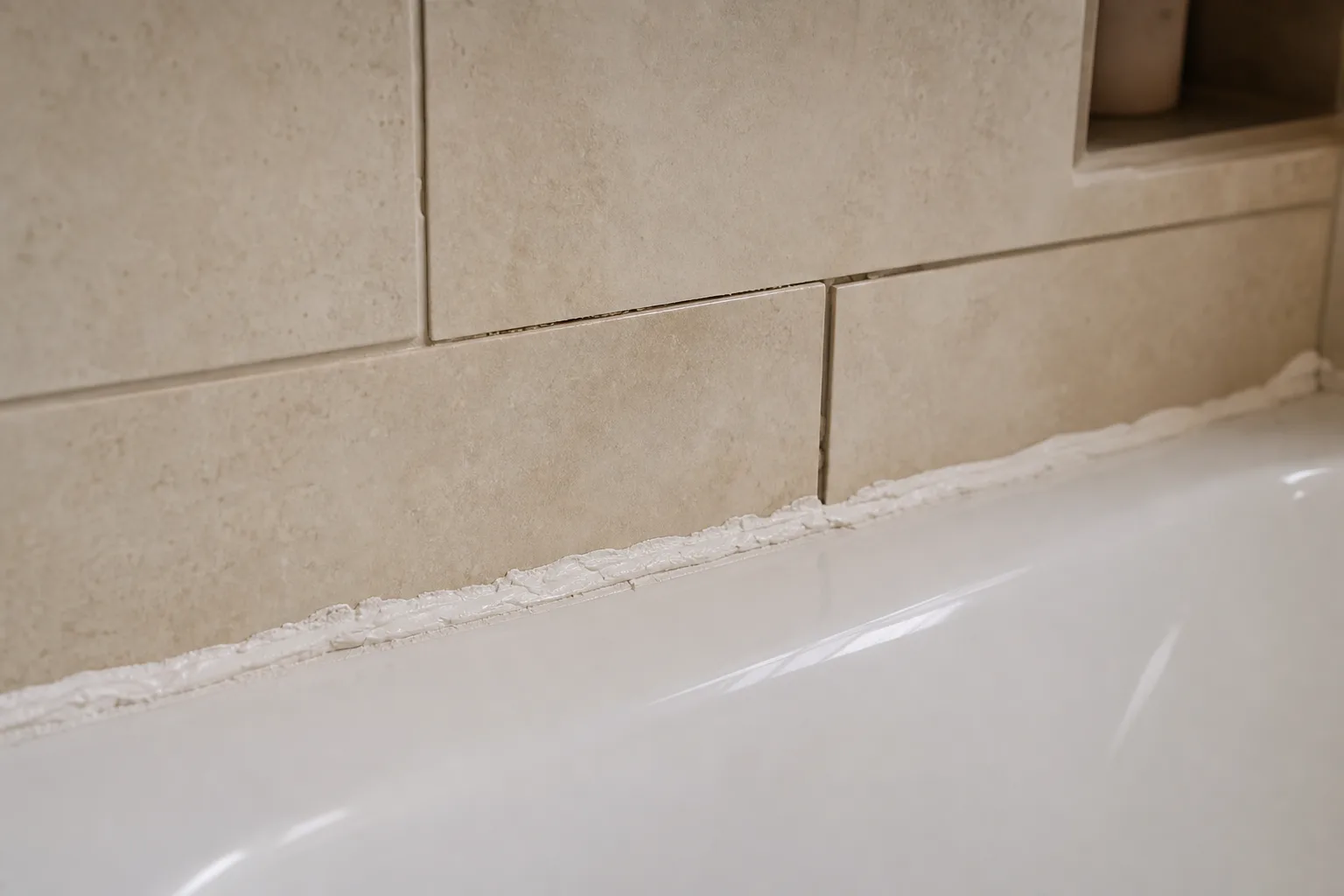
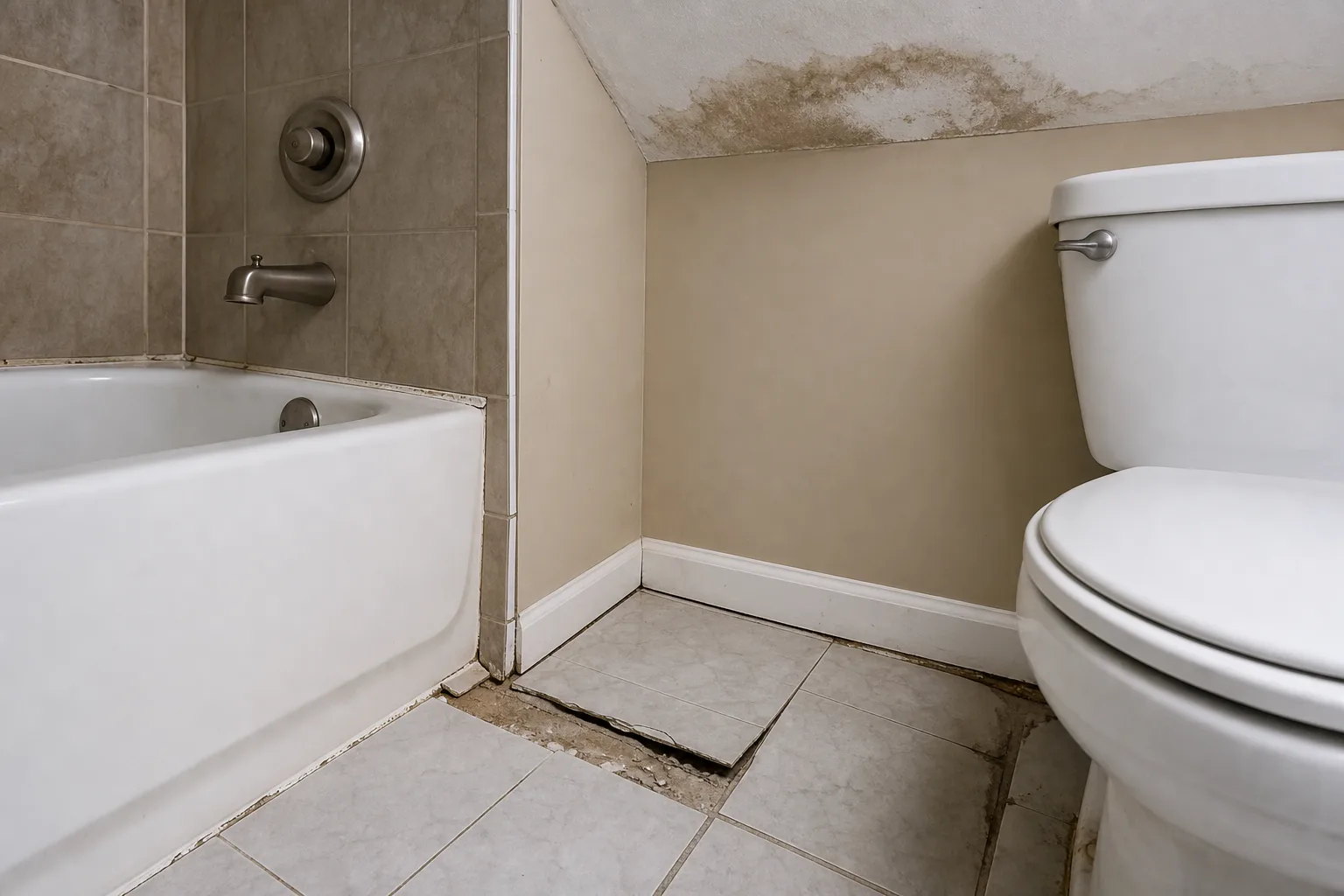
A typical hot shower releases two to three liters of water vapor into a small room. Without extraction, indoor humidity can spike from forty percent to eighty-five percent during a single use. That moisture condenses on the coldest surfaces: the mirror, the tile, the window glass. It lingers in grout. It feeds mold in corners. The room feels wet, which reads as cold, regardless of air temperature.
The Home Ventilating Institute certifies exhaust fans for airflow and sone ratings. ASHRAE Standard 62.2 requires a minimum of fifty CFM intermittent or twenty CFM continuous ventilation for bathrooms. In practice, many bathrooms need more than code minimum because the code assumes a fan that runs long enough after use. A fan that is too small or turned off too soon leaves moisture behind.
The specification should include fan capacity sized to the room, ducting that vents to the exterior (not into an attic or soffit), and a control that runs the fan for fifteen to thirty minutes after shower use. Humidity-sensing switches help because they remove the dependency on human memory.
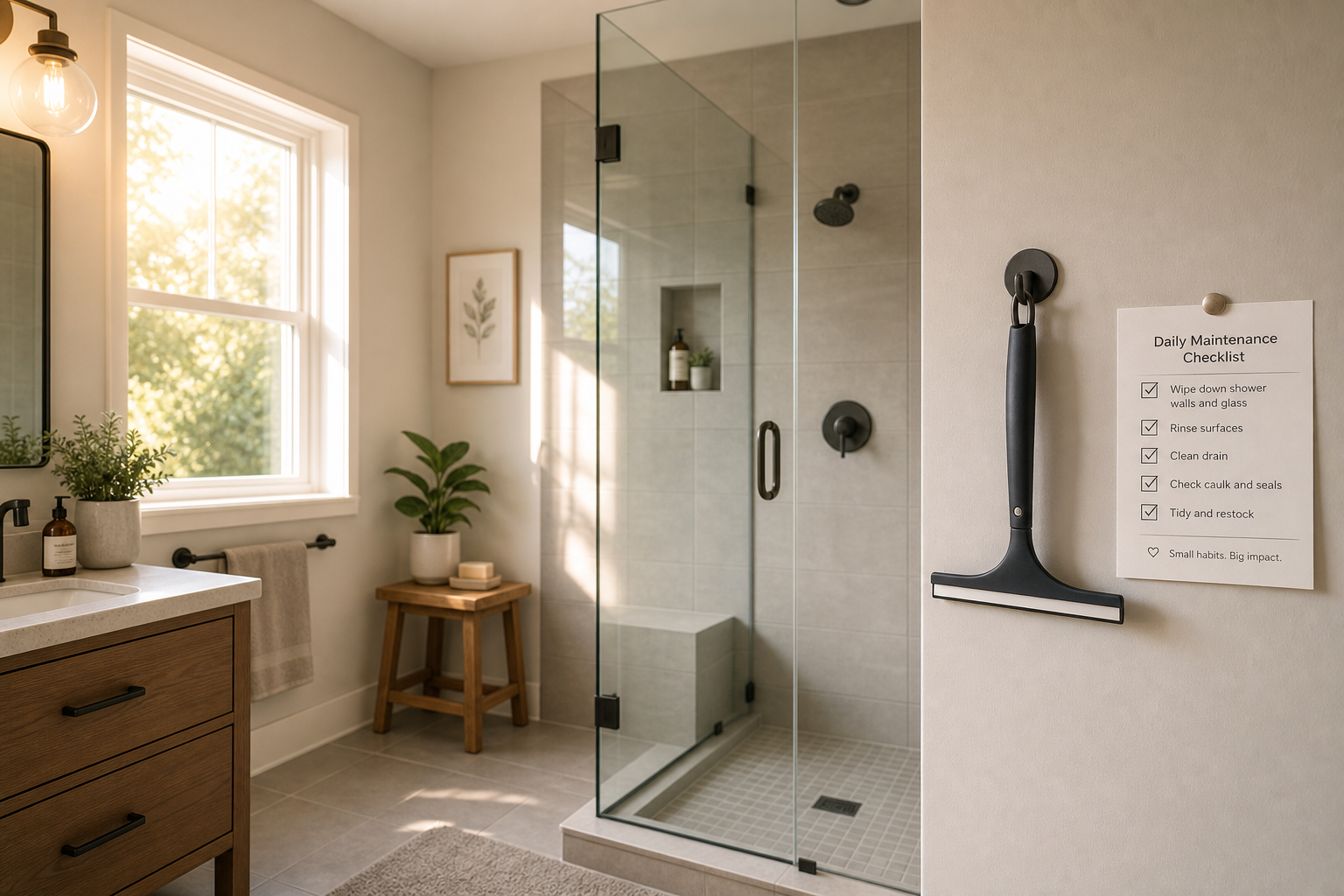
A dry room dries faster between uses. A dry mirror does not require wiping before the morning routine. Dry tile does not feel slick underfoot. Dry air holds heat more comfortably than saturated air. Ventilation is a warmth strategy disguised as a building code requirement.
Proportion and Enclosure Matter
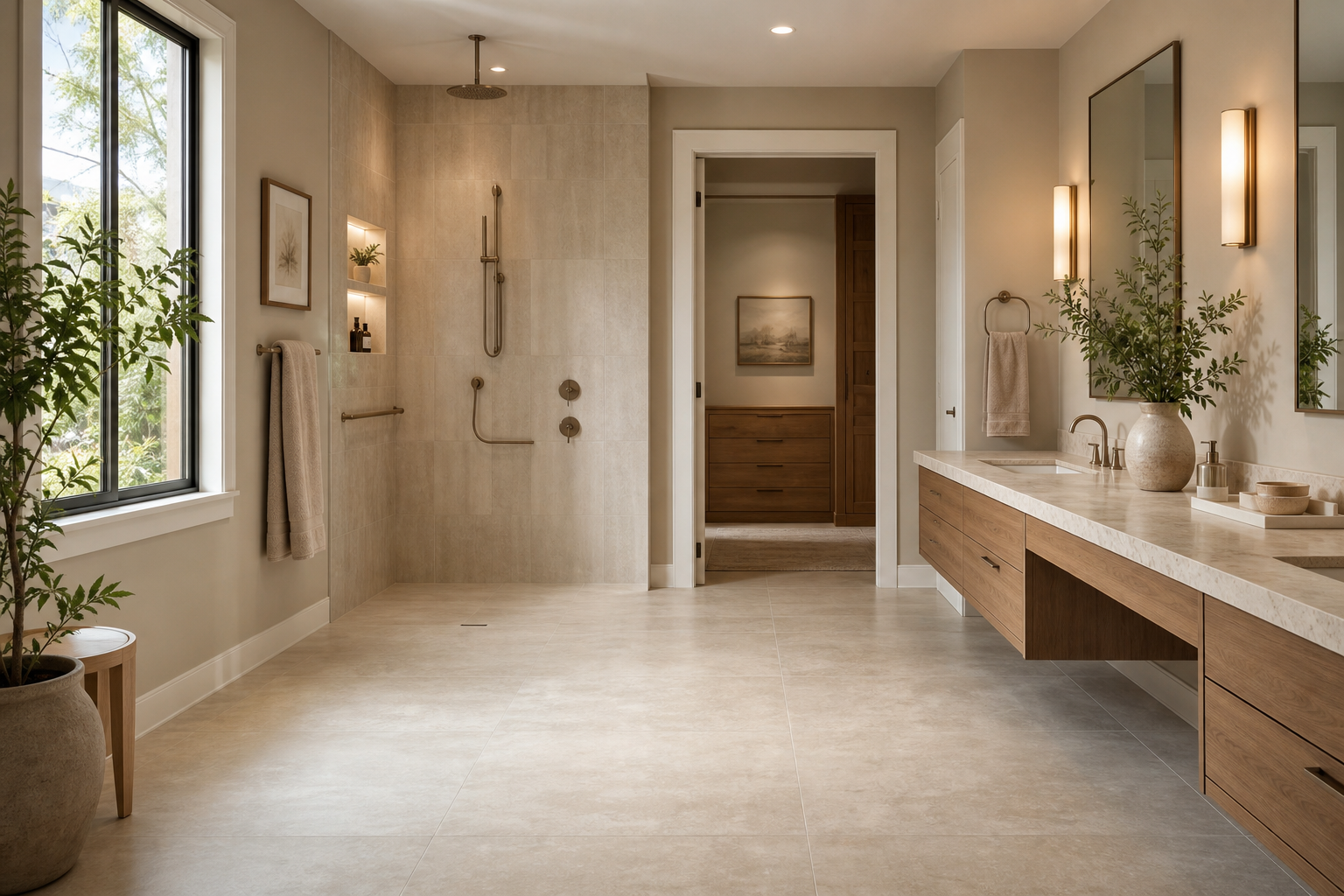
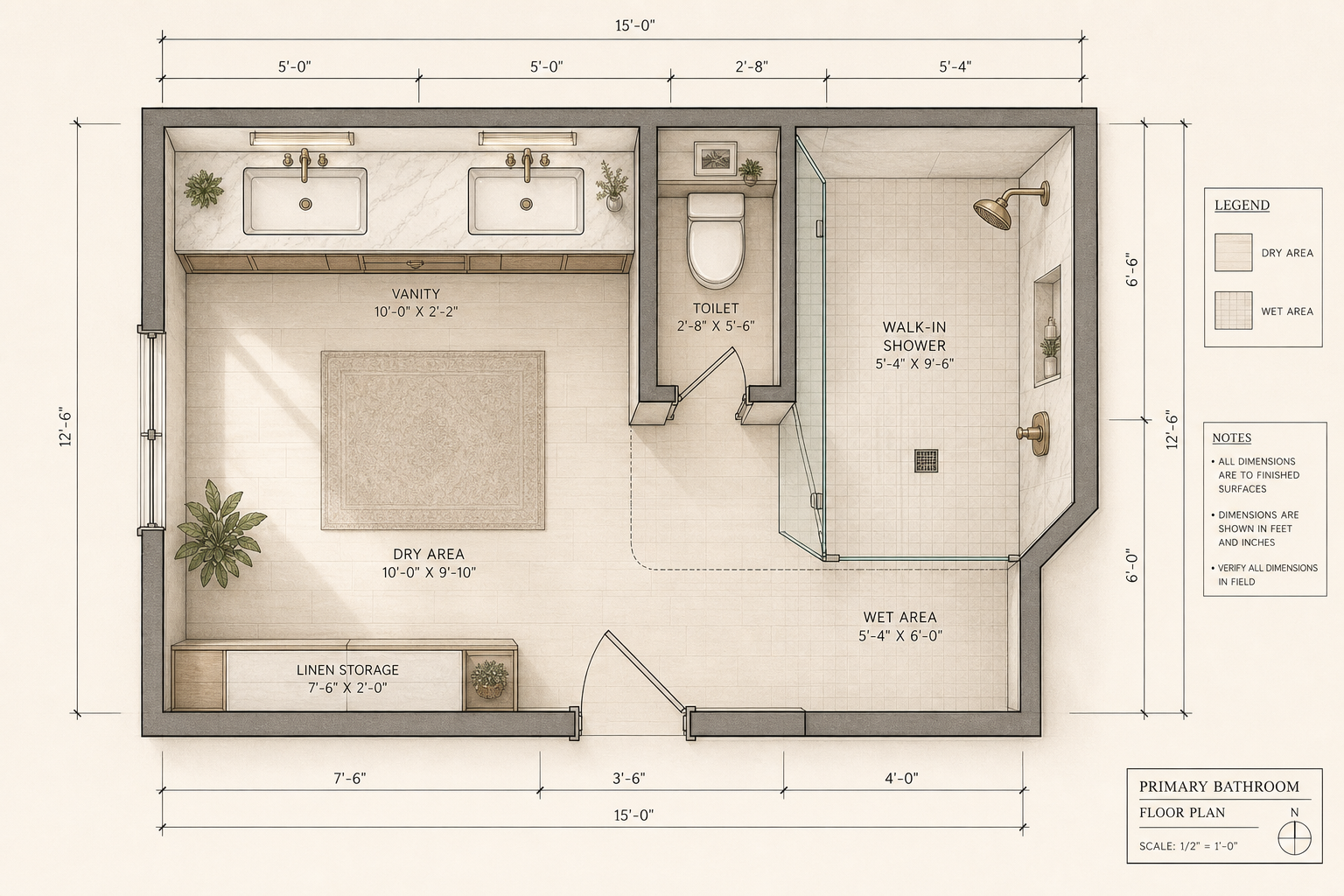
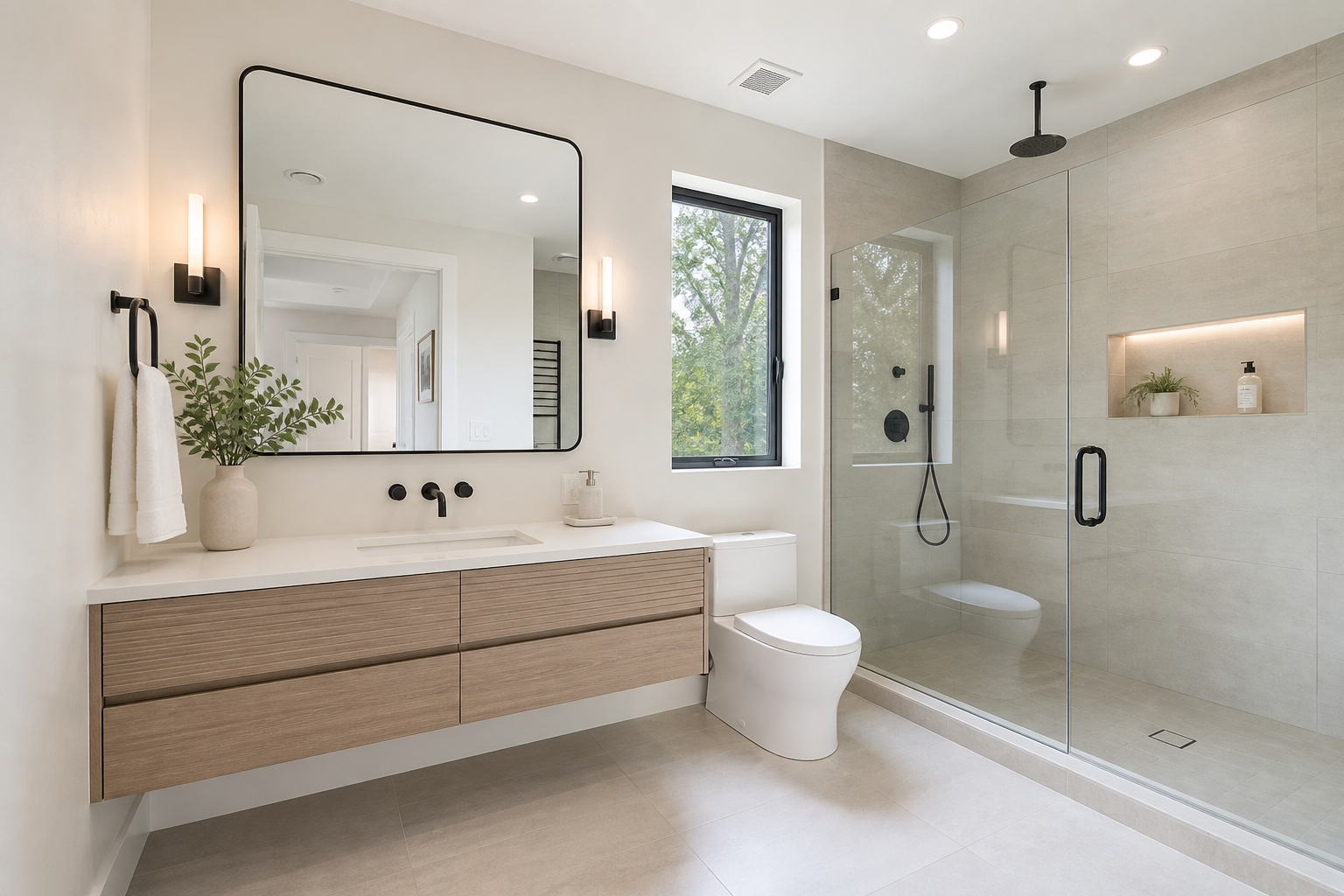
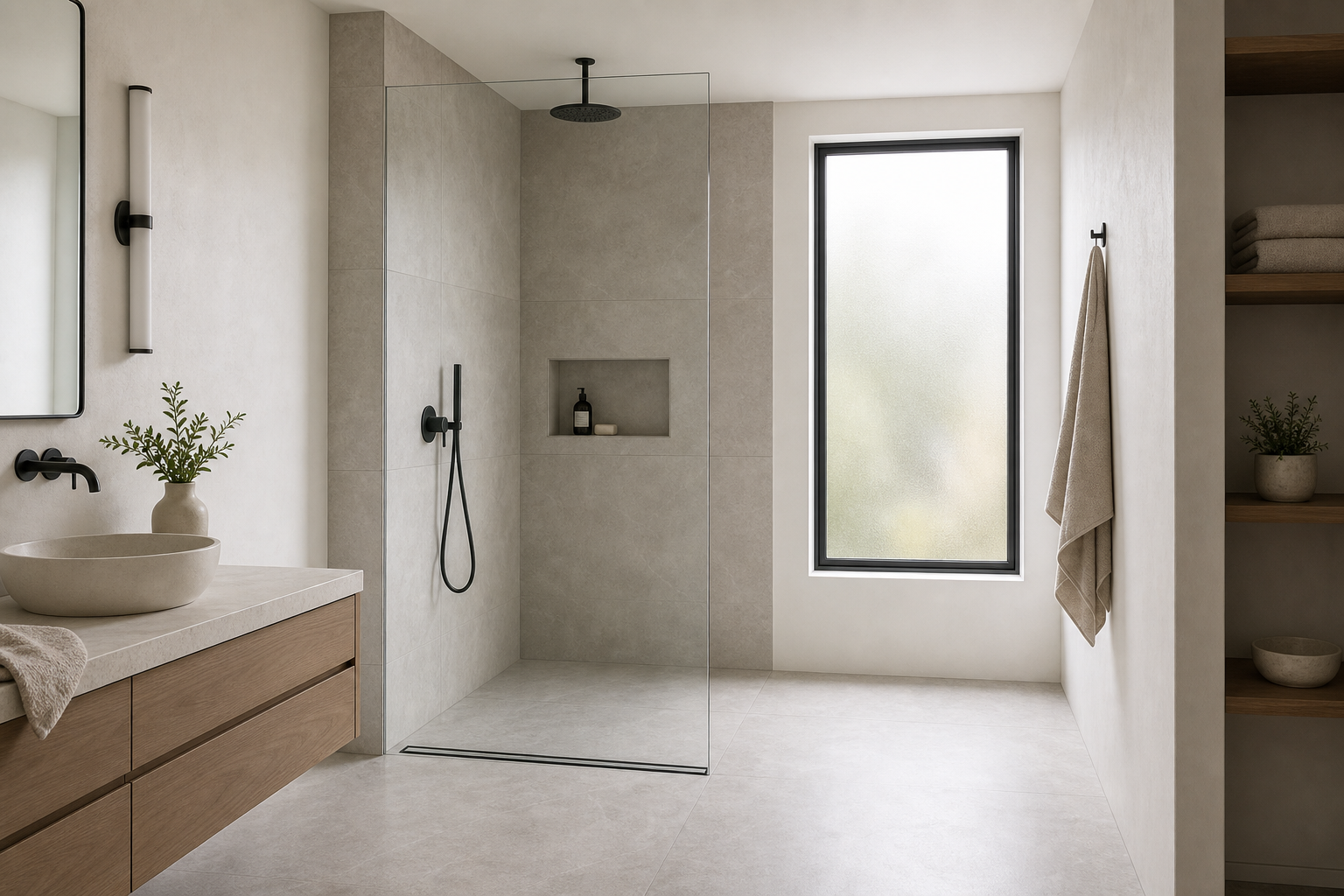
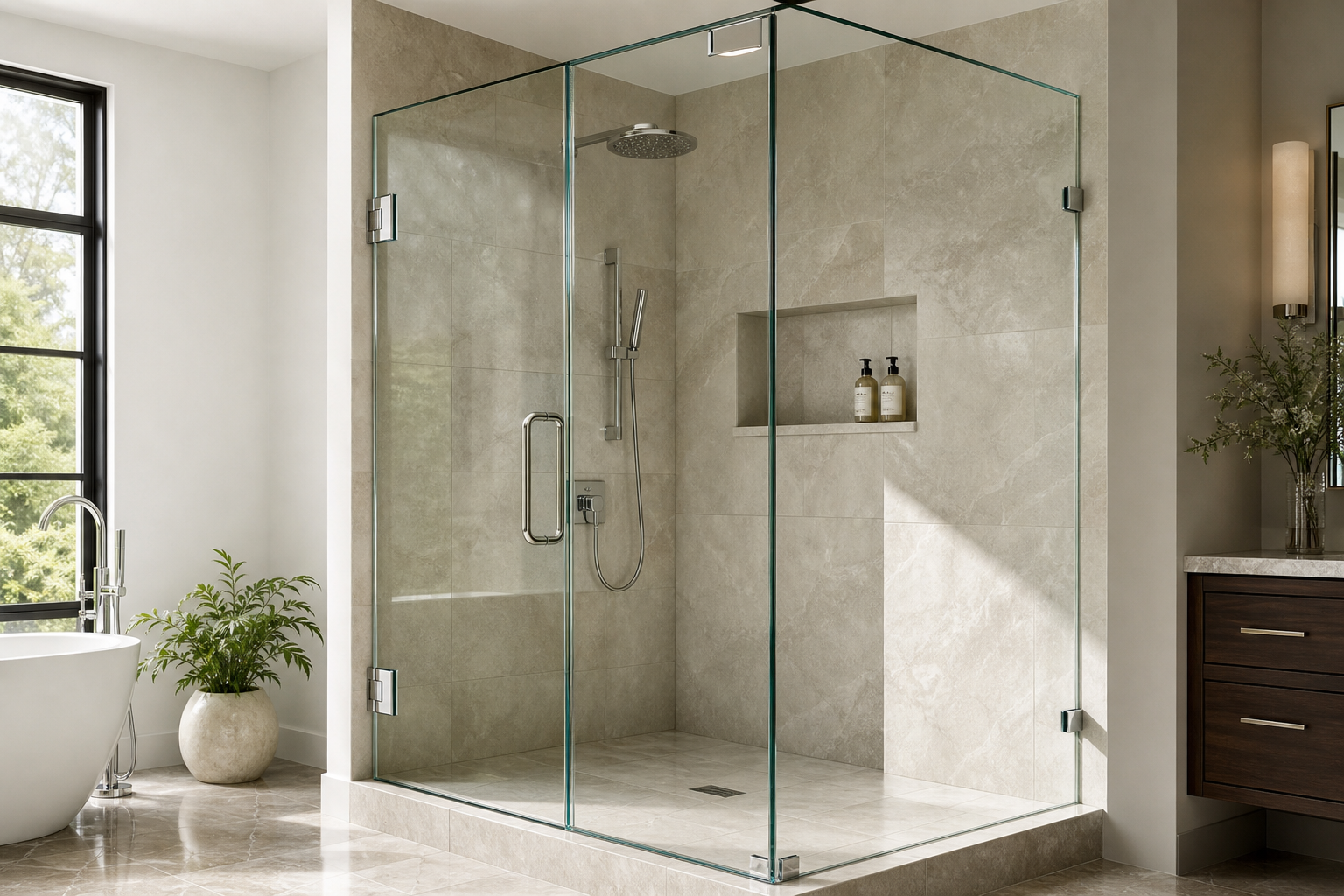
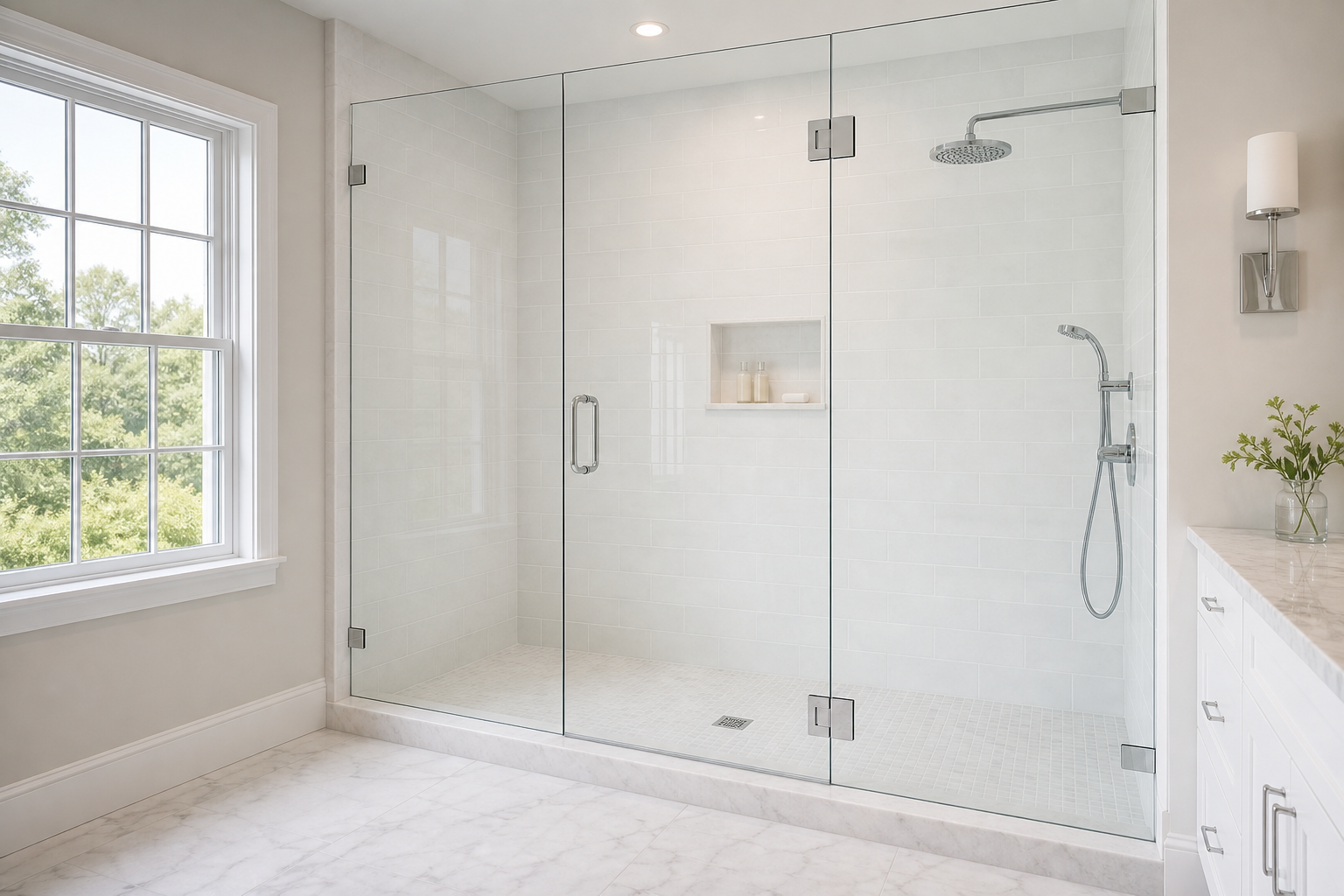
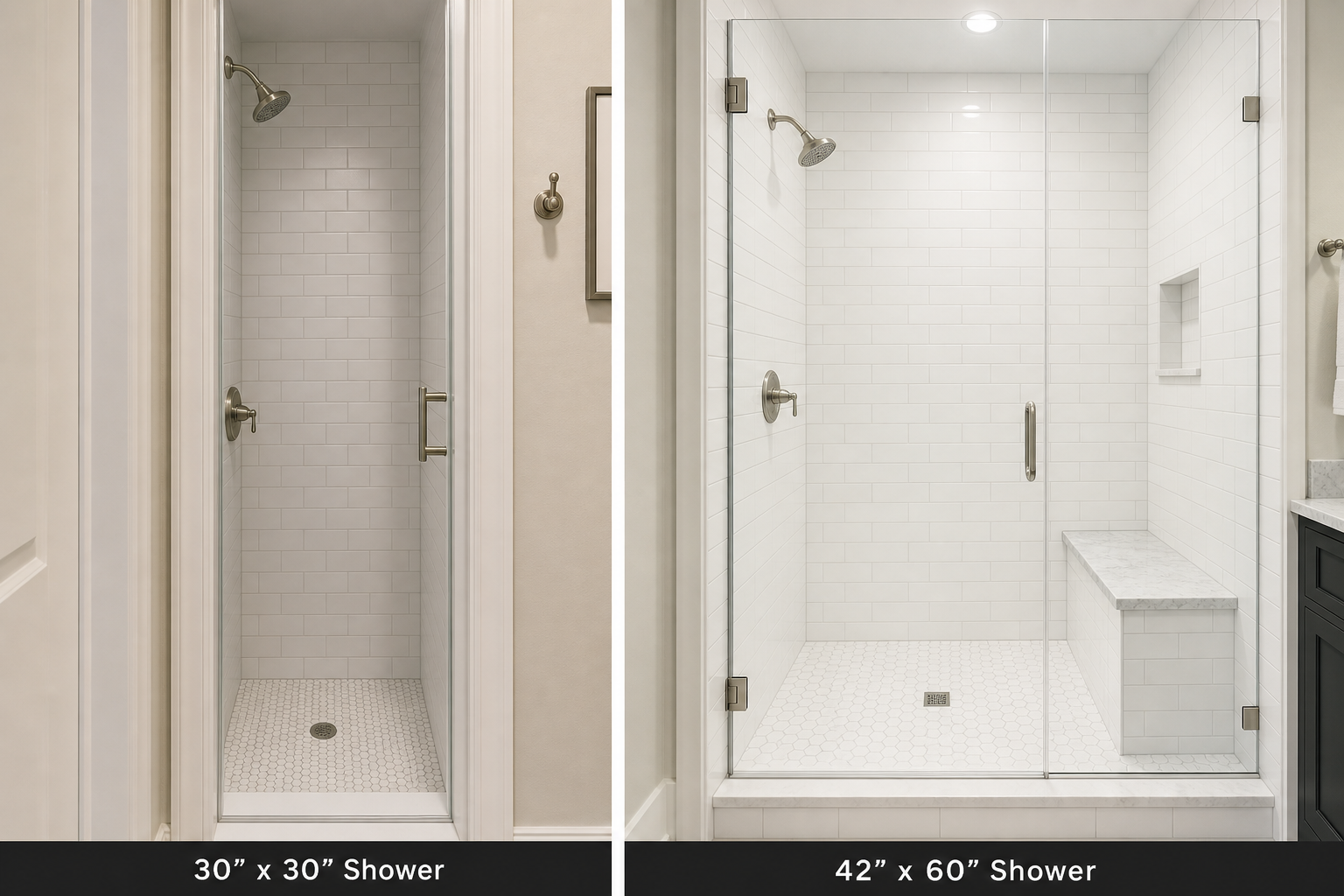
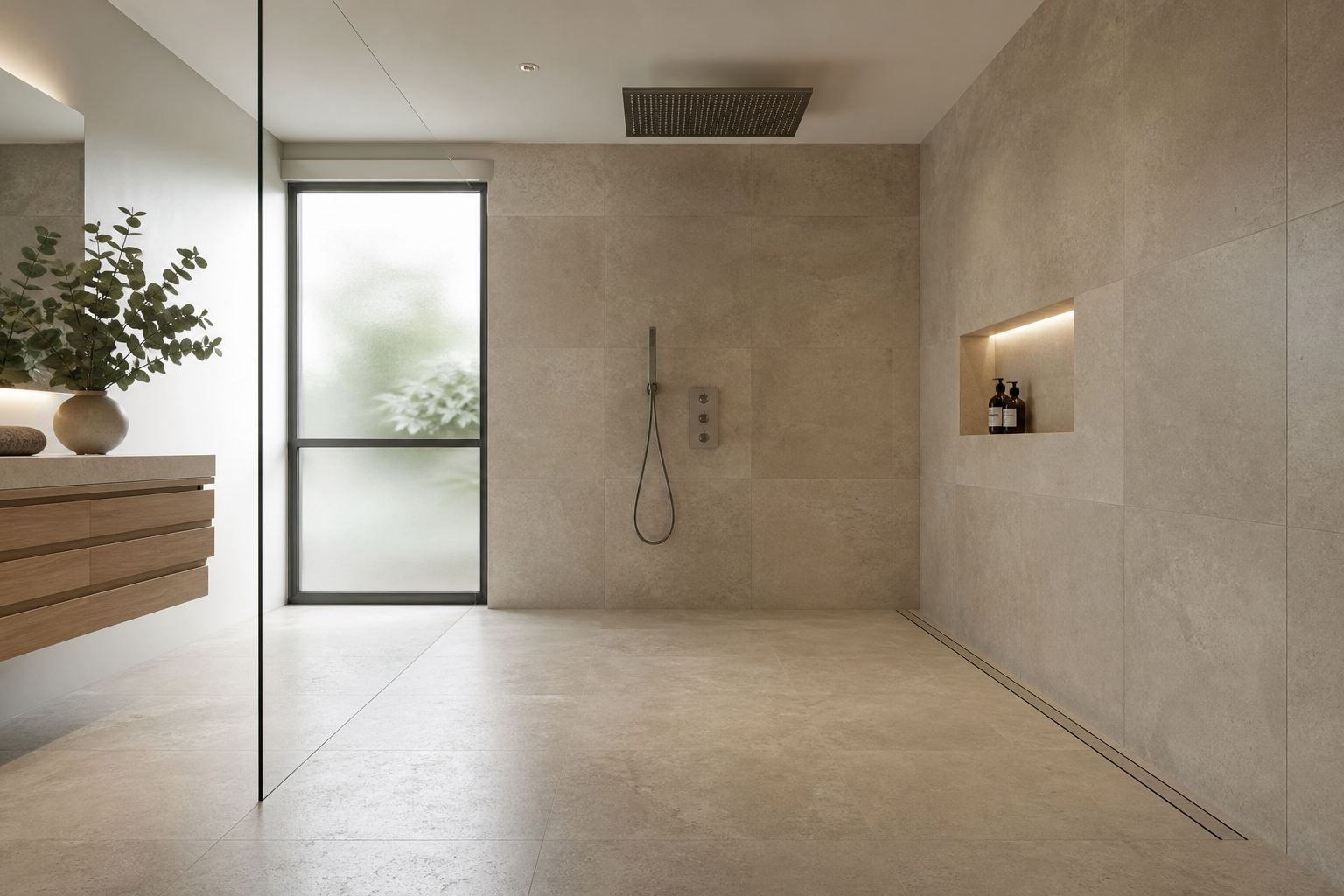
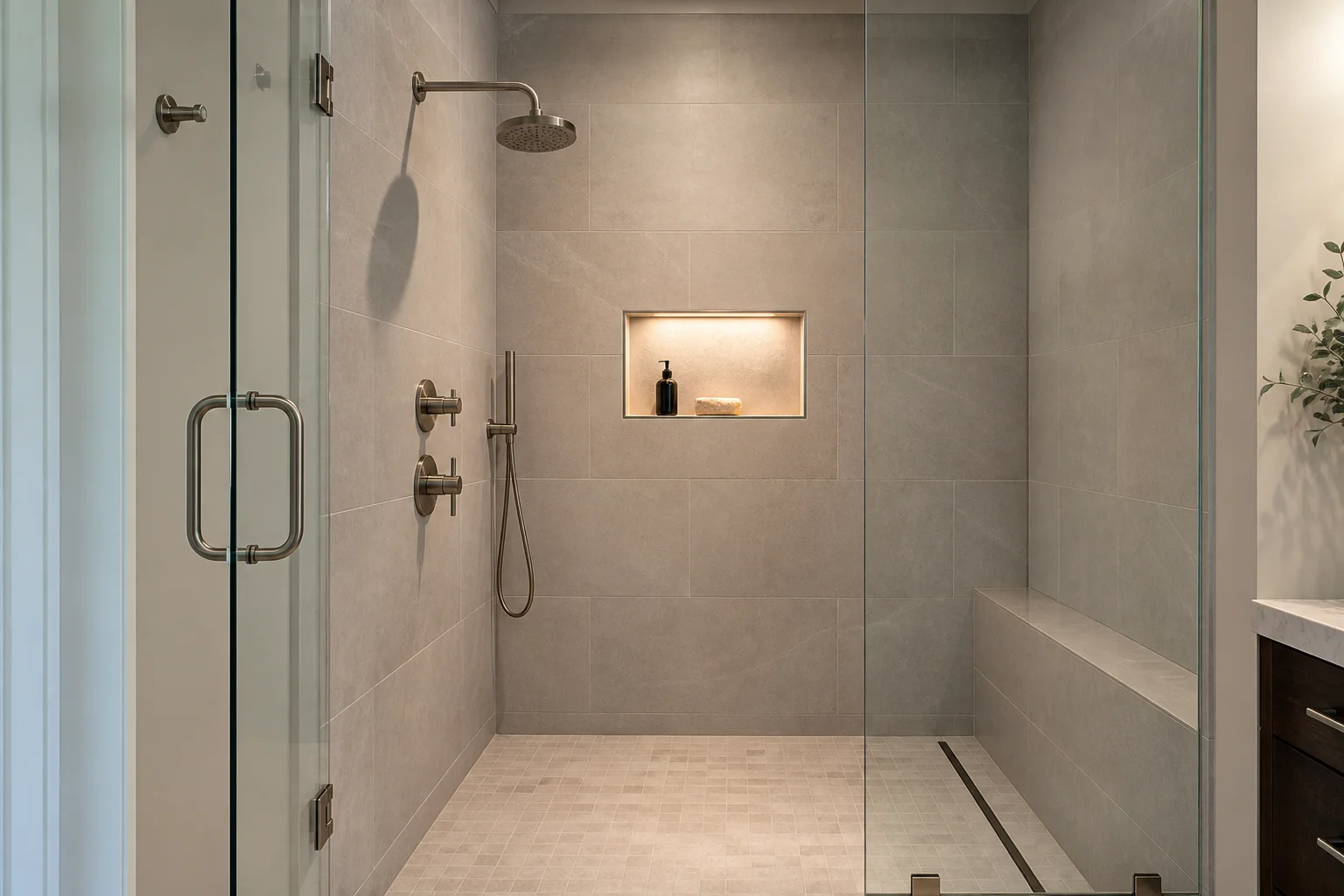
Large, open, all-glass showers look impressive in photographs. In February they also expose the bather to more cold surface area and more air volume to heat. A shower that is appropriately sized, partially enclosed, and fitted with a properly sealed door retains warmth during use better than an open wet room in a cold climate.
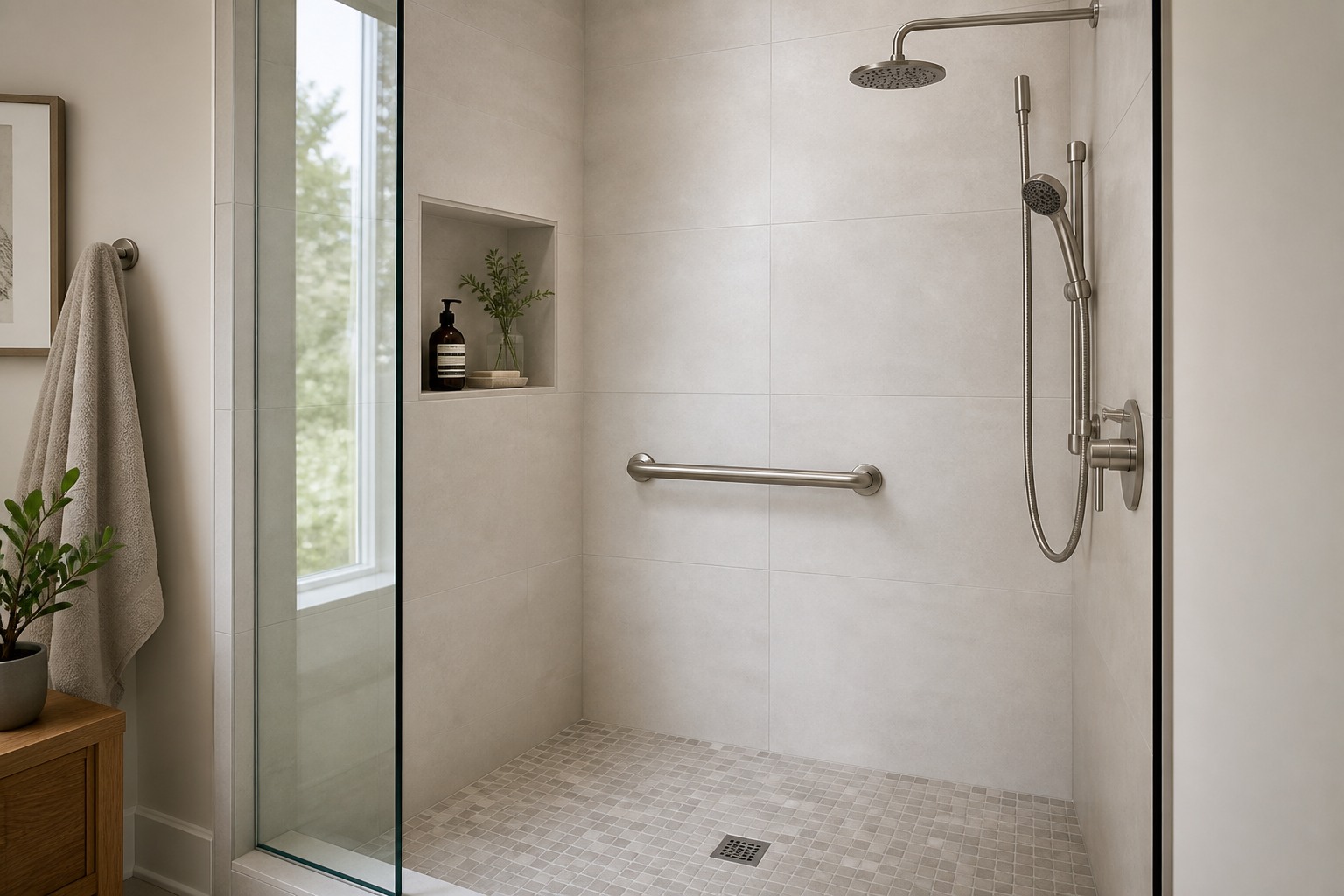
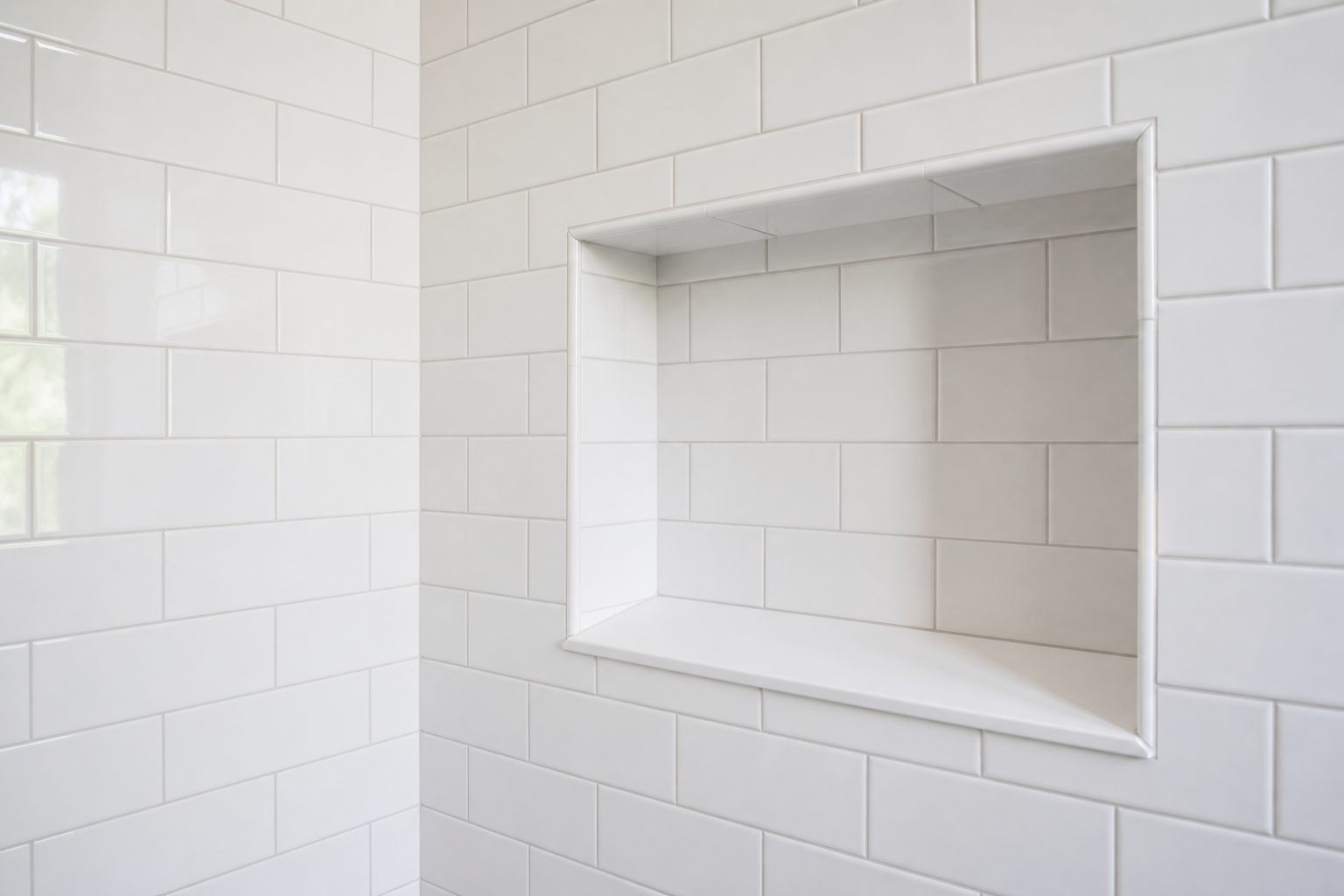
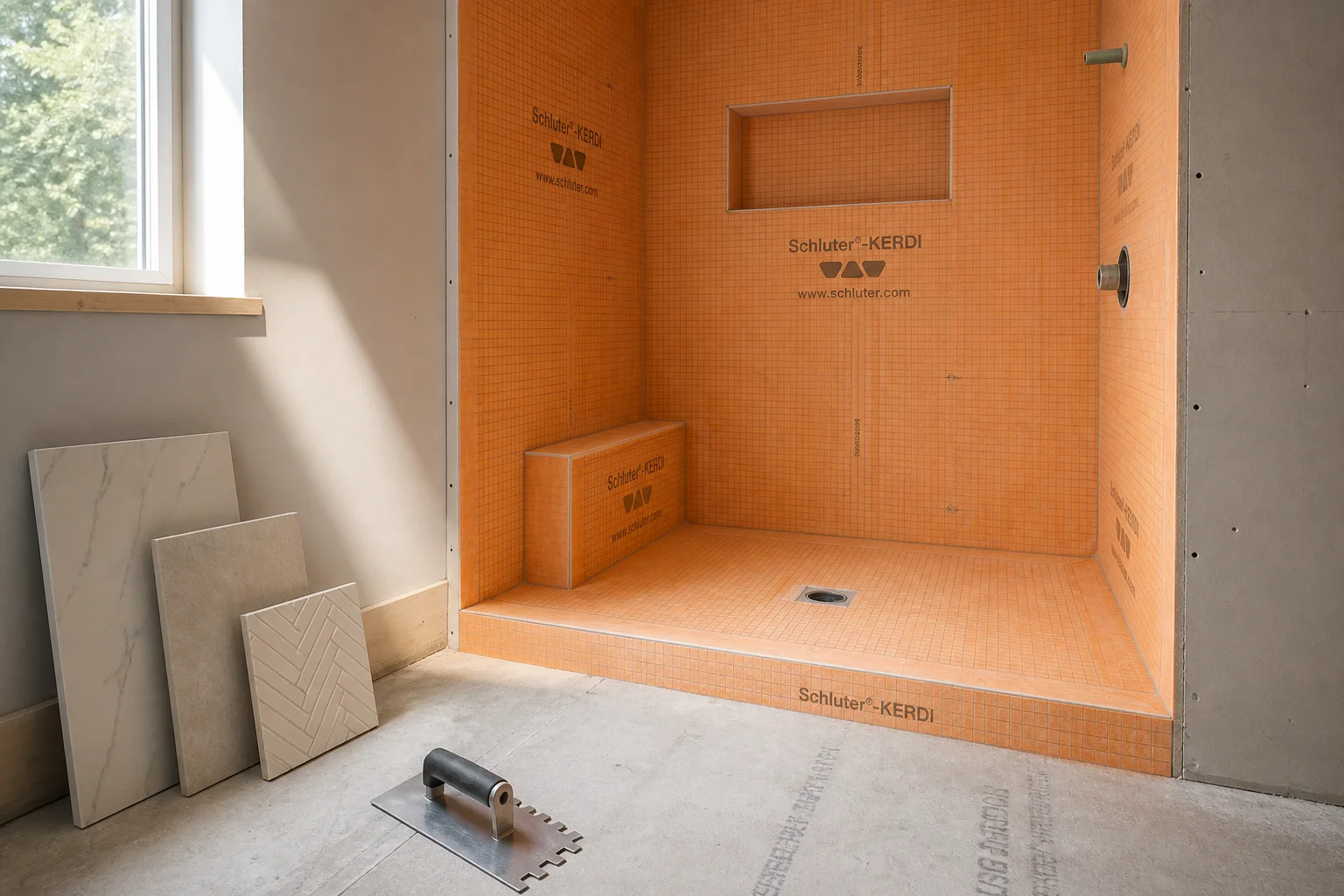
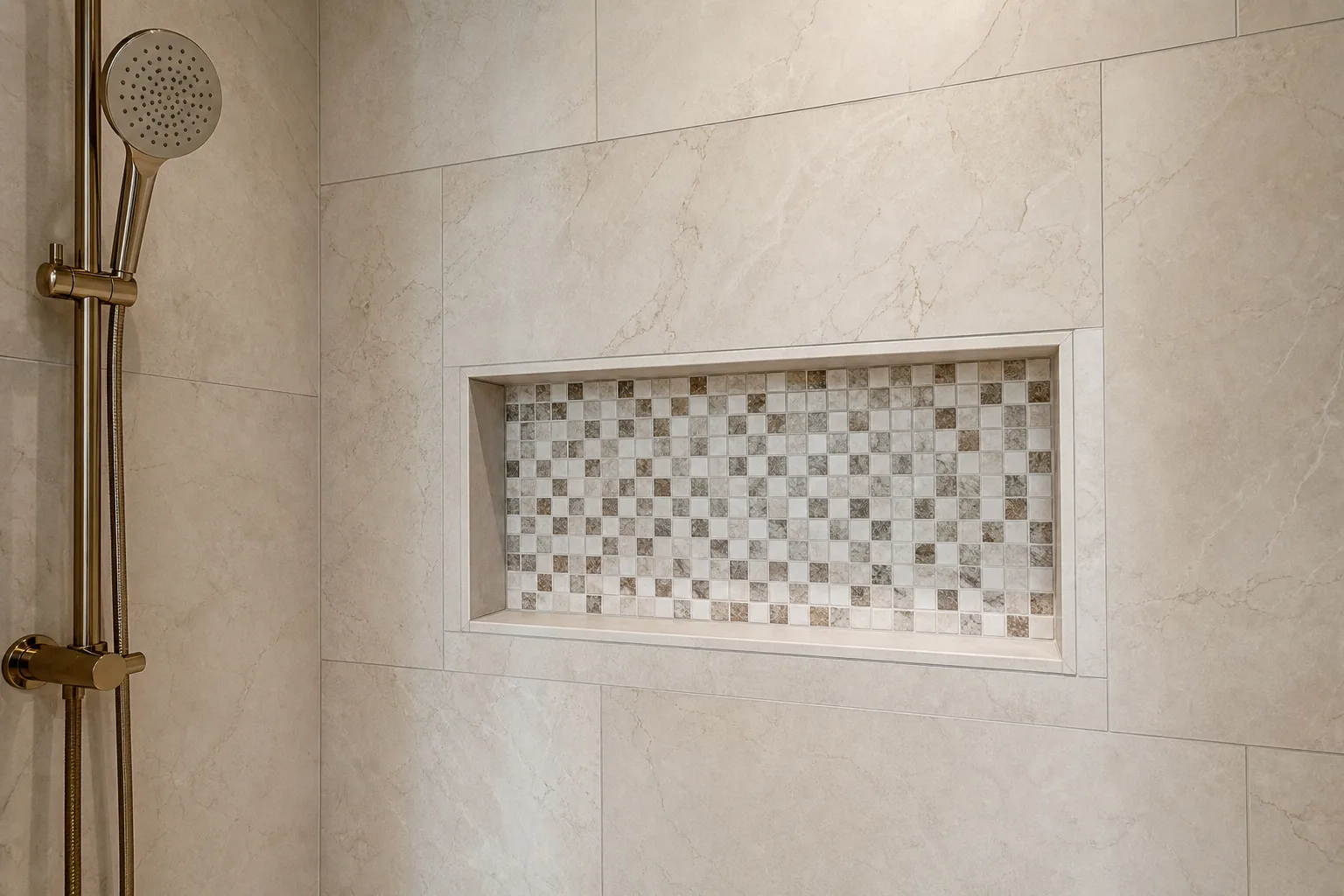
This is not an argument against curbless showers or glass enclosures. It is an argument for sizing and detailing them with thermal comfort in mind. A bench in the shower reduces the body's exposure. A showerhead that heats quickly matters. A door that seals at the bottom prevents cold air from sliding in at the floor level. Niches and controls placed to minimize standing time with water off all contribute to a shower that feels warm while in use.
Ceiling height plays a role. A tall ceiling in a small bathroom holds a larger volume of air above the bather. Warm air rises. The person standing at the floor level is in the coldest zone. Lower ceilings, or heated ceiling panels in high-ceiling rooms, address the stratification problem. Most residential bathrooms do not need heated ceilings. They do need realistic assessment of whether the volume of the room matches the heating strategy.
The February Morning Test
Before approving a bathroom design for a Pacific Northwest home, walk through this sequence mentally:
You wake at six-thirty. It is dark. Rain on the window. You walk barefoot across the floor. Is the surface warm or cold? You turn on the light. Is it amber or blue? You start the shower. Does the fan run automatically? You finish. Does the mirror clear within ten minutes, or does it stay fogged? You leave. Does the room feel dry an hour later, or damp?
Every answer is a specification decision made weeks earlier: floor heat, color temperature, fan CFM, duct path, tile finish, shower enclosure detail. None of them appear on a mood board. All of them determine whether February is something the bathroom survives or something it makes harder.
The bathrooms that feel best in this climate are not the most expensive. They are the most considered. They treat warmth as a system: contact warmth at the floor, visual warmth in light and material, physical warmth in air temperature, and perceptual warmth in dryness. Heating contractors handle one layer. Designers and homeowners who understand the rest build rooms that feel right when the gray months arrive and stay right when they leave.