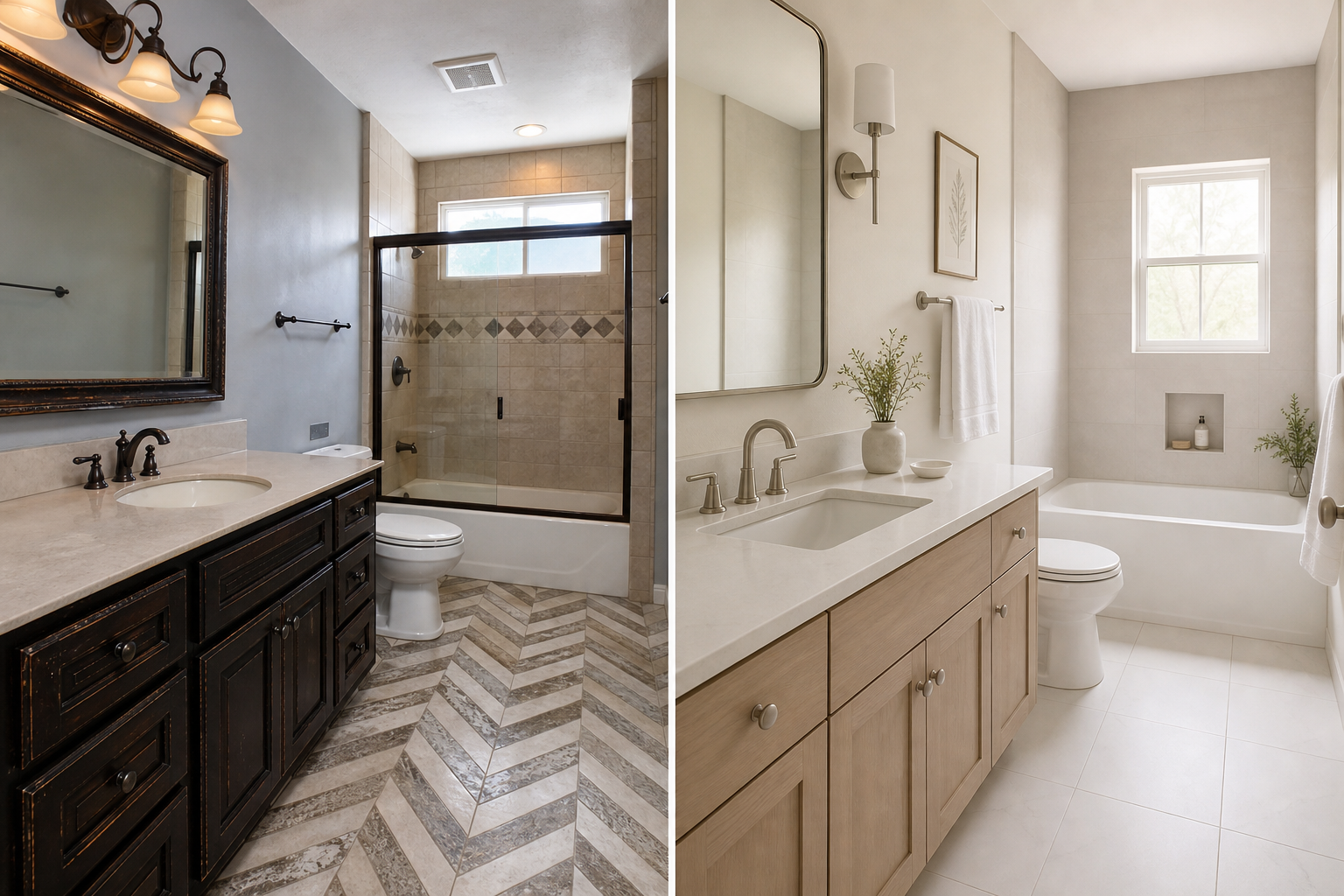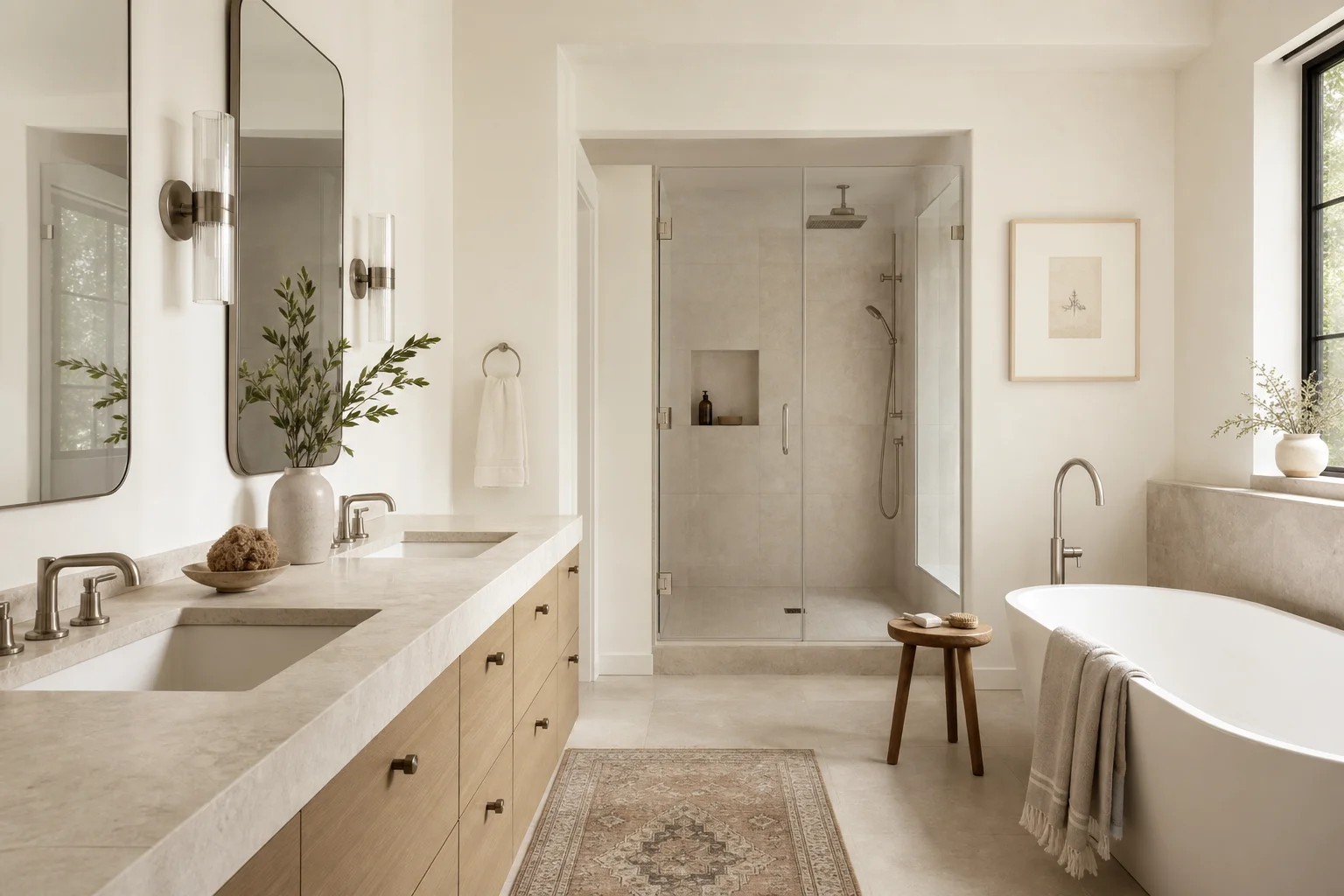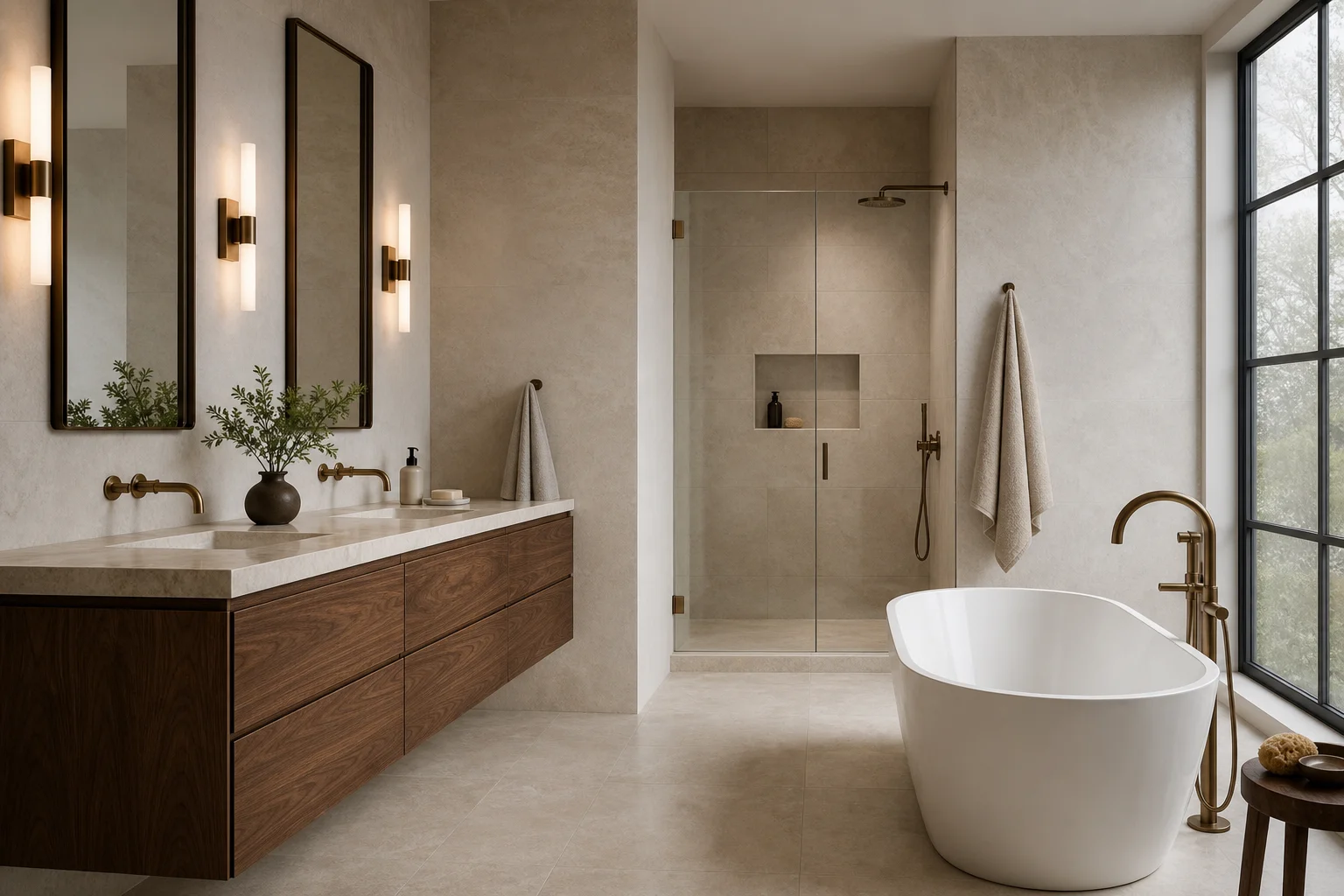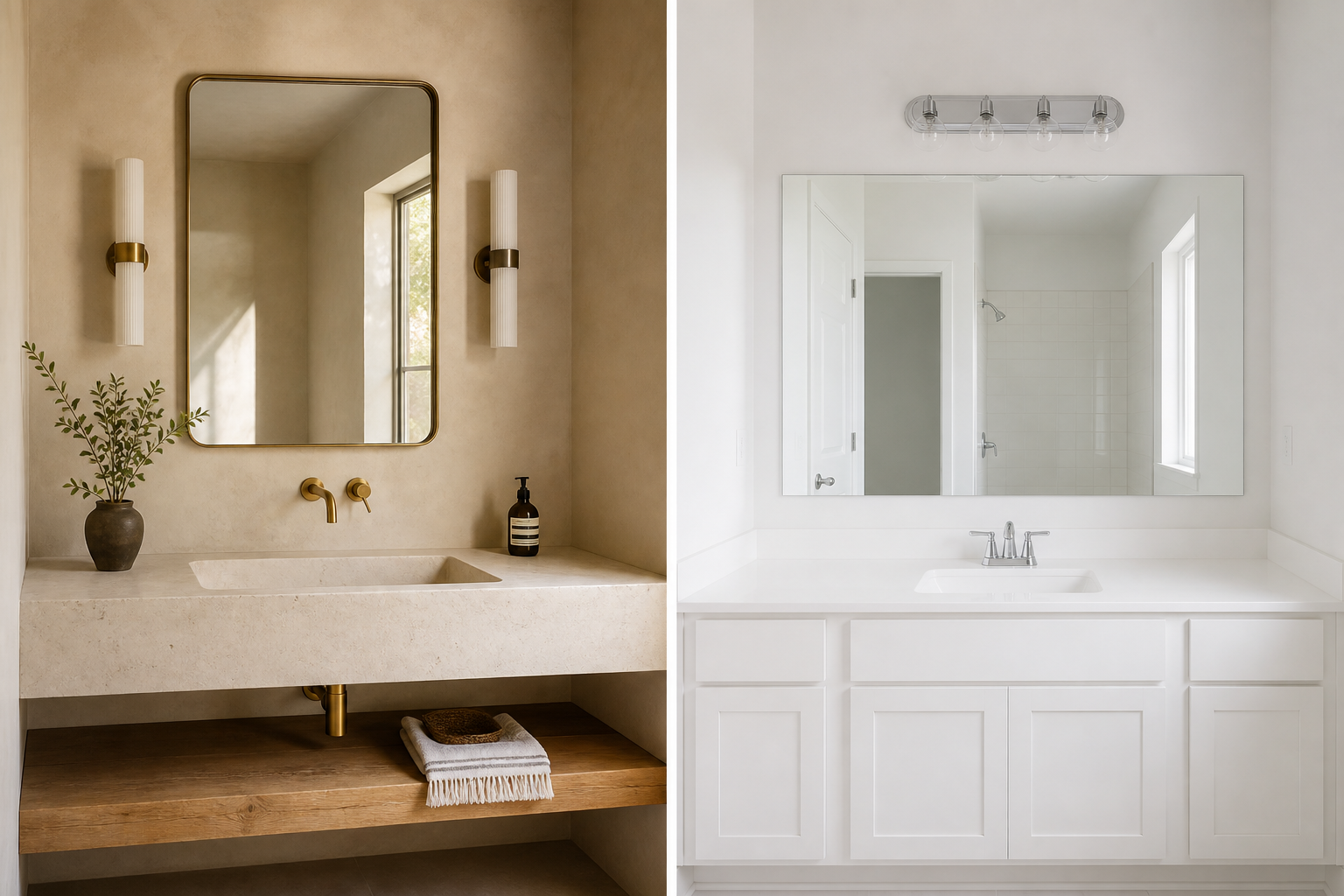
"Timeless" is a word with two very different things living inside it. One version describes a room built on proportion, material honesty, and restraint; designed for a specific household rather than for an imagined future buyer. That version is genuinely timeless because it was never trying to appeal to everyone. The other version describes a room built from caution: beige, safe, hotel-lobby neutral, with none of the household in it. That version does not age. It just never arrives.
The distinction matters because the two versions look similar in a contractor's quote and similar in a before photo. They do not look similar in year ten, or year twenty, or the morning you wake up and realize the room you spent twenty thousand dollars on feels like a rental.
The Word Has Been Colonized
"Timeless" entered the design vocabulary as a genuine idea. It named something real: rooms that outlast their moment because they were built on principles that do not depend on trends. Classical proportion. Material integrity. Scale appropriate to the human body. The quality of light. These things aged well in a Georgian townhouse and they age well now because they are calibrated to something that does not change: how bodies move through space, how light feels on stone at 7 a.m., what it means for a ceiling height to make you stand up straighter.
Then the word got borrowed. Real estate agents used it to describe subway tile. Builders used it to describe white shaker cabinets. Marketing departments used it to describe anything that did not look obviously dated in a product photograph. The meaning inverted. "Timeless" stopped meaning "built to last through time" and started meaning "unlikely to offend anyone right now."
The two ideas are not the same. One is an ambition. The other is a defense strategy.
What Restraint Actually Is
Design restraint is a decision to edit. It is the active removal of things that do not serve the room's purpose: the extra hardware profile, the third tile material, the accent wall that competes with the window. Restraint is not the same as emptiness. It is not minimalism in a strict sense. A room can be layered, warm, and full of material interest and still be restrained, as long as each element earned its place and the ones that did not were removed.
The furniture designer Kaare Klint, working in the 1930s, described his process as studying how people actually used objects and then removing everything the object did not need to do its job. His work aged because the decisions behind it were specific and grounded, not because he chose neutral colors or avoided commitment. The specificity is exactly why it lasted.
This matters because restraint is sometimes confused with safety. They are almost opposites. Safety avoids commitment. Restraint commits and then edits. A safe room has nothing strong enough to argue with. A restrained room has positions: a material, a proportion, a finish. It has simply removed the noise around those positions so they can be seen clearly.
The distinction shows up in bathrooms immediately. A safe bathroom is all-white, chrome hardware, standard-depth vanity, flush ceiling light. Nothing is wrong. Nothing is right. It could be in a hospital, a mid-range hotel, or a spec house. It photographs well. It does not feel like anything in particular to stand in.
A restrained bathroom has a position. Perhaps the vanity is a single slab of honed limestone with no seam. The faucet is unlacquered brass, which will age as unlacquered brass does: not shiny, not precious, but deepening and becoming itself over years. The tile is a single format, laid in an honest running bond without decorative insets, and the grout color was chosen to make the field read as a surface rather than a grid. Every decision serves the same intent. The room is not complicated. But it is not empty. There is something in it that required someone to decide.
How a Safe Room Reveals Itself Over Time
The trouble with safety as a design strategy is that it does not produce durability. It produces a room that fails at a specific moment: when the materials age, or when the next round of builder-grade options comes out looking slightly newer, or when you finally notice that the room has never felt like yours.
Generic rooms age into obsolescence. The all-white subway tile bathroom of 2014 is already showing its date. Not because white tile is bad, but because the particular configuration (the pattern, the grout line, the chrome fixtures, the floating frameless mirror) was assembled from a trend palette rather than from proportional reasoning. It read as "timeless" in the moment. It reads as "2014" now.
A room built from specific, grounded decisions ages differently. The aged-brass faucet that has developed a patina over eight years does not look dated; it looks like it has been somewhere and done something. The honed stone vanity top that has picked up a few mineral rings and one thin scratch looks inhabited. The tile that was chosen because its dimensions and texture worked with the room's proportions still works, because proportions do not expire.
This is the mechanism behind genuine longevity. It is not about avoiding trend. It is about building on things that do not move: the relationship between a ceiling height and a vanity height and a mirror height, the way a matte surface reads differently than a glossy one in morning versus evening light, the way a material that weathers honestly tells a story while a material that shows every mark tells only a complaint.
Specificity Is Not Risk. Genericness Is.
There is a common belief among homeowners planning a renovation that personalization is risky. The logic goes: if you make choices that are specifically yours, future buyers might not share your taste, and the investment will not hold. Better to stay neutral. Better to keep it broadly appealing.
This logic is wrong in at least two ways.
First, "broadly appealing" is not a stable target. It moves every four or five years as the visual culture of renovation shifts. The subway tile that seemed safely neutral in 2012 required apologizing for by 2021. The gray laminate floor that read as contemporary in 2017 reads as dated now. Chasing broad appeal is chasing a moving horizon. You will not catch it.
Second, the rooms that hold their value best are not the most generic ones. They are the most resolved ones. A bathroom that has a clear point of view; one designed with attention to proportion and material quality, with human scale and evidence of real decisions; holds value because it registers as well-made. Buyers respond to well-made things even when they cannot articulate why. What they are responding to is the feeling of a room that was designed for someone's life rather than assembled to avoid argument.
The National Kitchen and Bath Association's 2026 design trend data describes exactly this shift: designers are increasingly focused on "how spaces support a homeowner's individual rituals, preferences and self-care routines" rather than generic resale positioning. The market is moving toward personal rooms. The risk calculus is changing.
But even setting aside resale, there is a more fundamental argument. You will live in this bathroom every morning. Not a future buyer. Not a real estate agent photographing it for a listing. You, at 6:30 a.m., in the light your bathroom gets at 6:30 a.m., with your height, your routine, your materials. A room built for your life will feel better in that moment, and in five hundred repetitions of that moment, than a room built to offend no one.
What Personal and Restrained Look Like Together
The framing that personal design is the opposite of restrained design is false. They work together. The most durable rooms are usually both: they reflect a specific household and they are edited ruthlessly.
A room built for a six-foot-two person who showers in the morning and works at home will have different proportions than a room built for a five-foot-four person who baths in the evening and has children. The ceiling height, the mirror placement, the type of lighting, the materials. These are not decorative choices. They are functional ones that happen to produce a space that feels specifically right to its occupant.
When those functional decisions are also edited with care; when the finish palette is controlled, when the materials speak to each other rather than past each other, when the hardware is a single family rather than a collection of near-misses. The result is a room that has personality and discipline at the same time. It is not austere. It is not sparse. It is specific.
This is the quality that aged-brass faucets and plaster walls and natural wood shelves are actually signaling when they appear in high-quality renovations. Not that those particular materials are inherently timeless. They are not. A plaster wall badly proportioned in a room that does not know what it is doing will not age any better than a tiled wall. What they signal is an intention: that someone looked at this room and made choices rather than avoided them.
The difference between a restrained personal room and a generic safe room is not difficult to see once you know what you are looking at. A generic safe room has nothing you would think to photograph except to document the square footage. A restrained personal room has a moment: a corner, a surface, a quality of light at a particular time of day. You notice it every time you are in it.
When we sit down with a client who says they want something "timeless," we have learned to ask a follow-up question: timeless because it reflects how you actually live, or timeless because you want to feel safe about the investment? The answer shapes everything. For clients who are genuinely uncertain about their own preferences, we start with the room's proportional logic before discussing any finishes. Ceiling height, vanity height, mirror placement, window relationship. Get the bones right, and a wide range of finishes will work. Panic about finishes before the bones are resolved, and no finish will save you.
The Case for Knowing What You Actually Want
All of this points to the same conclusion: the enemy of longevity is not specificity. It is ambivalence.
A room assembled from carefully curated generic choices is built from the question "what won't anyone object to?" That question produces a room that is, at best, inoffensive. It does not produce a room that is right. A room built from the question "what does this particular household actually need, and what is the most resolved way to deliver it?" can be both specific and enduring. The specificity is not in tension with the longevity. It is the source of it.
The historian and critic Ada Louise Huxtable spent fifty years writing about American architecture and design and returned repeatedly to the same observation: that the buildings which lasted were not the ones that tried hardest to appeal to everyone. They were the ones that had a clear idea of what they were for and executed that idea with discipline. The buildings that dated fastest were the ones that tried to read as contemporary to as many people as possible. Contemporary is the most perishable thing you can build.
Bathrooms are not buildings. But the principle is identical. A bathroom built on proportion, material integrity, and an honest understanding of who lives there and how they use it will feel more right in ten years than it did in year one. It will feel more right because the materials will have developed, the proportions will have proven themselves, and the room will carry evidence of the life that happened in it. A bathroom built from safety will feel less right in ten years, because nothing in it was ever right in a way that deepens. It was just not wrong.
That is the actual meaning of timeless, recovered from the word. Not: designed to offend no one. Not: assembled from the least controversial options available. But: built on things that do not expire. Proportion. Material honesty. The specific life of a specific household. Those things are still true in twenty years. The safest choices from last decade are already explaining themselves.