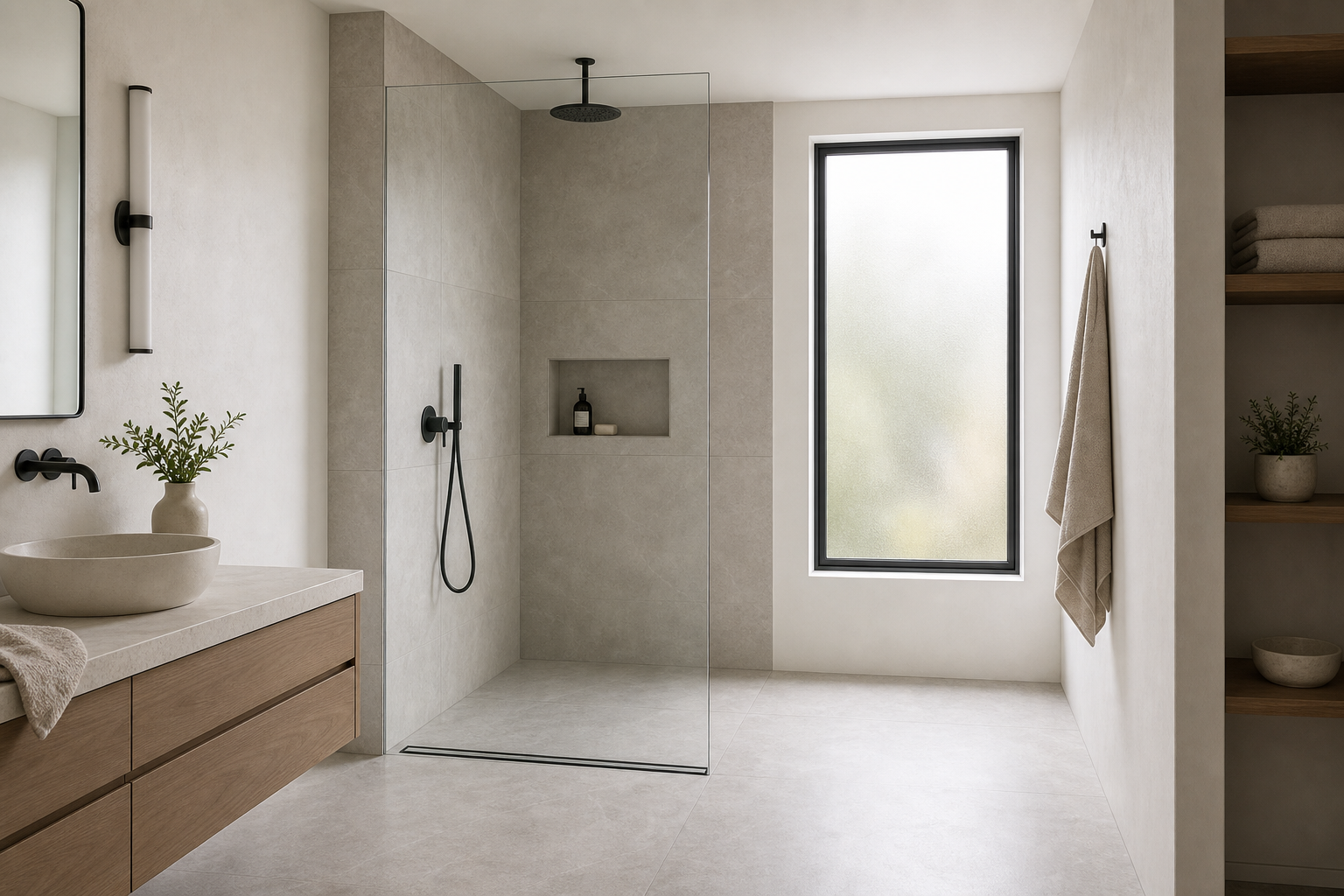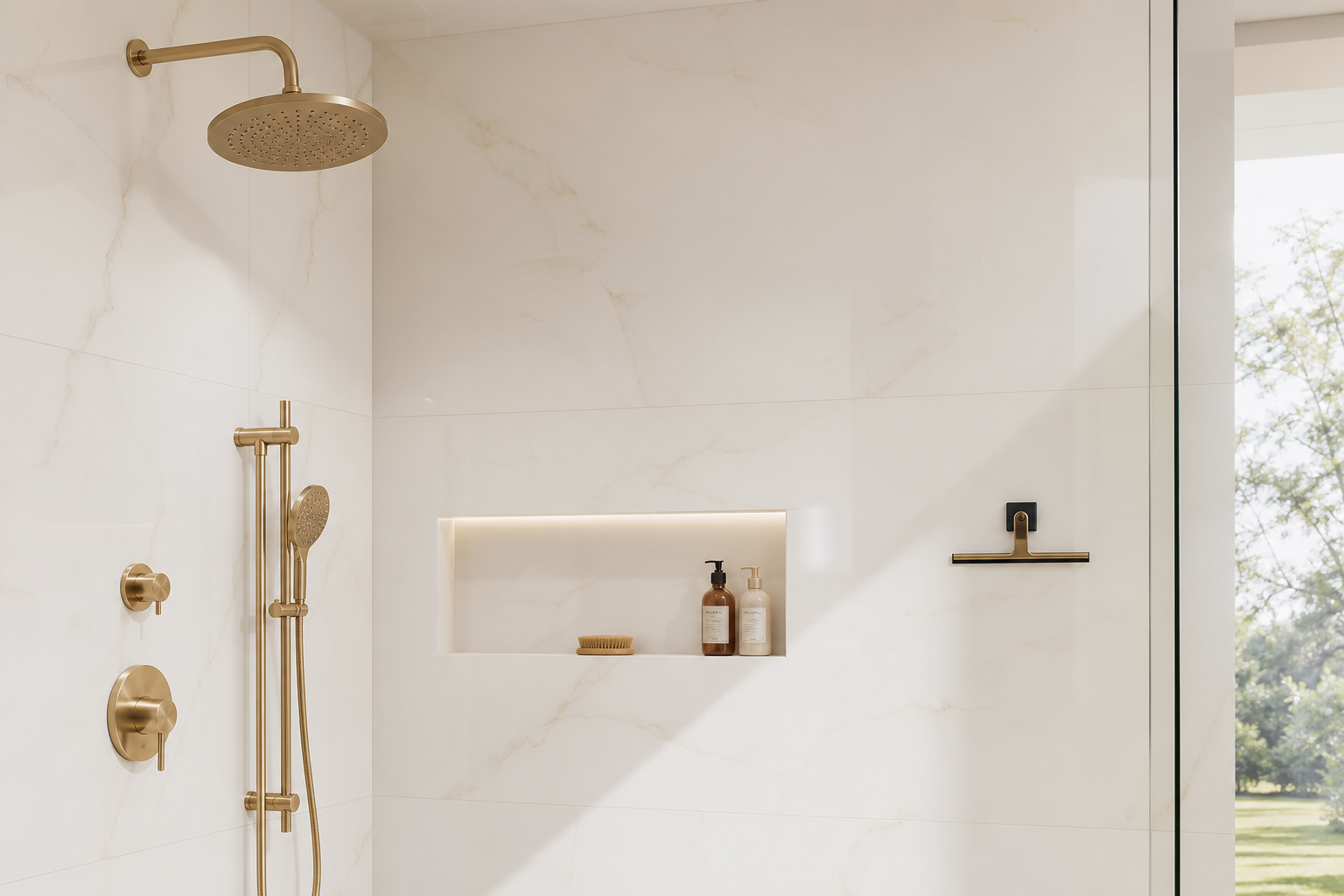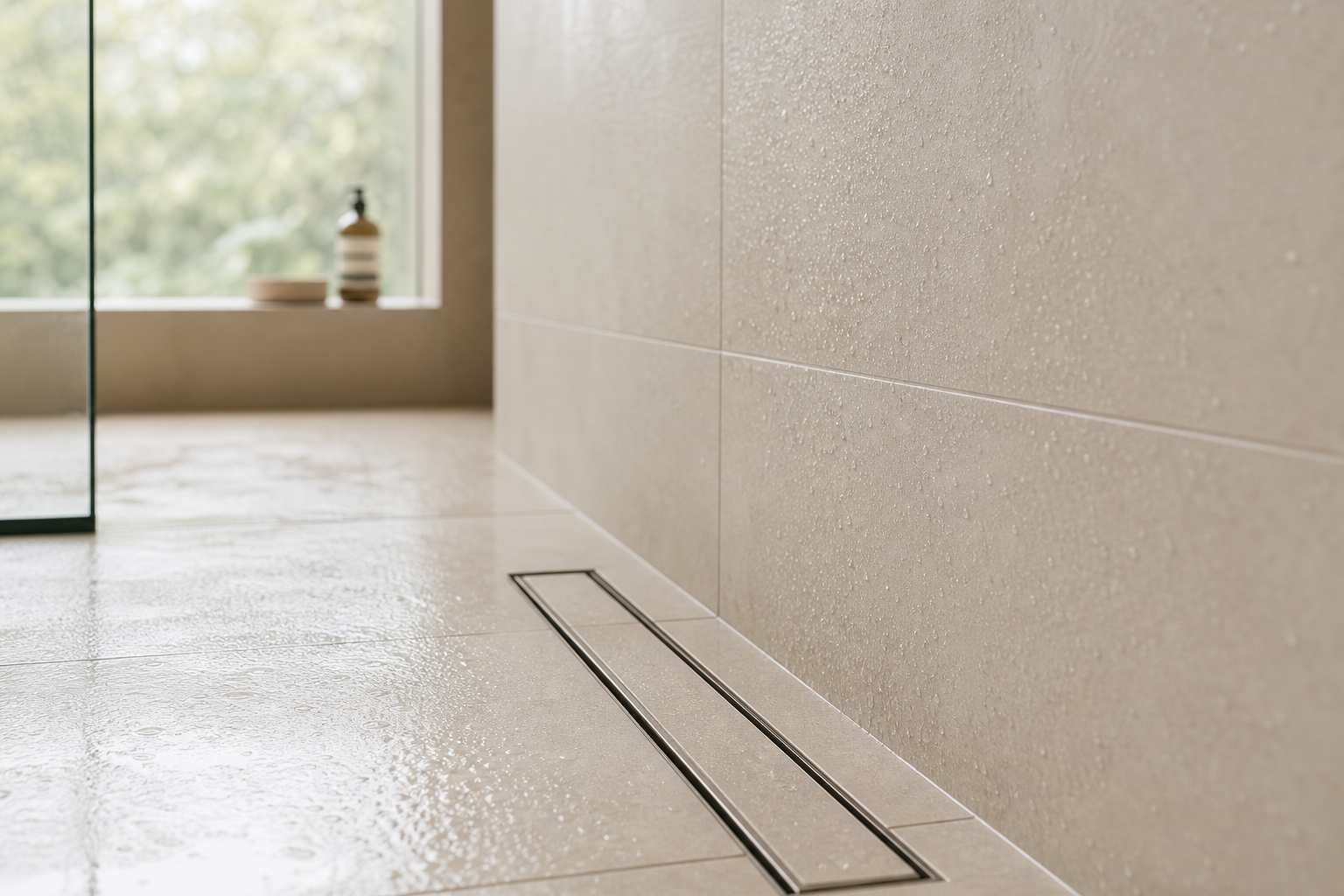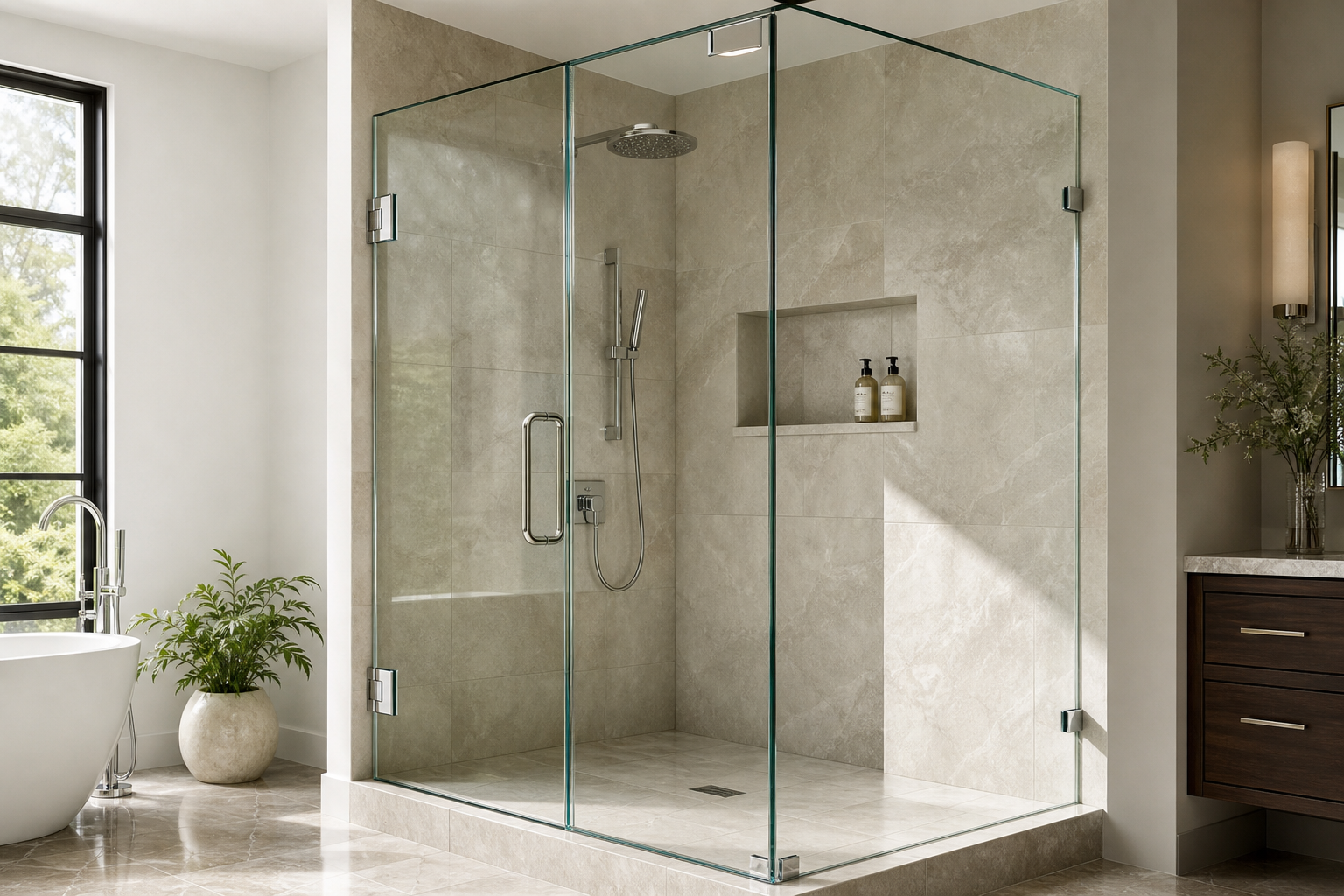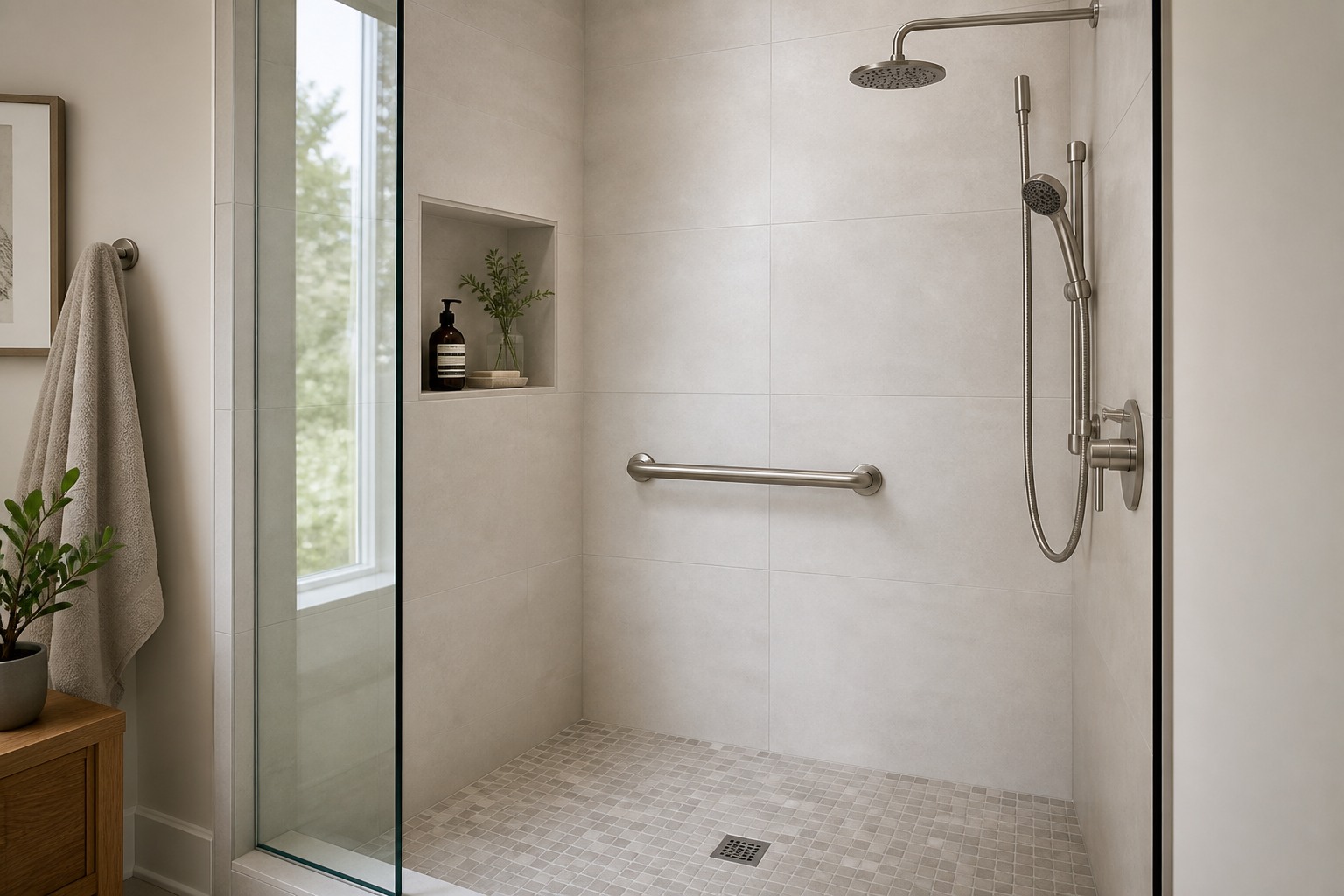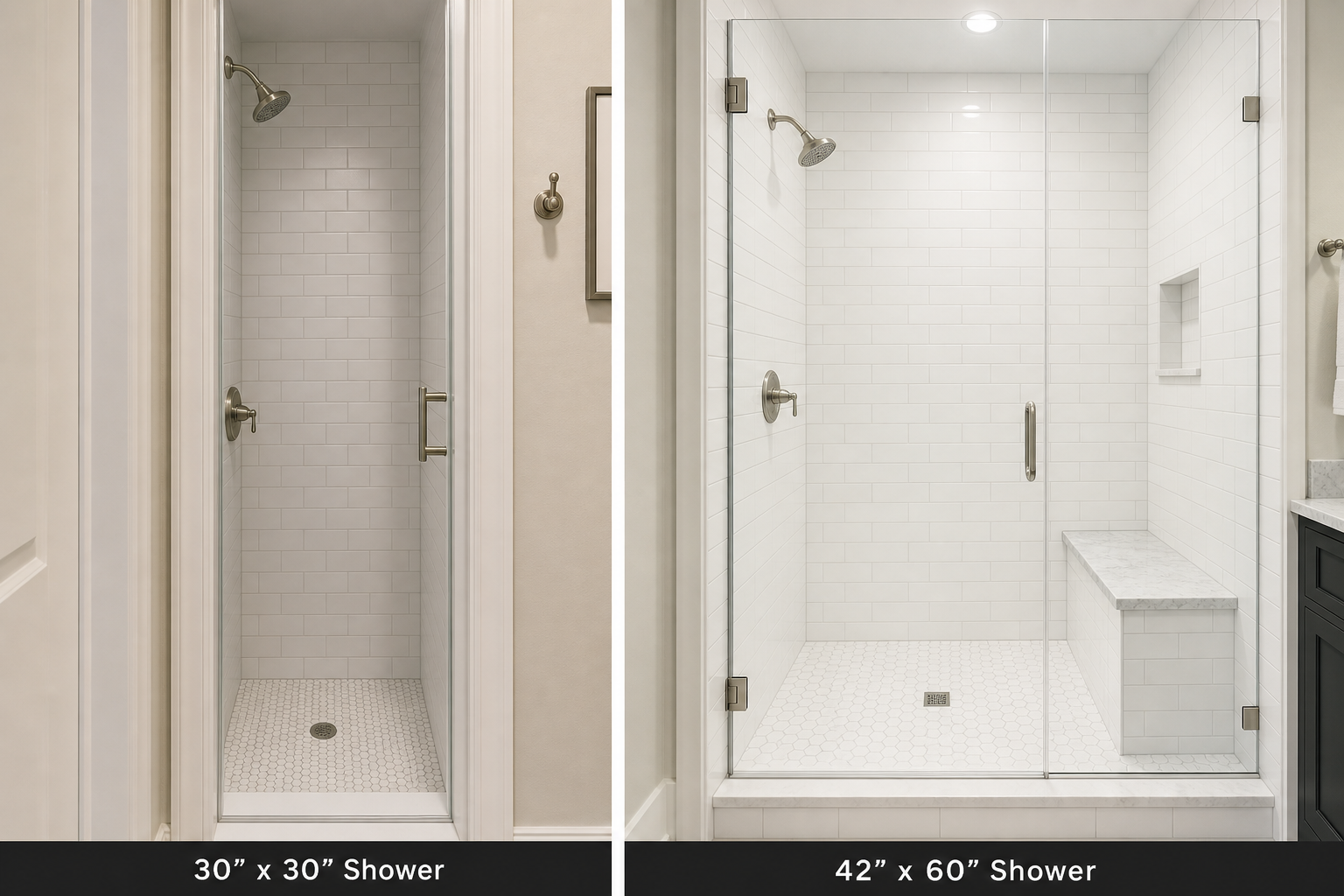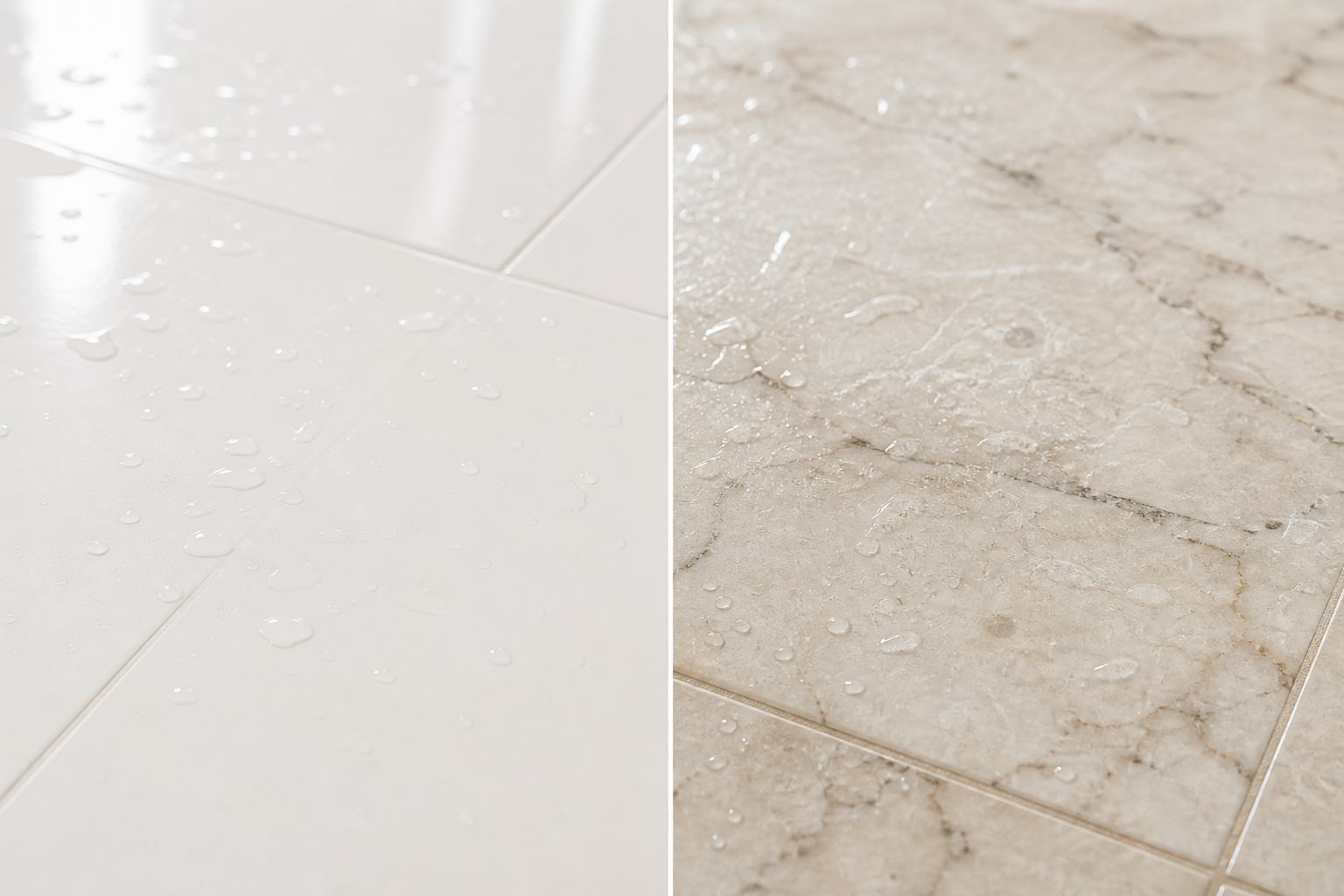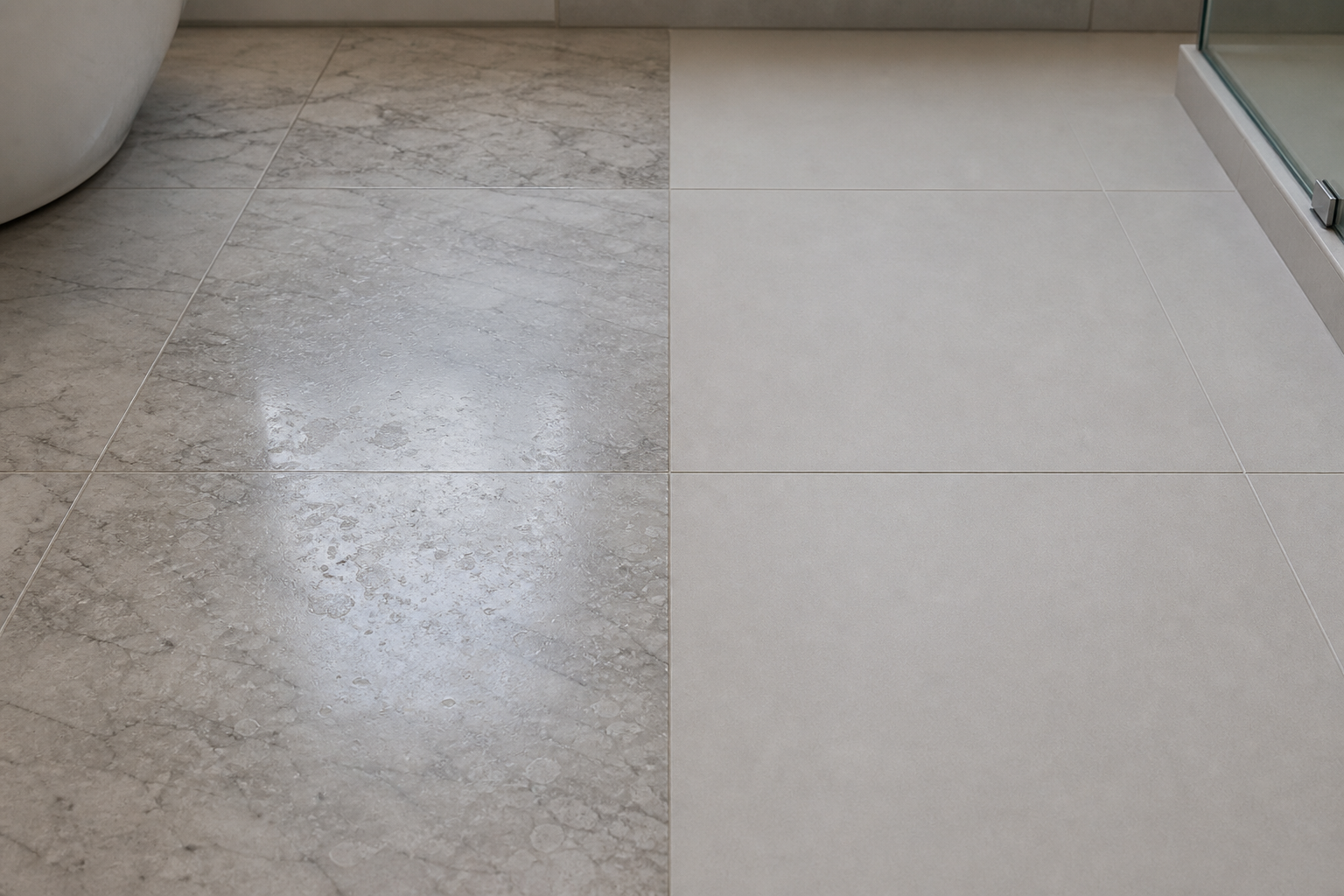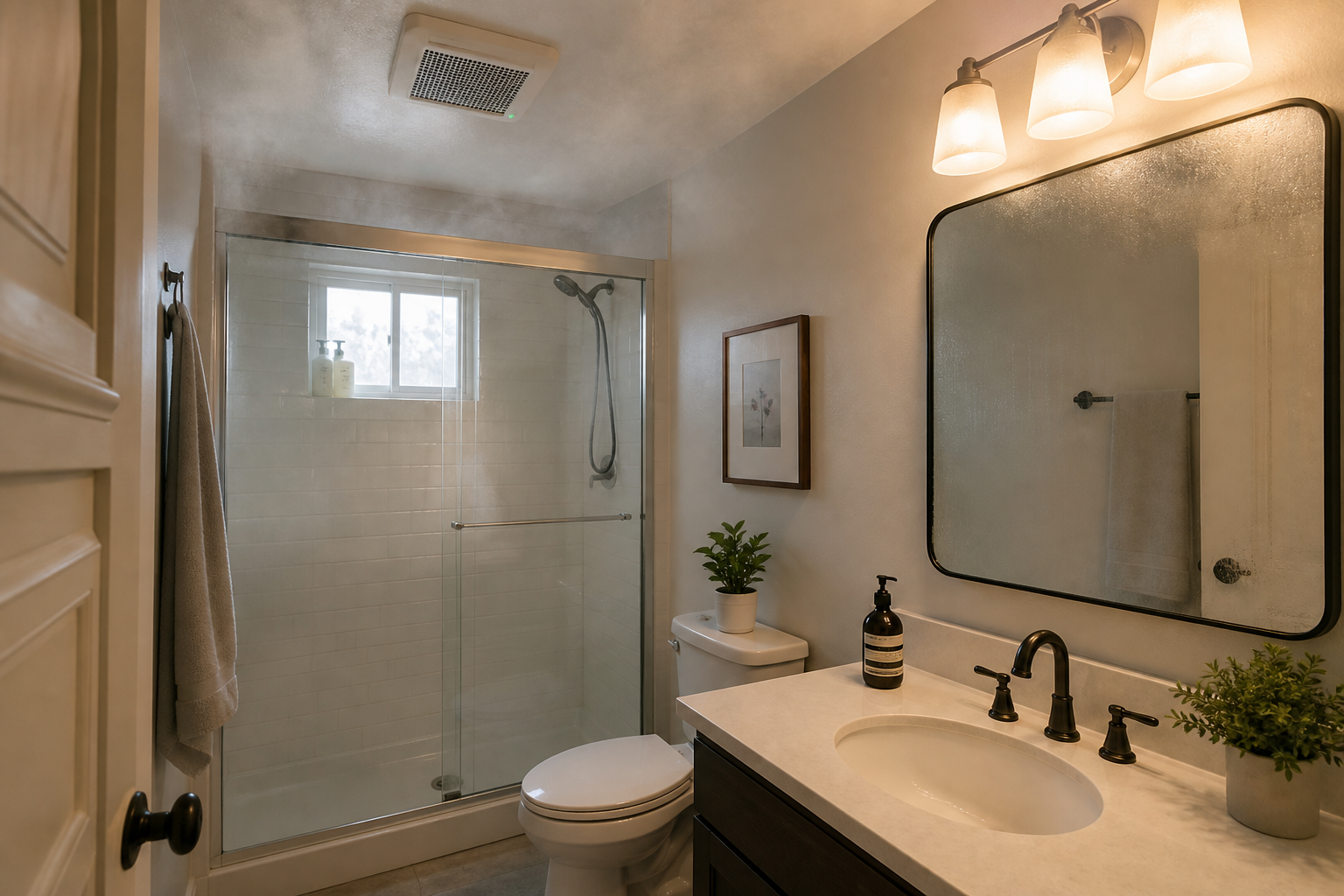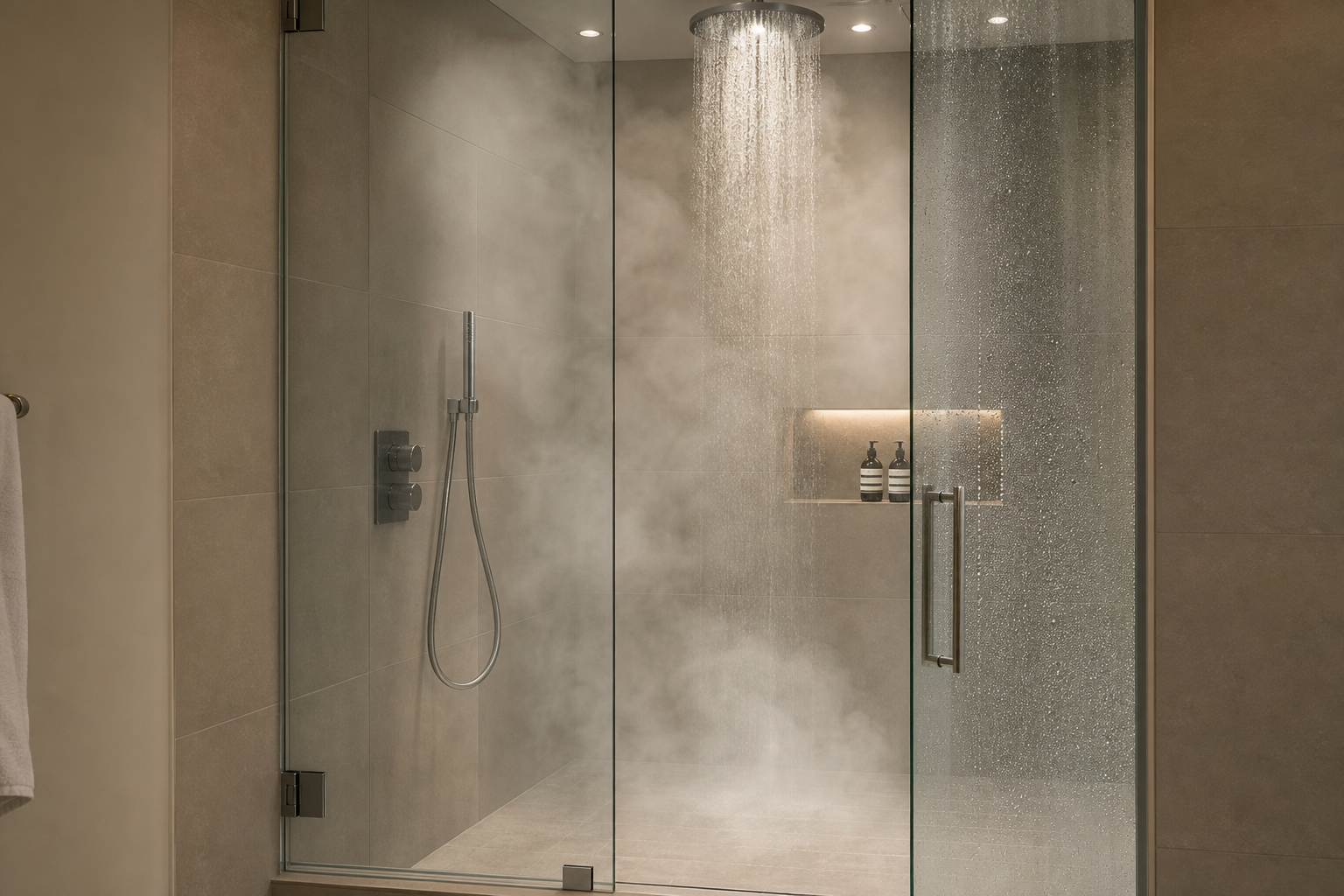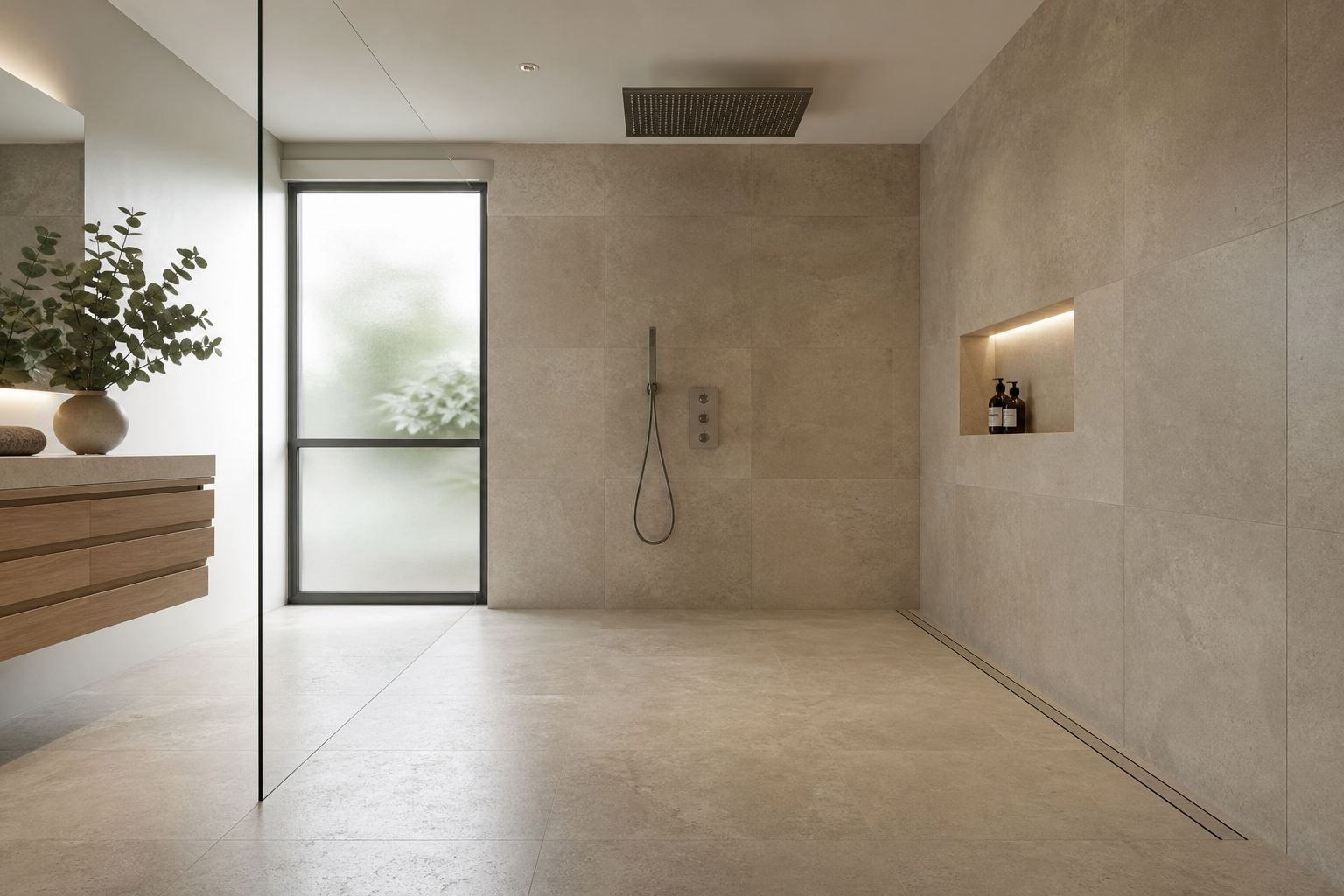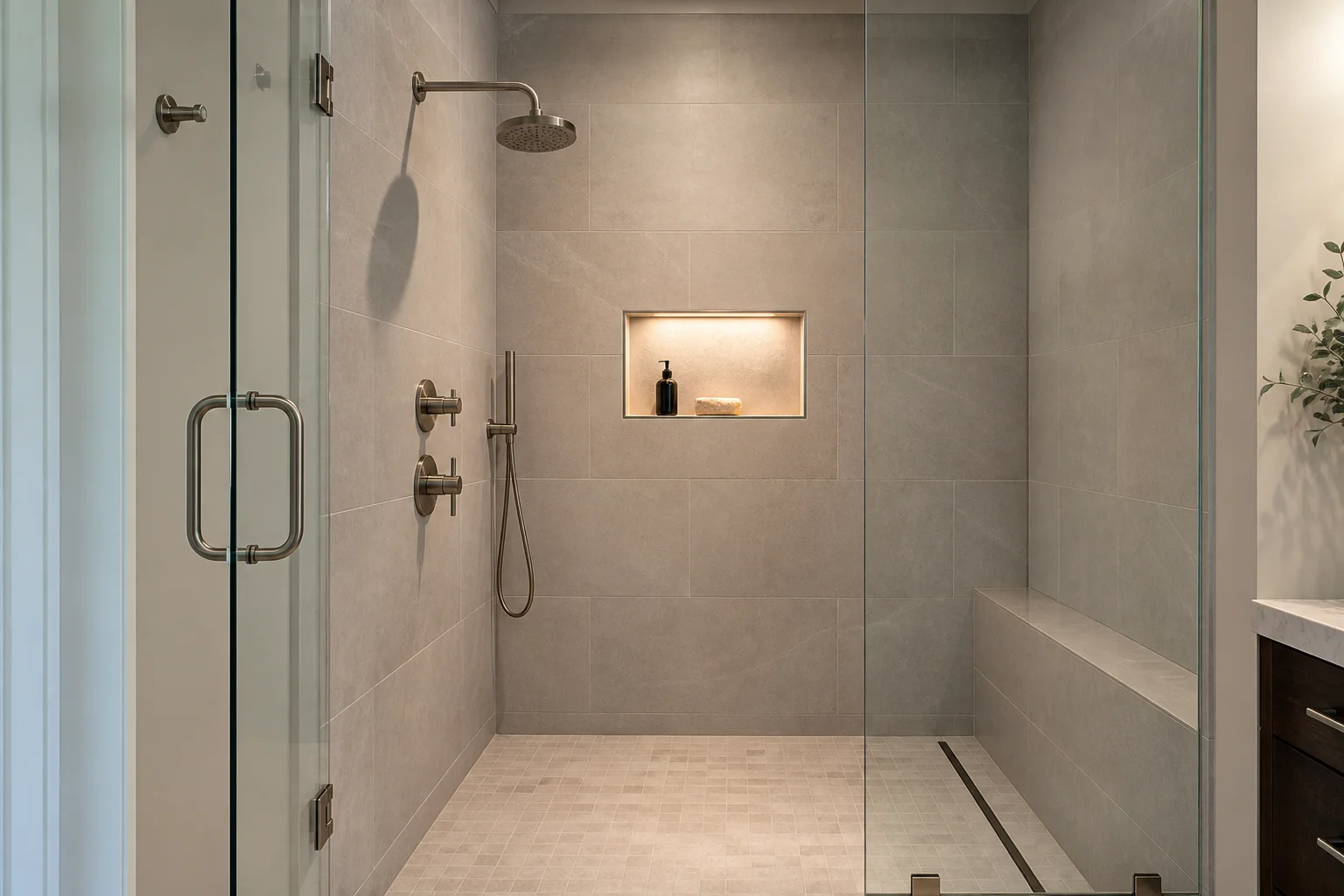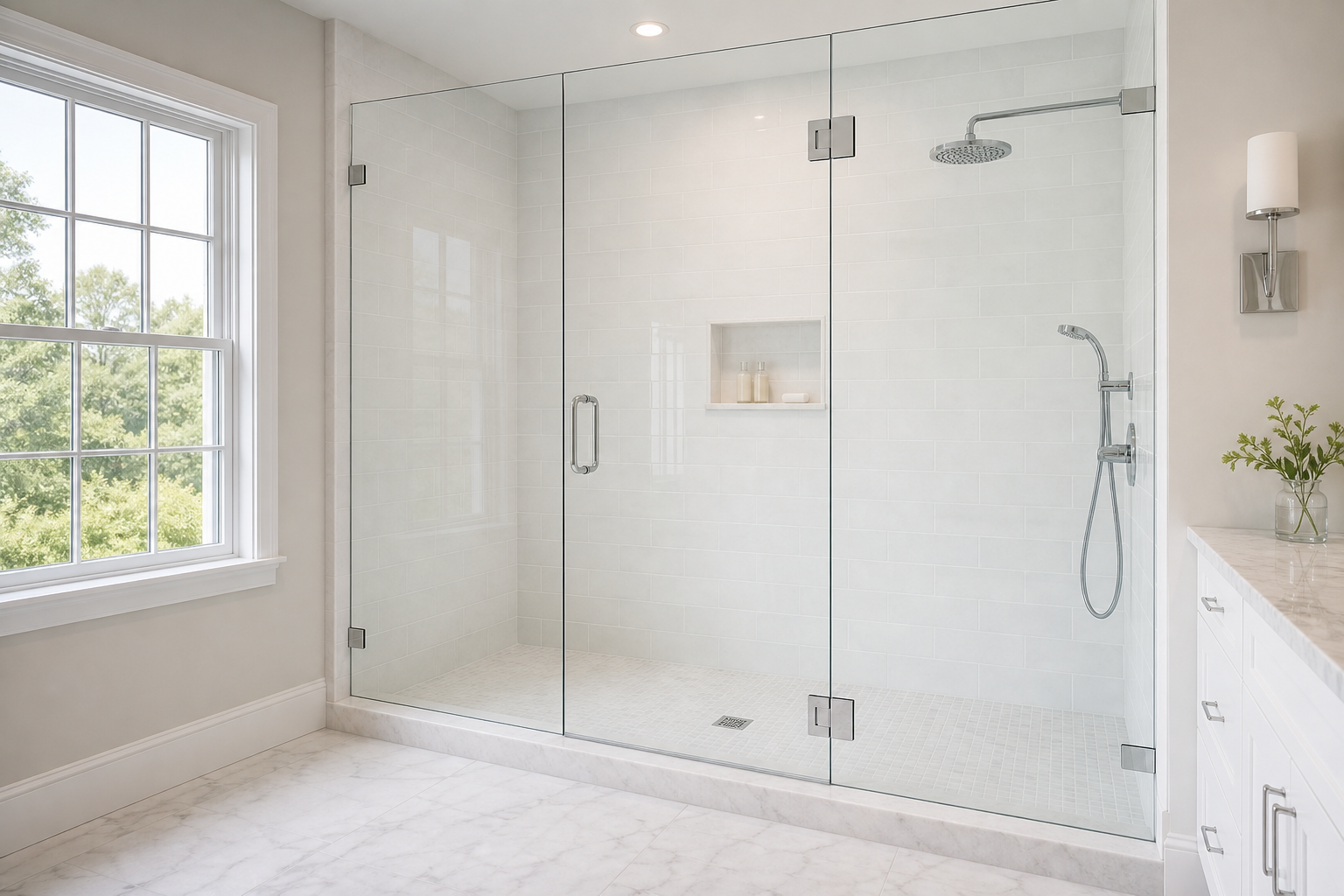
Keeping a glass shower looking new over a decade is possible, but it requires understanding that glass is a maintenance surface, not a low-maintenance surface. The frameless enclosure in the inspiration photo is not a finished product. It is a surface that begins collecting mineral deposits, soap residue, and body oils from the first shower and will continue collecting them until someone removes them on a schedule the glass does not negotiate.
The households that succeed treat the post-shower squeegee as a design requirement, not an optional habit. The households that fail assumed the glass would stay clear because it looked clear on installation day. Both groups paid the same price for the enclosure. The difference is ten years of clear glass versus three years of etching that no amount of cleaning reverses.
Why Glass Is the Highest-Maintenance Shower Surface
Every shower surface collects the same contaminants: water with dissolved minerals, soap, shampoo, conditioner, and body oils. The difference is what each surface does with them.
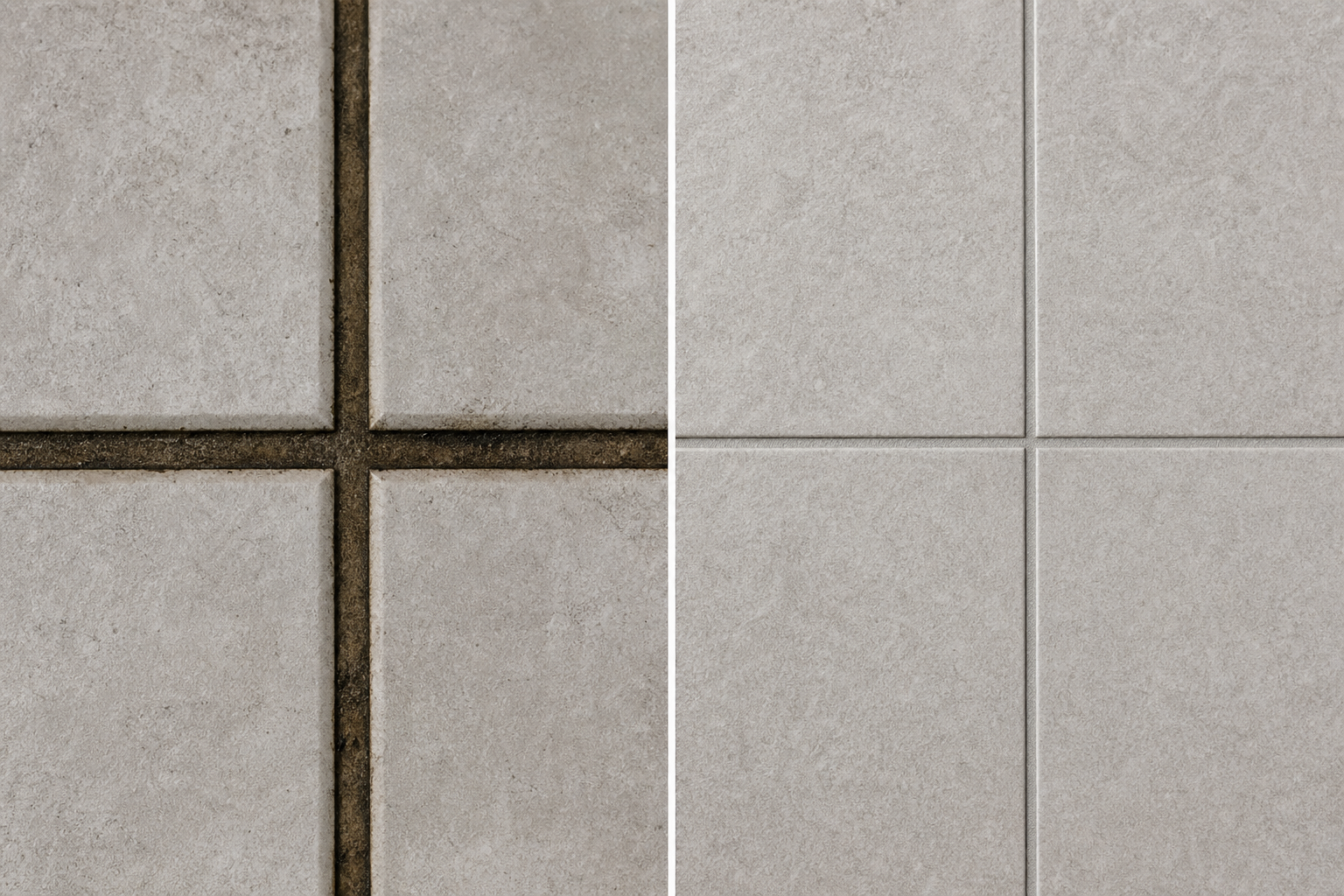
Tile sheds most contaminants from the glazed face during the shower itself. Water runs down the vertical surface. Soap residue that does not rinse away sits on a surface that tolerates periodic scrubbing without permanent change. Grout is the maintenance concern on tile, not the tile face.
Acrylic and solid surface panels have non-porous faces that resist absorption. Mineral deposits and soap scum sit on the surface and can be removed with appropriate cleaners. The seams between panels are the vulnerability, not the face material.
Glass is transparent. Every deposit is visible. Every water spot reads against the background of whatever is on the other side of the panel. Every streak from a partial cleaning catches light at an angle and announces itself. Glass has no texture to hide imperfections, no glaze layer to protect the surface from chemical etching, and no forgiveness for neglected maintenance.
At a microscopic level, glass is not smooth. The surface has peaks and valleys that give water droplets and dissolved minerals something to bond to as the water evaporates. In hard water areas, calcium and magnesium carbonate deposits form on the glass within hours of a shower if standing water is not removed. Over months, those deposits build into a haze. Over years, if the deposits are not removed before they chemically bond to the glass surface, etching occurs. Etched glass feels smooth to the touch but remains cloudy because the damage is in the surface structure, not on it. Etching is permanent without professional polishing.
This is the mechanism that separates a glass shower that looks new at year ten from one that looks permanently foggy at year three. The glass itself is identical. The maintenance schedule is not.
What the Daily Routine Actually Requires
The most effective maintenance action for frameless shower glass is removing standing water immediately after every shower. FHC, a major frameless shower hardware manufacturer, states in their published cleaning and maintenance guidelines that there is no substitute for removing water spots by using a squeegee after every use.
The action takes thirty to sixty seconds. A silicone-blade squeegee hung inside the enclosure removes the water film before it evaporates and leaves minerals behind. Industry sources consistently estimate that this single habit prevents 80 to 90 percent of mineral deposit formation. The remaining 10 to 20 percent is addressed by weekly cleaning.
Silicone blades matter. Hard rubber squeegees can leave streak marks and do not conform as cleanly to the glass surface. A squeegee with a hook or suction mount placed at eye level inside the shower makes the habit accessible. A squeegee stored in a hall closet is a squeegee that does not get used.
The households that maintain clear glass over a decade squeegee after every shower without exception. Not most showers. Not weekdays only. Every shower, every user, every time. This is the design requirement that should be discussed before the glass is ordered, because a household that will not squeegee daily needs a different recommendation than one that will.
Weekly cleaning addresses what the squeegee misses. White vinegar applied to the glass, allowed to sit for five to ten minutes, and wiped with a microfiber cloth dissolves mineral deposits and soap scum without damaging seals or coatings. Mild dish soap in warm water handles body oil residue on hardware and glass. The FHC guidelines recommend soapy water cleaning once per week to prevent mineral deposit buildup on hardware finishes.
What not to use: abrasive scrubbers, which scratch glass permanently. Ammonia-based cleaners, which degrade silicone seals and hydrophobic coatings. Razor blades on coated glass, which remove the coating along with the deposit. These are not conservative recommendations. A single abrasive cleaning session on coated glass can destroy a treatment that cost several hundred dollars at installation.
Hard Water and the Deposits That Do Not Wipe Away
Water chemistry determines how aggressively glass accumulates deposits. Soft water leaves fewer minerals per shower. Hard water, common across much of the Pacific Northwest depending on municipal source and well water locations, deposits calcium and magnesium on every surface the water touches, including glass.
The progression follows a predictable sequence. After a single shower without squeegeeing, individual water spots appear where droplets dried. After a week without cleaning, spots merge into a light haze visible when light hits the glass at an angle. After a month, the haze is visible head-on. After six months of inadequate maintenance, deposits require chemical treatment (CLR, Bar Keepers Friend, or manufacturer-specific hard water removers) rather than vinegar alone. After one to two years of neglect, deposits etch into the glass surface and cannot be removed by any consumer cleaning product.
The distinction between a deposit sitting on the glass and a deposit bonded into the glass is the maintenance deadline. Deposits on the surface come off with appropriate cleaners. Deposits that have chemically interacted with the glass surface require professional polishing with cerium oxide or glass replacement. DFI, a major glass treatment manufacturer, offers Glass Rescue for surface-level hard water staining but notes that etched glass requires professional intervention.
This is why the daily squeegee is not a preference but a preservation action. It removes water before the minerals in that water can concentrate and bond. Skipping the squeegee for a week on hard water is recoverable. Skipping it for a year may not be.
Coatings: What They Do and What They Do Not Do
Hydrophobic coatings applied to shower glass at or after installation reduce the surface tension that allows water to flatten and cling to the glass. Water beads up and rolls off, carrying dissolved minerals with it before they deposit. Products like EnduroShield, Diamon-Fusion, and Rain-X Glass Treatment fill microscopic surface irregularities and create a water-repellent barrier.
What coatings do: reduce mineral bonding, extend the interval between deep cleanings from weekly to monthly or less, and make remaining deposits easier to wipe away because they sit on the coating rather than the bare glass.
What coatings do not do: eliminate the need for a squeegee, prevent all deposit formation, or last indefinitely. Consumer-applied treatments like Rain-X require reapplication every three to six months depending on shower frequency and water hardness. Professional applied coatings like EnduroShield and Diamon-Fusion typically last three to five years with proper care before retreatment is needed. The coating wears from the friction of water, soap, and squeegee blades passing over the surface daily.
Coatings are a maintenance multiplier, not a maintenance replacement. A coated glass panel that gets squeegeed daily and cleaned weekly stays clear for years with minimal effort. A coated glass panel that receives no daily care still accumulates deposits, just more slowly than uncoated glass. The coating buys time. It does not buy neglect.
When we specify frameless glass enclosures, we discuss the maintenance commitment before the glass is ordered. A household that will not squeegee daily gets a different recommendation than one that will. That may mean a semi-frameless design with fewer glass panels. It may mean textured or frosted glass that hides deposits more effectively than clear glass. It may mean a coated panel with the coating cost included in the specification rather than offered as an optional upgrade the client declines. The goal is matching the product to the maintenance behavior, not delivering a product that requires behavior the household will not sustain.
Hardware, Seals, and the Parts That Fail First
Frameless shower glass is held by hardware: hinges, clamps, and a header or channel at the top. The glass panels themselves, if maintained, last twenty to thirty years. The hardware and seals typically need attention sooner.
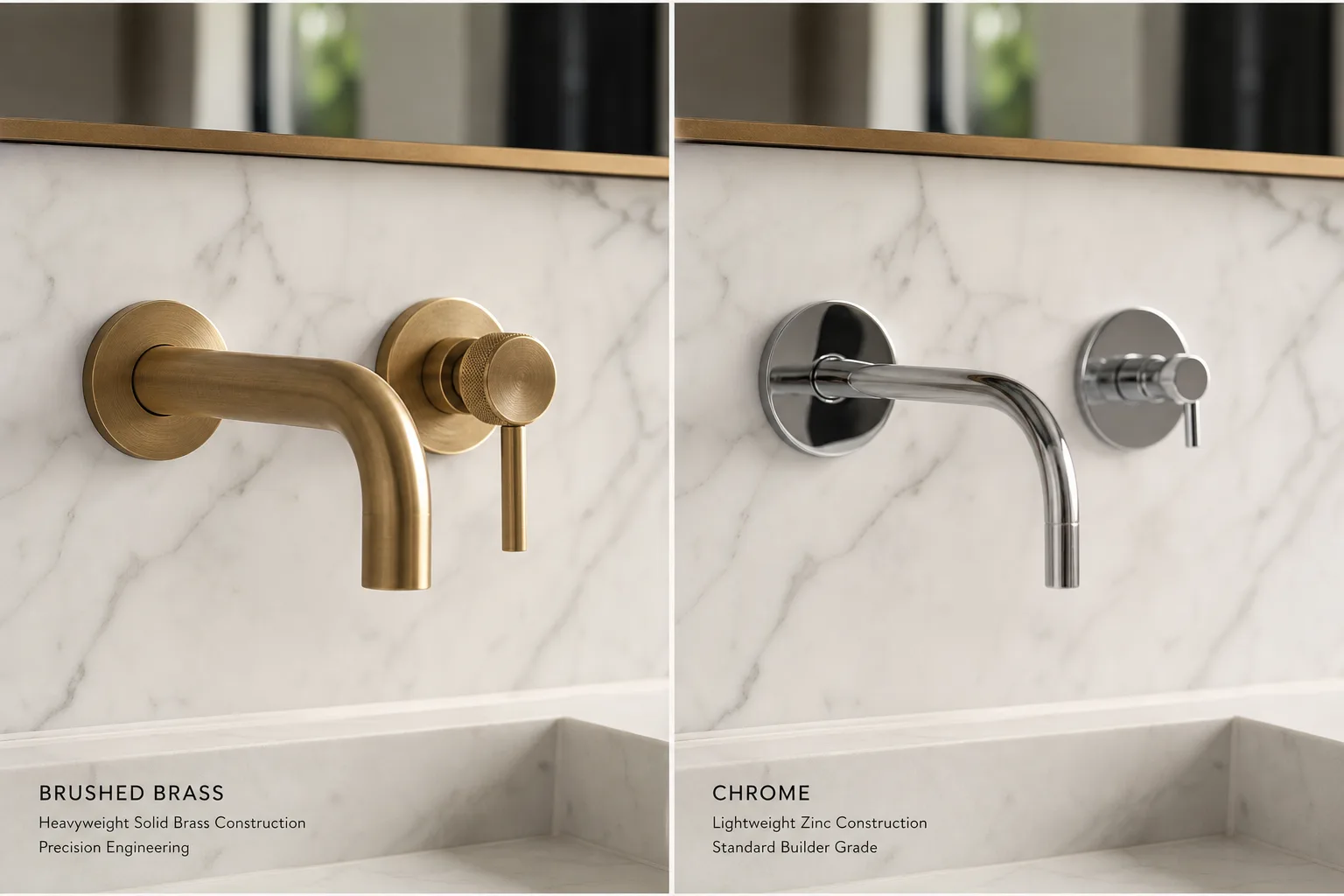
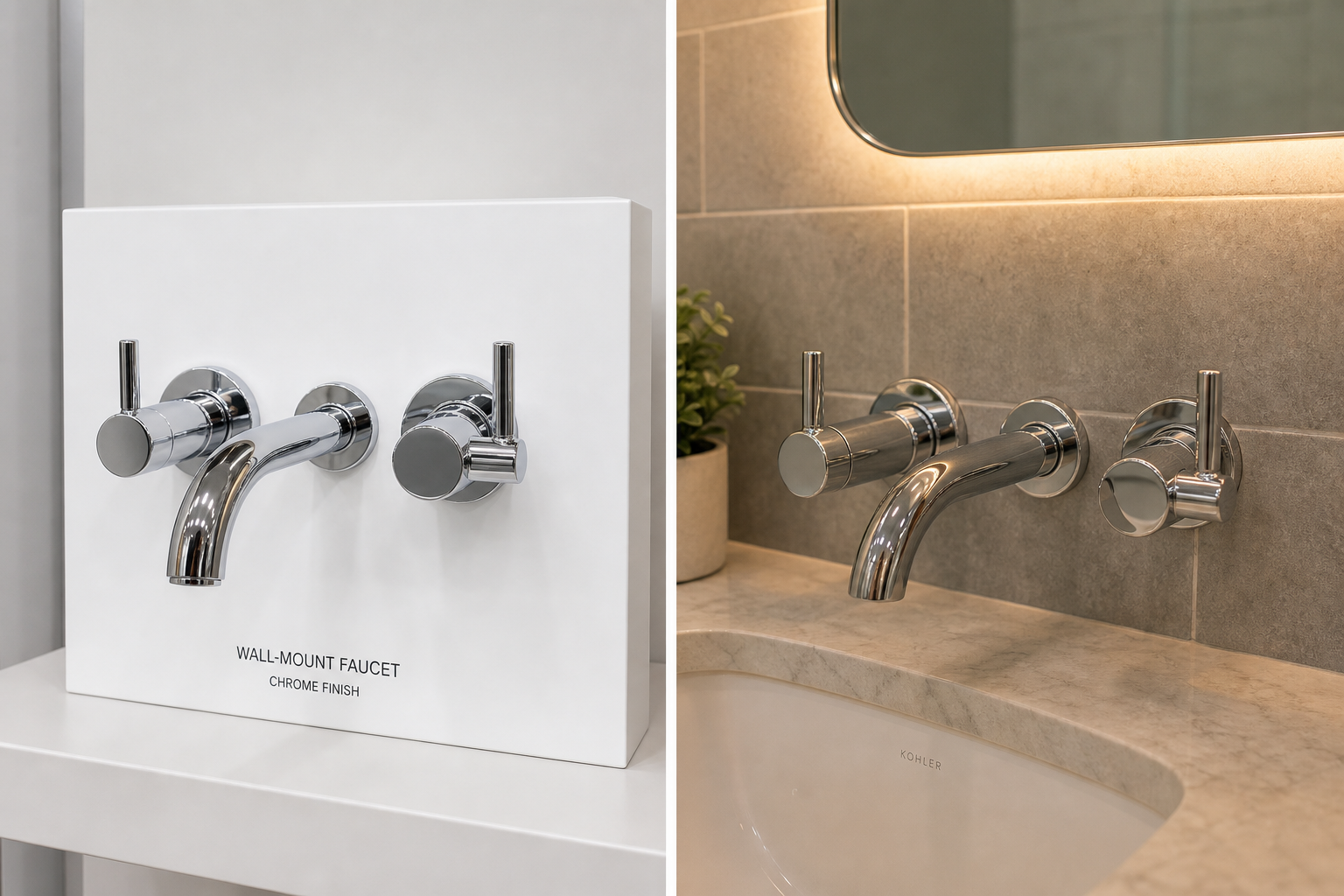
Hinges and clamps accumulate mineral deposits and soap residue at the same rate as the glass. FHC recommends drying hardware after every use and cleaning with soapy water weekly to prevent mineral buildup that damages plated finishes. Brushed nickel, chrome, and matte black finishes all degrade under sustained mineral exposure if not cleaned regularly.
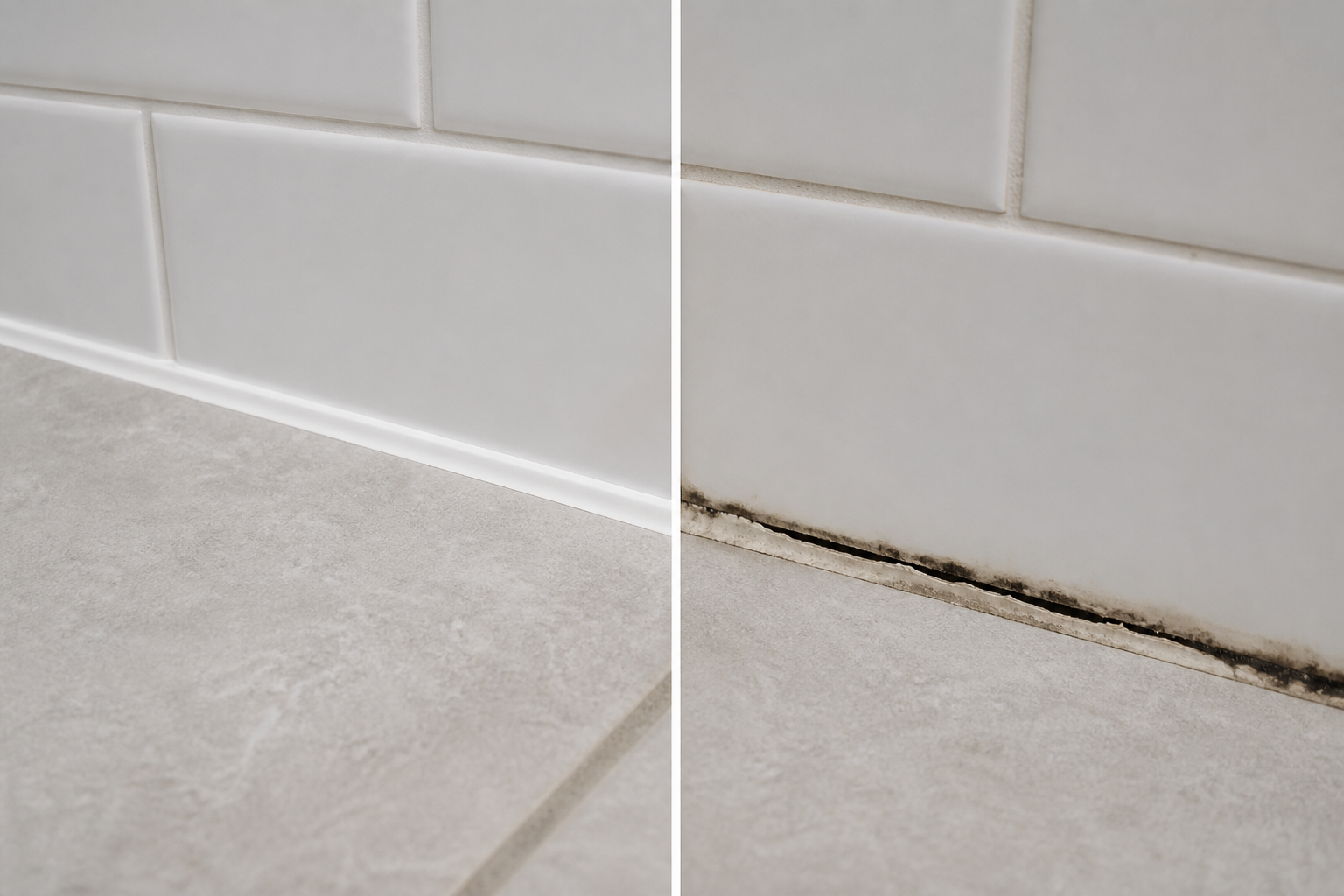
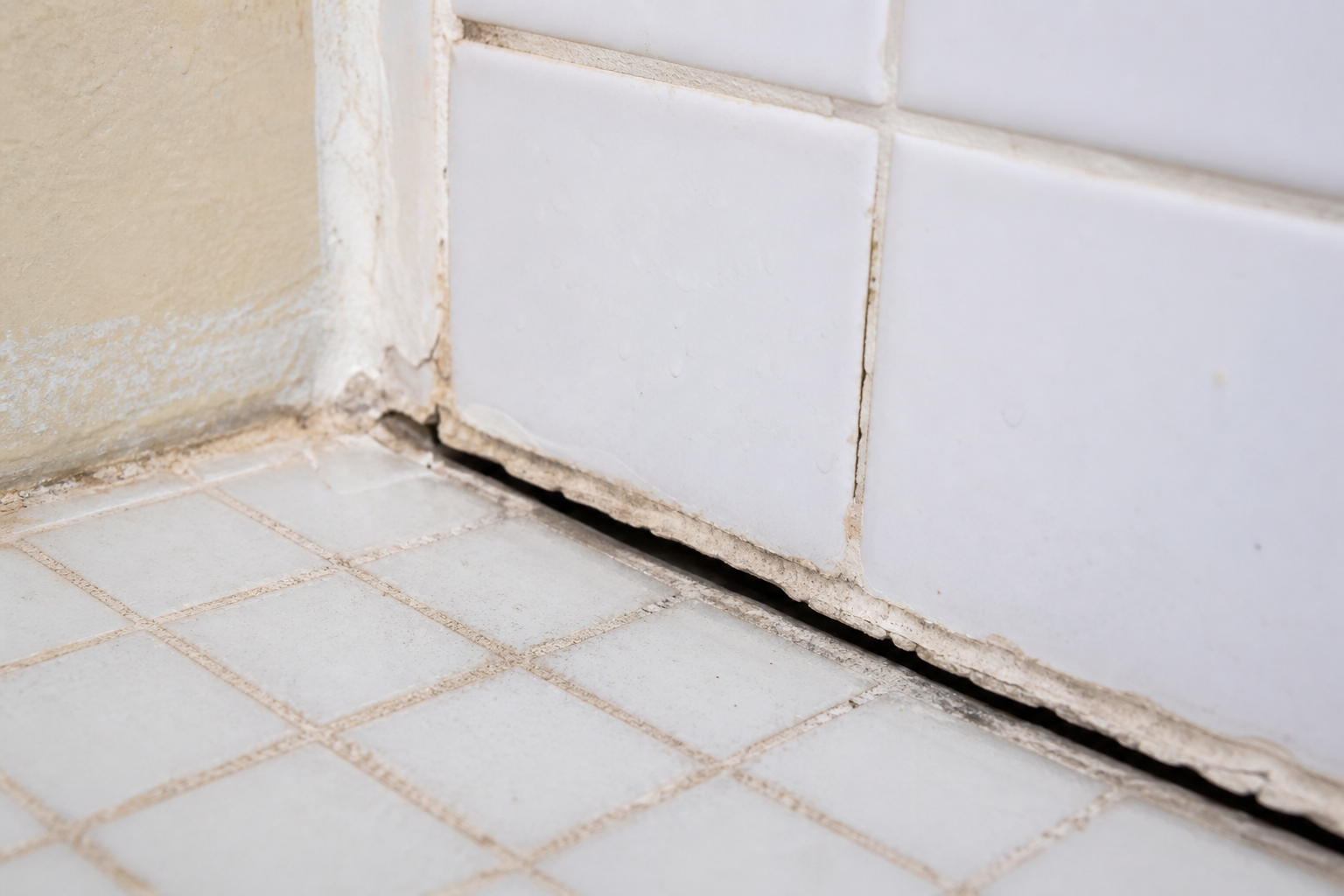
Silicone seals at the door sweep, hinge points, and panel edges have a functional lifespan of three to five years in a shower environment. When seals fail, water escapes the enclosure onto the floor and into the hardware channels. Seal failure is a maintenance item, not a product defect. Inspecting seals annually and replacing them when they show compression set, discoloration, or gap formation prevents the secondary damage that failed seals cause.
The glass panel is the durable component. The maintenance surface is the entire enclosure system: glass, hardware, seals, and coating. Budgeting for the enclosure means budgeting for squeegees, cleaning products, coating retreatment, and seal replacement over the life of the installation, not just the initial glass cost.
What Ten Years Actually Looks Like
A frameless glass shower maintained on the daily squeegee and weekly cleaning schedule, with coating retreatment every three to five years and seal replacement at year three to five, looks substantially the same at year ten as it did at month one. The glass is clear. The hardware finish is intact. The enclosure reads as it did in the inspiration photo.
The same enclosure without daily squeegeeing shows visible haze by year one, requires professional cleaning or polishing by year three, and may need glass replacement by year five if etching has occurred. The hardware finishes degrade in parallel. The cost of restoration exceeds the cumulative cost of daily maintenance many times over.
This is not a reason to avoid frameless glass. Frameless glass is the right product for bathrooms where the visual openness and light transmission justify the maintenance commitment. It is a reason to specify frameless glass with the same honesty applied to every other maintenance-sensitive material in the room: understand what the product requires, confirm the household will provide it, and design the specification accordingly.