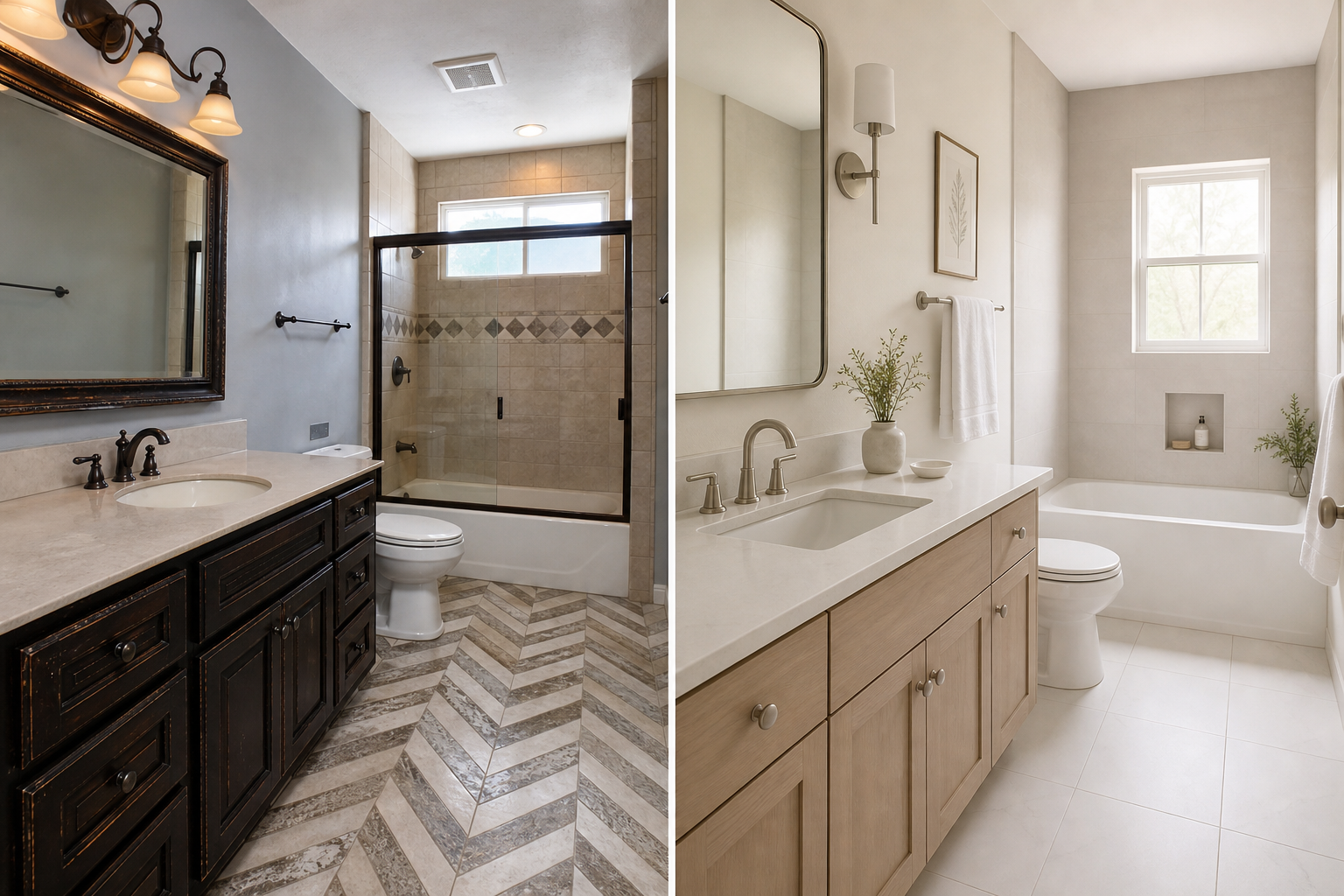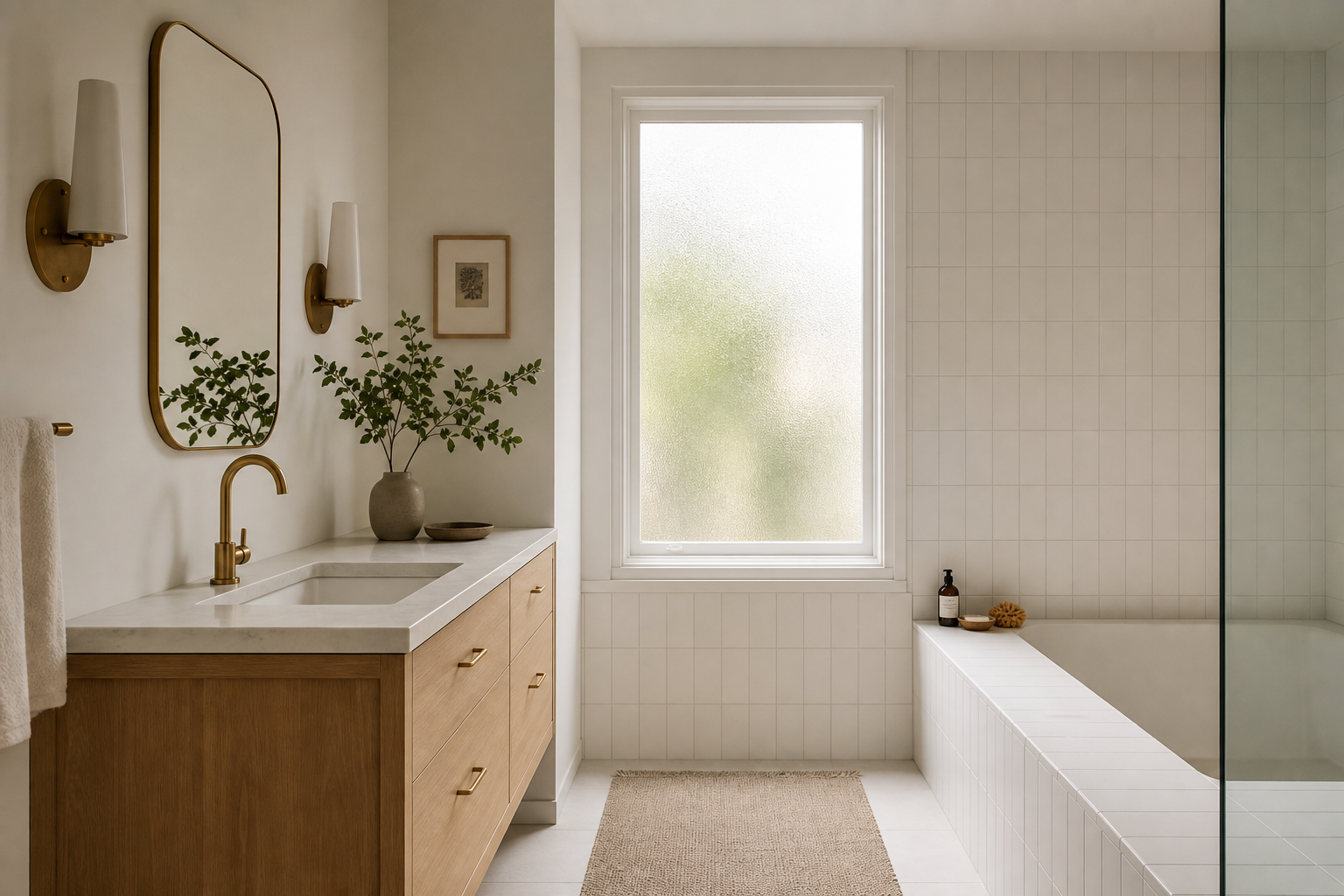
An easy-to-clean bathroom is not primarily a product choice. It is a sequence of design decisions about grout joint width, surface texture, transition details, ventilation, and material placement that either make cleaning fast or make it punishing. Most bathrooms are hard to clean because those decisions were never made consciously.
That distinction sounds abstract until you have spent a Saturday morning on your knees with a grout brush, working at lines that seem to absorb grime no matter how often you scrub them. Or until you have tried to get soap scum off deeply textured stone tile and realized the texture was doing exactly what physics said it would do. Or until you have noticed, again, that the caulk at the base of your shower has gone dark around the edges, and cleaning it does nothing because the mold is inside the material now.
These problems are not bad luck. They are the predictable outcomes of design choices that prioritized aesthetics over behavior. The good news is that the design choices which make a bathroom genuinely easy to maintain are also, most of the time, the ones that produce the cleanest-looking result. This is one case where what looks right and what works right largely converge.
Grout Is a Surface, Not a Gap
Most people think of grout as the stuff between the tiles. The more accurate way to think about it: grout is a surface in its own right, and in most bathrooms it is the most maintenance-intensive surface in the room.
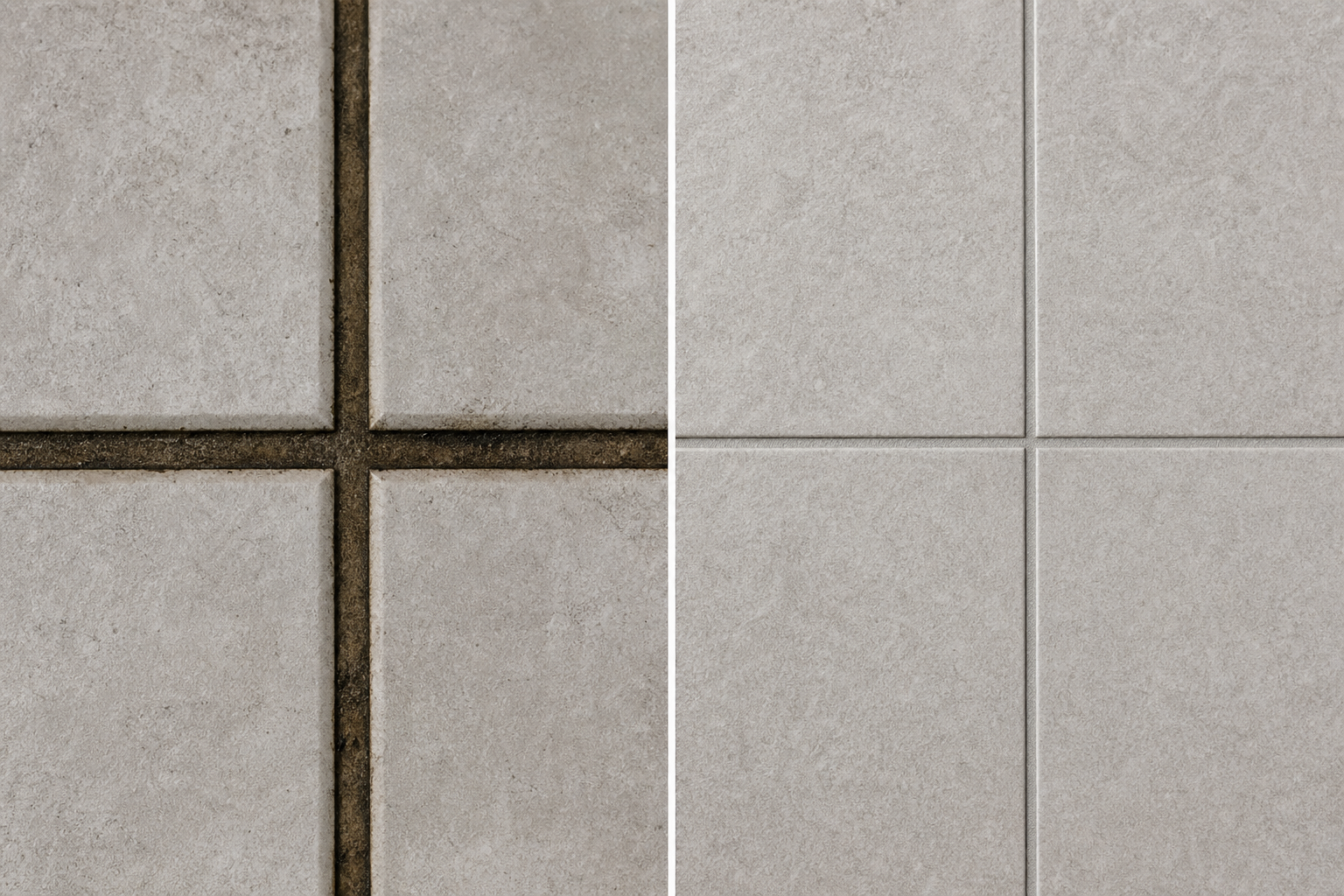
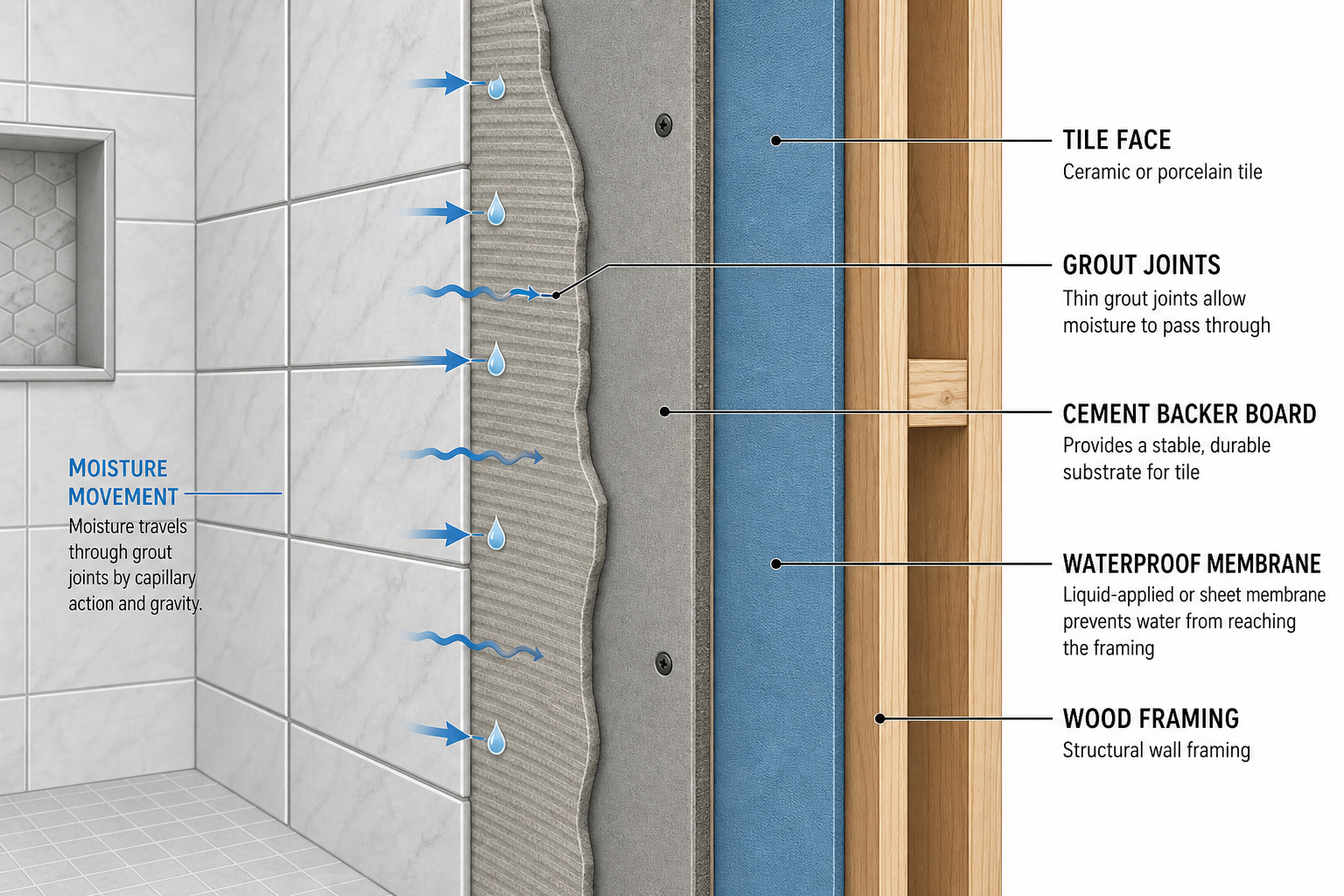
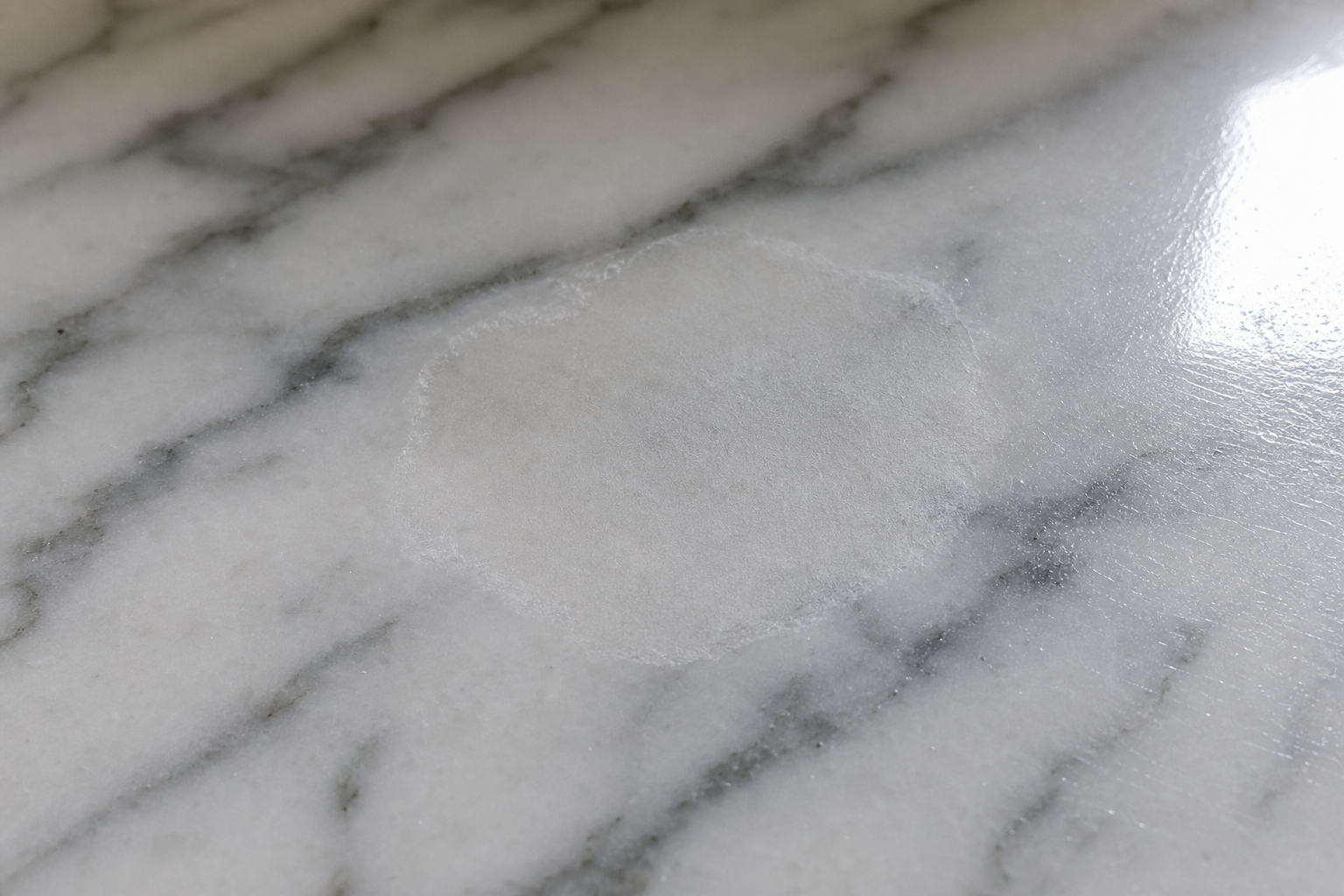
Cement grout is porous. It absorbs water, soap residue, body oils, and minerals from hard water. It offers texture that captures particulates. And unlike the tile surface itself, it cannot be sealed into genuine imperviousness. You can reduce its porosity with a good sealer. You cannot eliminate it. Over time, grout in a wet environment darkens, harbors mildew in its surface pores, and requires mechanical scrubbing to restore even an approximation of its original color.
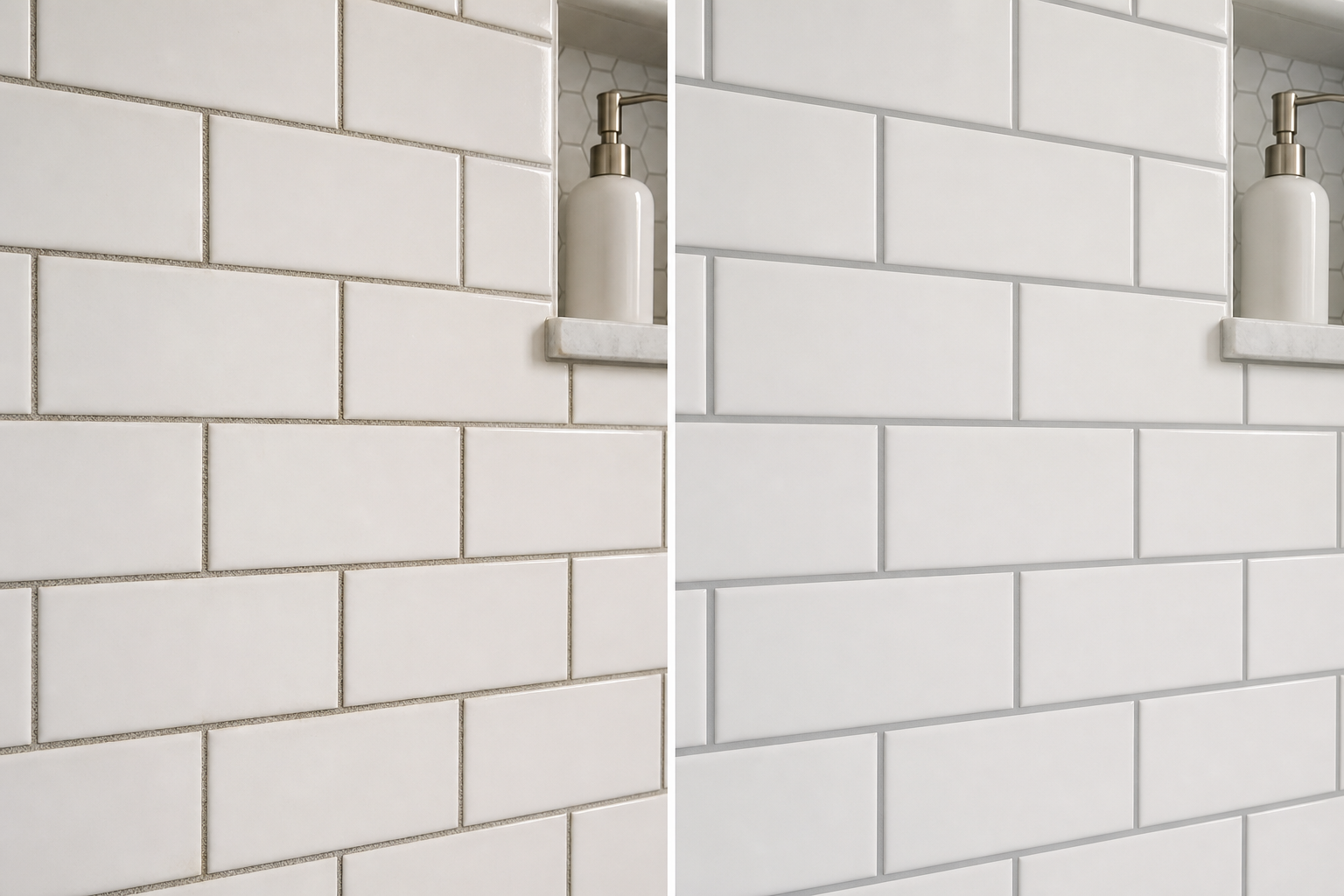
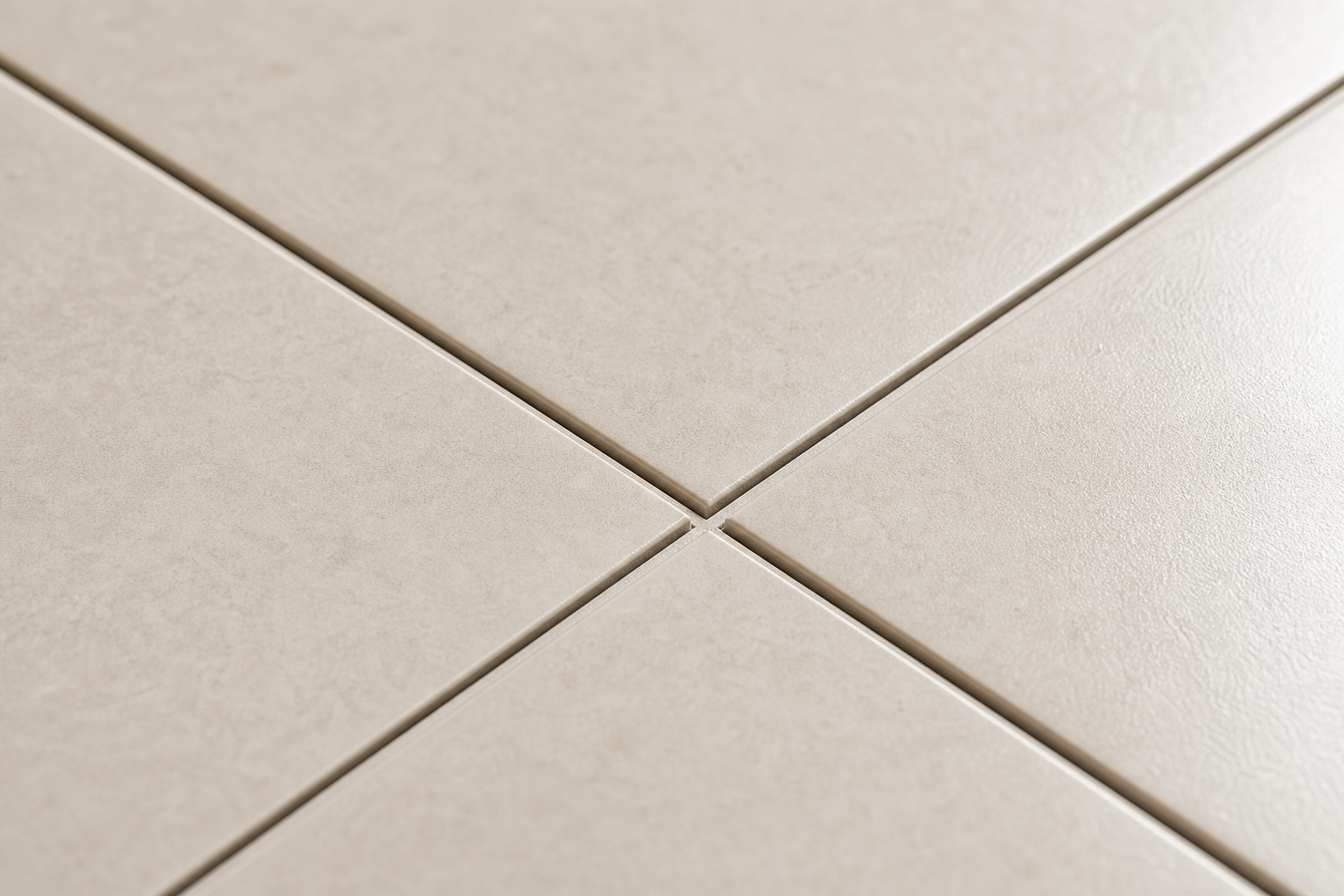
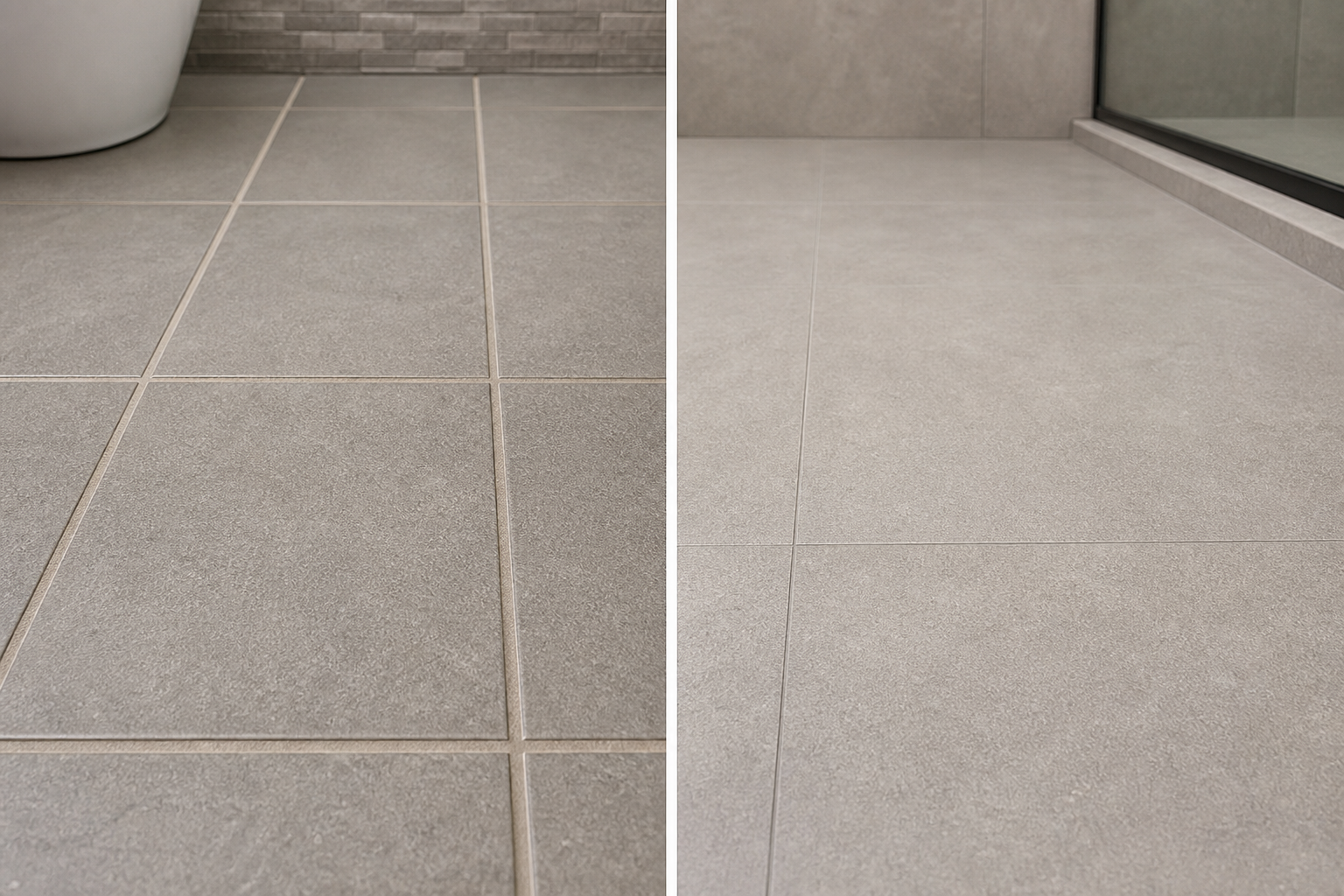
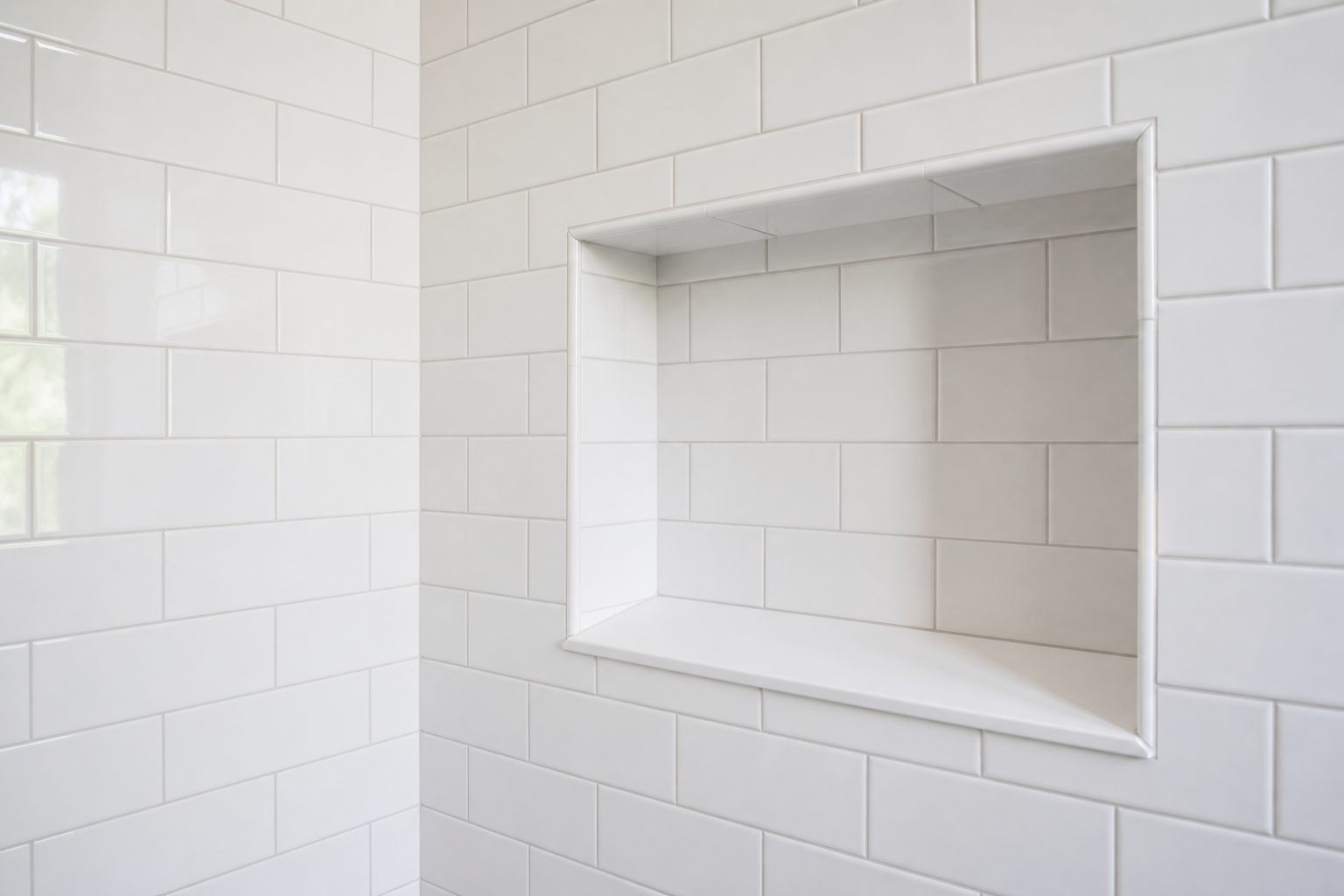
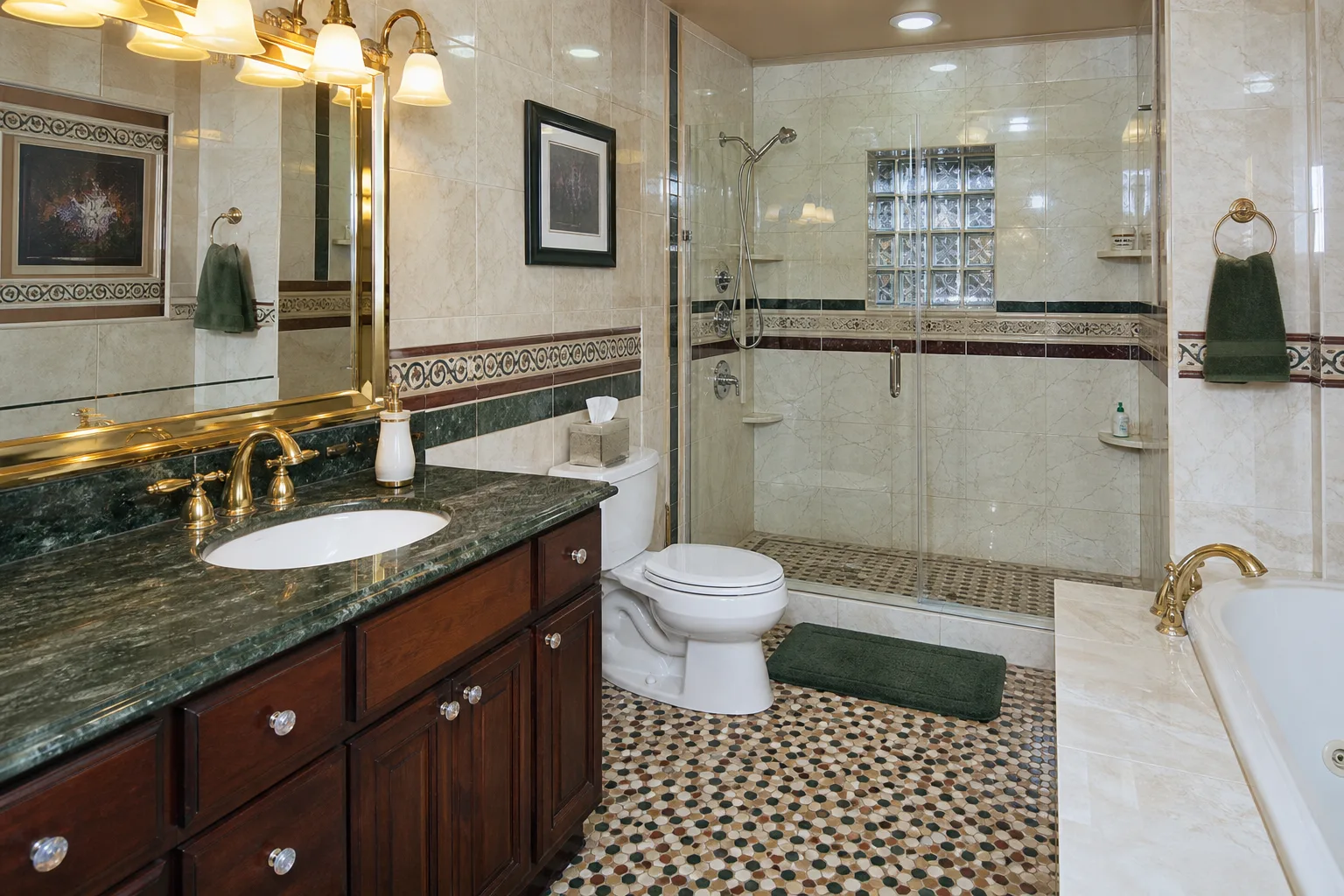
This is why grout joint width is among the most consequential decisions in a bathroom specification. The relationship is direct: more grout lines, more porous surface area, more scrubbing. A shower tiled with 3-by-6-inch subway tile has roughly four times the linear grout footage of the same shower tiled with 24-by-24-inch large-format tile. That is not a styling observation. It is a cleaning reality that plays out every week for the life of the room.
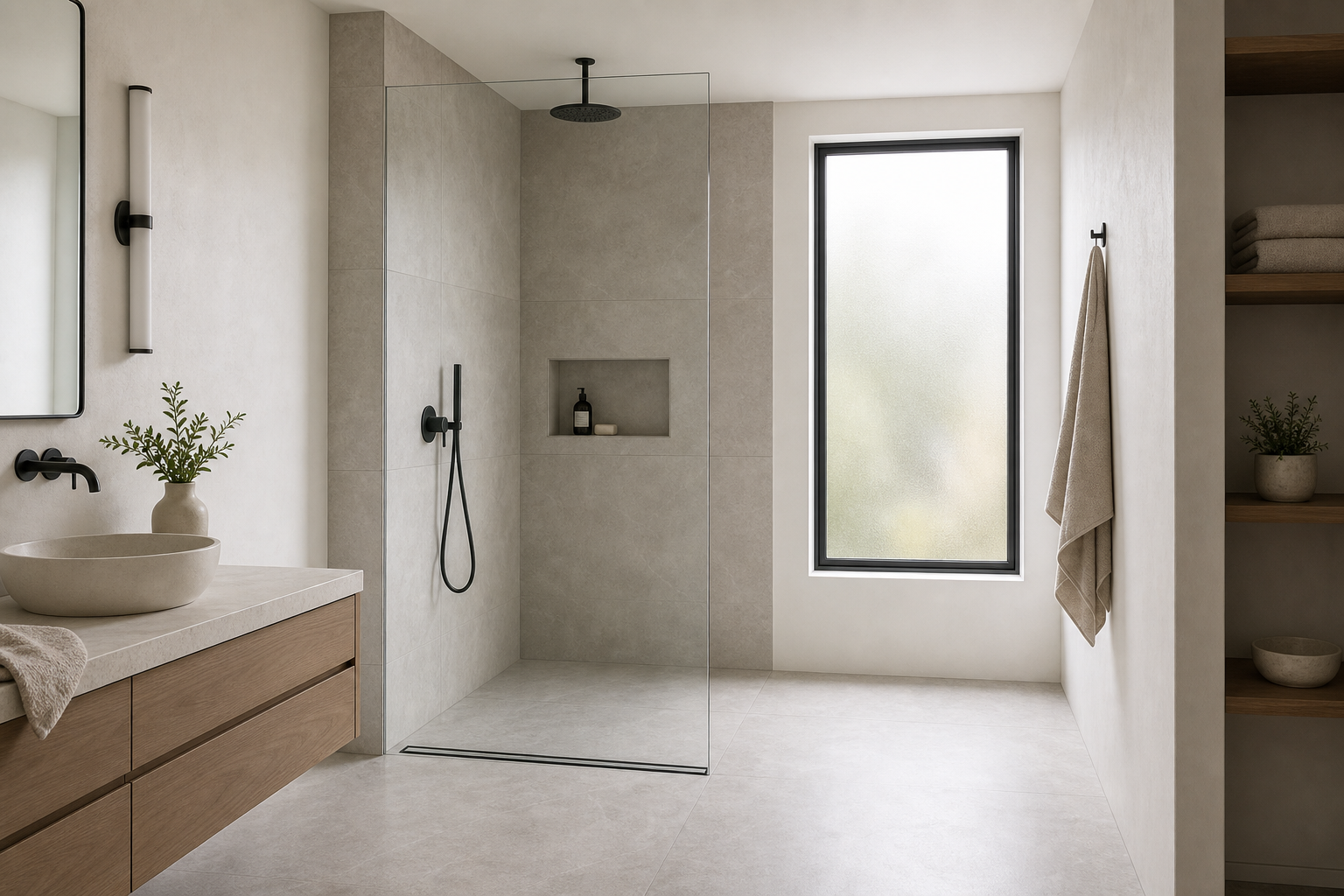
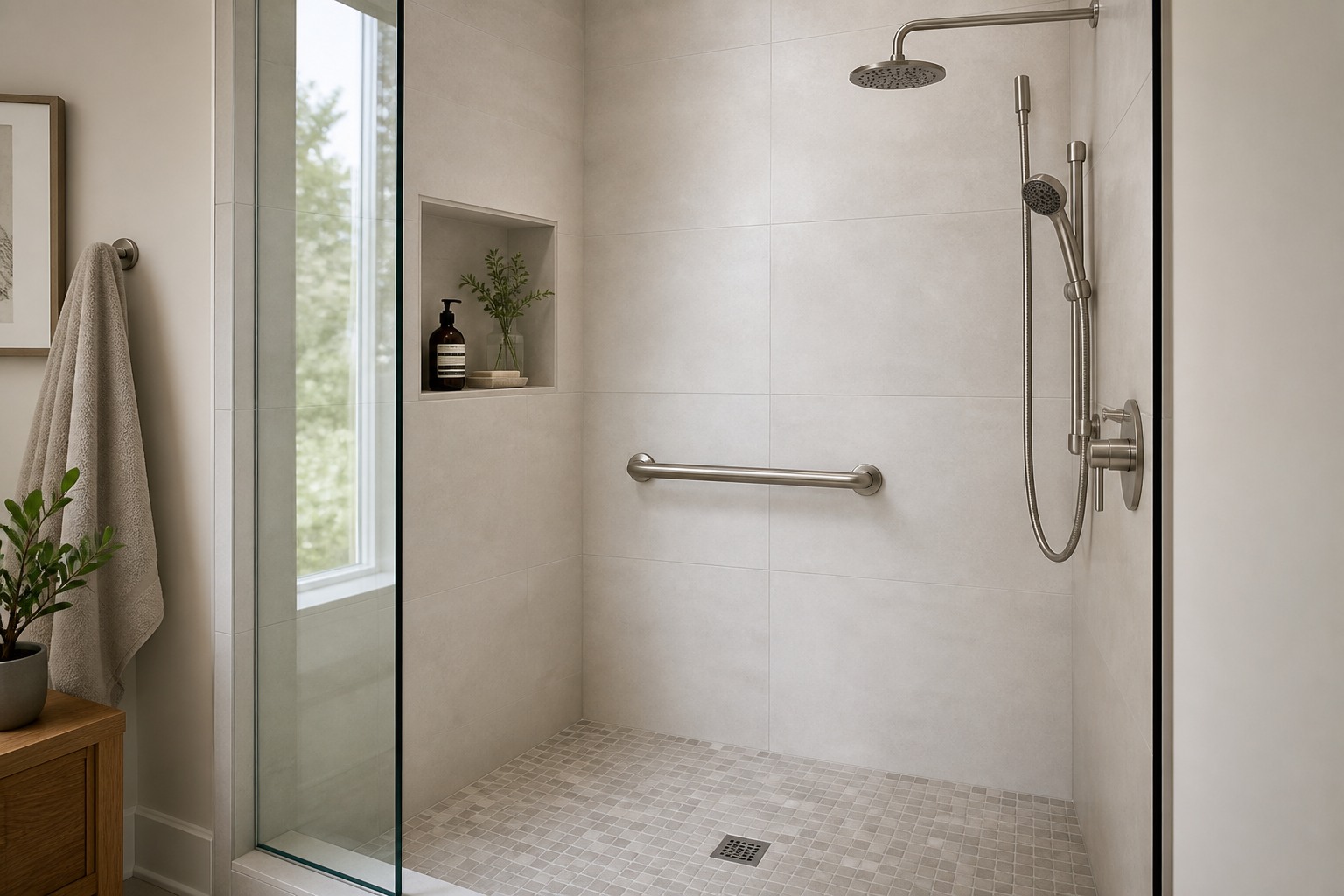
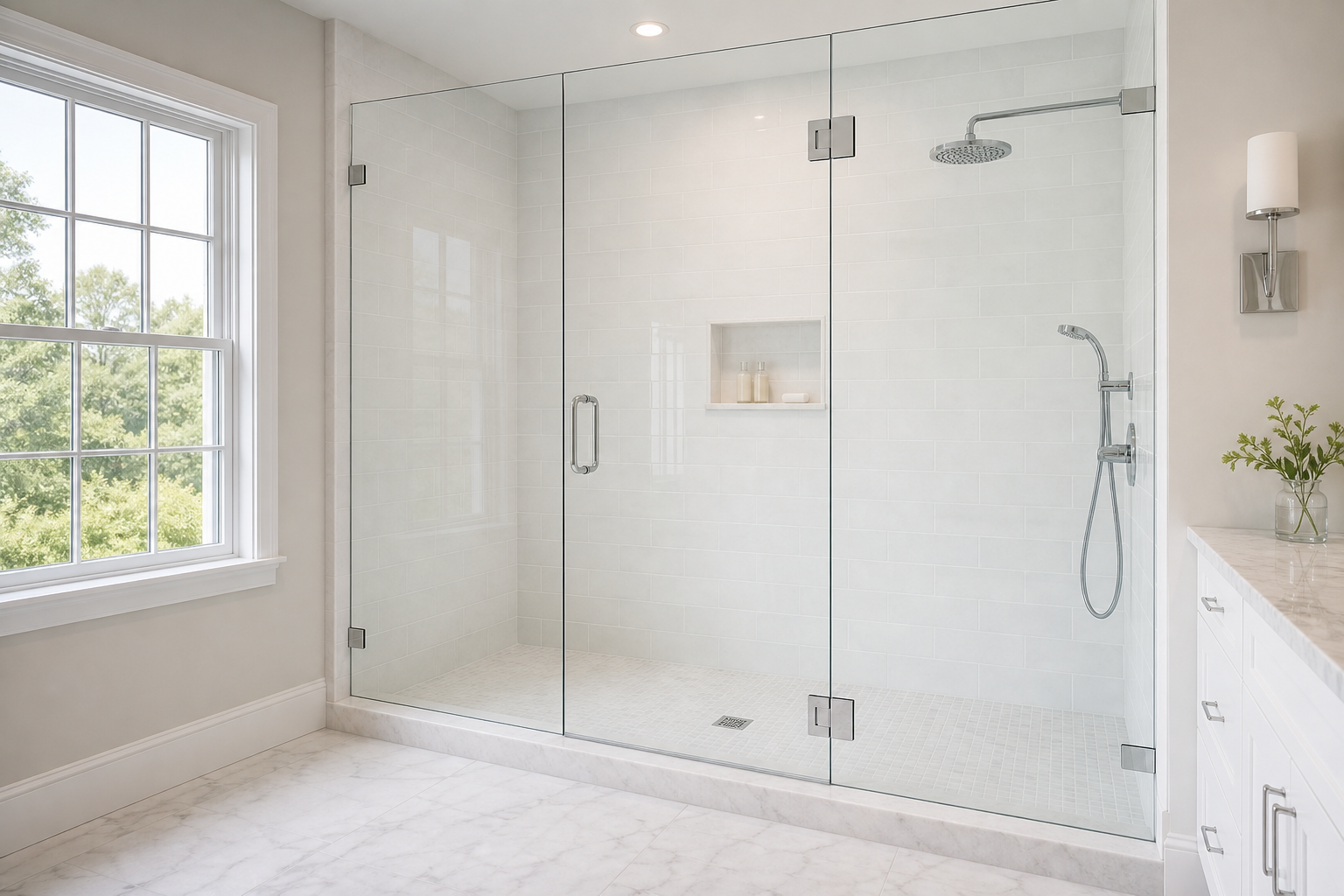
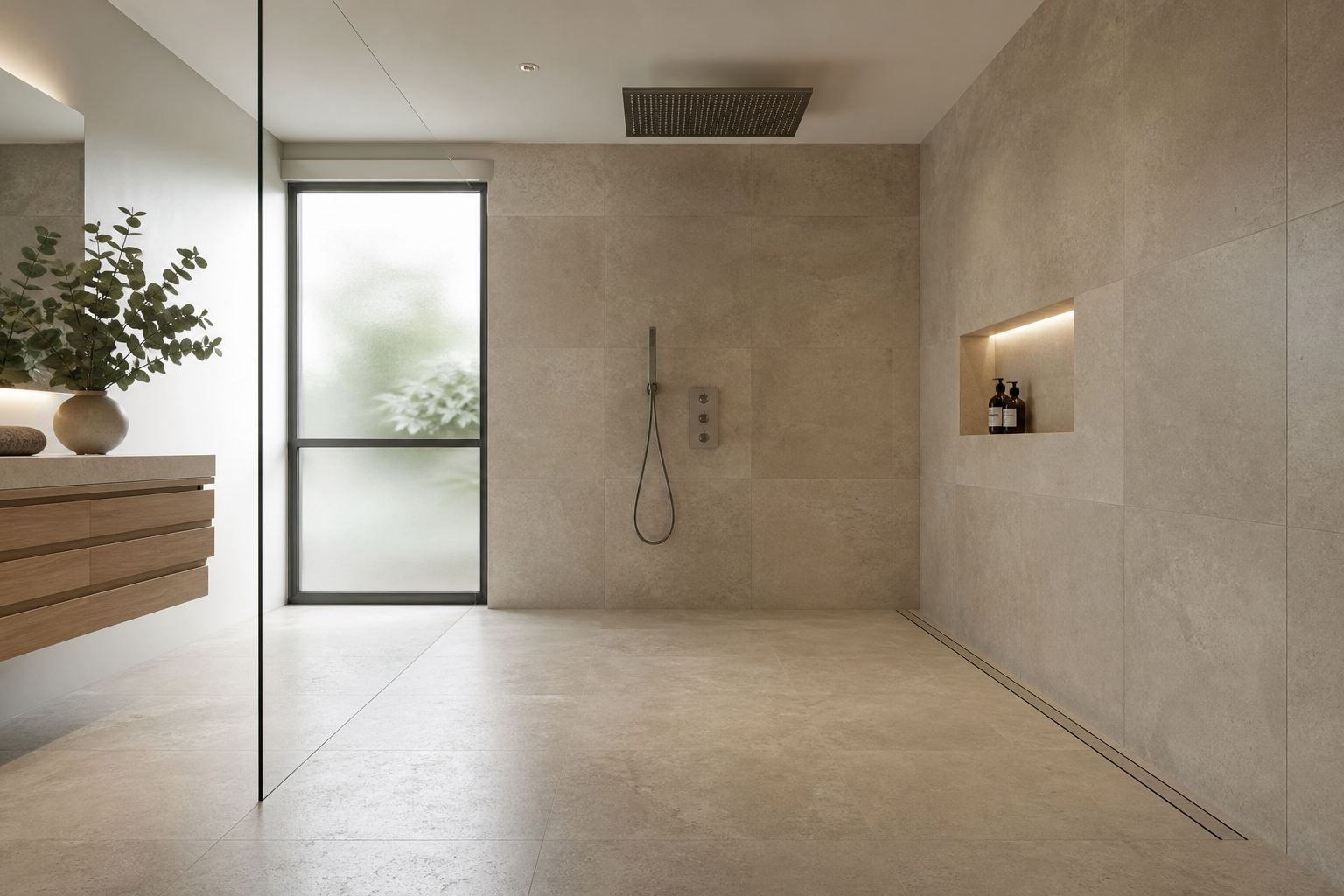
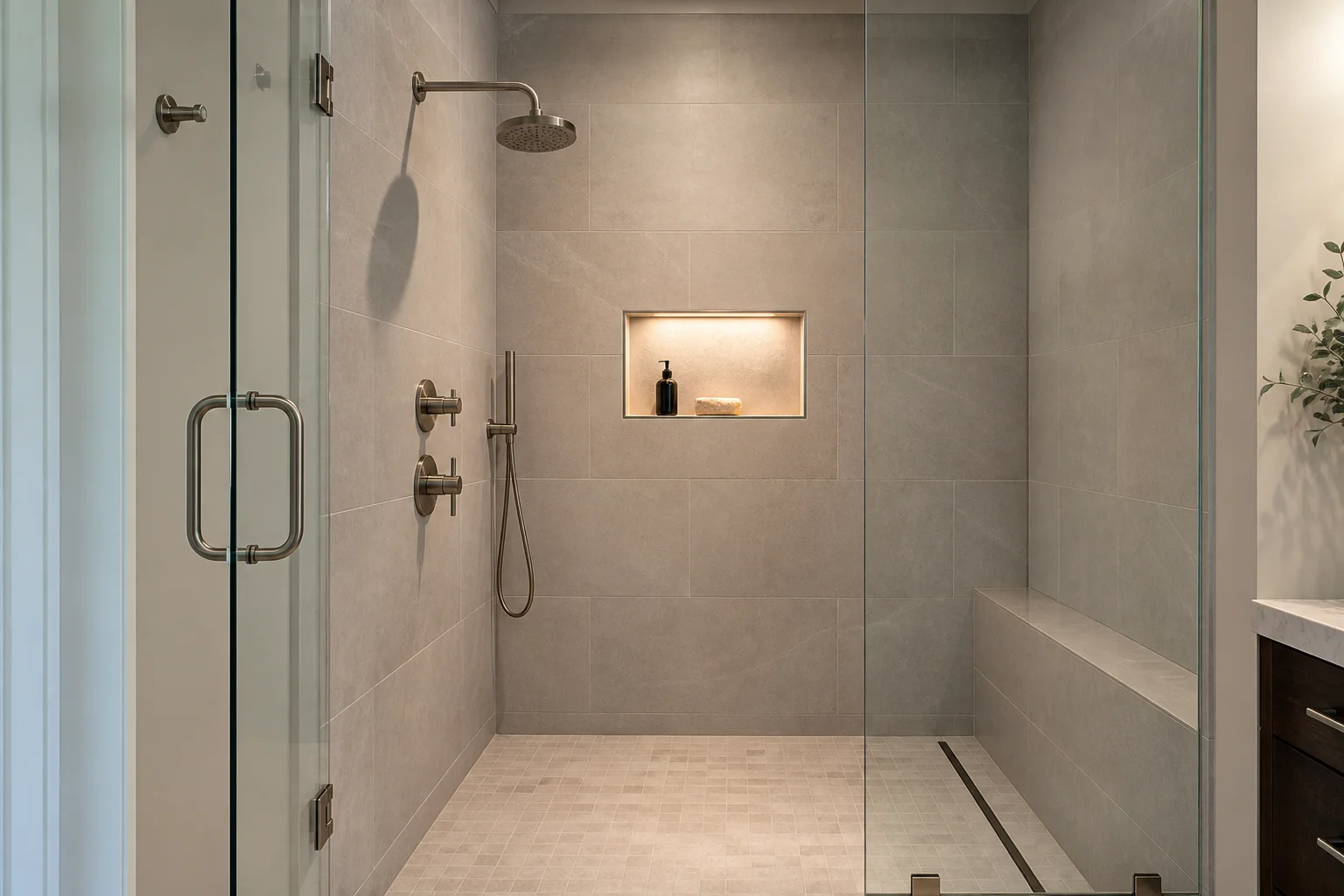
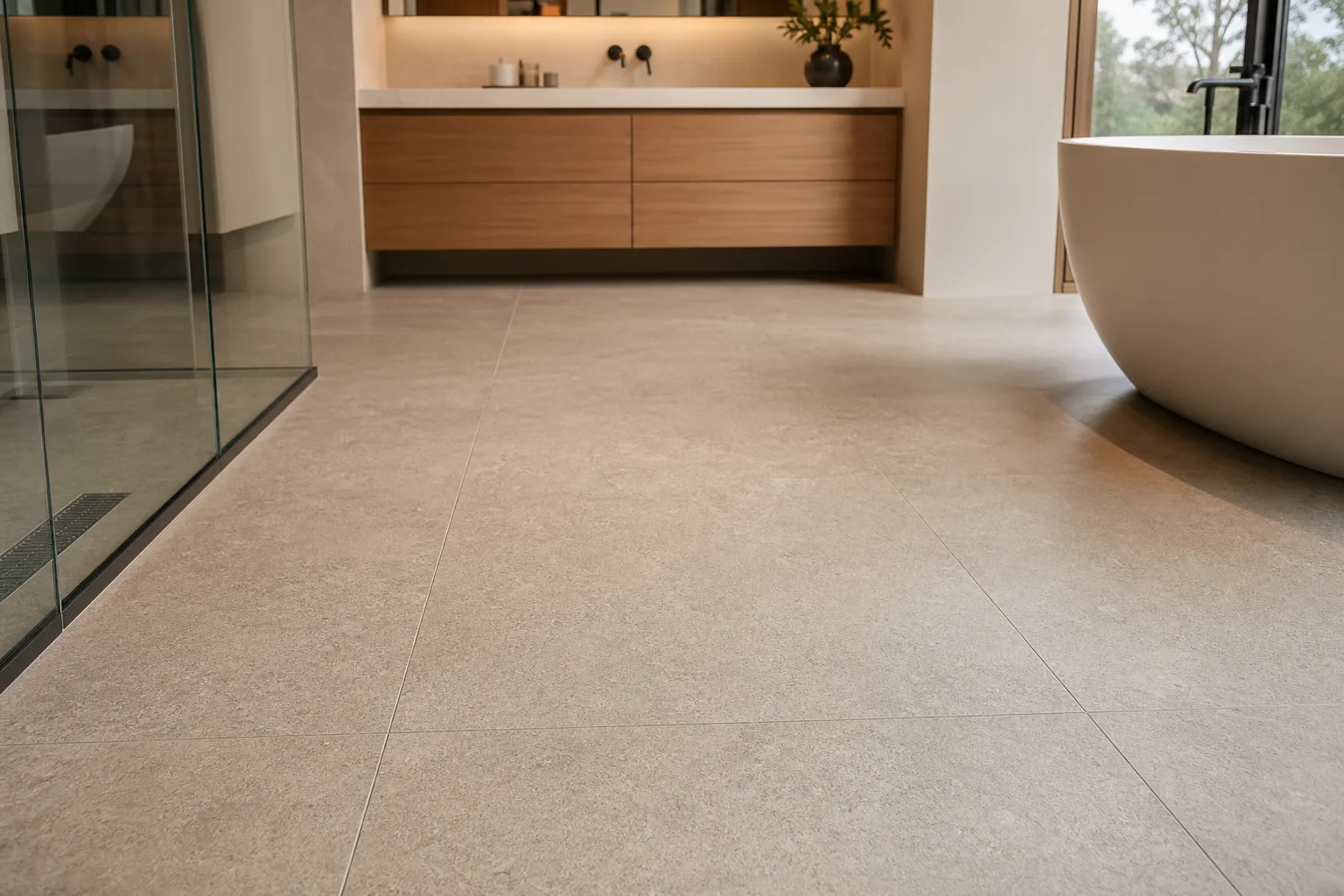
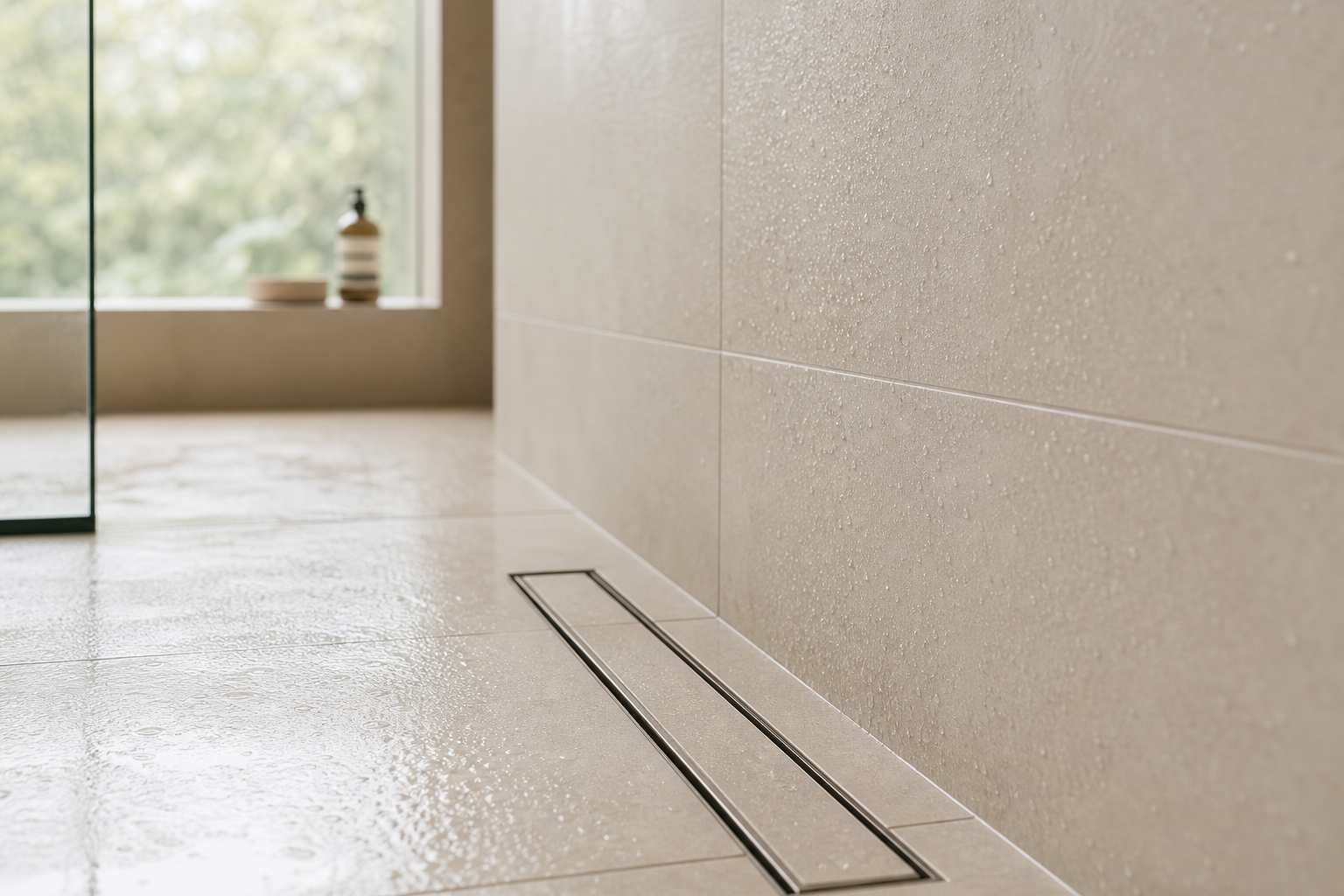
Narrow joints on large-format tile address both variables simultaneously. Large-format rectified porcelain, typically 18-by-18 inches or larger, allows for joints as narrow as 1/16 inch to 1/8 inch because the factory manufacturing process produces tiles with consistent dimensions and straight edges. The result is minimal grout surface, which means minimal area for mold to colonize and minimal scrubbing to keep that area clean. One pass with a squeegee or a damp cloth covers the whole wall. You are cleaning a smooth surface, not a grid.
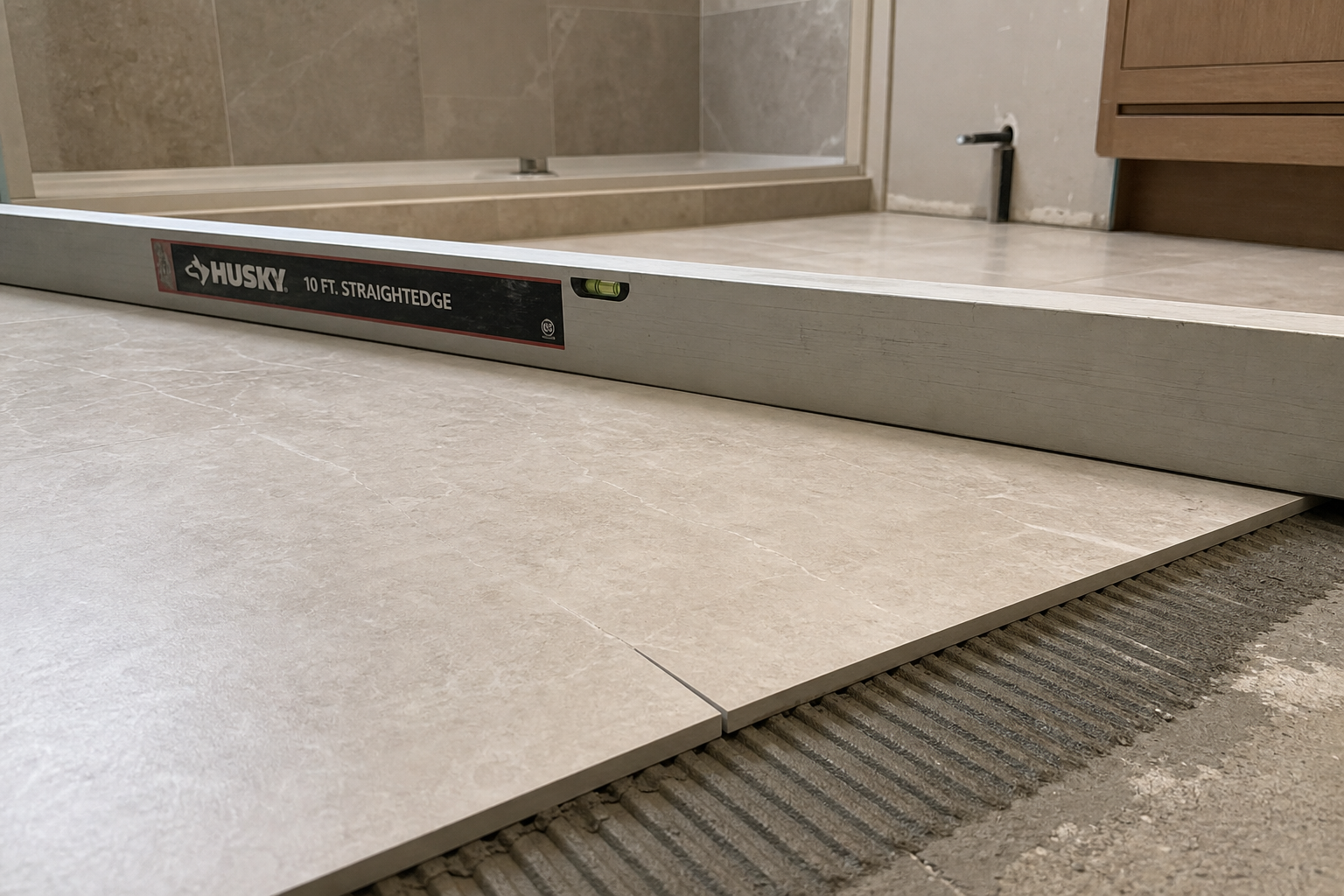
There is a trade-off worth naming. Rectified large-format tile requires a flatter substrate than smaller tile does. Lippage (where adjacent tile edges sit at different heights) becomes visible and uncomfortable underfoot at these dimensions. Proper setting requires skilled installation on a well-prepared surface. But this is a construction quality problem, not an argument against large format tile. It is an argument for not cutting corners on the substrate preparation.
Epoxy grout, which can be used in any joint width, adds another layer of protection: it is essentially non-porous, resists staining, and does not require sealing. Its trade-off is cost and installation difficulty. It is harder to work with than cement-based grout and must be cleaned off tile surfaces during installation before it cures. But in wet zones where grout maintenance has historically been a problem, it earns its cost back quickly.
Surface Texture and the Physics of Soap Scum
Soap scum is a salt. When the fatty acids in soap react with calcium and magnesium ions in hard water, they form insoluble calcium and magnesium stearates that adhere to surfaces. On a smooth, dense surface, the stearate film sits on top of the material and releases with a wipe. On a textured surface, it settles into the microscopic valleys of the finish and requires mechanical effort to remove.
This is the core problem with heavily textured tile in wet zones. The texture that provides visual interest and slip resistance also provides surface area for deposits to grip. A tile rated for heavy texture, like an aggressively dimensional stone look or a deeply scored surface, can require a soft-bristle brush and significant dwell time for cleaning products just to maintain a baseline appearance. Multiply that by every square foot of shower wall and every week of use.
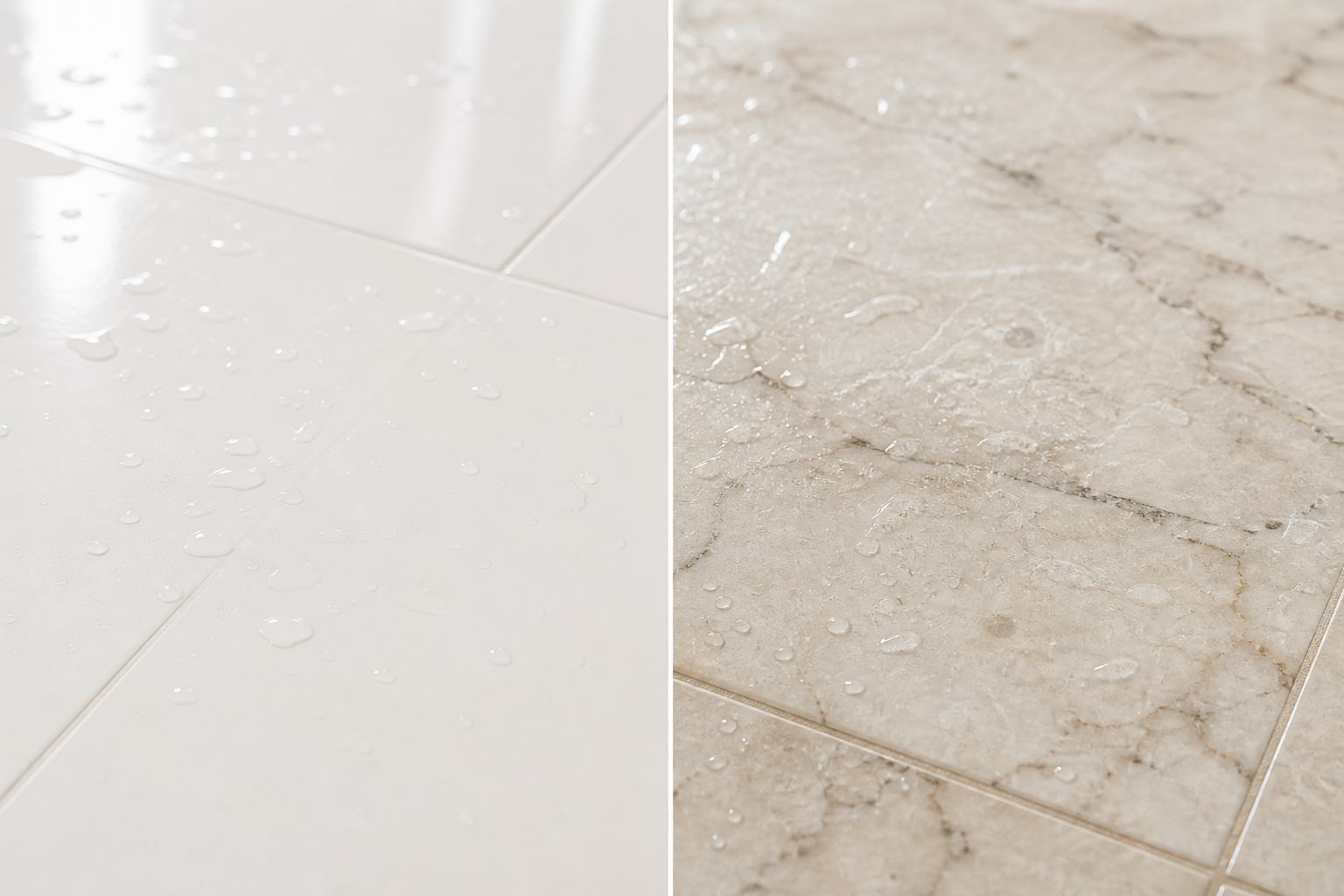
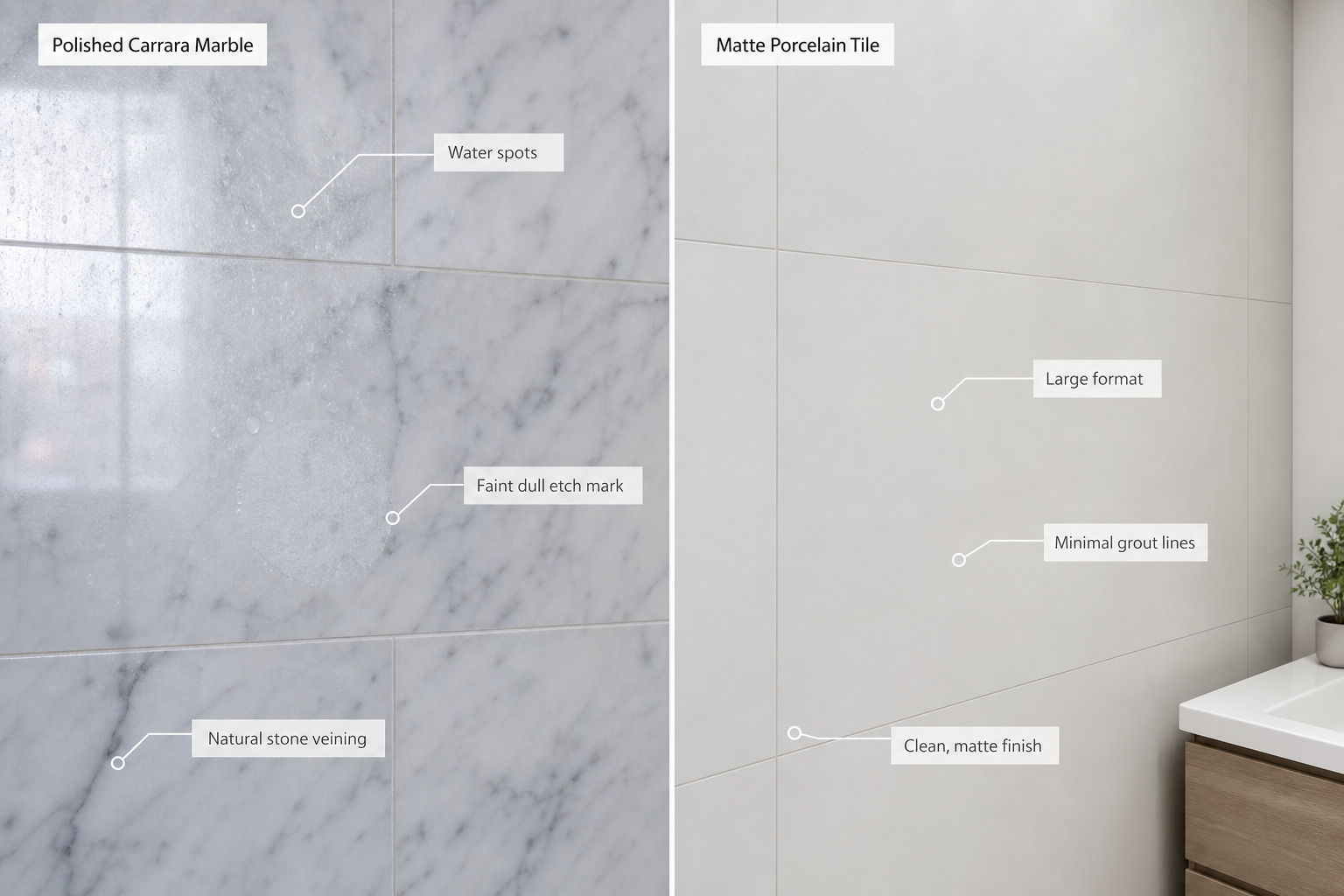
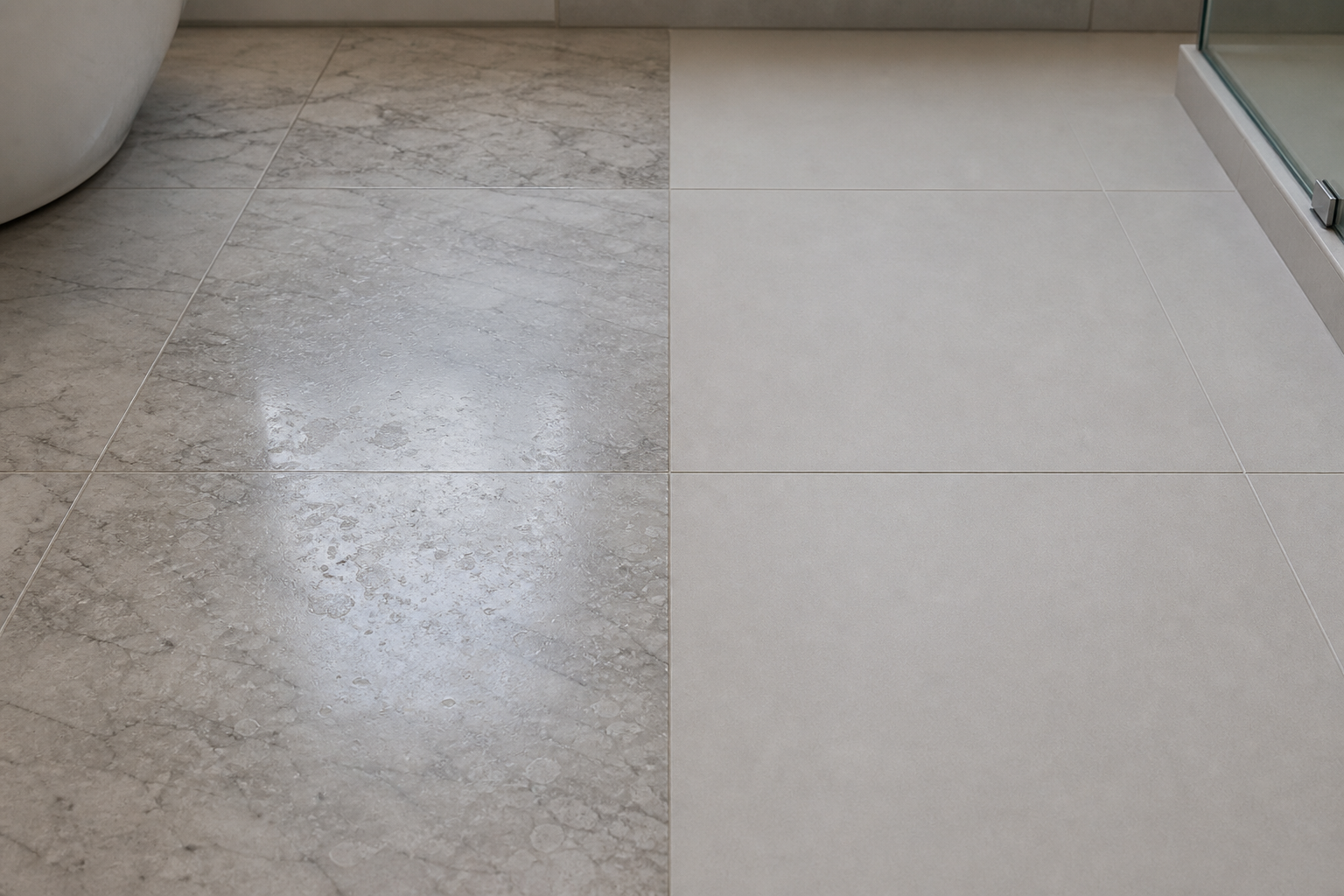
Polished surfaces go to the other extreme. They are the easiest to wipe clean because the surface offers almost no mechanical grip for deposits. But they show everything: water spots, fingerprints, any residual streaking. In a shower that does not get squeegeed after every use, a high-polish surface looks worse than a matte surface within days, even though the soap film is actually thinner.
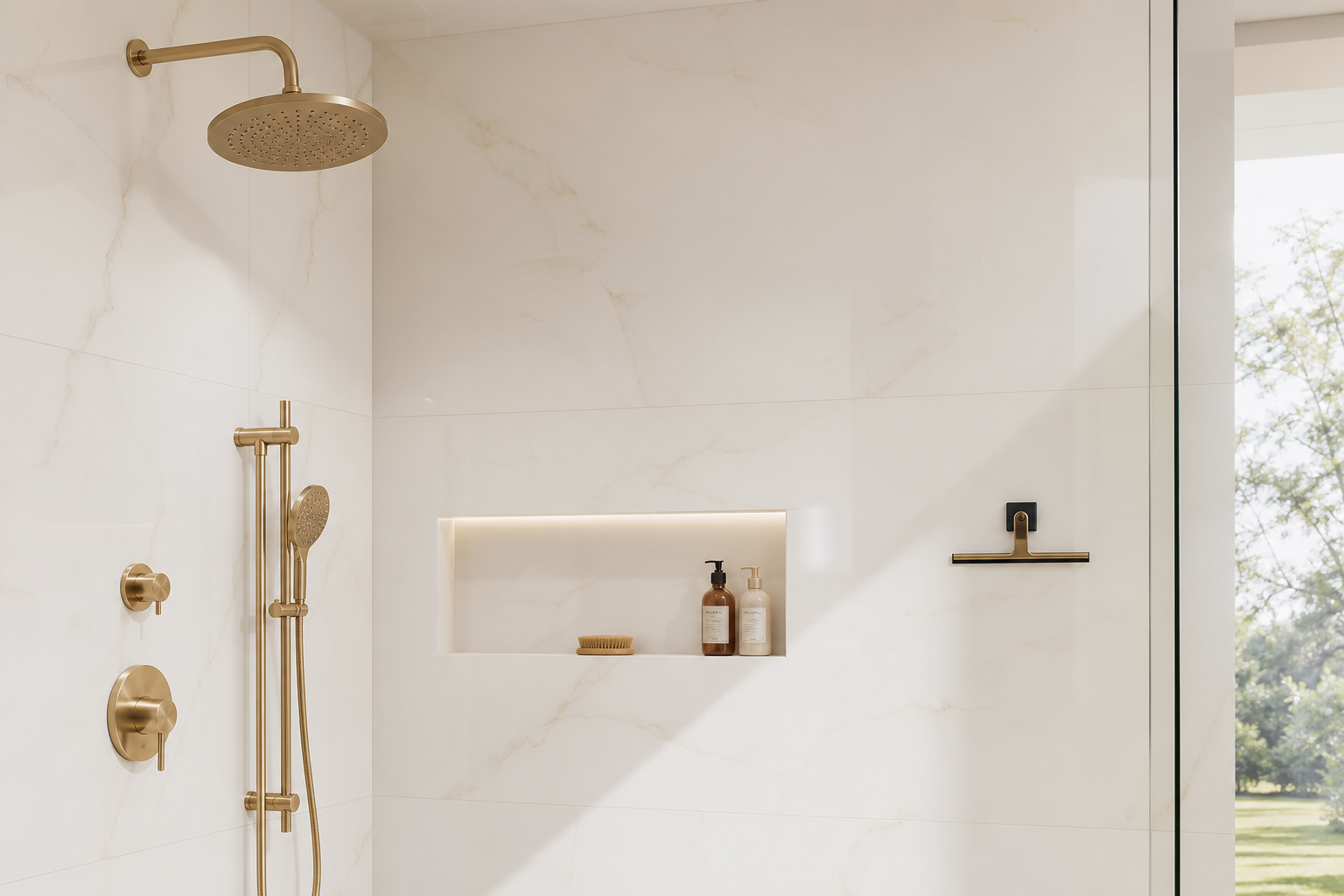
The practical answer for shower walls is a surface finish that sits between these poles: lightly honed or satin-finish porcelain, or a low-texture matte. These surfaces are smooth enough that deposits do not grip deeply, but they are not so reflective that normal use reads as neglect. They clean with a wipe rather than a scrub. They do not demand a squeegee ritual after every shower to look acceptable.
Floor tile is a different calculation because slip resistance is a genuine safety requirement, not a preference. Some texture is appropriate on shower floors and wet bathroom floors. Here the design move is to use the minimum texture necessary for adequate traction and pair it with a grout color that is close to the tile color so that grout darkening is less visible. A charcoal grout in a gray-toned floor tile installation reads as a continuous surface rather than a dirty grid.
The Transition Detail Nobody Thinks About
The floor-to-wall junction at the base of a shower is one of the most failure-prone details in residential construction, and it is one of the most overlooked decisions in how cleanable a bathroom ends up being.
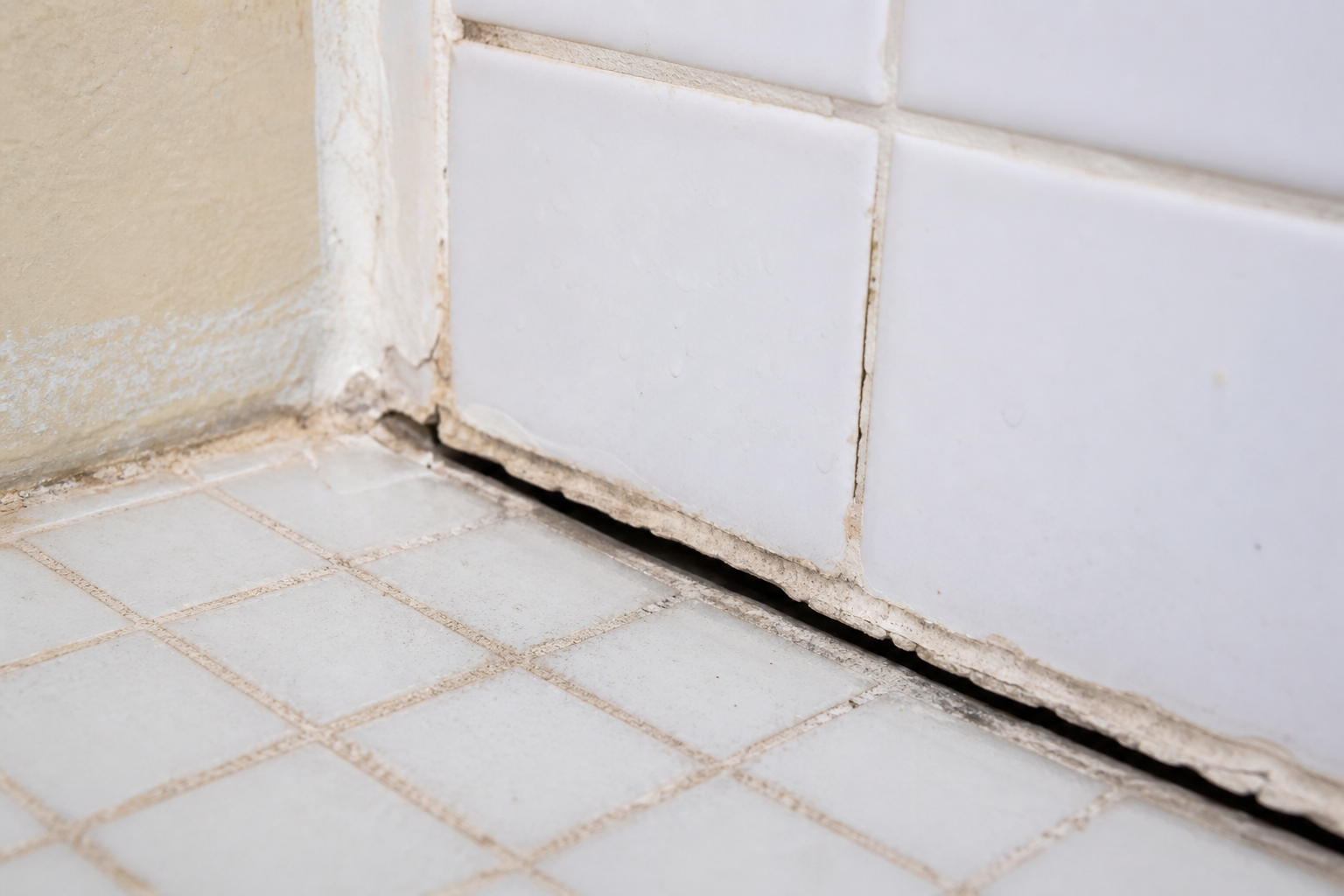
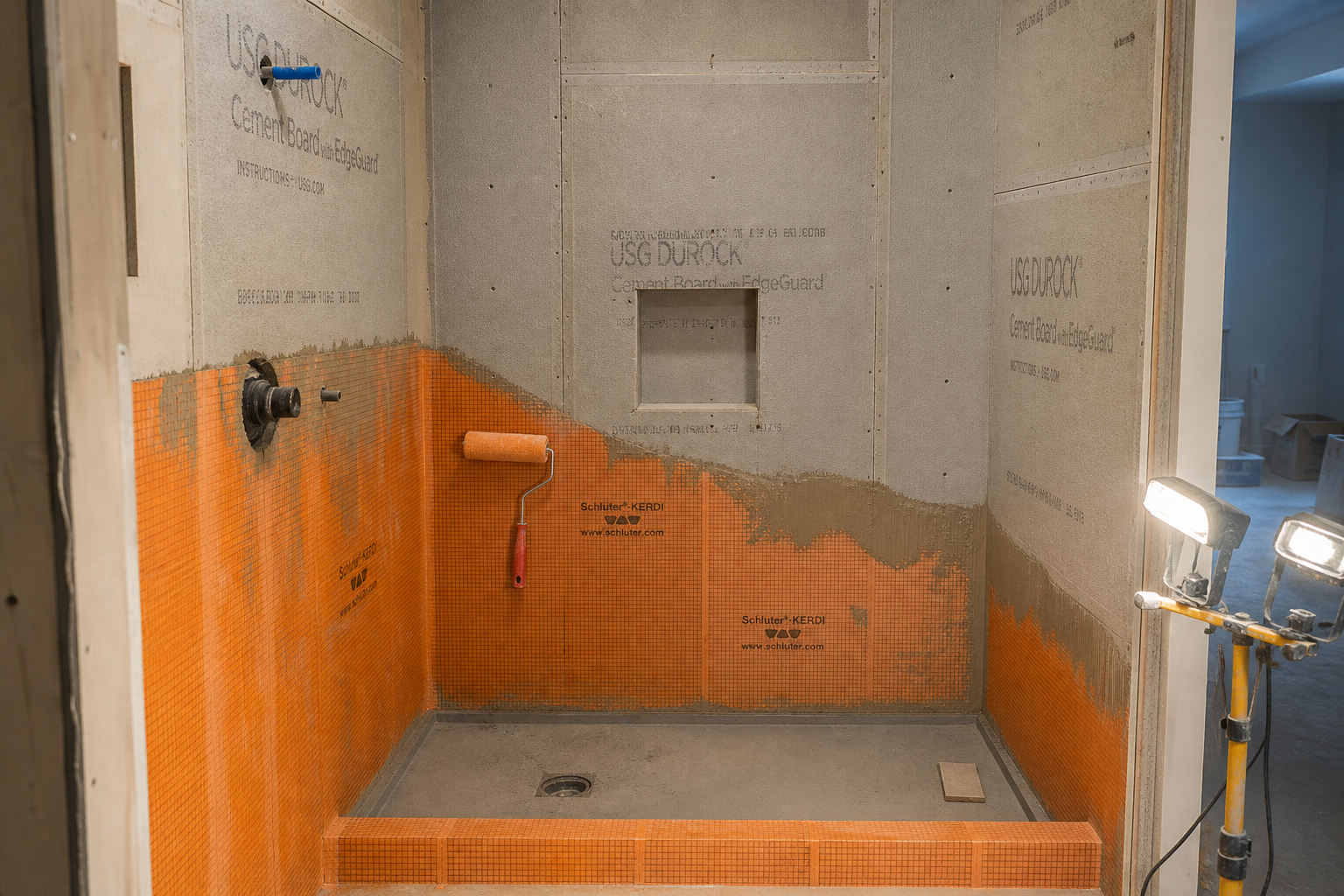
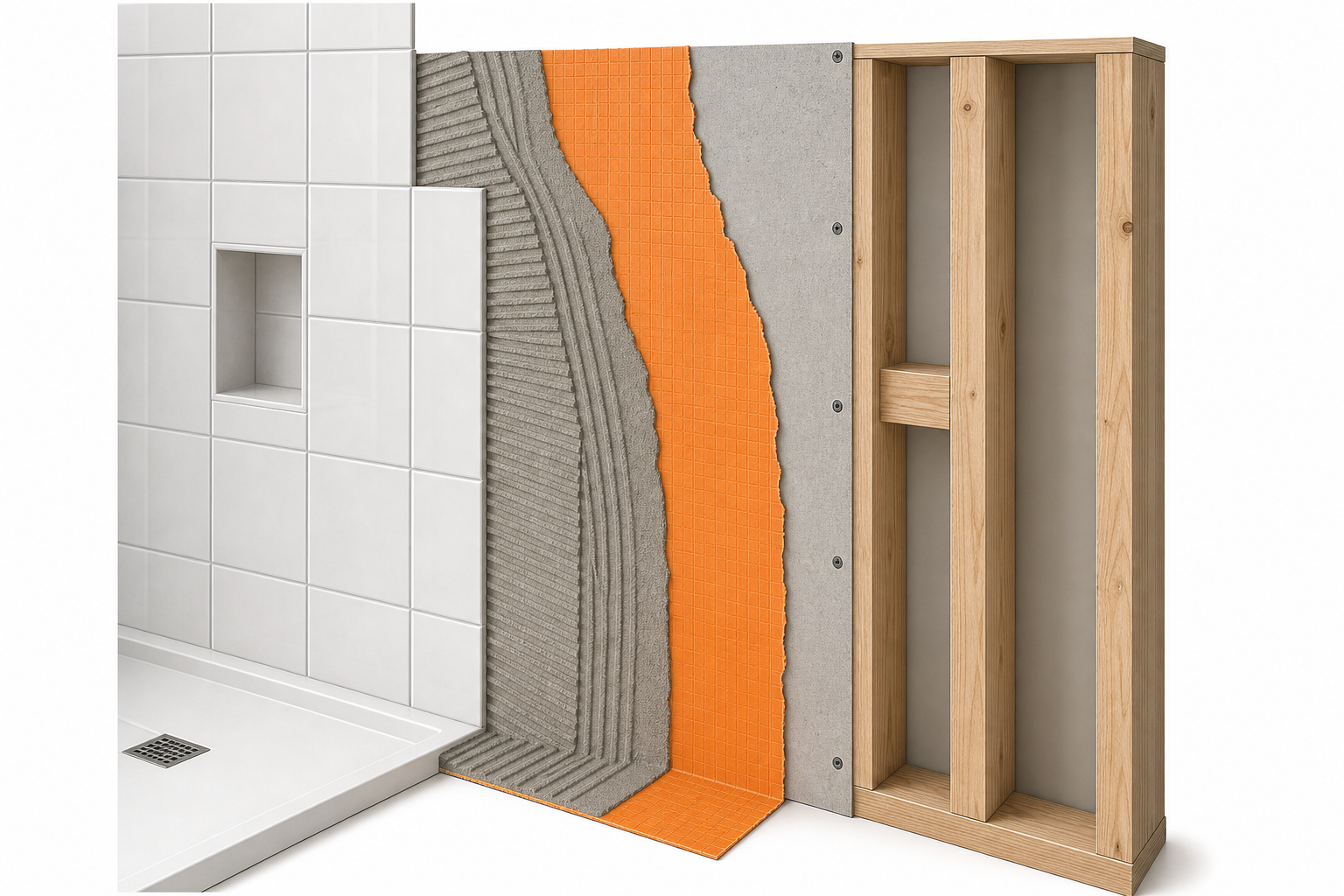
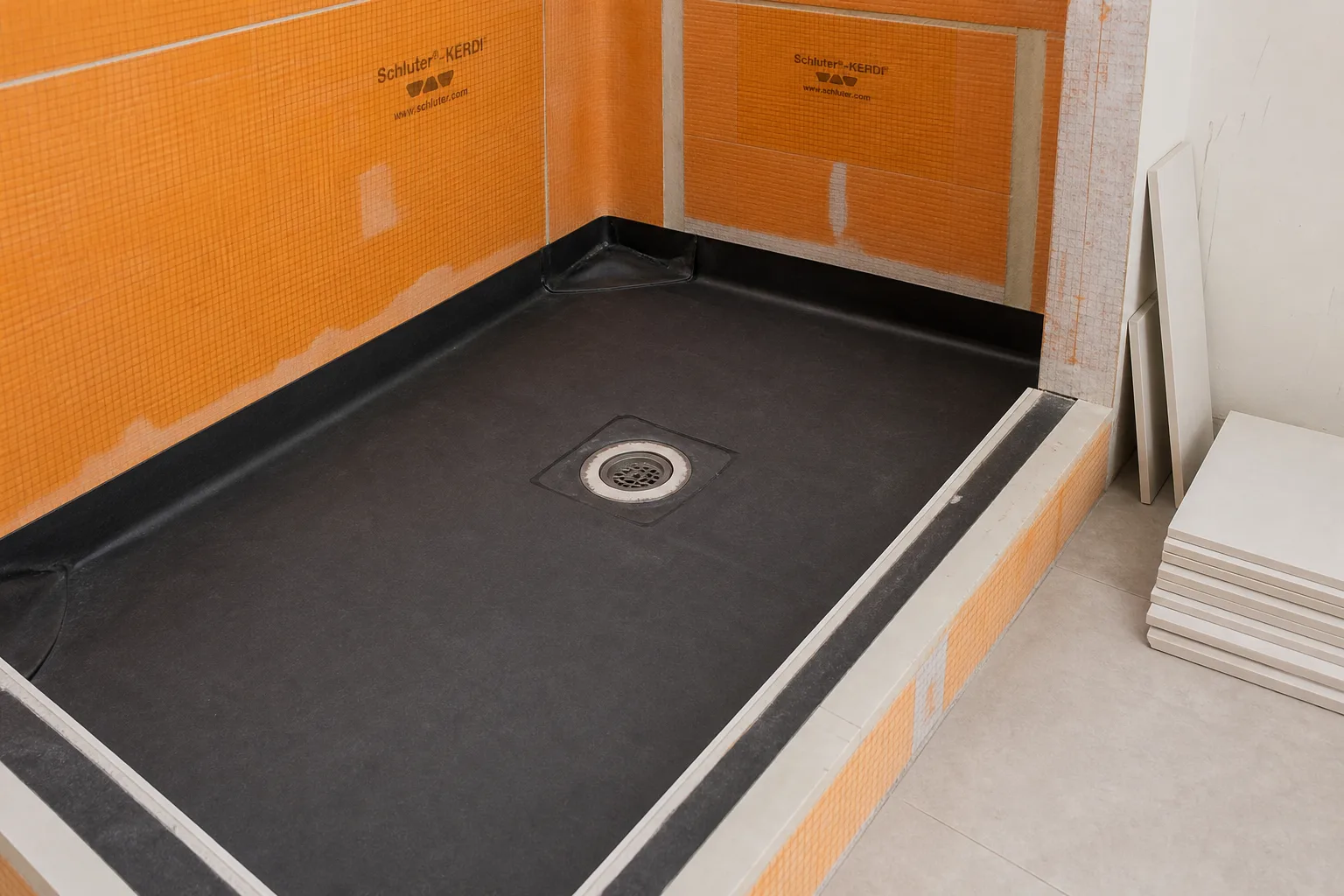
Cement grout is rigid. Tile assemblies move. The floor substrate and wall substrate move at slightly different rates due to structural loads, thermal cycling, and moisture expansion. When a rigid material bridges a change of plane between two surfaces that move independently, the material fails. Grout cracks at floor-wall corners predictably and repeatedly, which is why tile industry standards (TCNA EJ171) require that inside corners be filled with a compressible sealant rather than grout.
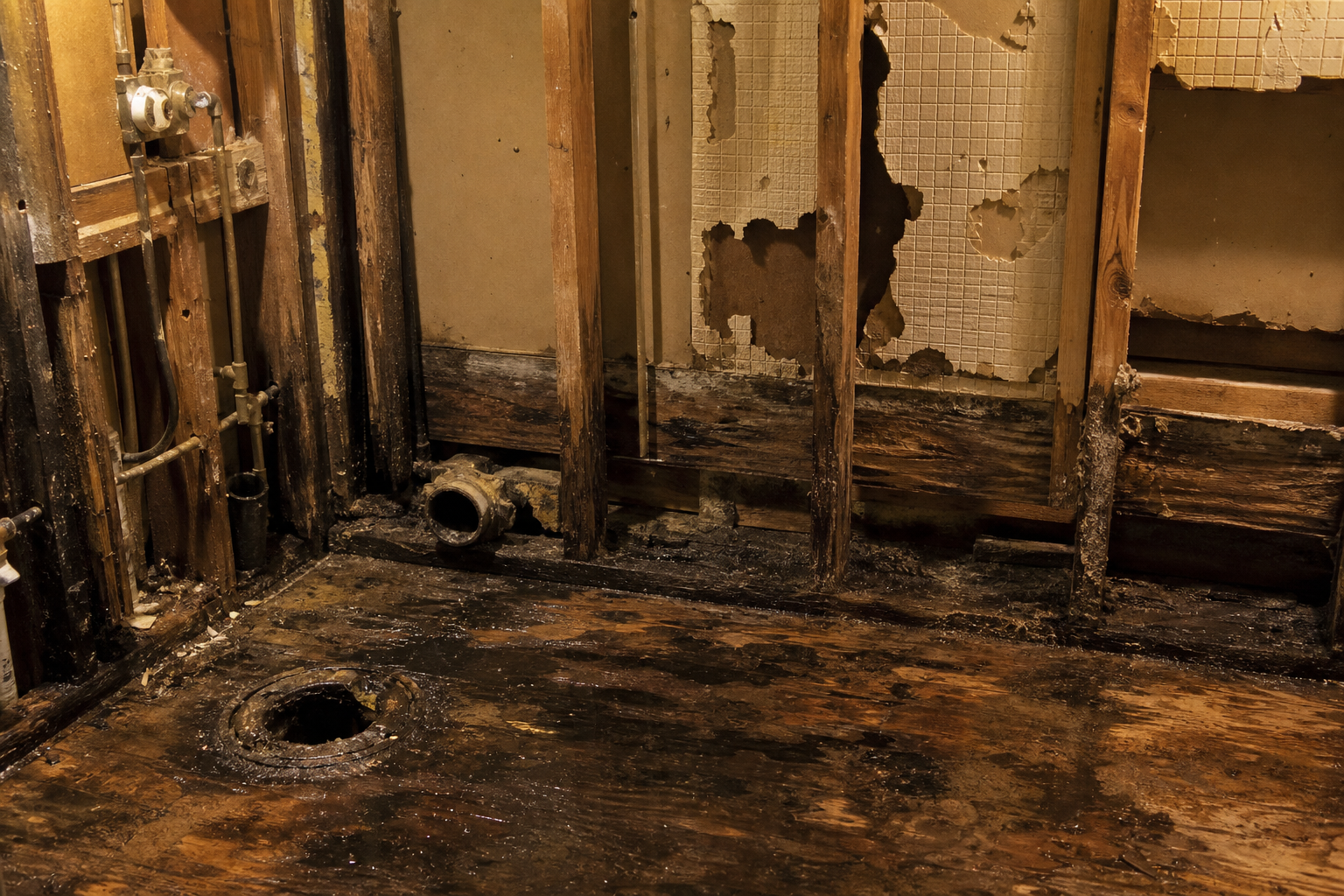
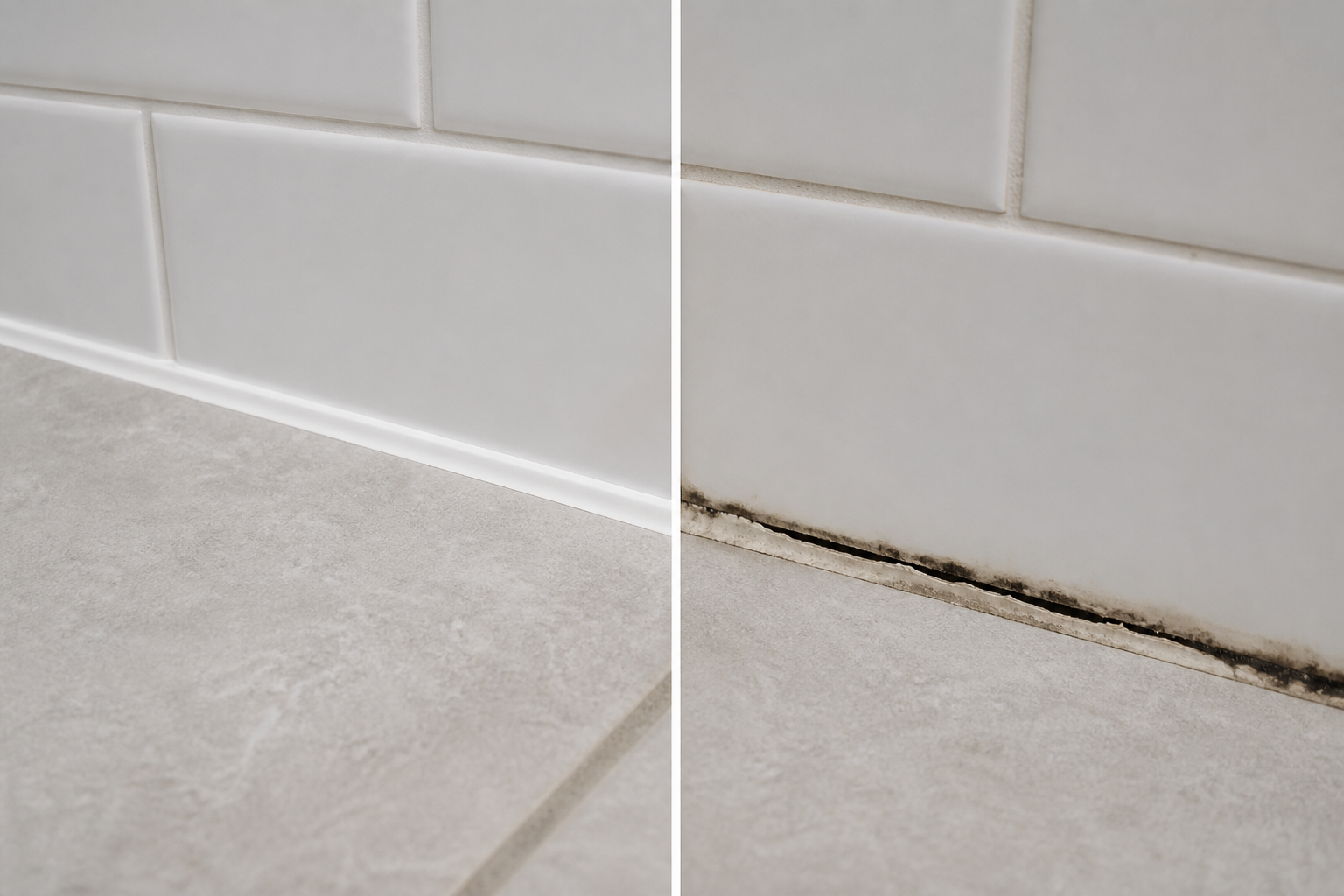
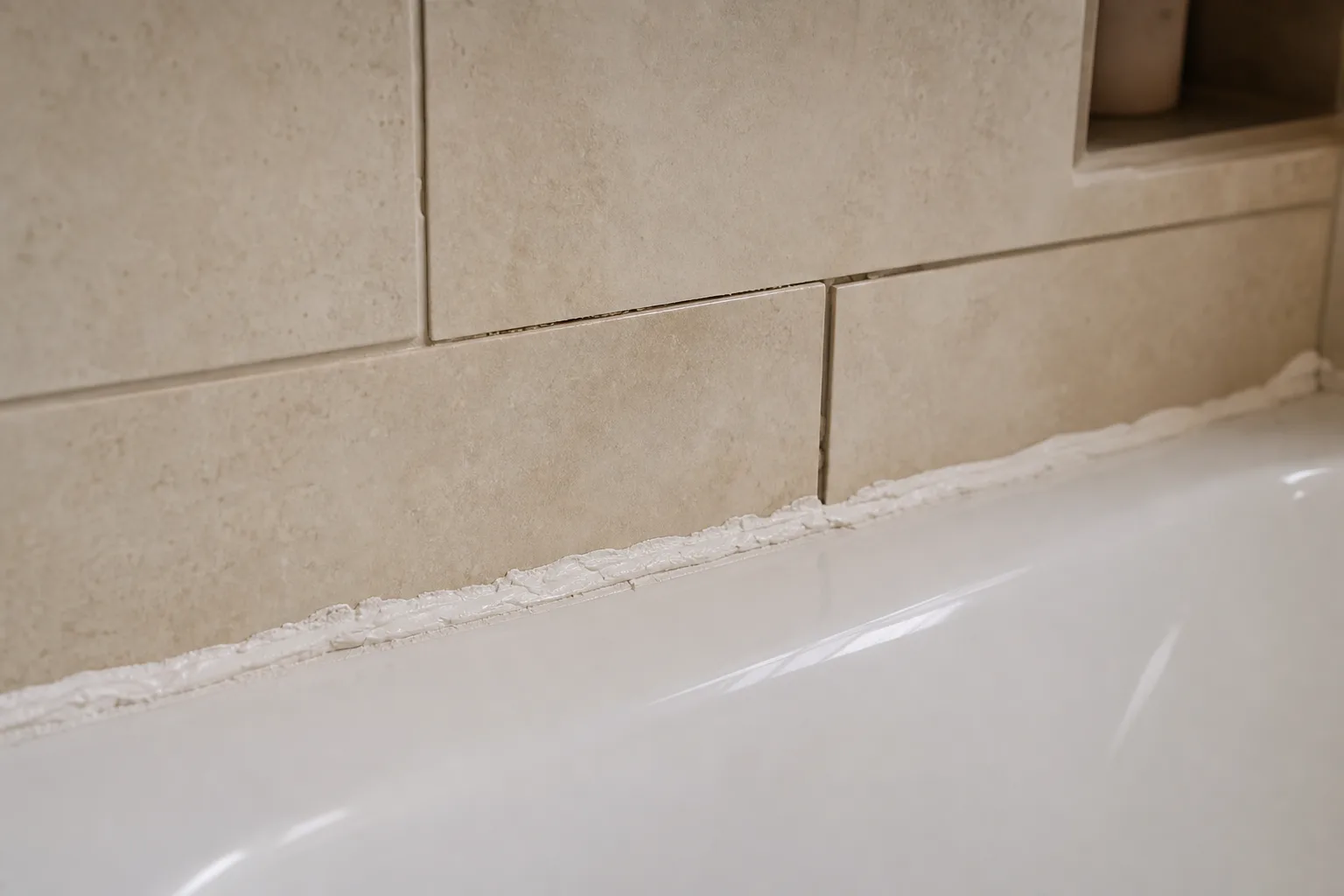
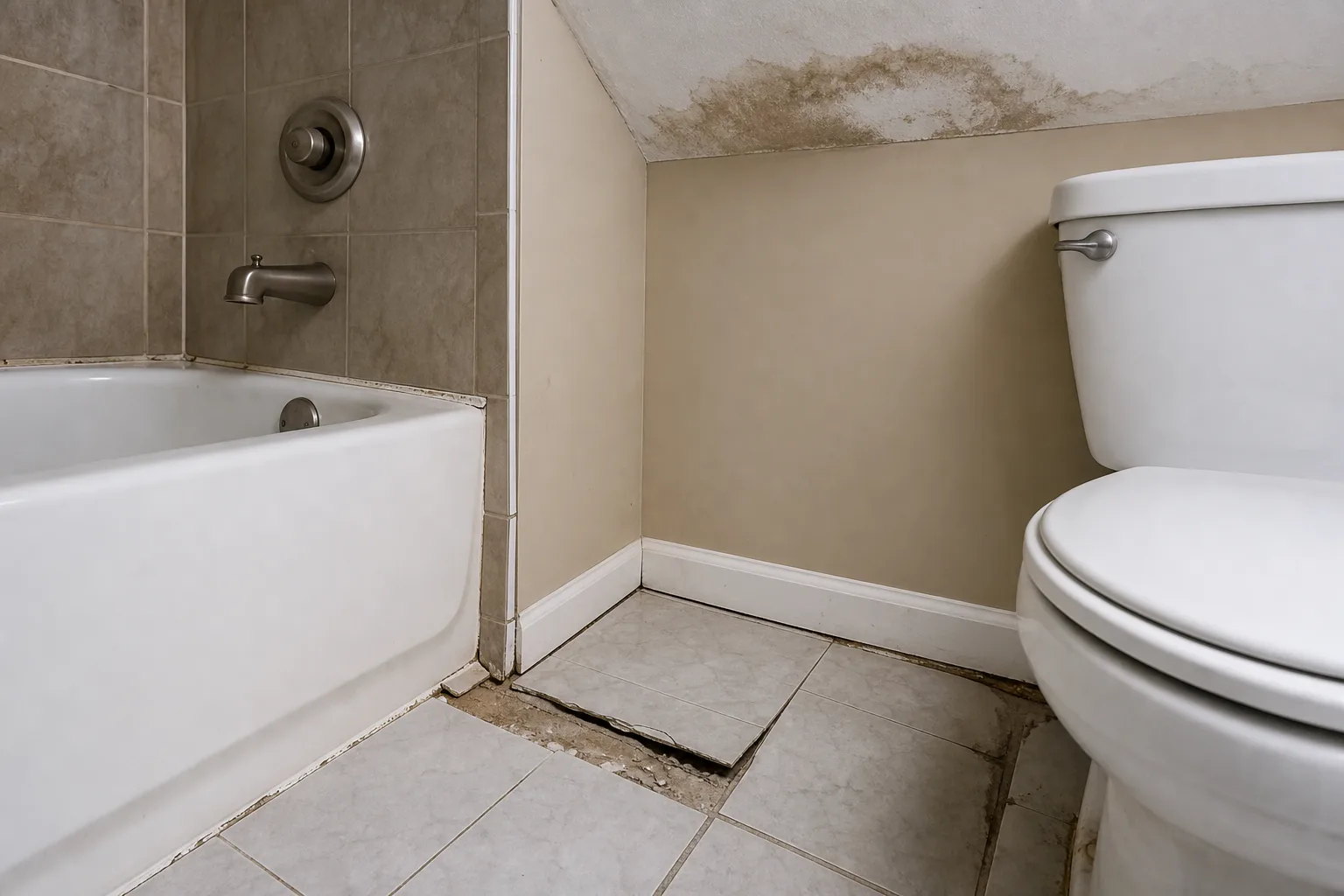
The compressible sealant at that joint is almost always silicone caulk. And this is where the cleaning problem arrives in a different form. Caulk in a wet environment, particularly at the floor-to-wall transition where water pools and dries repeatedly, is the surface most susceptible to mold penetration. Surface mold can be cleaned. Mold that has grown inside the caulk body cannot be removed; the caulk must be replaced. In a bathroom without adequate ventilation, that replacement cycle can run as short as two or three years.
The detail that performs best for both structural integrity and long-term cleanability is a continuous silicone joint at changes of plane using a mold-resistant silicone formulation, combined with ventilation adequate to dry the room between uses. The silicone will still need periodic replacement. That is a ten-minute maintenance task, not a construction problem. The failure mode is managed and minor.
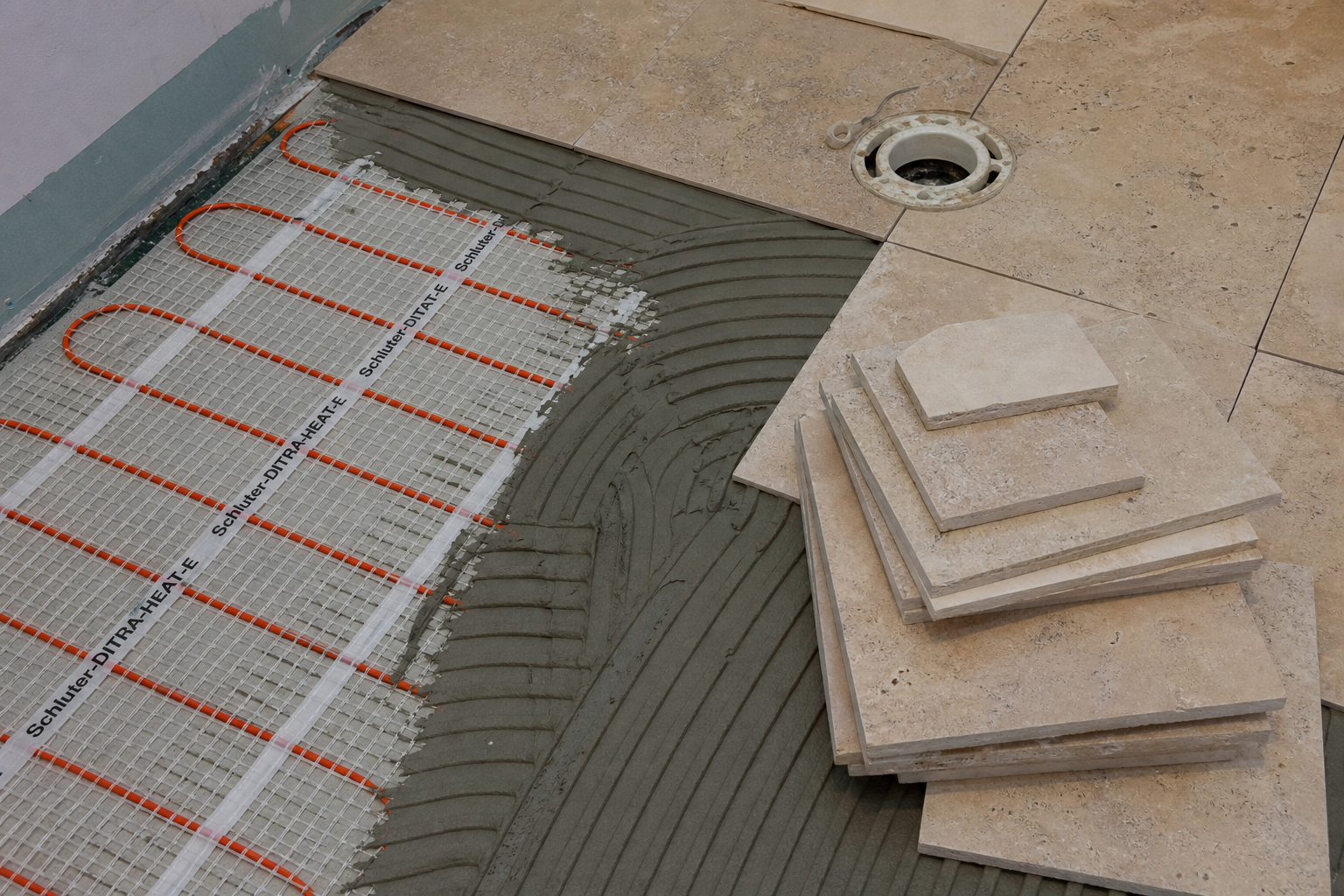
Some designers specify a metal schluter strip at the floor-wall transition rather than a caulk joint. The strip protects the tile edge, takes the movement in the metal rather than in a sealant, and creates a surface that does not mold the way caulk does. It is a more durable long-term solution but adds cost and requires a specific reveal that may or may not suit a given aesthetic.
Ventilation Is Not Optional Infrastructure
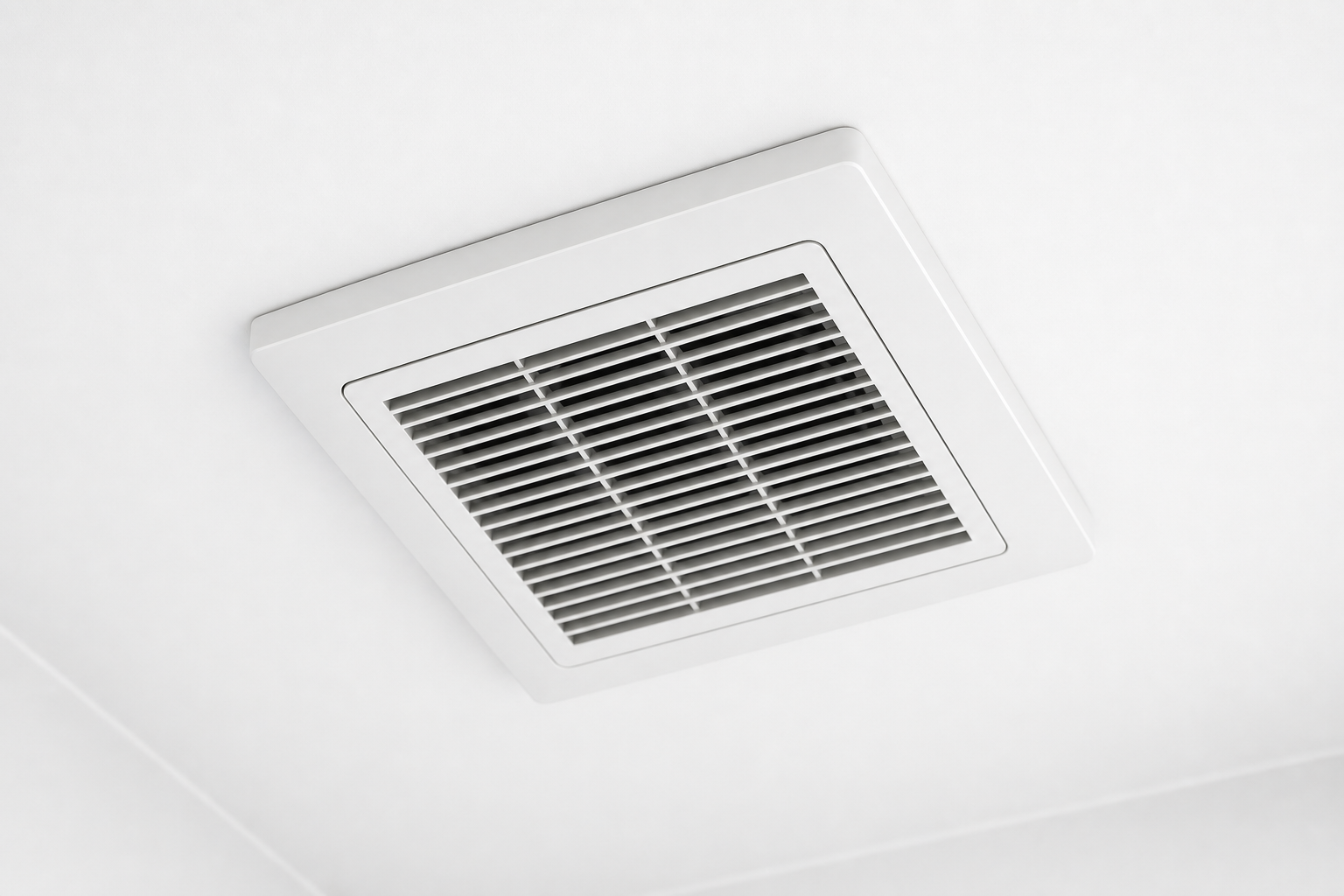
Every other design decision in this article is partly undone by inadequate ventilation. A bathroom with narrow grout lines, smooth tile, and correctly detailed transitions will still develop mold in its caulk joints, mineral deposits on its surfaces, and a chronic damp smell if the exhaust ventilation cannot remove moisture faster than showering introduces it.
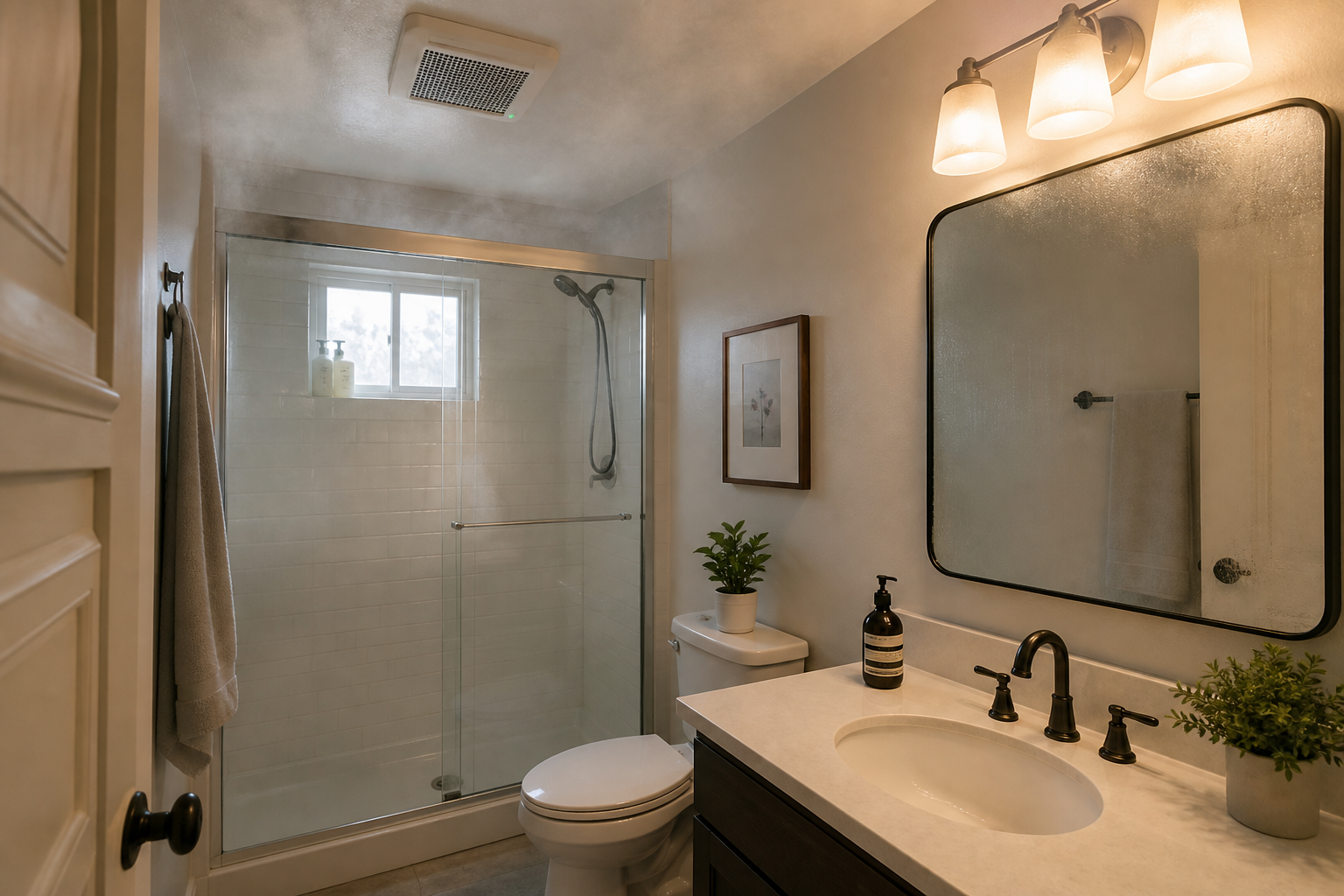
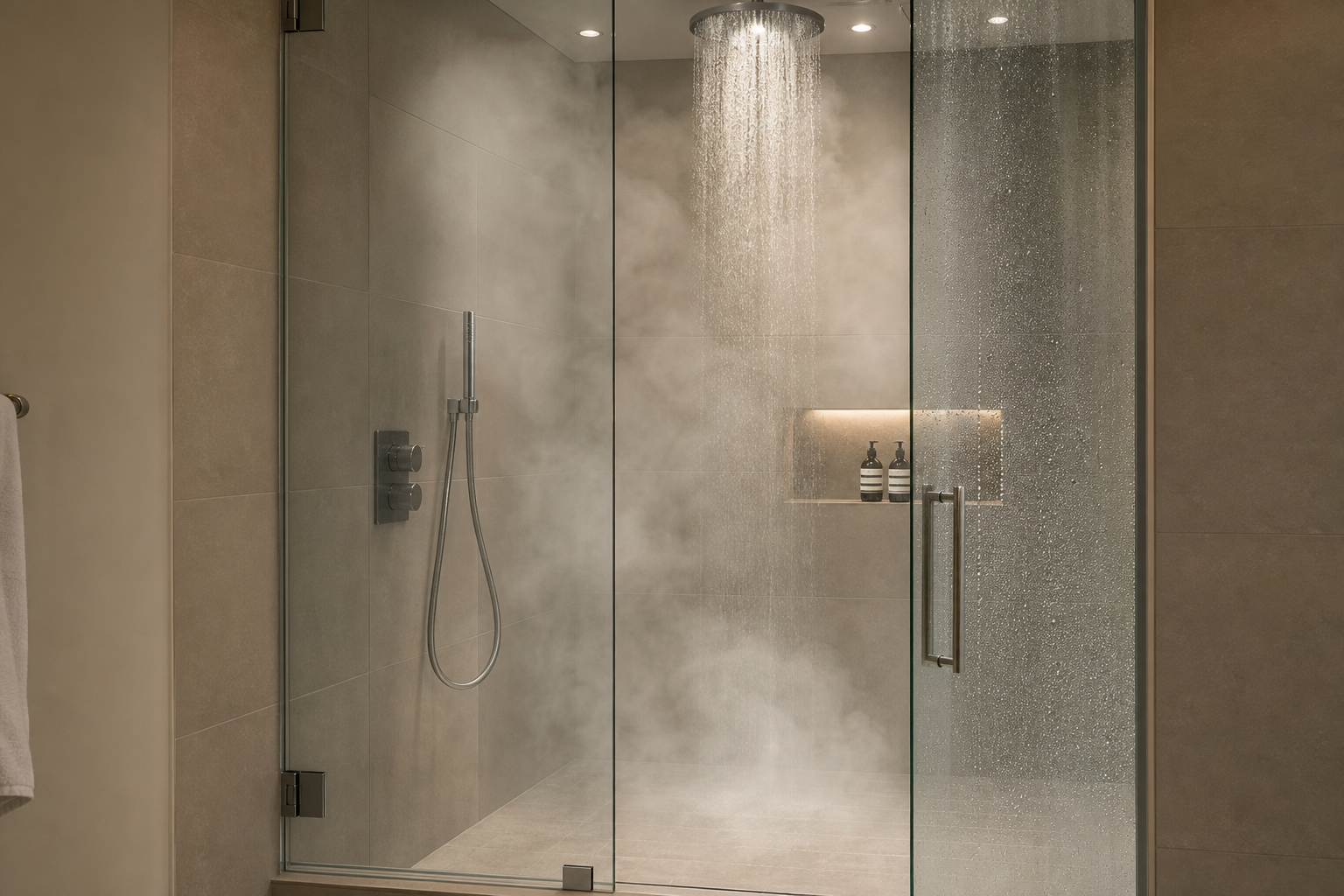
A shower produces roughly 0.4 to 0.5 pounds of water vapor in an eight-minute use. At the IRC-required minimum of 50 CFM of intermittent exhaust (or 20 CFM continuous), the room can remove that moisture load within a reasonable window after the shower ends. Below that threshold, moisture accumulates on surfaces faster than it can leave the room. The relative humidity stays elevated. Surfaces remain damp for hours. Mold colonizes caulk and grout more aggressively. Hard water deposits form thicker films because water sits rather than evaporating.
The practical complication is that the 50 CFM rating on a fan box is a bench measurement at zero static pressure, not a delivered airflow figure. Every foot of duct, every elbow, and every termination cap adds resistance that reduces real-world performance. Most residential installations lose 20 to 50 percent of rated CFM in the installed condition, which means a fan labeled "50 CFM" may deliver 25 to 35 CFM in the wall. ENERGY STAR recommends selecting a fan rated at least 70 CFM for intermittent use to ensure the installed system actually meets the 50 CFM requirement.
Duct routing matters as much as fan sizing. Flex duct that sags collects condensate. Long runs with multiple bends multiply resistance. Terminations that point into prevailing wind add back-pressure. An inadequately ducted fan can run continuously and still fail to ventilate the room, while giving the occupant the impression that ventilation is happening because they can hear the motor.
Timer controls and humidity-sensing switches are practical rather than optional in any bathroom that sees regular use. Run the fan during the shower and for at least twenty minutes after the last shower of the day. In a high-humidity climate or a bathroom with an enclosed shower rather than an open one, that window may need to be longer. A humidity-sensing fan that runs until the relative humidity drops to a set threshold is the most reliable way to ensure the room actually dries between uses without depending on occupant behavior.
Material Placement and the Dry Zone Strategy
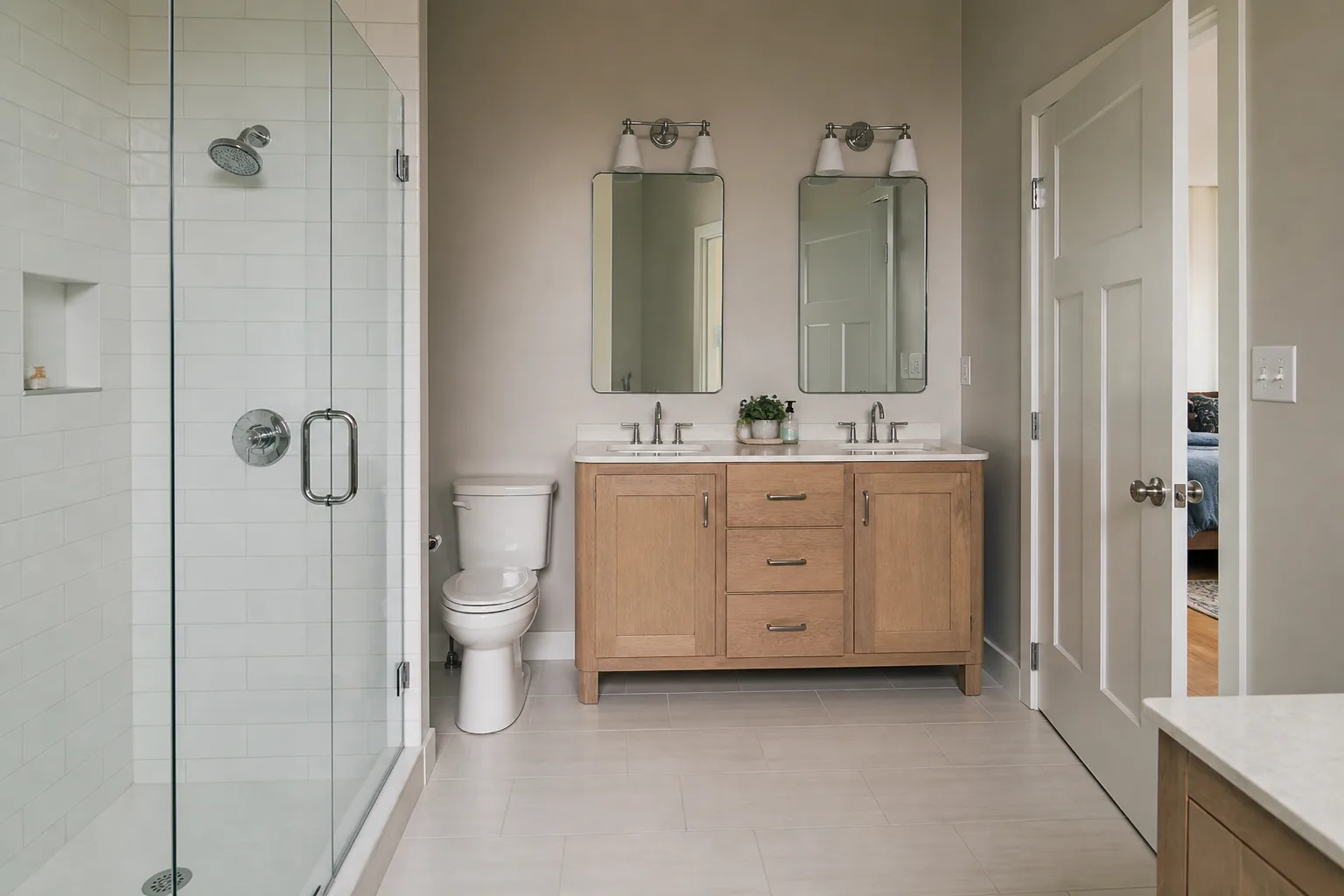
Not every surface in a bathroom is equally wet. The interior of the shower sees direct water contact and prolonged humidity. The outer wall of the shower enclosure sees splash and cleaning chemicals but dries relatively quickly. The vanity area and toilet zone may see no direct water at all.
Matching material maintenance requirements to actual exposure is a straightforward approach that most bathroom specifications miss. Applying highly textured stone to shower walls because it looks beautiful, then applying the same material to a dry powder room floor, creates very different maintenance realities. The powder room floor is essentially maintenance-free. The shower wall becomes a problem within a year.
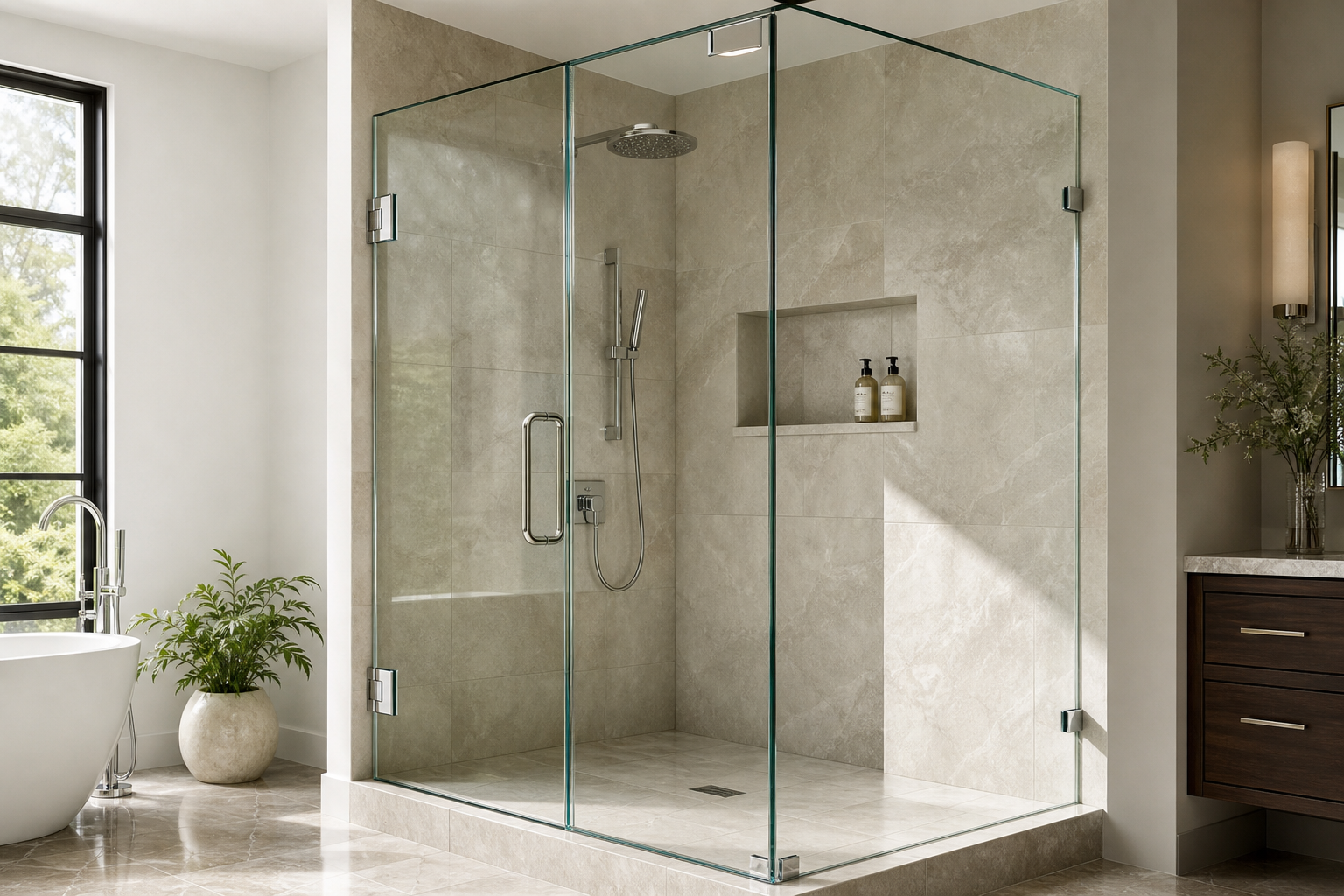
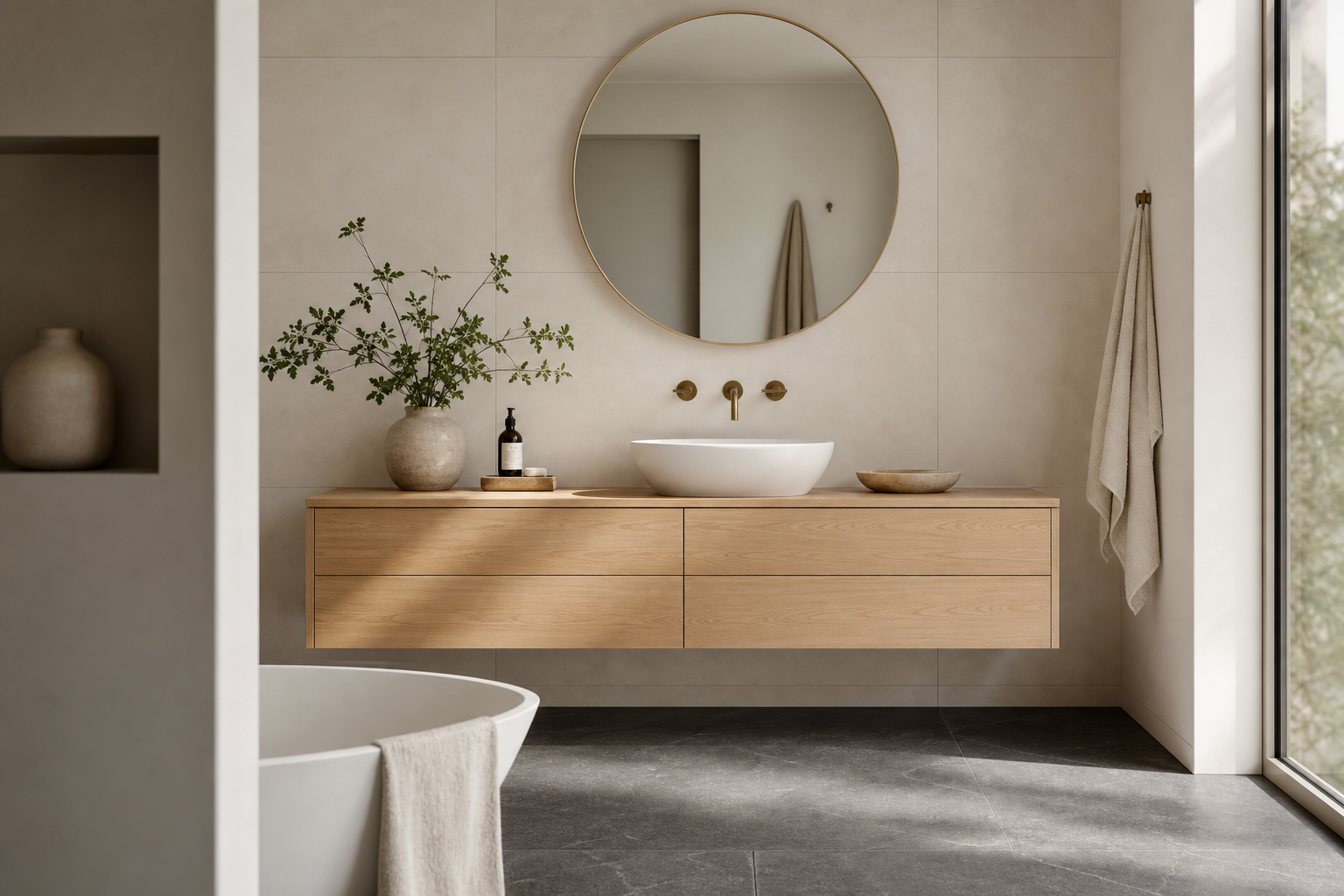
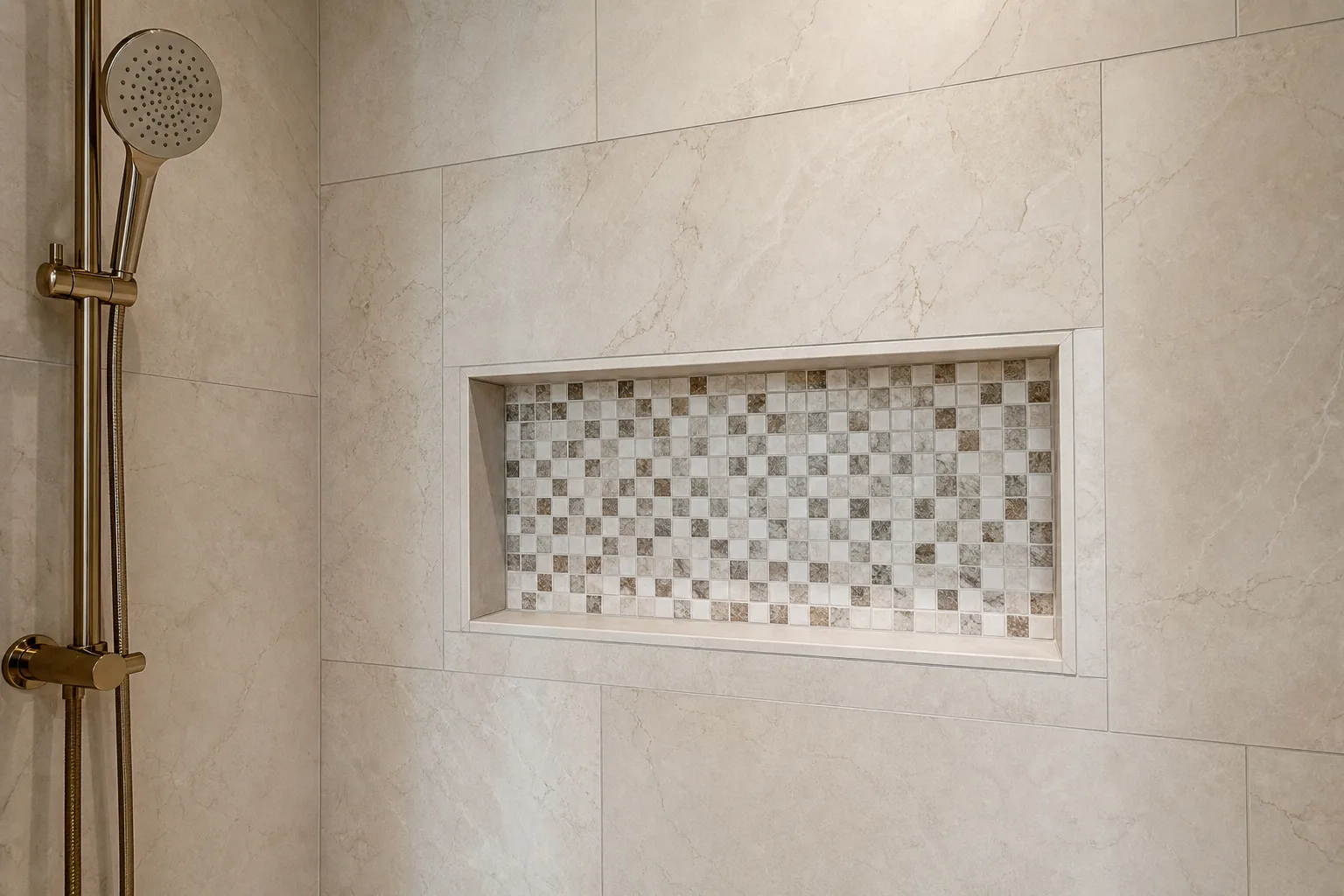
The practical version of this strategy: use your most impervious, smoothest, easiest-to-clean surfaces in the wettest zones. Smooth-finish rectified porcelain in the shower. Honed or matte porcelain on the floor where texture is needed for traction. If natural stone is important to the design, restrict it to the vanity wall, the feature niche outside the wet zone, or a dry floor where the porosity and maintenance requirements do not compound.
The one position worth taking plainly here: tile choice is the last variable that matters for cleanability. The decisions that actually determine how much time you spend cleaning a bathroom are grout joint density, surface finish in wet zones, transition detailing, and ventilation performance. A beautifully tiled bathroom that was specified without attention to those four things will be punishing to maintain. A modest bathroom specified with them in mind will be easy.
What PNW B&D Actually Does
We ask about cleaning habits before we specify any surface in a wet zone. How often does the household clean? Does anyone squeegee after showers, or is that a non-starter? Is there a cleaning person, and do they have preferences that should inform material selection? A household that cleans daily gets different grout color guidance than one that cleans weekly. A client who travels frequently gets different caulk detail recommendations than one who runs the exhaust fan diligently every morning. We have walked back beautiful stone shower concepts when the honest answer to our questions made clear that the client wanted a room that could tolerate real life, not one that punished them for it.
What Daily Life Actually Feels Like in This Room
This is the L5 payoff, and it is quieter than most people expect. You do not feel it as a dramatic improvement. You feel it as the absence of the thing that used to annoy you.
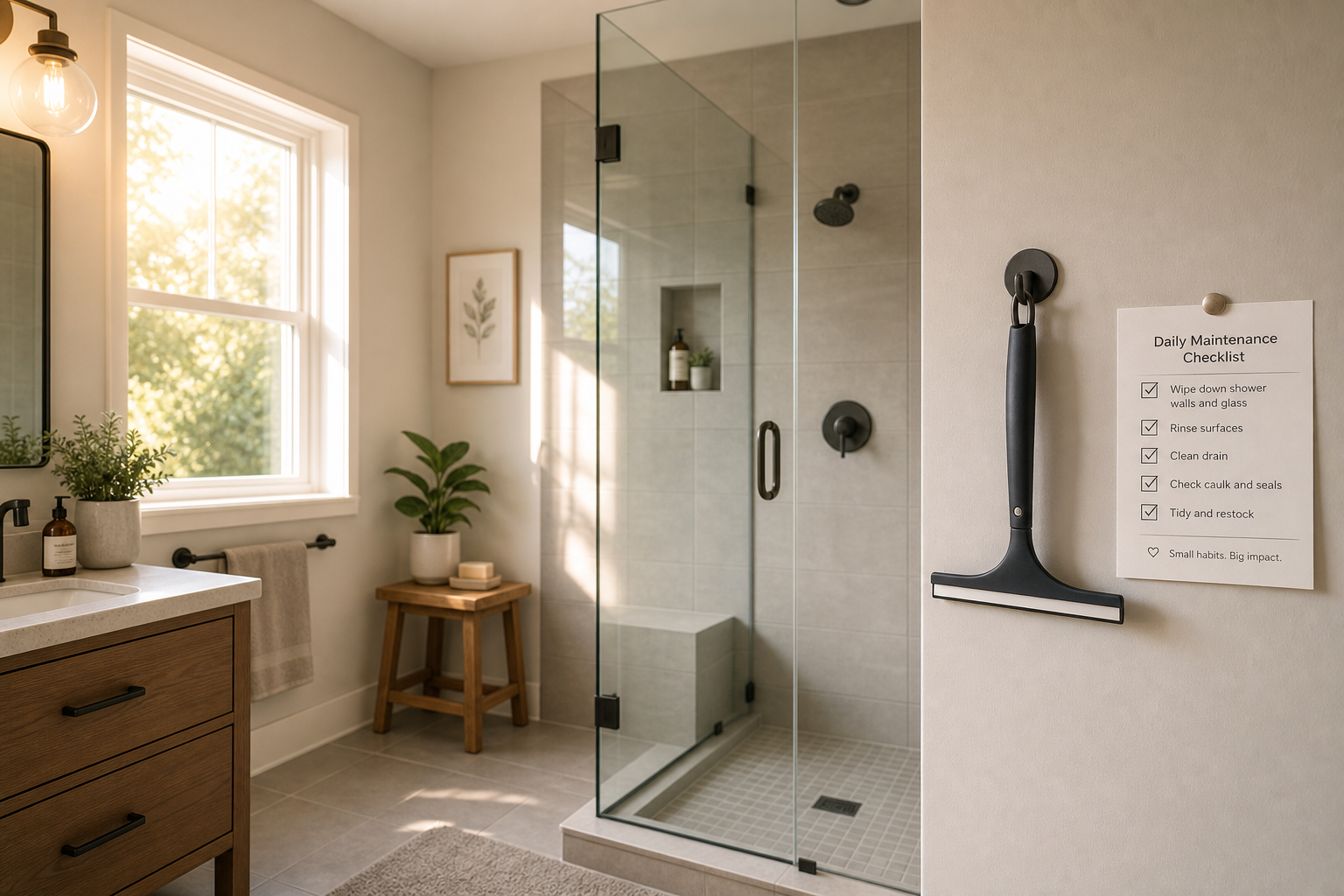
You stop Sunday from including a grout brush. The squeegee gets used occasionally, when you think of it, rather than being a mandatory ritual to prevent the tile from looking terrible by Tuesday. The caulk at the base of the shower stays the color it was when it was installed for several years, because the room dries between uses and the silicone does not stay damp long enough for mold to colonize it. When you do clean the shower, you spray, wipe, and you are finished. You are cleaning a smooth surface, not excavating a grid.
The ventilation fan is quiet enough that you forget it is running, which means you leave it on without thinking twice. The mirror clears faster after a shower. The ceiling above the shower stays white instead of slowly acquiring a gray film that nothing seems to fully remove. The bathroom does not smell damp on Monday morning.
What you are experiencing is a room where the physics were considered before the tile was ordered. Where "how does this behave with water" was treated as a design question, not an afterthought. Where the daily experience of the room was weighted at least as heavily as the first-day photograph.
A bathroom designed this way does not feel like a luxury product. It feels like a room that was designed by someone who understood how bathrooms are actually used. Over time, that understanding is the most durable improvement a renovation can deliver. Long after the new fixtures are familiar and the tile colors are unremarkable, the room keeps being easy. That is what it looks like.