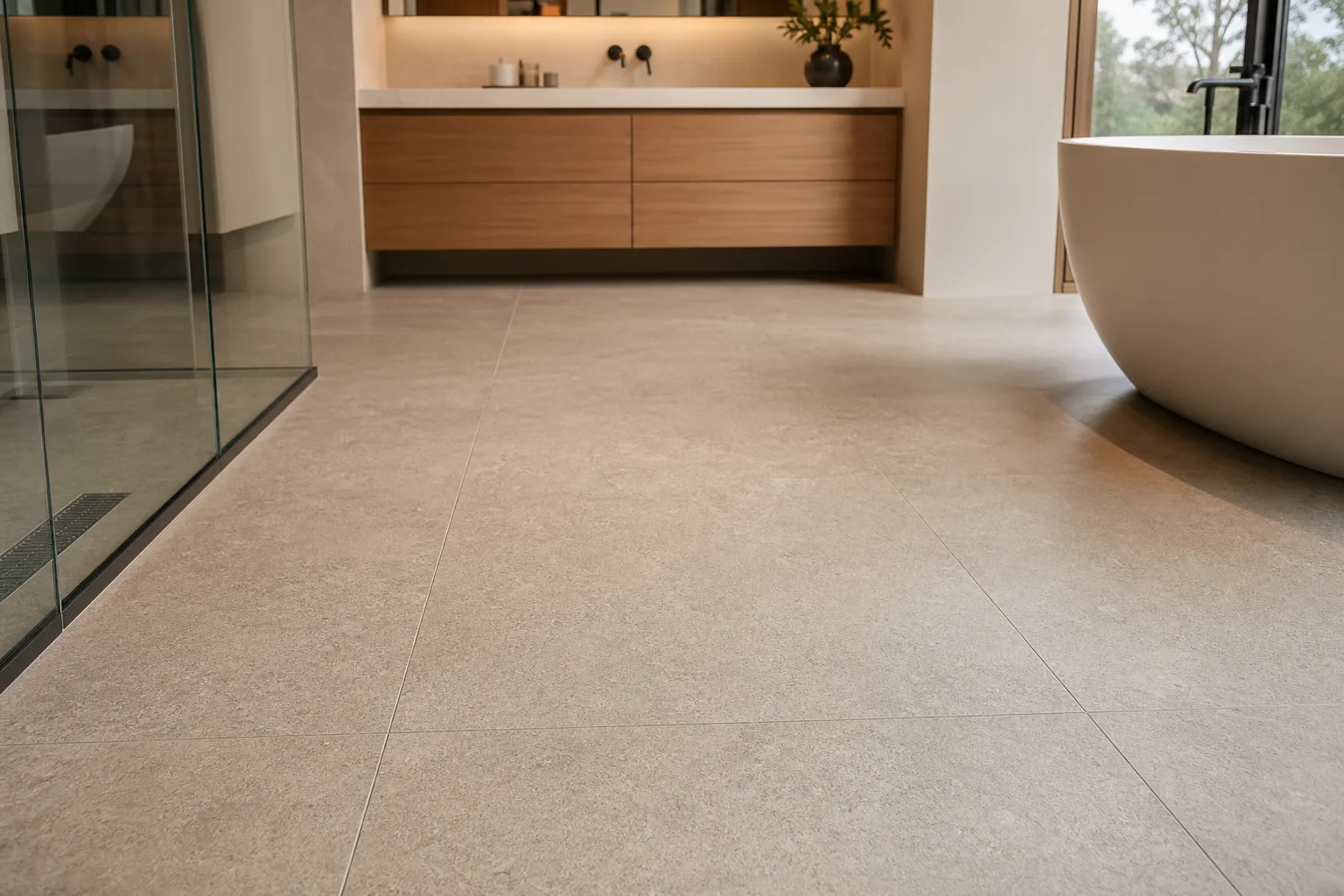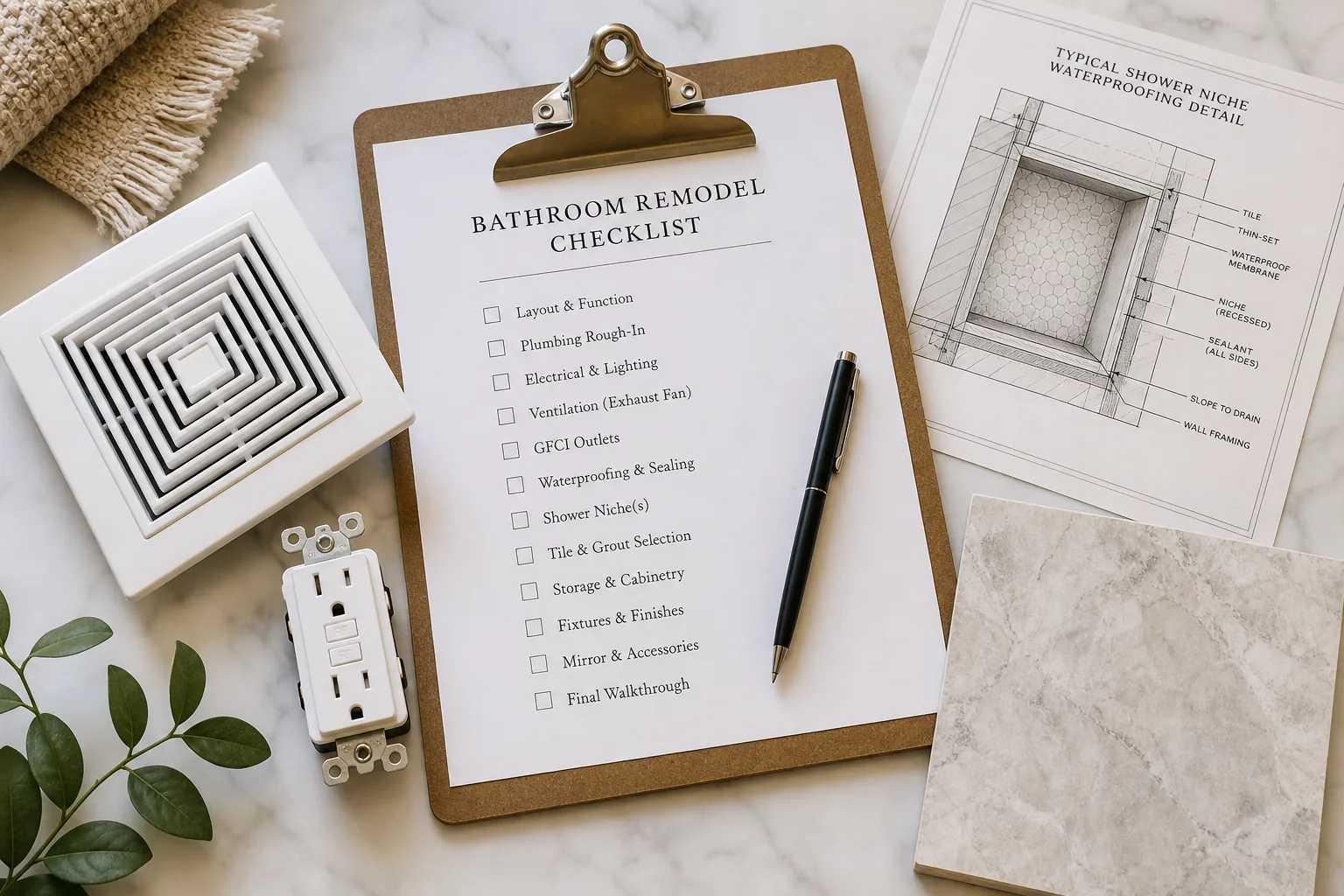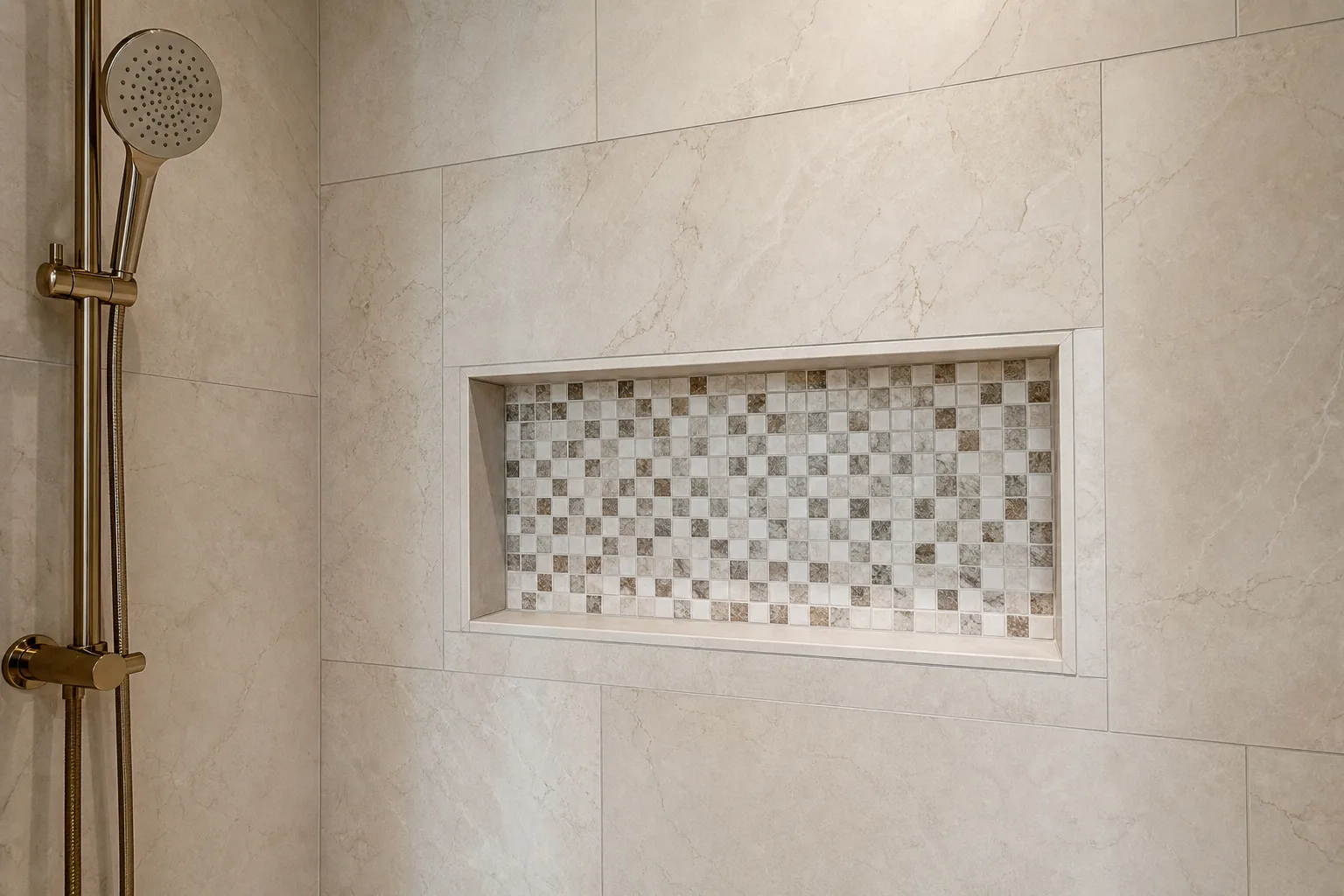
The habits that extend a bathroom's life are not the ones people typically think of. Squeegee after showering. Run the fan for twenty minutes, not two. Inspect caulk annually, not when it looks terrible. Replace caulk completely, not over the top of old caulk. These are not difficult. They are simply not instinctive.
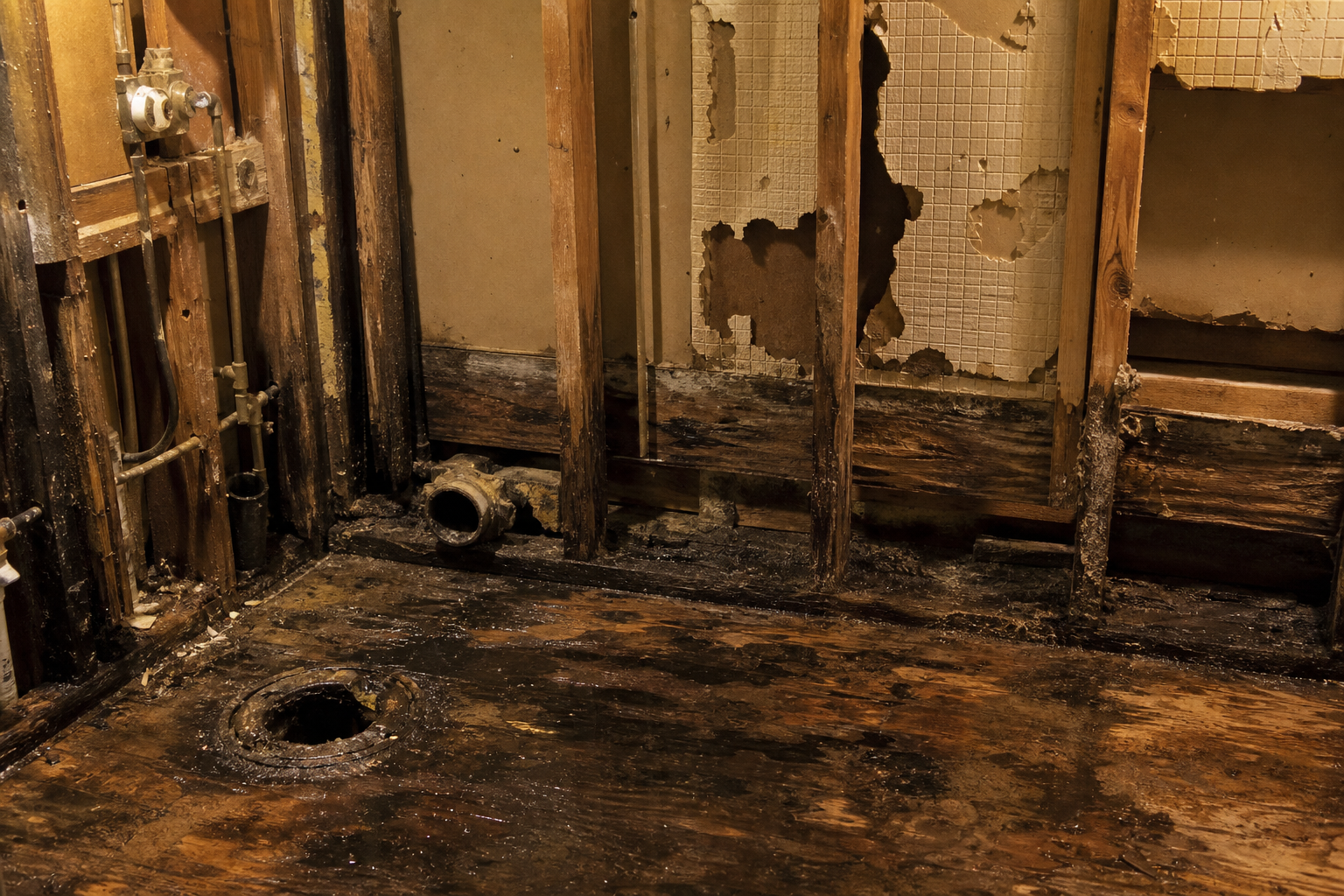
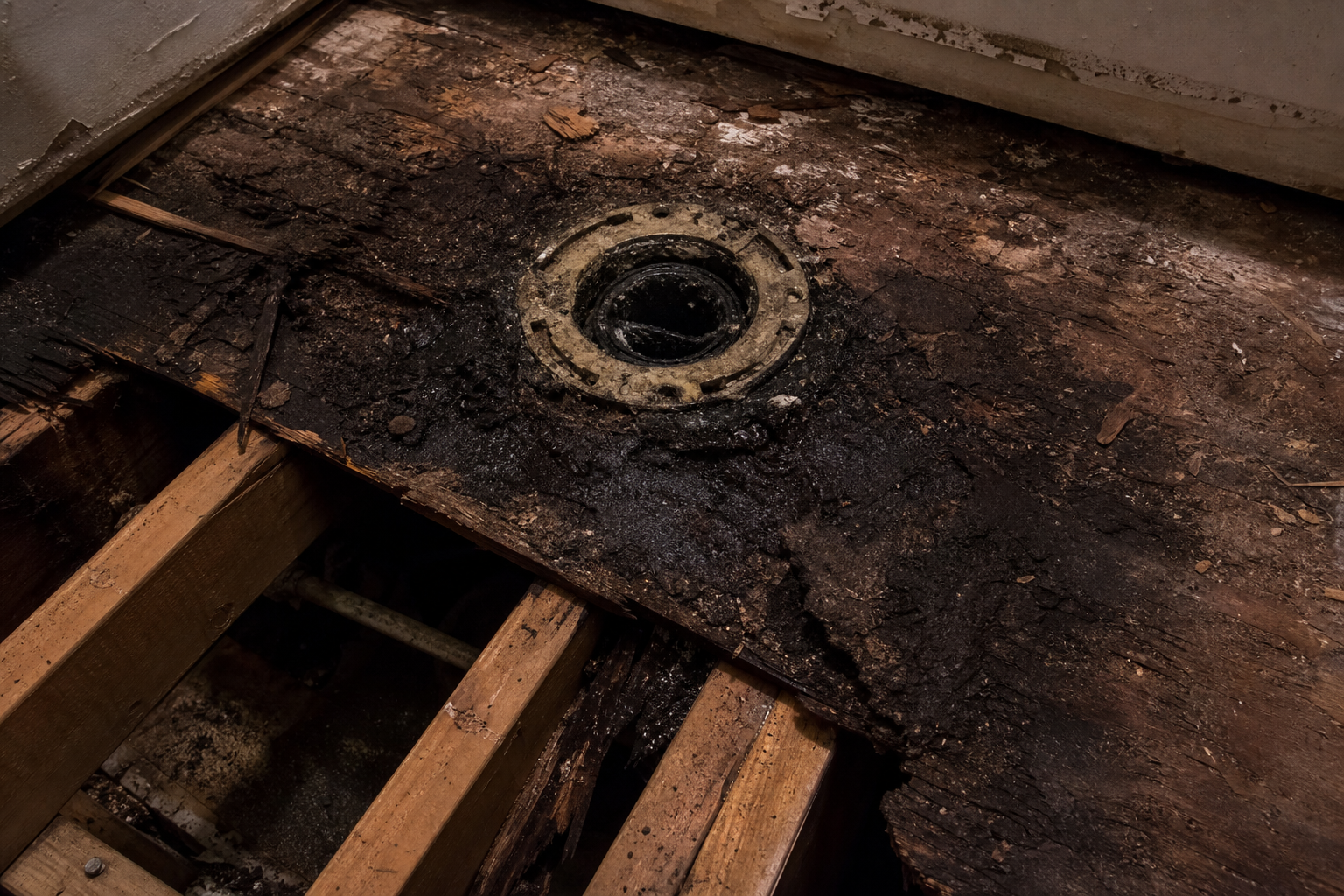
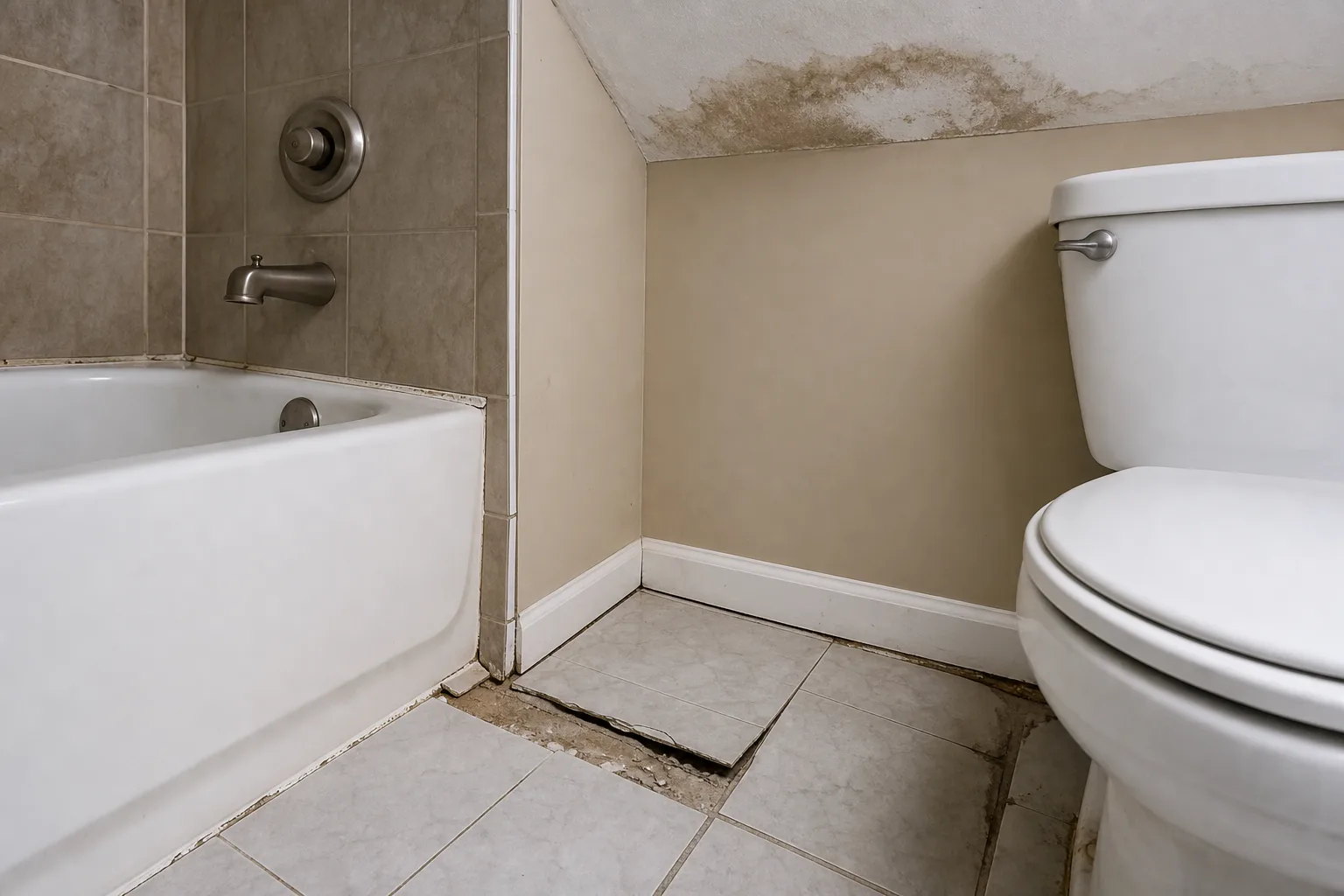
This is the gap between a bathroom that performs for twenty years and one that develops mold, peeling paint, and soft subfloor by year five despite identical construction. The assembly behind the tile is the same. The daily behavior is different. Maintenance is not about perfectionism. It is about removing moisture from surfaces and joints before it becomes a problem inside them.
The Habits That Actually Matter
Four habits produce most of the longevity difference: post-shower surface drying, adequate ventilation runtime, annual joint inspection, and complete caulk replacement when joints fail. Everything else is secondary or cosmetic.
Each habit addresses a specific failure mode. Surface drying reduces mineral deposit and biological growth on tile and glass. Ventilation runtime removes humidity from the air before it condenses on walls, ceilings, and framing cavities. Joint inspection catches caulk and grout failure before water reaches the assembly behind. Complete caulk replacement restores a continuous seal rather than patching a failing one.
The habits people assume matter often do not. Scrubbing grout weekly with harsh chemicals degrades grout faster than gentle maintenance. Applying sealer annually without cleaning first seals dirt into the pores. Running the fan only during the shower captures steam at peak production but misses the residual humidity released as surfaces dry afterward. Wiping visible mold with bleach removes the stain without addressing the moisture source that produced it.
Habit One: Squeegee After Showering
A squeegee removes standing water from tile, glass, and fixtures in under sixty seconds. Austin Fire and Flood, an IICRC-certified restoration firm, includes daily squeegee use in its bathroom mold prevention guidance because removing surface water eliminates the moisture mold requires to colonize grout and silicone joints.
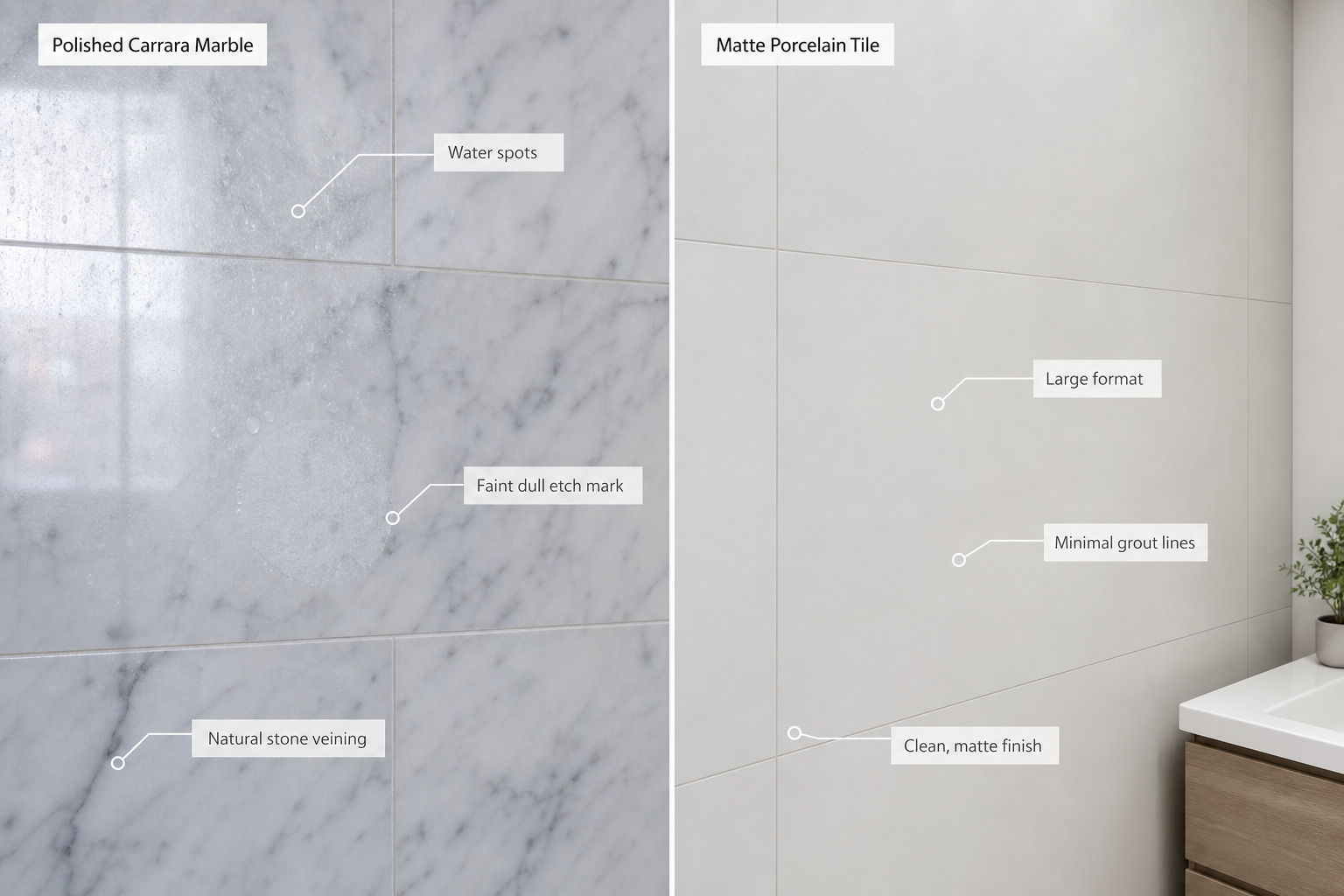
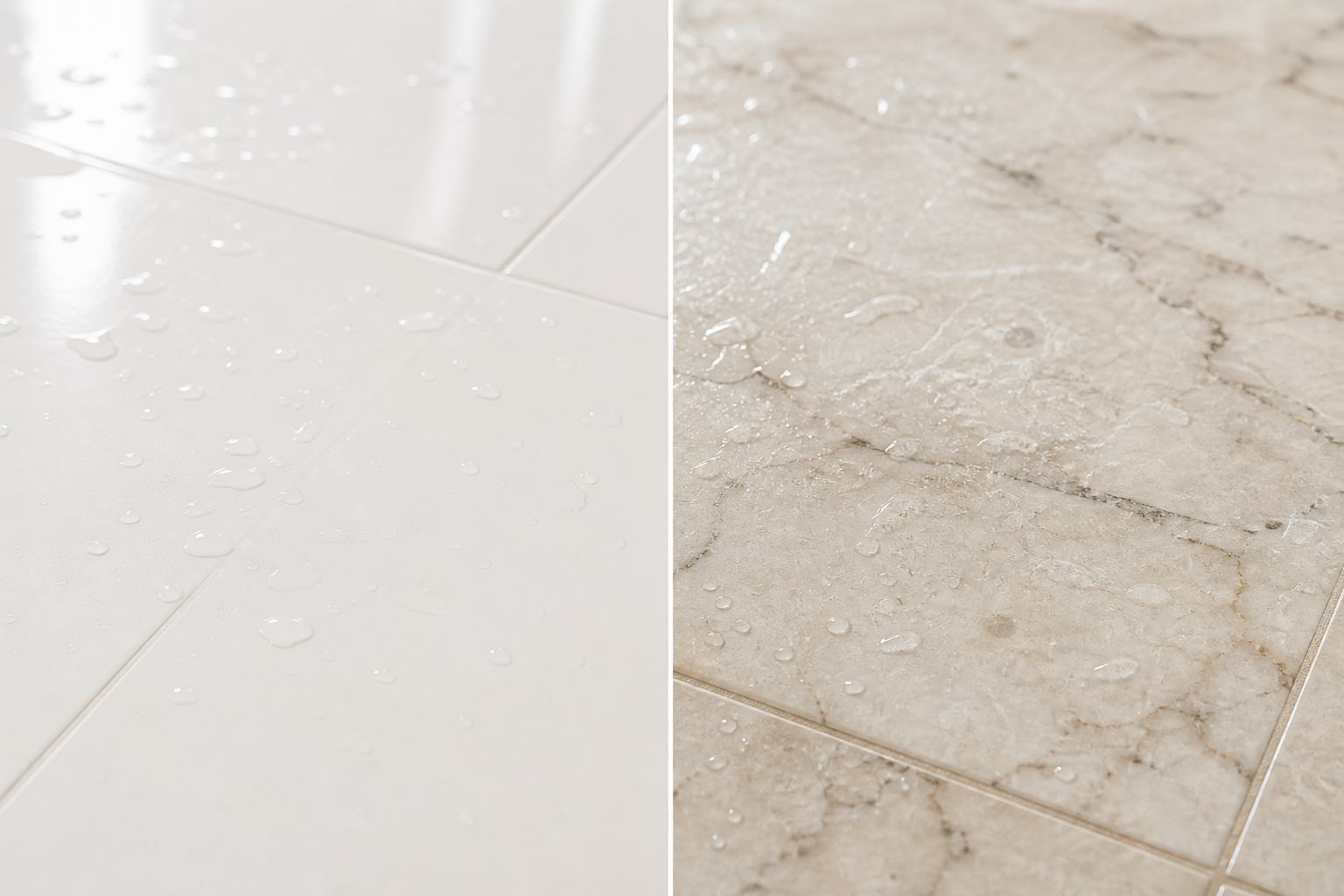
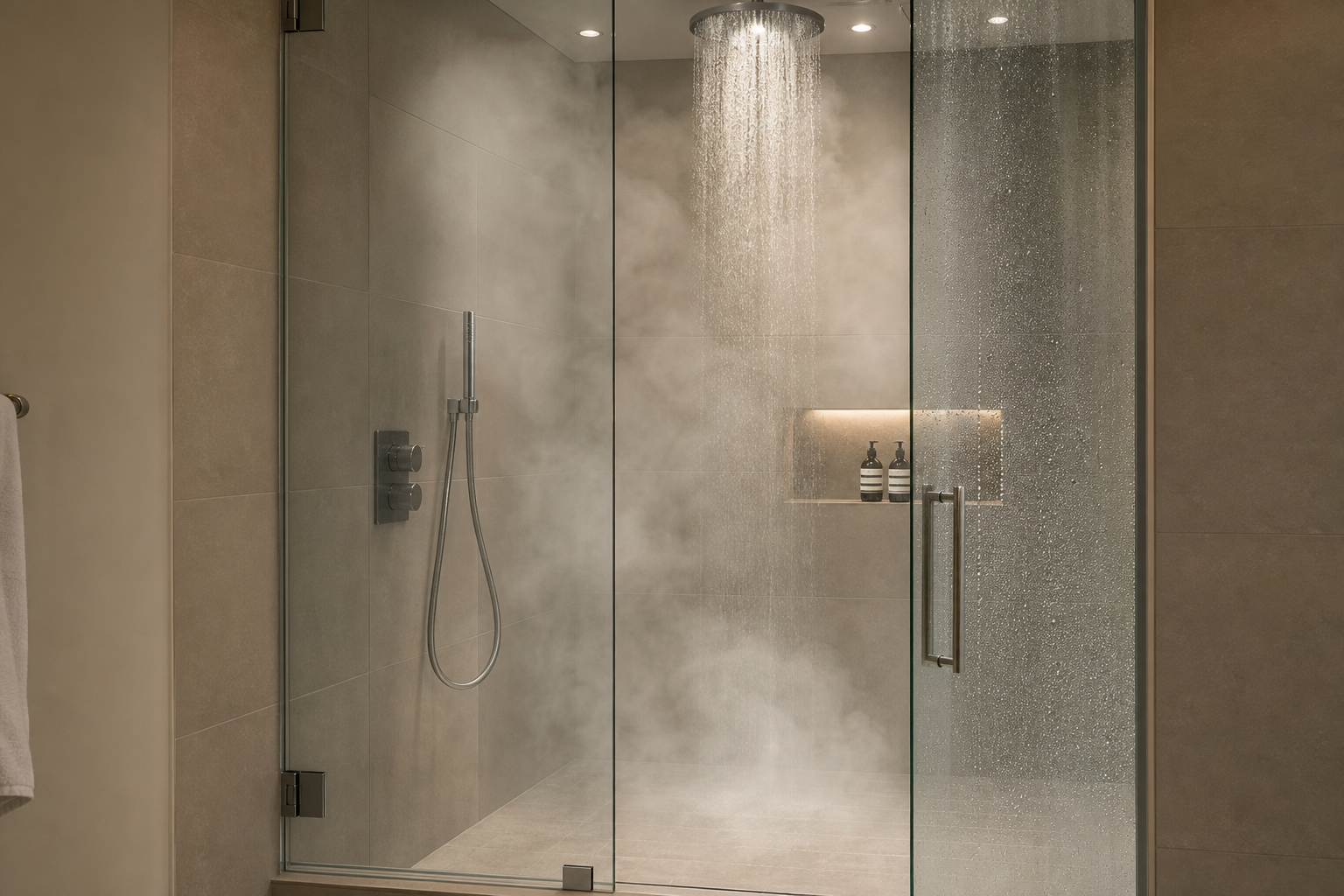
The mechanism is straightforward. After a shower, water clings to vertical and horizontal surfaces. That water evaporates into the bathroom air, raising relative humidity and leaving mineral deposits as it dries. A squeegee removes the bulk water immediately, reducing both the humidity load on the ventilation system and the mineral residue that makes glass look cloudy within weeks.
Squeegeeing does not replace ventilation. It reduces the volume of water the fan must evacuate. Combined, the two habits address moisture at the surface and in the air simultaneously.
Hang the squeegee inside the shower on a hook at arm height. If retrieving it requires leaving the shower wet, the habit will not stick. Placement is part of the habit design.
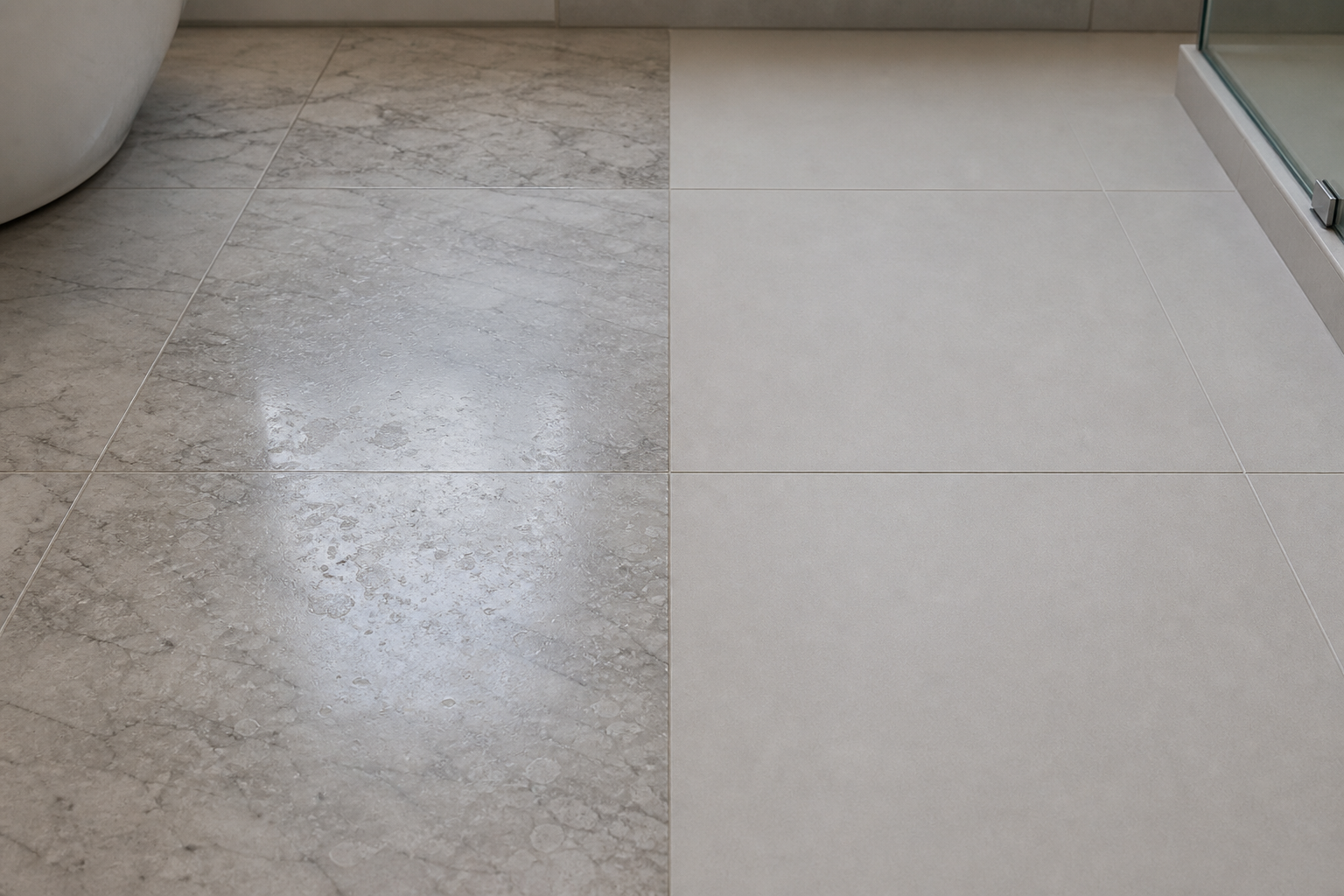
This habit matters most for glass enclosures, dark tile that shows water spots, and bathrooms with slow ventilation or no window. It matters less for fully tiled showers with epoxy grout and oversized exhaust fans, but it still reduces cleaning frequency.
Habit Two: Run the Fan Long Enough
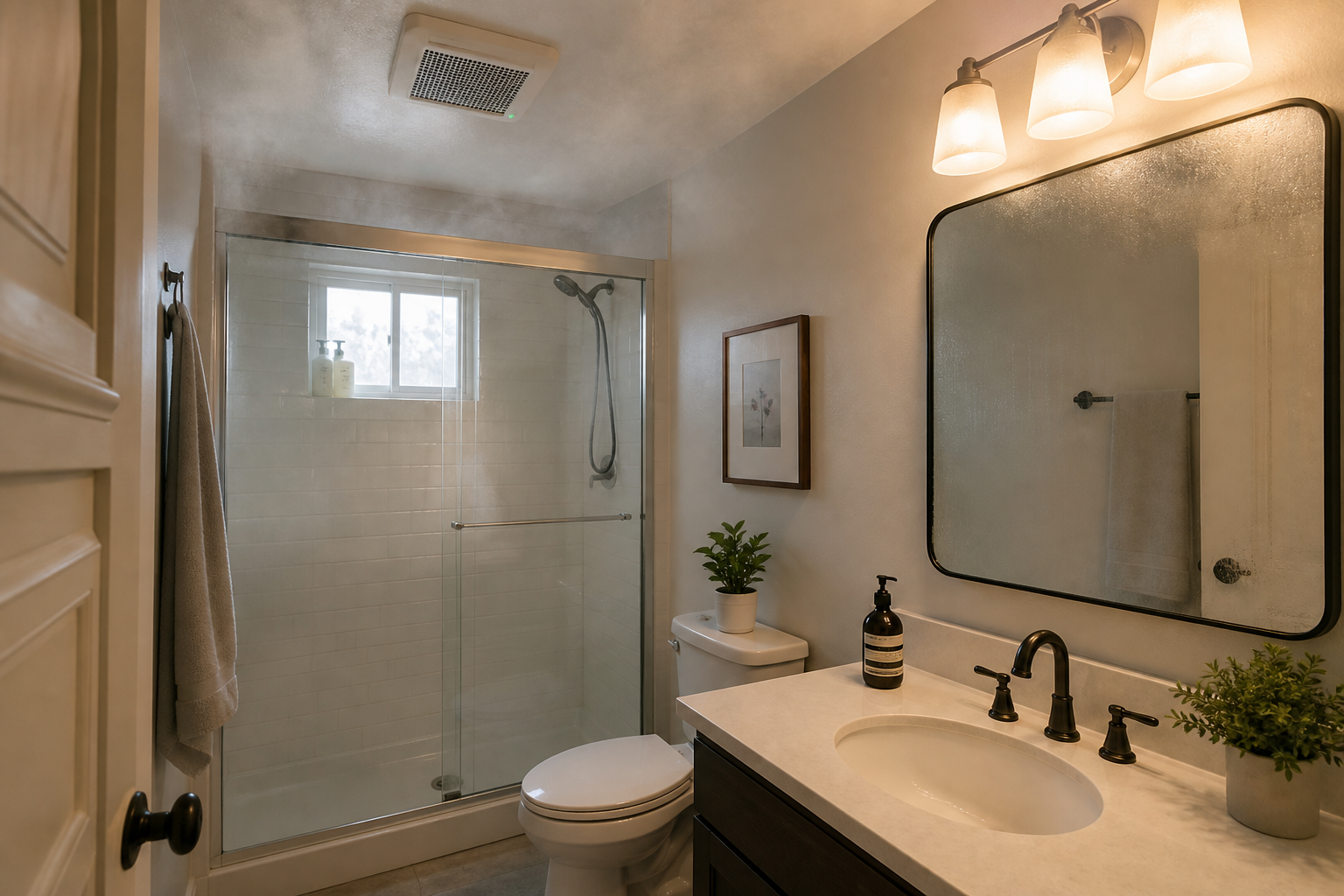
Most bathroom exhaust fans are switched off when the user leaves the room. That is the wrong moment to switch them off.
Martha Stewart's home maintenance guidance, citing HVAC professionals Lisa Purvins and Rick Christiansen, recommends turning the fan on before starting the shower and running it for fifteen to thirty minutes after finishing. Moisture does not disappear when the water shuts off. Wet tile, grout, towels, and surfaces continue releasing humidity into the air as they dry. Residual moisture that is not evacuated condenses on ceilings, walls, and mirror surfaces, producing the conditions mold requires within twenty-four to forty-eight hours per EPA guidance cited by Storm Ready's ventilation guide.
The practical target is twenty to thirty minutes of post-shower runtime. Bathrooms with undersized fans, long duct runs, or ducts that terminate in attics rather than outdoors may need the full thirty minutes or longer. Bathrooms with humidity-sensing fan controls that run automatically until relative humidity drops below a set threshold remove the human memory requirement entirely.
Turn the fan on before the shower, not after. Starting ventilation once surfaces are already saturated forces the fan to work against peak humidity rather than capturing steam at the source. Close the bathroom door during the shower so the fan draws from the wet room rather than diluting with dry house air. Ensure an undercut at the door provides makeup air so the fan can move volume efficiently.
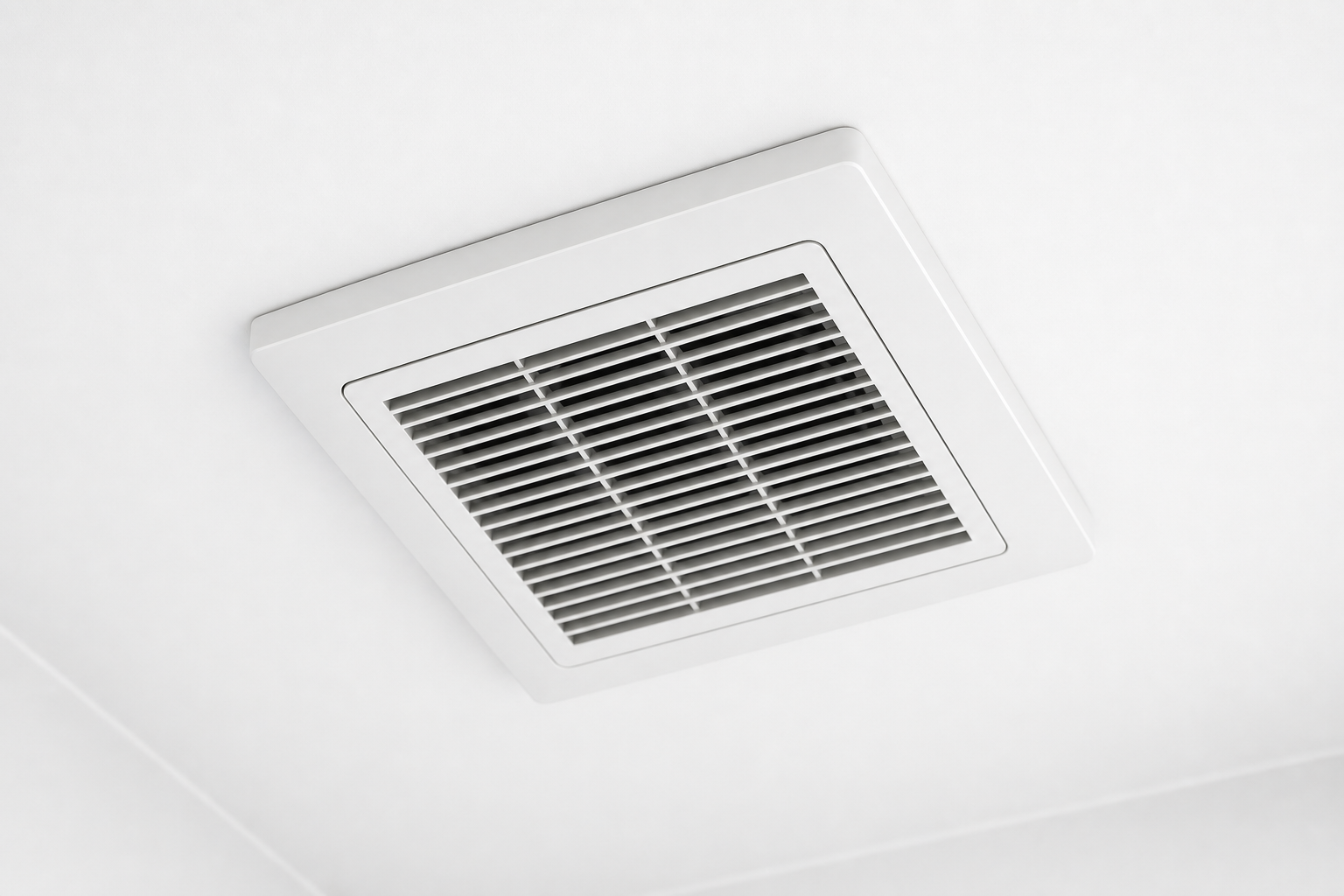
Clean the fan grille every three to six months and vacuum the fan housing annually. Martha Stewart's fan maintenance guidance notes that dust on the grille and blades reduces airflow cubic feet per minute, meaning the fan runs for the same duration but moves less air. A fan that cannot exchange air fast enough after a shower is a fan that fails its primary function regardless of runtime.
Habit Three: Inspect Caulk and Grout Joints Annually
Caulk fails gradually, then suddenly. A joint that looked intact in January may be gapped and peeling by March. Annual inspection catches the transition before water reaches the substrate.
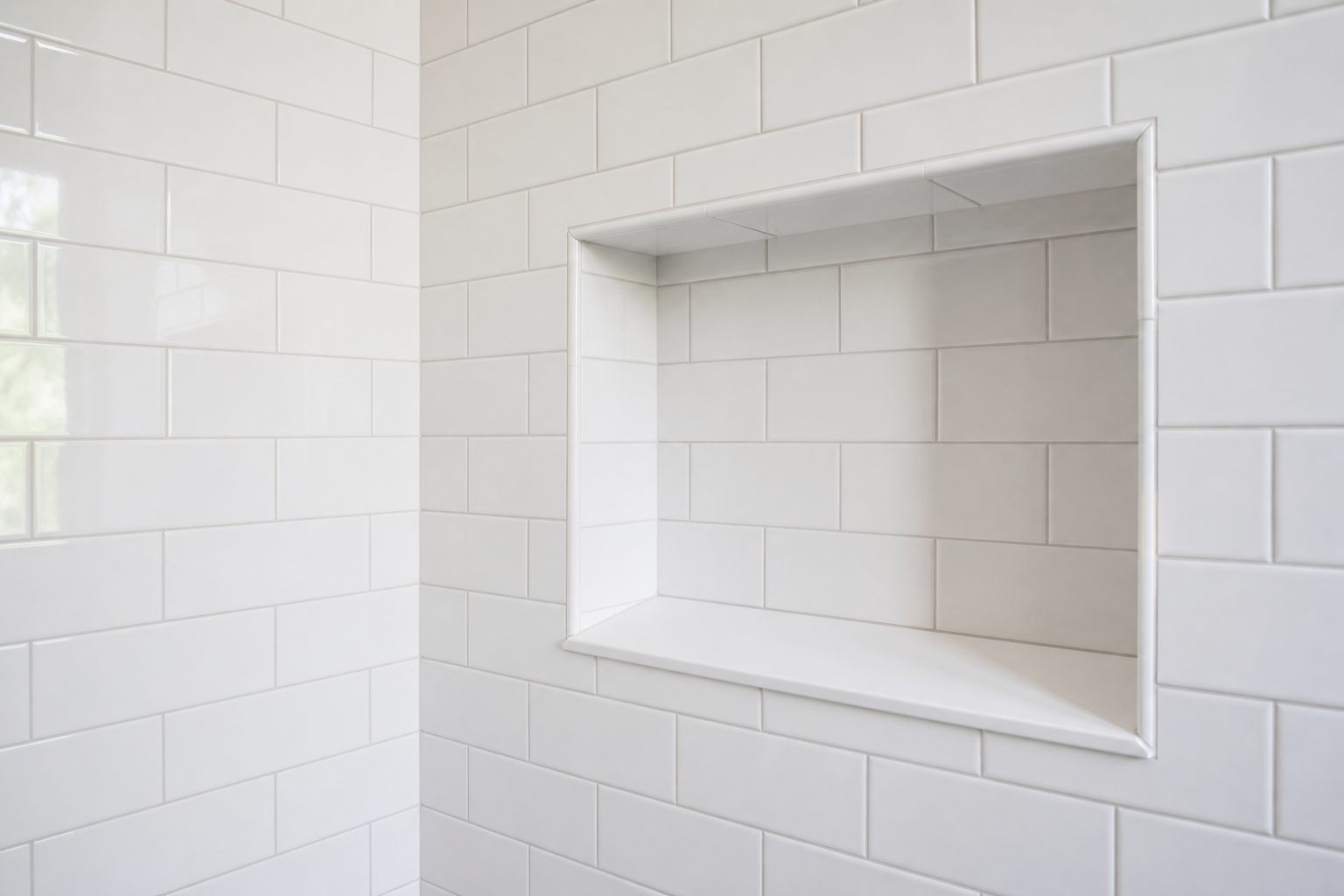
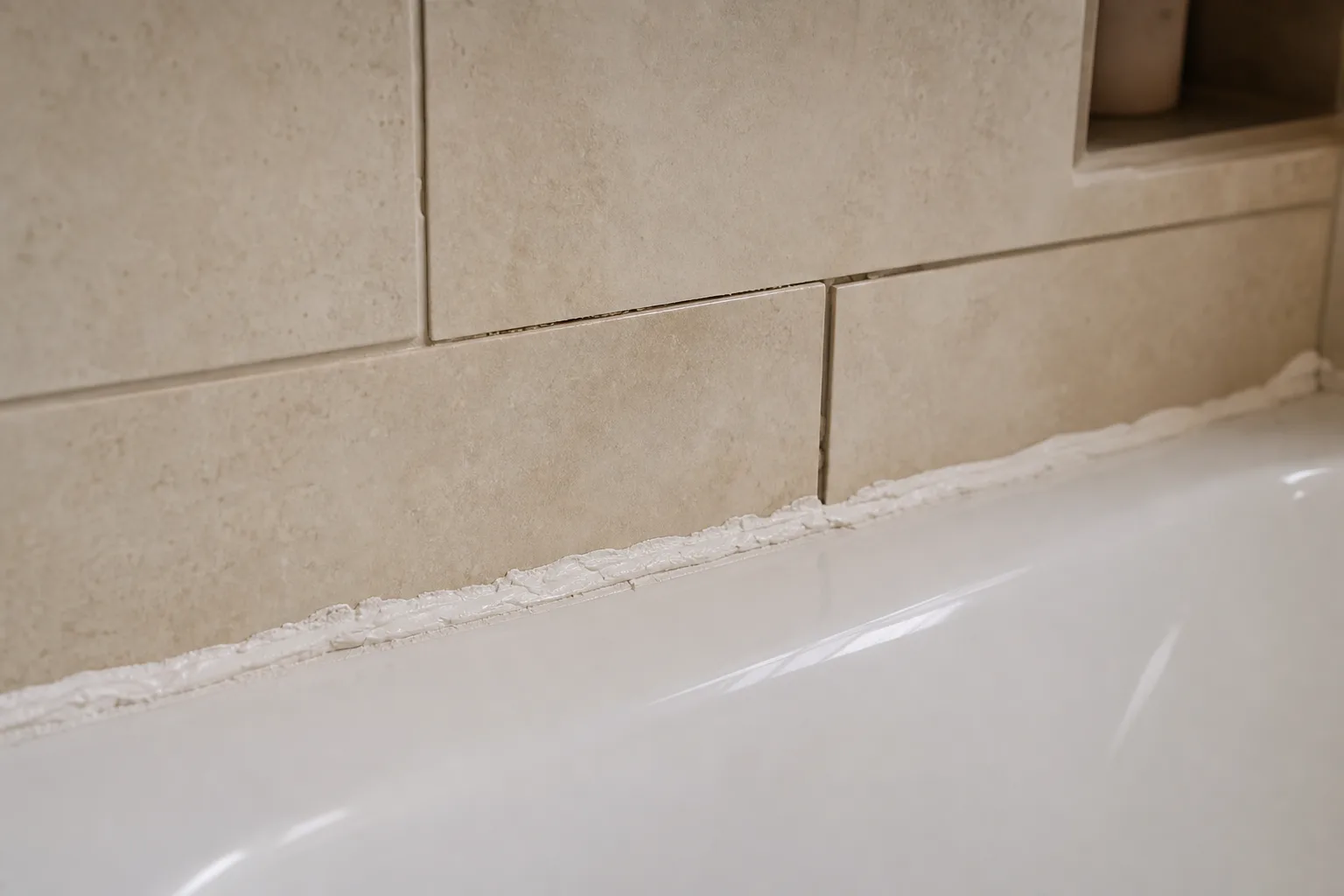
Austin Fire and Flood recommends checking caulk around tubs and sinks every three months and re-caulking showers and tubs every one to two years. Annual inspection is the minimum for a well-built bathroom. High-use primary baths with daily showers benefit from inspection every six months at the change-of-plane joints: tub-to-wall, floor-to-wall, faucet penetrations, and niche corners.
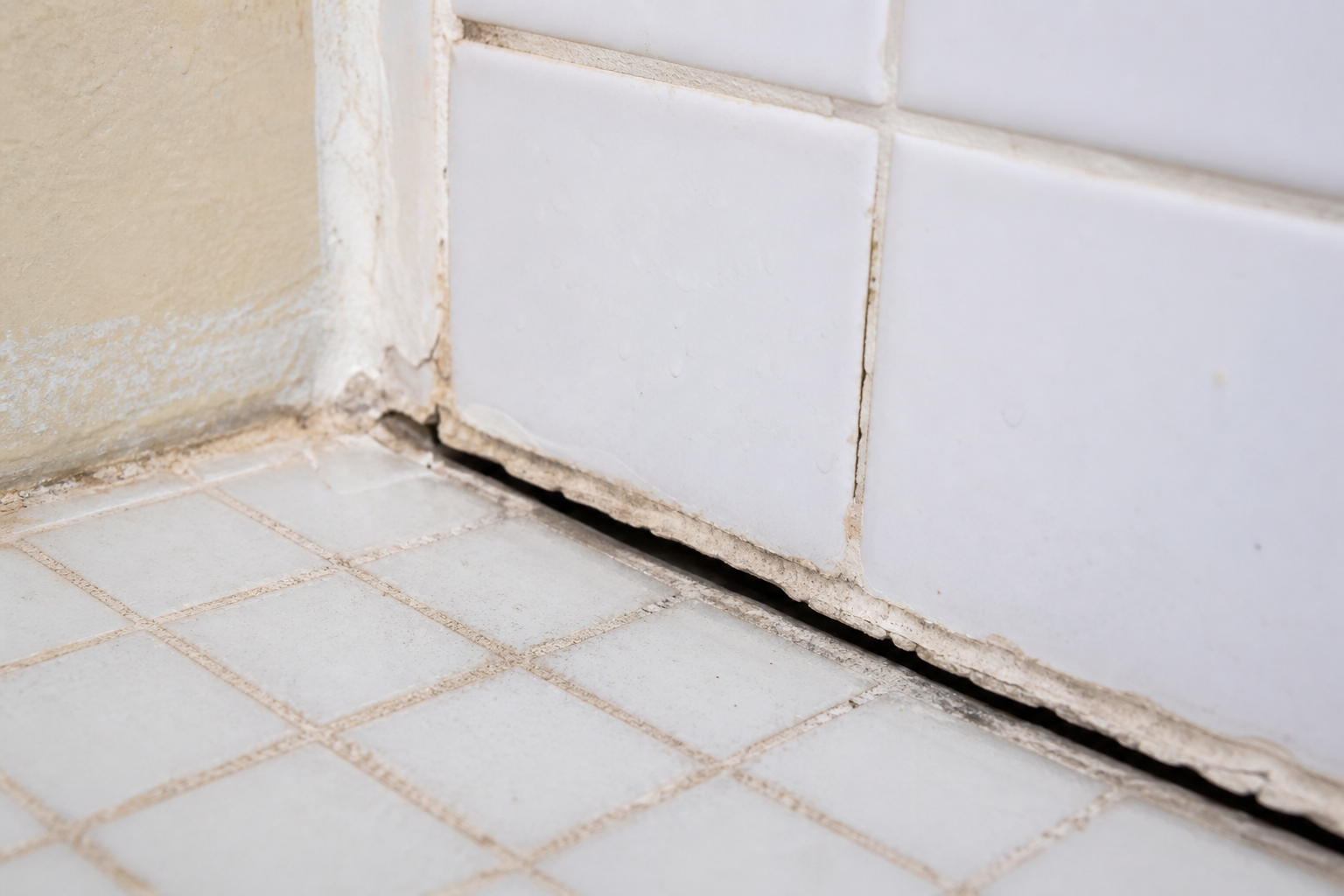
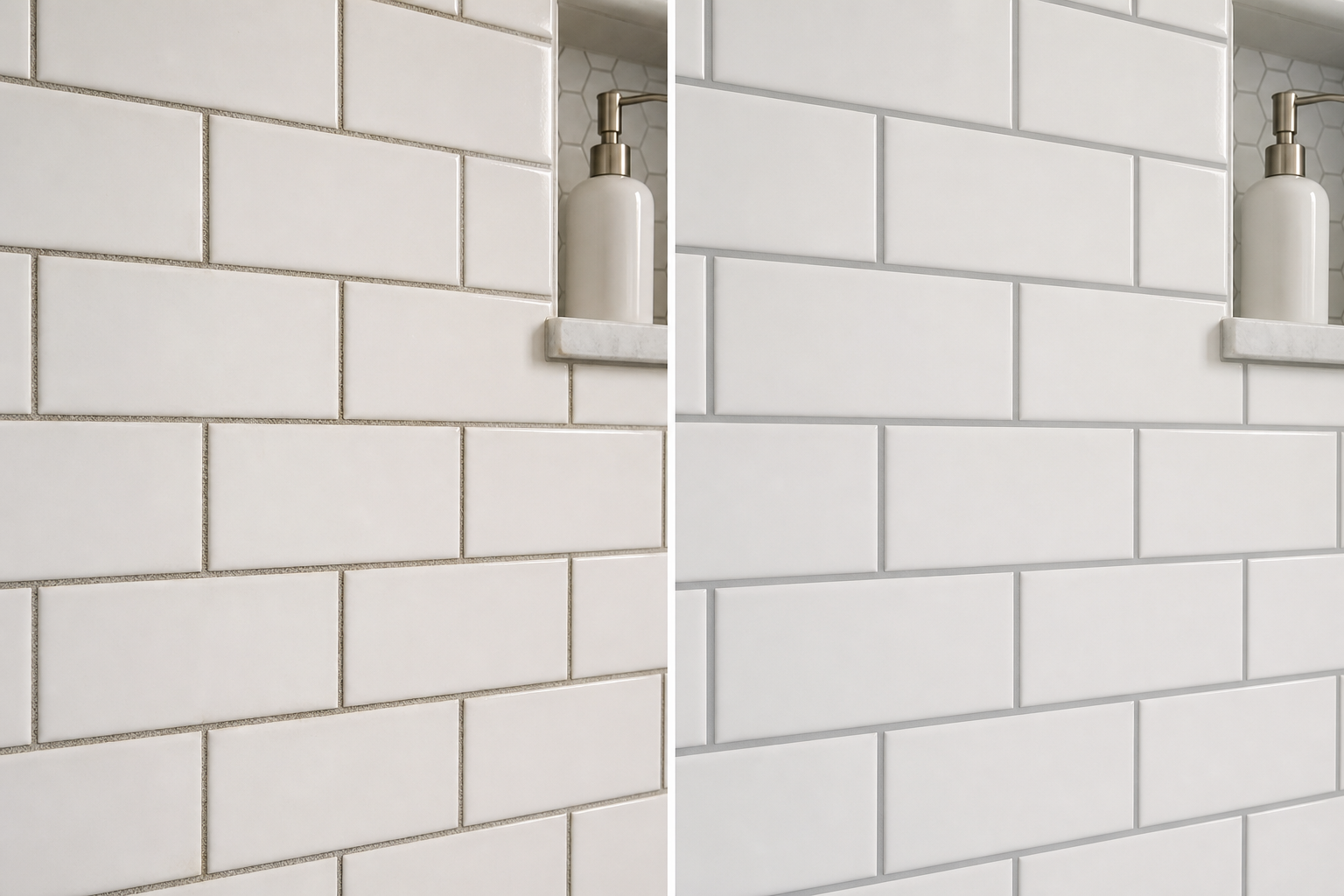
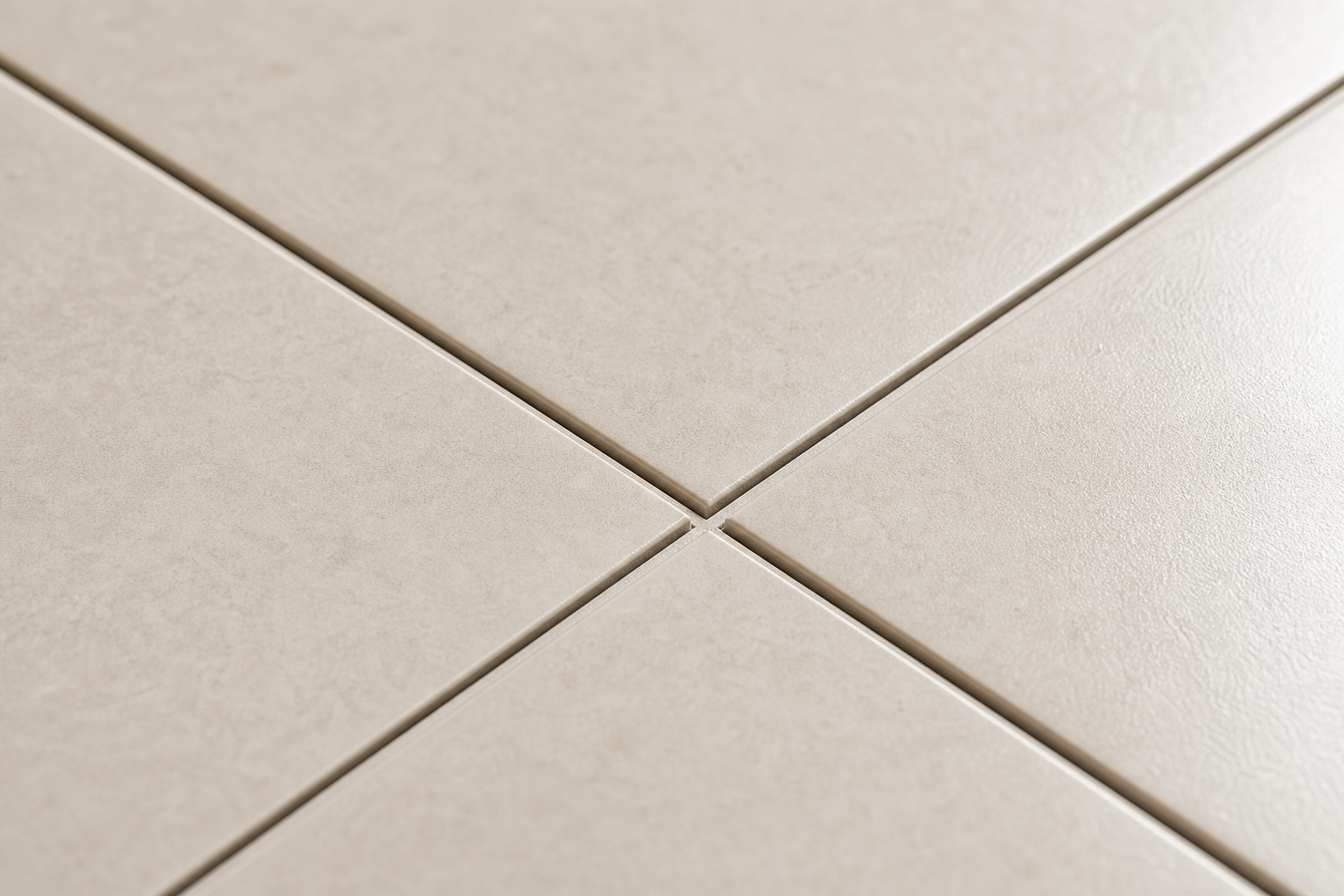
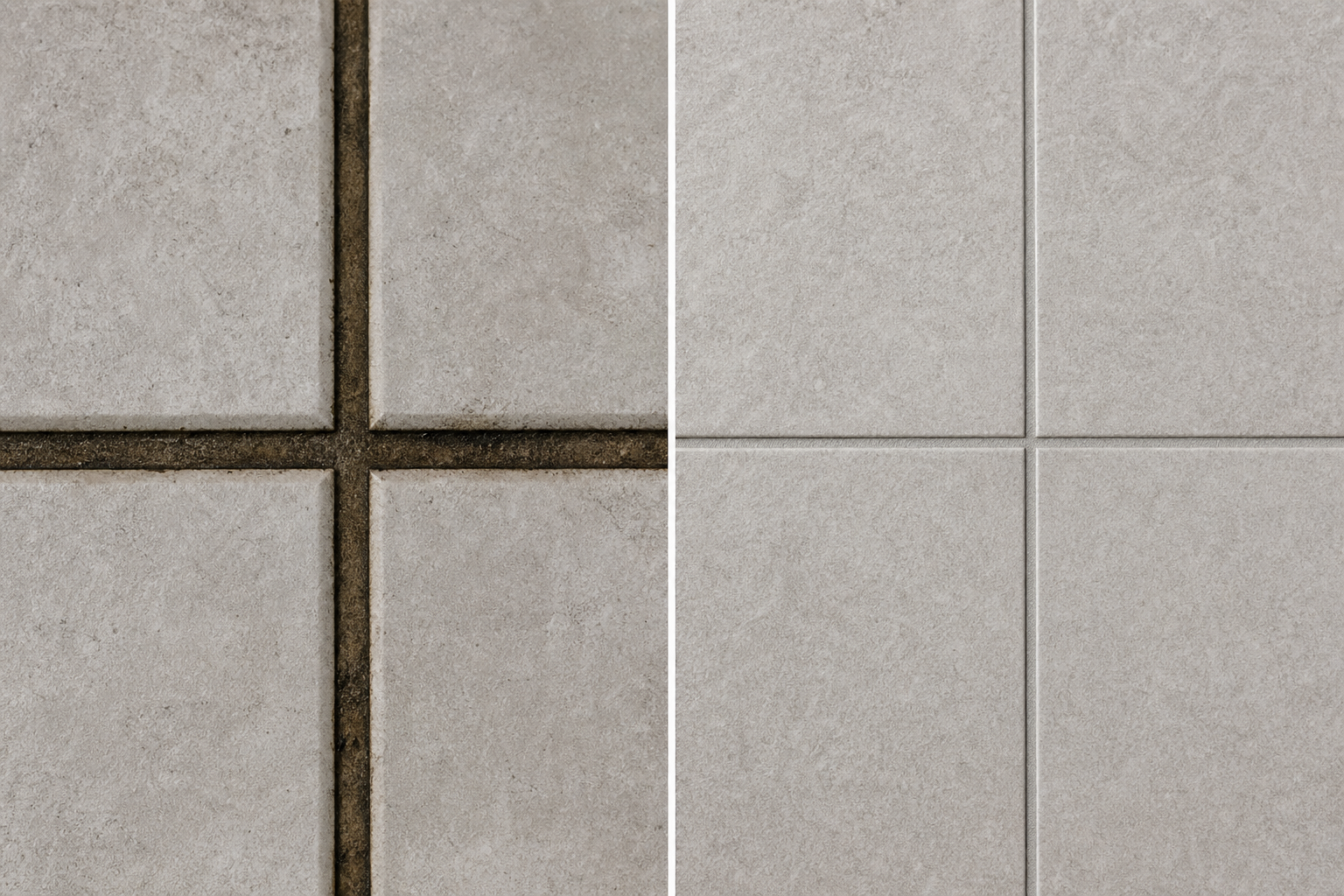
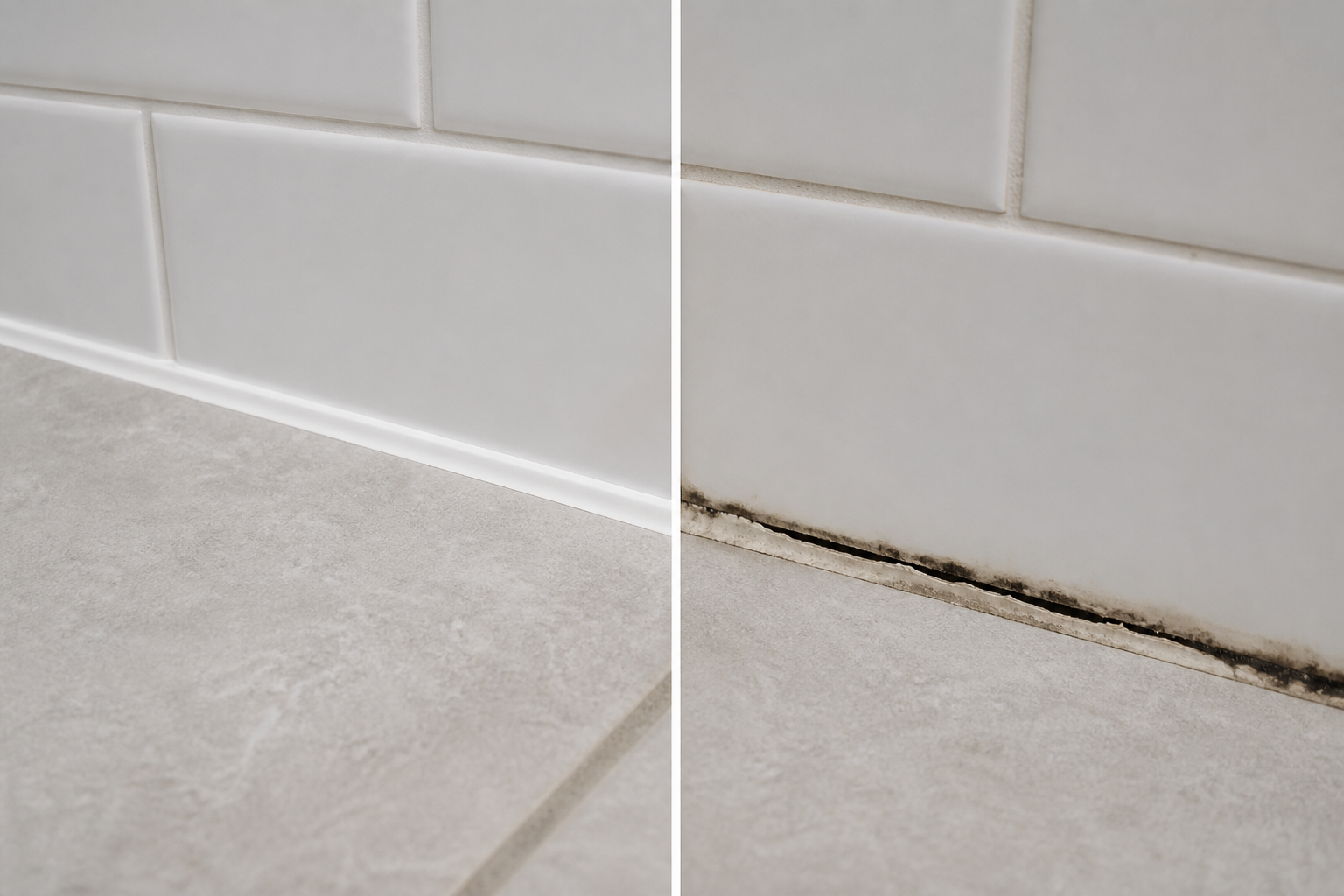
Inspection is visual and tactile. Look for gaps, peeling, discoloration, and shrinkage at joint edges. Press gently along the joint with a fingernail. Intact caulk is firm and continuous. Failing caulk is soft, separated, or missing in sections. Grout inspection focuses on cracks, especially at inside corners where movement joints should be sealant rather than grout. Cracked grout at a floor-to-wall transition is a water entry point.
Document what you find. A phone photograph of each joint once a year creates a comparison record. Changes that happen slowly are visible in the comparison even when daily use makes them invisible in the moment.
Inspection without action is incomplete. Finding a failing joint and noting it for later is how water enters during the months between noticing and fixing. When a joint fails inspection, schedule replacement within weeks, not seasons.
Habit Four: Replace Caulk Completely, Not Over It
Applying new caulk over old caulk is the most common maintenance mistake in bathrooms. It produces a visible repair that fails within months because the bond is to old material, not to the substrate.
Complete caulk replacement requires removing all existing sealant from the joint, cleaning the substrate, allowing it to dry, applying new sealant in a continuous bead, and tooling the joint smooth. The process takes thirty to sixty minutes per joint. It lasts years when done correctly.
Partial replacement fails because old caulk continues to peel beneath the new layer, carrying the new caulk with it. Old caulk that has mold embedded in its surface contaminates the new application. Old caulk that has shrunk away from one side of the joint leaves a channel beneath the new bead where water travels unseen.
Use the correct sealant for the application. ASTM C920 silicone sealants rated for sanitary use in wet areas are the standard for tub, shower, and sink joints. Paintable latex caulk is for dry areas only and fails quickly in shower environments. Acetoxy-cure silicone produces acetic acid during cure that can etch some natural stone; neutral-cure silicone is required at stone joints.
Tooling matters. A too-thin bead lacks adhesion surface. A too-thick bead shrinks and pulls away from one side. The correct profile is a concave joint that contacts both substrates along the full length without gaps.
The Habits That Provide False Comfort
Some habits feel responsible but do not extend bathroom life.
Bleaching visible mold removes color without killing the colony below the surface and without addressing the moisture source. The mold returns within weeks. Fix the moisture, then remove the growth.
Applying grout sealer annually without cleaning first seals soap residue and mineral deposits into the grout matrix. Sealer is a maintenance step for clean grout, not a substitute for cleaning.
Scrubbing with abrasive pads or acidic cleaners erodes grout and damages fixture finishes. Gentle cleaning with pH-neutral products on a regular schedule preserves surfaces longer than aggressive periodic scrubbing.
Leaving wet towels bunched on hooks traps moisture against the wall and floor. Hanging towels spread on a bar allows drying and reduces humidity contribution.
Ignoring a slow drain allows standing water in the shower pan, extending wet time on grout and increasing infiltration through any compromised joint. Clear drains promptly.
Running a dehumidifier instead of fixing ventilation treats the symptom in the room while humidity continues entering wall cavities through any failed joint. Ventilation and joint integrity come first.
The Annual Maintenance Calendar
Daily: squeegee shower surfaces after use. Run fan twenty to thirty minutes after showering. Hang towels to dry spread, not bunched.
Weekly: wipe down vanity and fixtures. Check that the fan operates when switched. Clear drain stoppers.
Monthly: inspect grout and caulk visually in the shower. Clean fan grille if dust is visible.
Quarterly: clean fan grille thoroughly with soap and water. Inspect all caulk joints tactilely. Wash bath mats and fabric surfaces.
Annually: vacuum fan housing and blades. Photograph all caulk joints for comparison. Replace any joint that shows failure. Reseal grout if specified by installer (many epoxy grout installations do not require resealing).
Every one to two years: replace caulk at tub and shower joints proactively if inspection shows any shrinkage, even before visible gaps appear. Preventive recaulking is cheaper than subfloor repair.
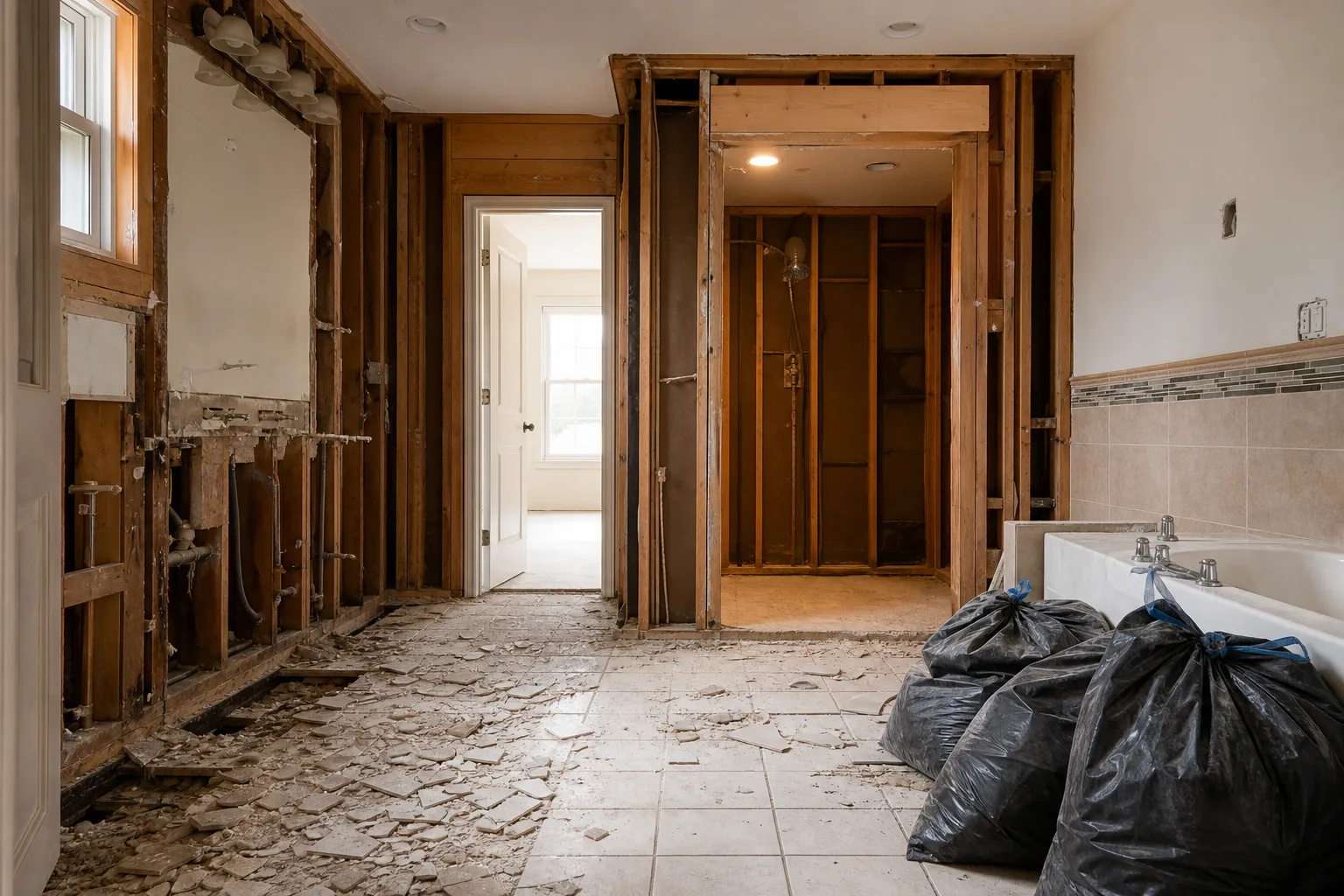
This calendar is not burdensome. The daily habits take two minutes. The quarterly and annual tasks take an afternoon. The cost of skipping them is measured in mold remediation, subfloor replacement, and the renovation you thought you finished five years ago.
What Good Construction Assumes
A well-built bathroom assumes the owner will ventilate, inspect, and maintain joints. Construction quality sets the ceiling on performance. Maintenance sets the floor.
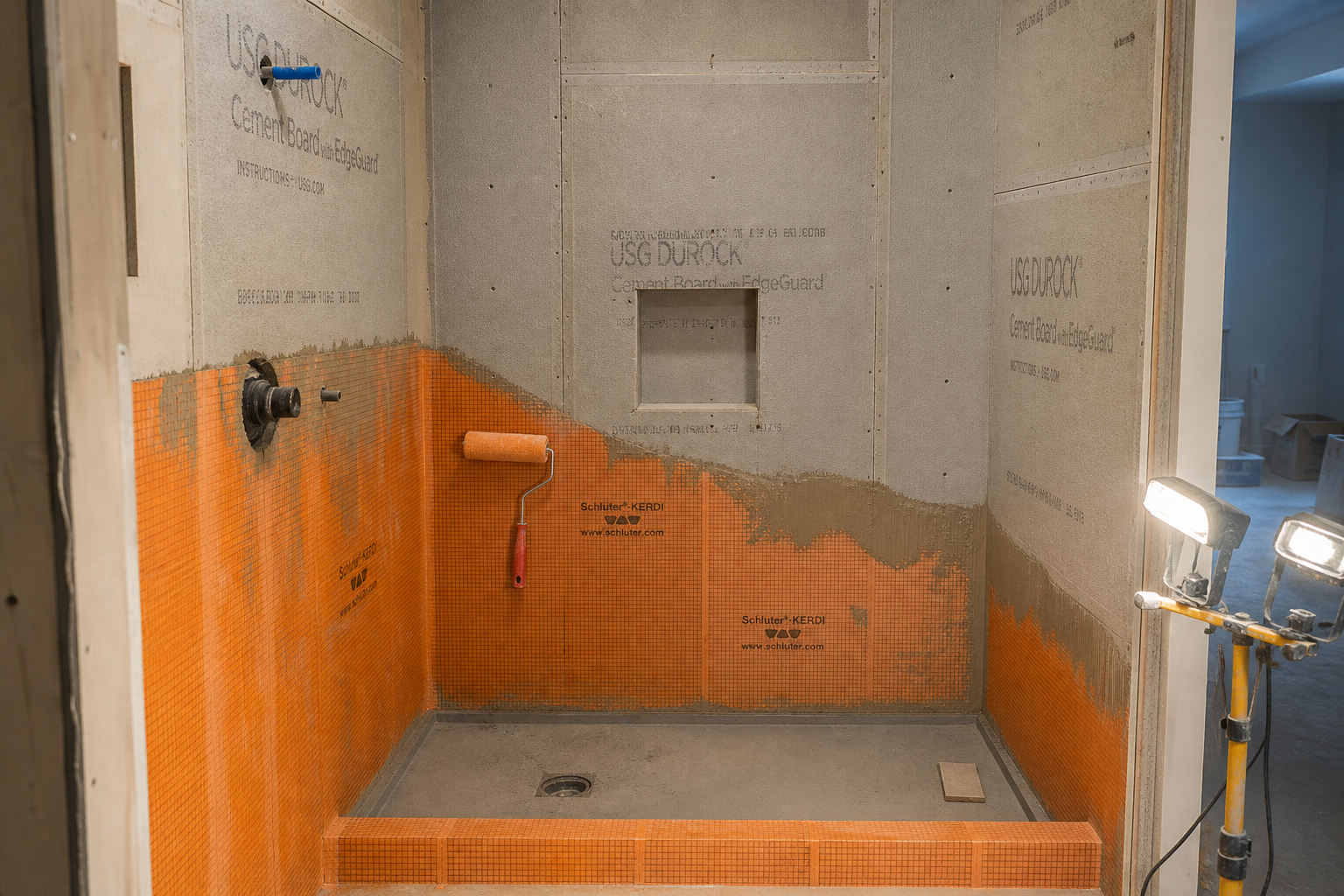
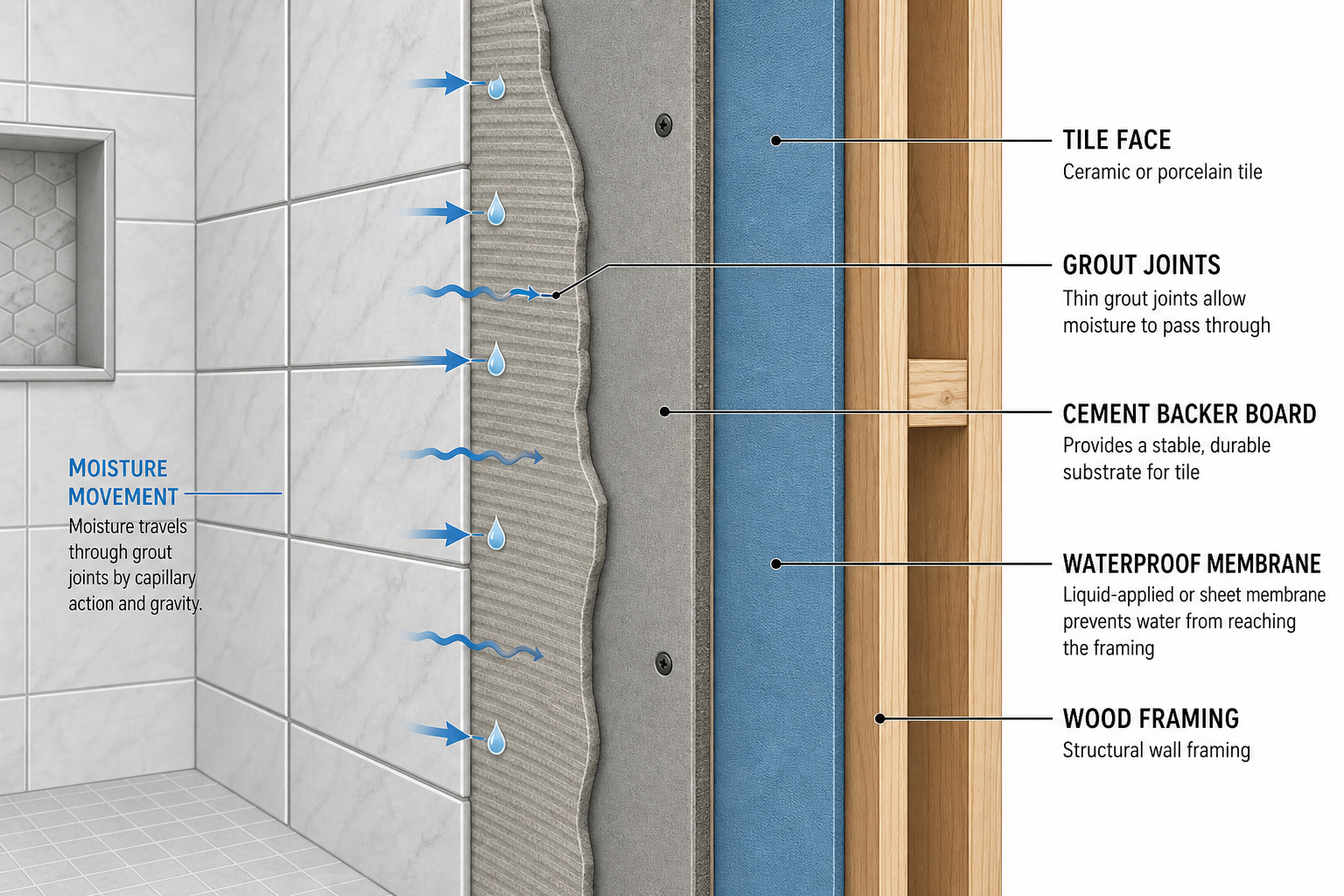
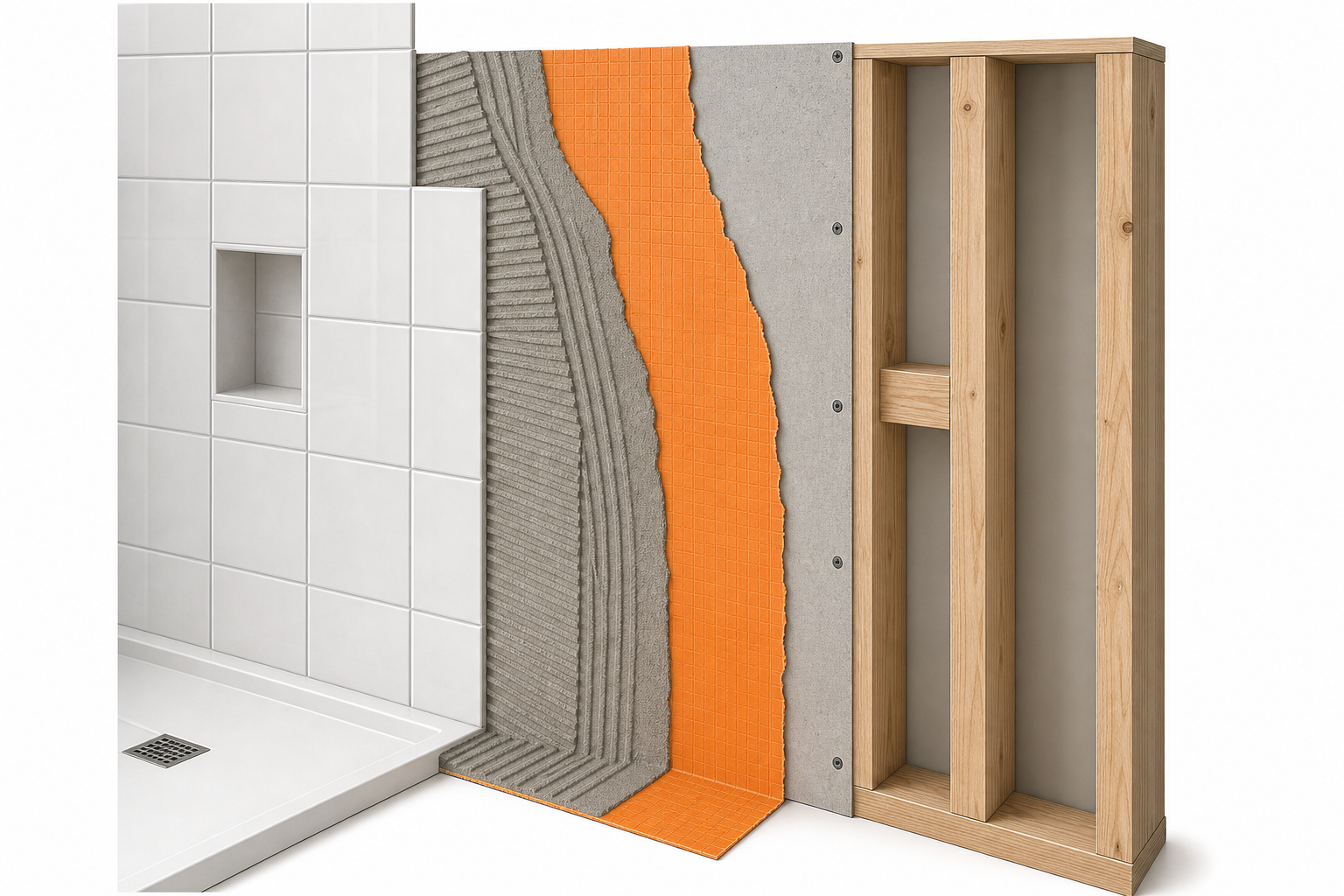
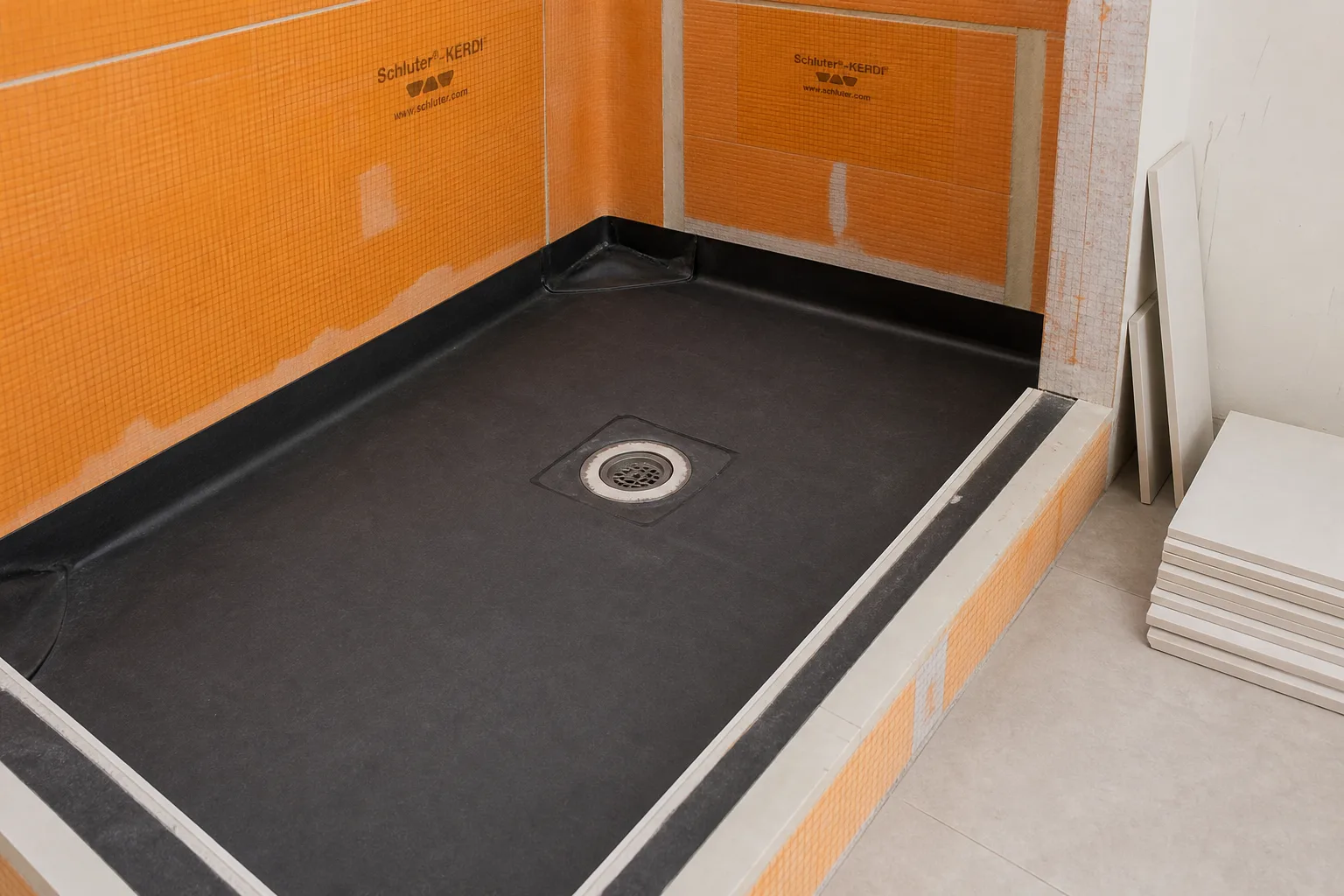
A shower with a continuous waterproof membrane, proper movement joints, and a fan ducted to the exterior will tolerate imperfect maintenance longer than a poorly built shower. But no assembly tolerates standing water at failed joints indefinitely. The membrane intercepts water that moves through the tile assembly. It does not intercept bulk water entering through a gap in caulk at the tub rim.
The maintenance guide exists because the assembly is designed to get wet at the tile surface and stay dry at the framing. That design requires the surface pathways to remain intact. Caulk is a maintenance item with a finite lifespan. Grout is permeable by design. Fans require cleaning to move air. These are not defects. They are the operating conditions of the system.
We include a one-page maintenance guide with every project close-out. Which joints to inspect, when to reseal grout, how long to run the fan, what to do when caulk starts to go. A client who reads that page once and follows it will live in that room for fifteen years without a construction problem.