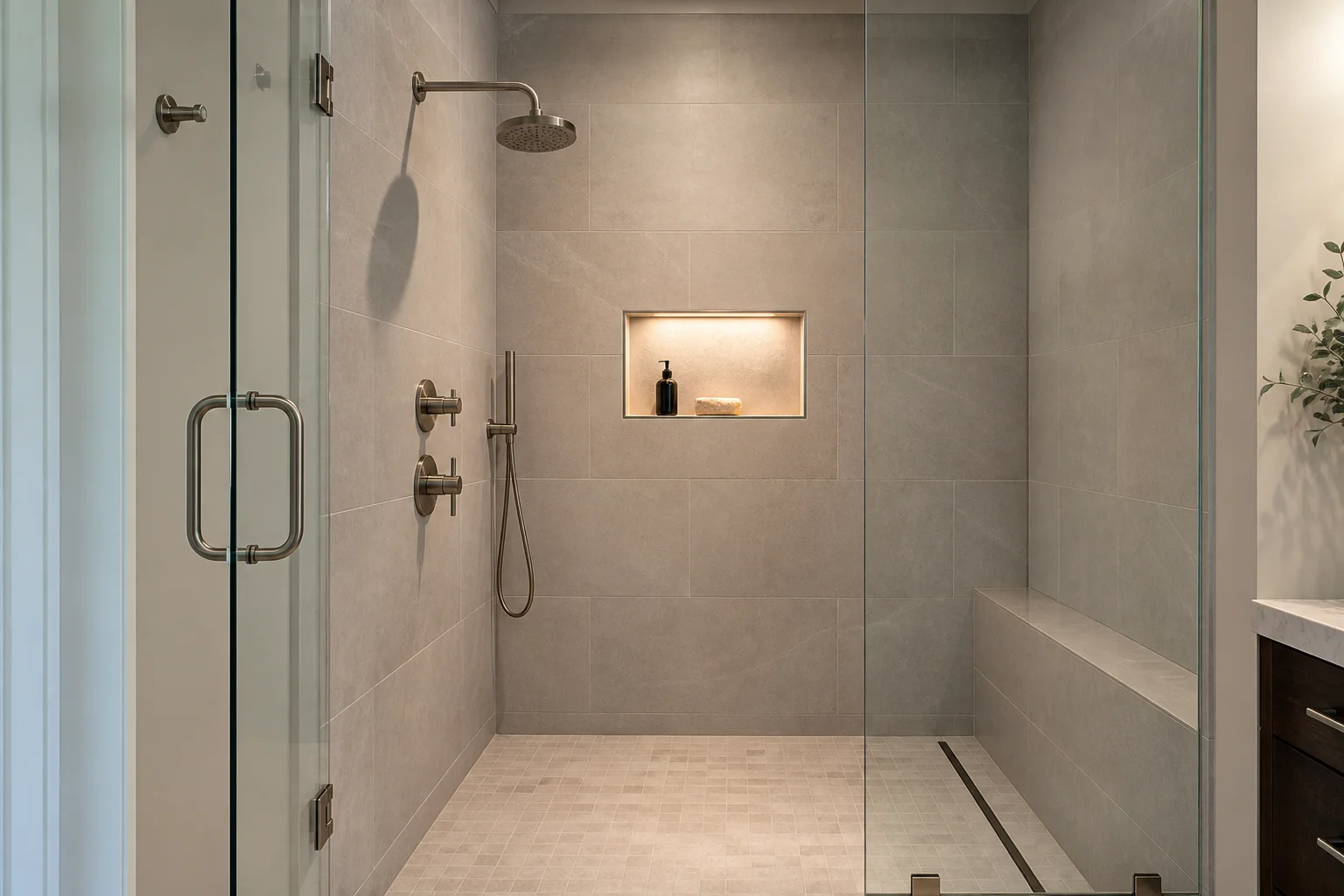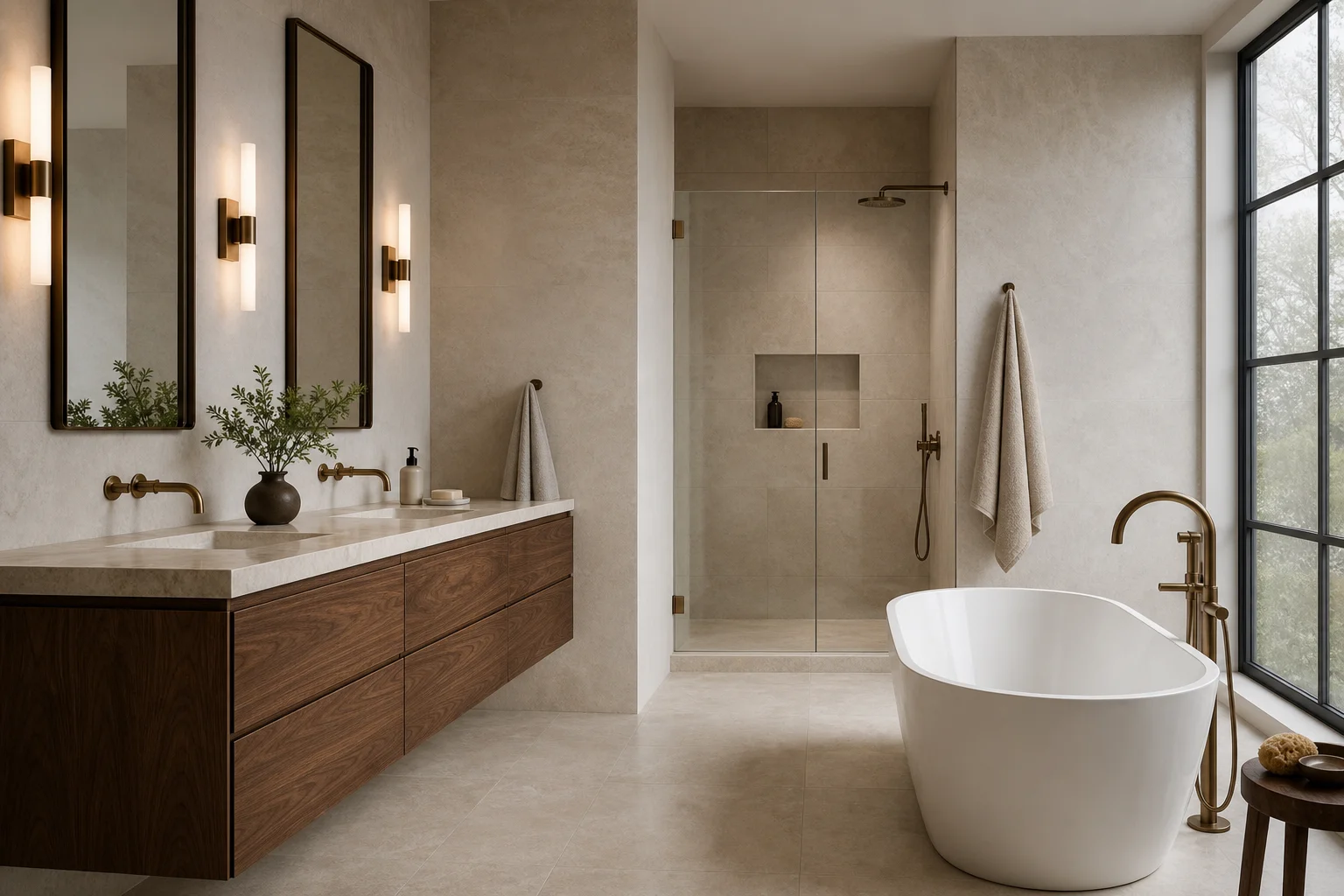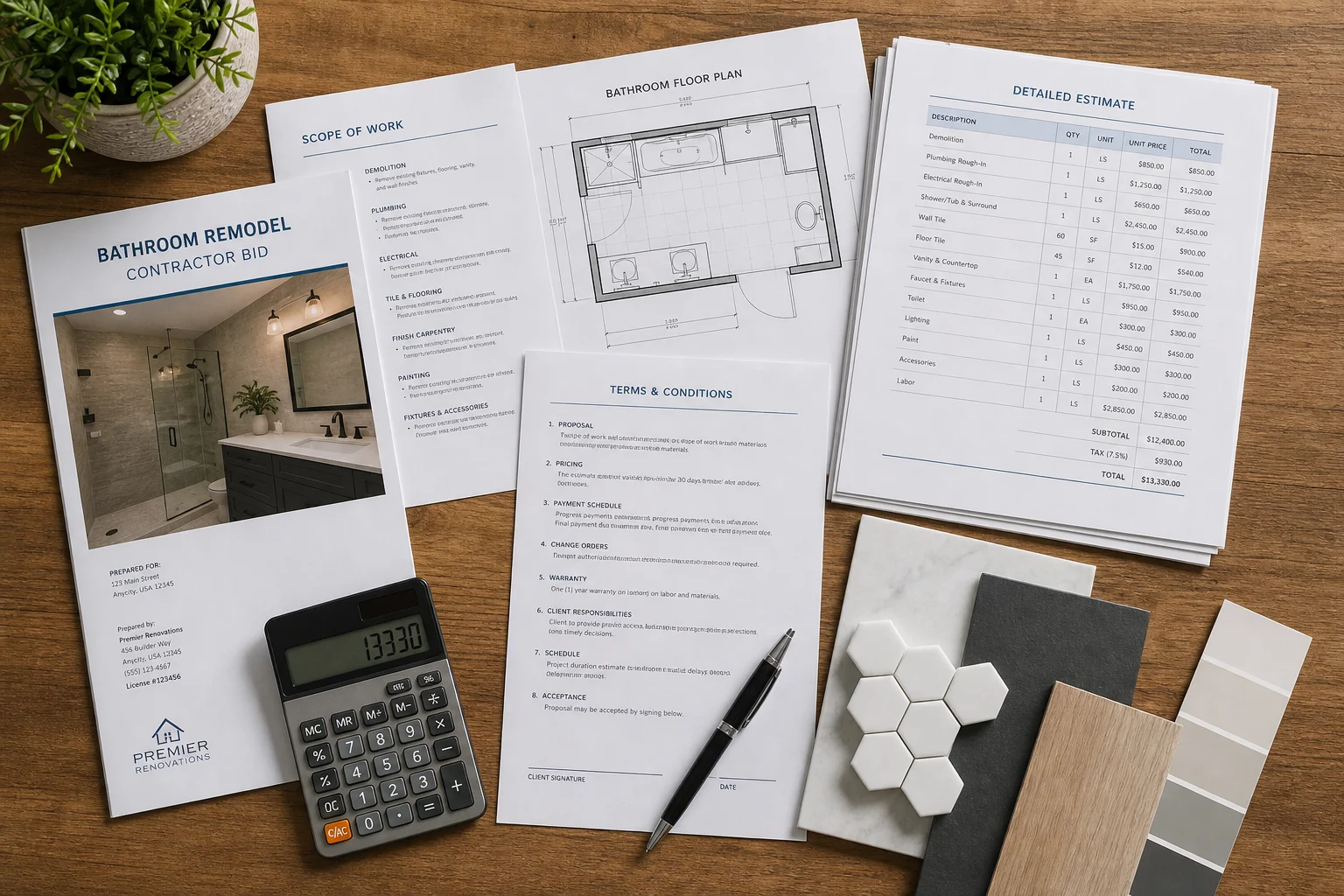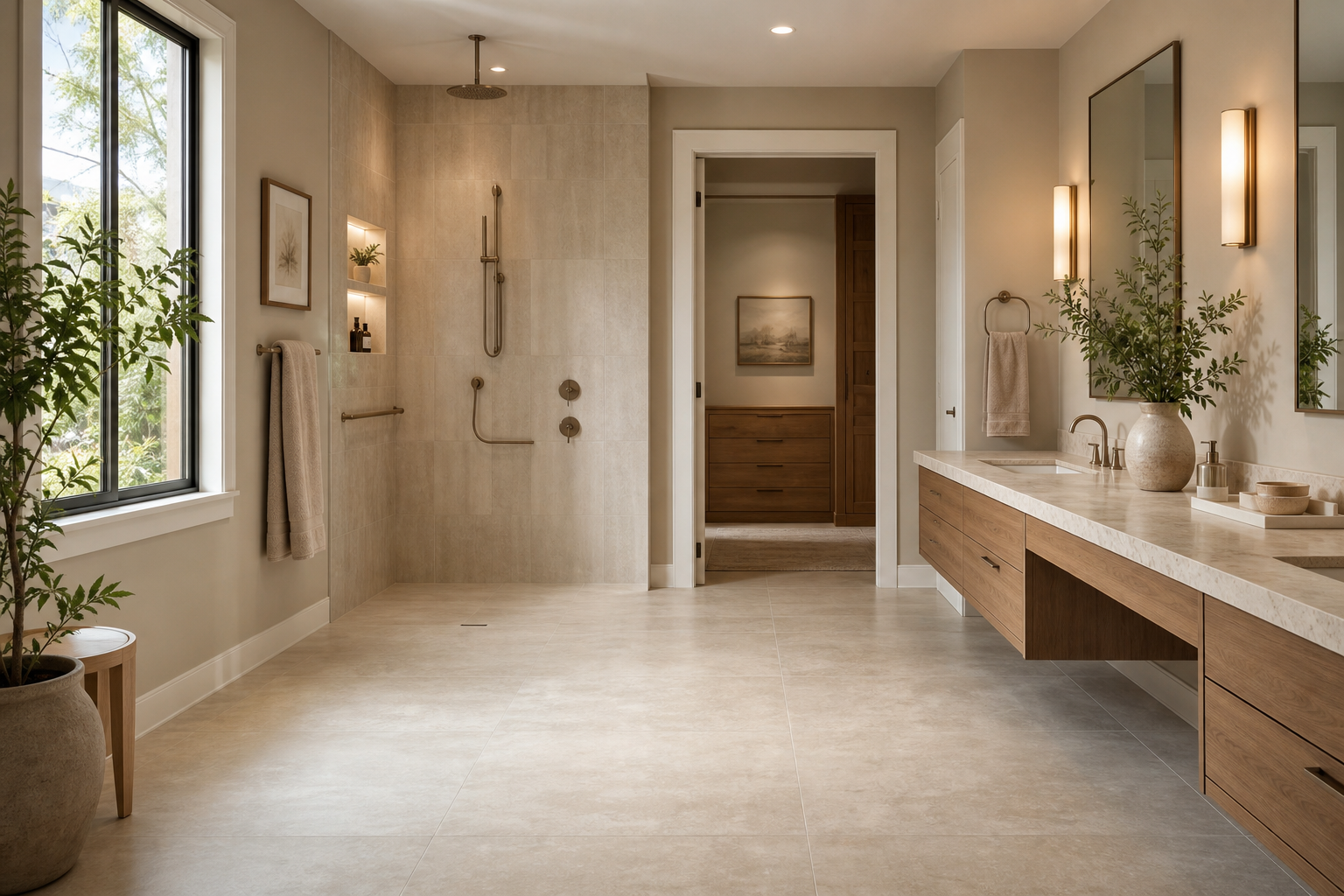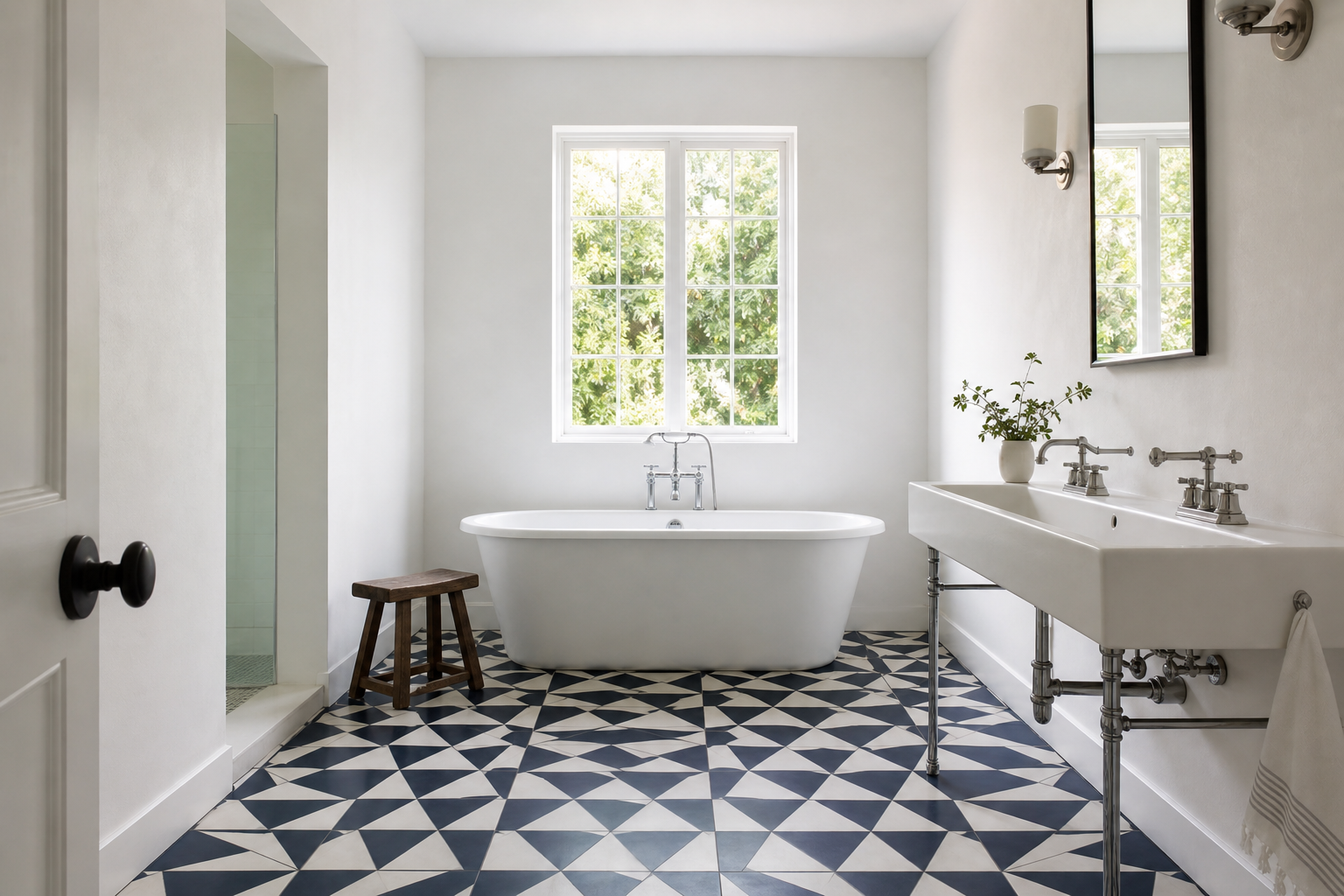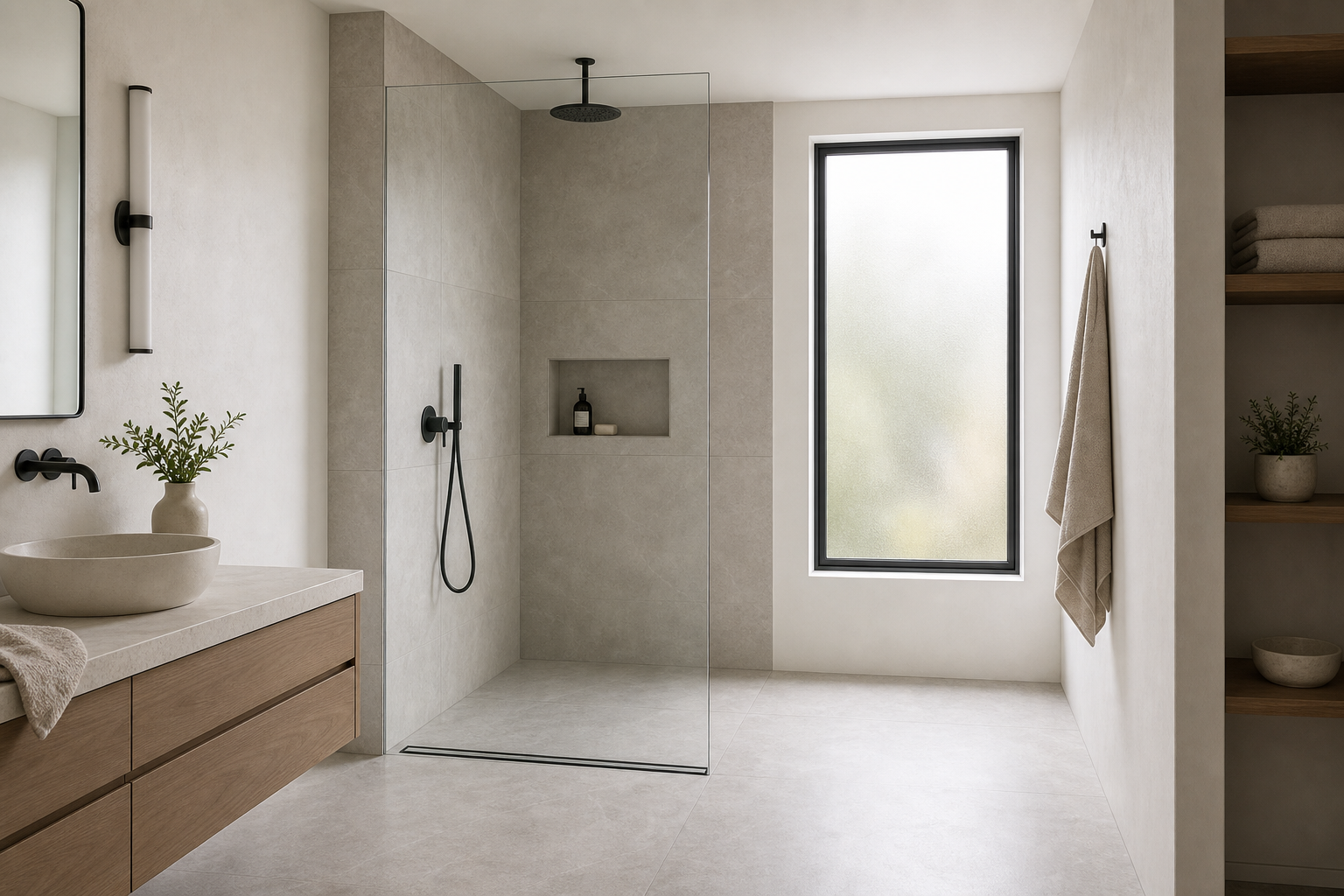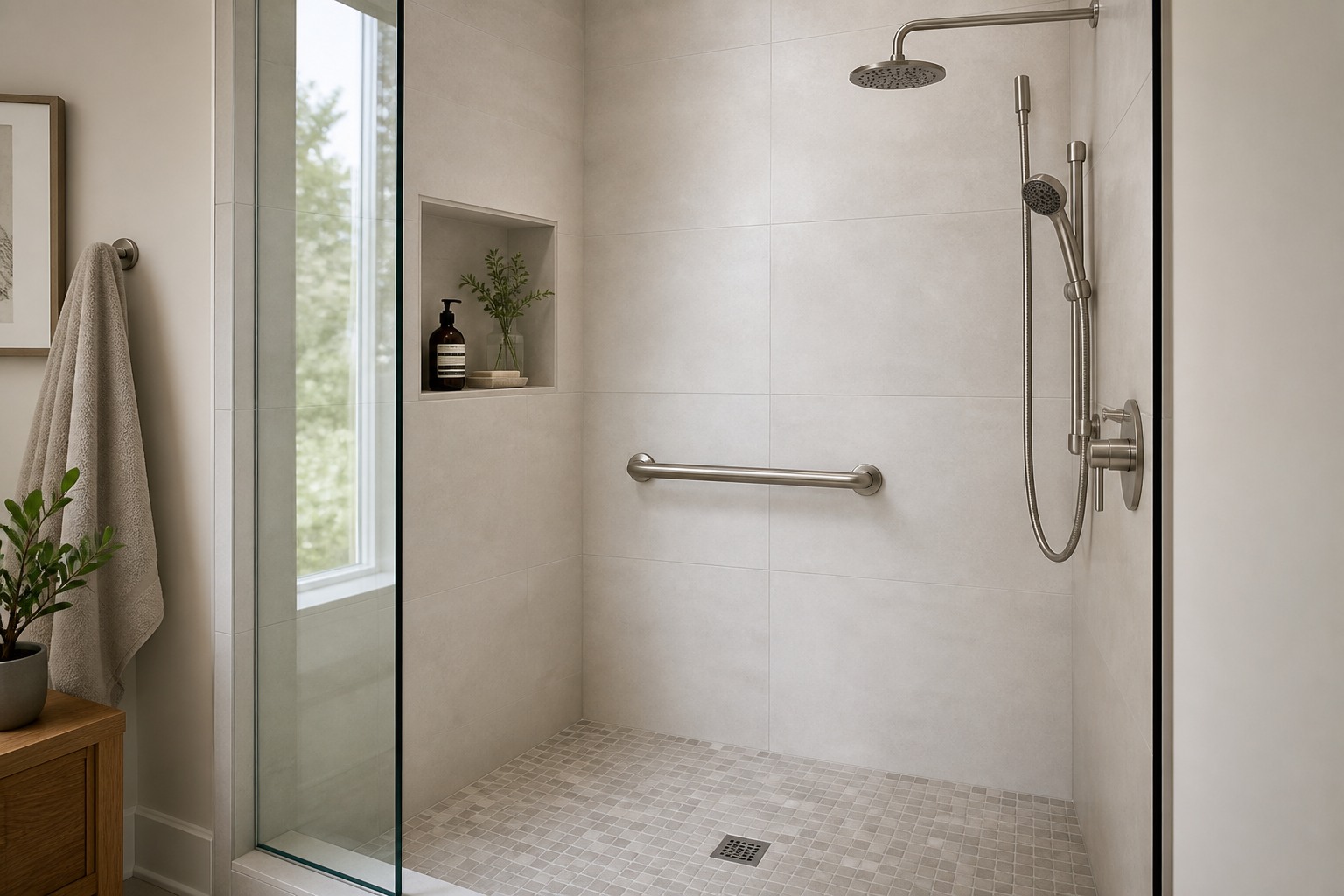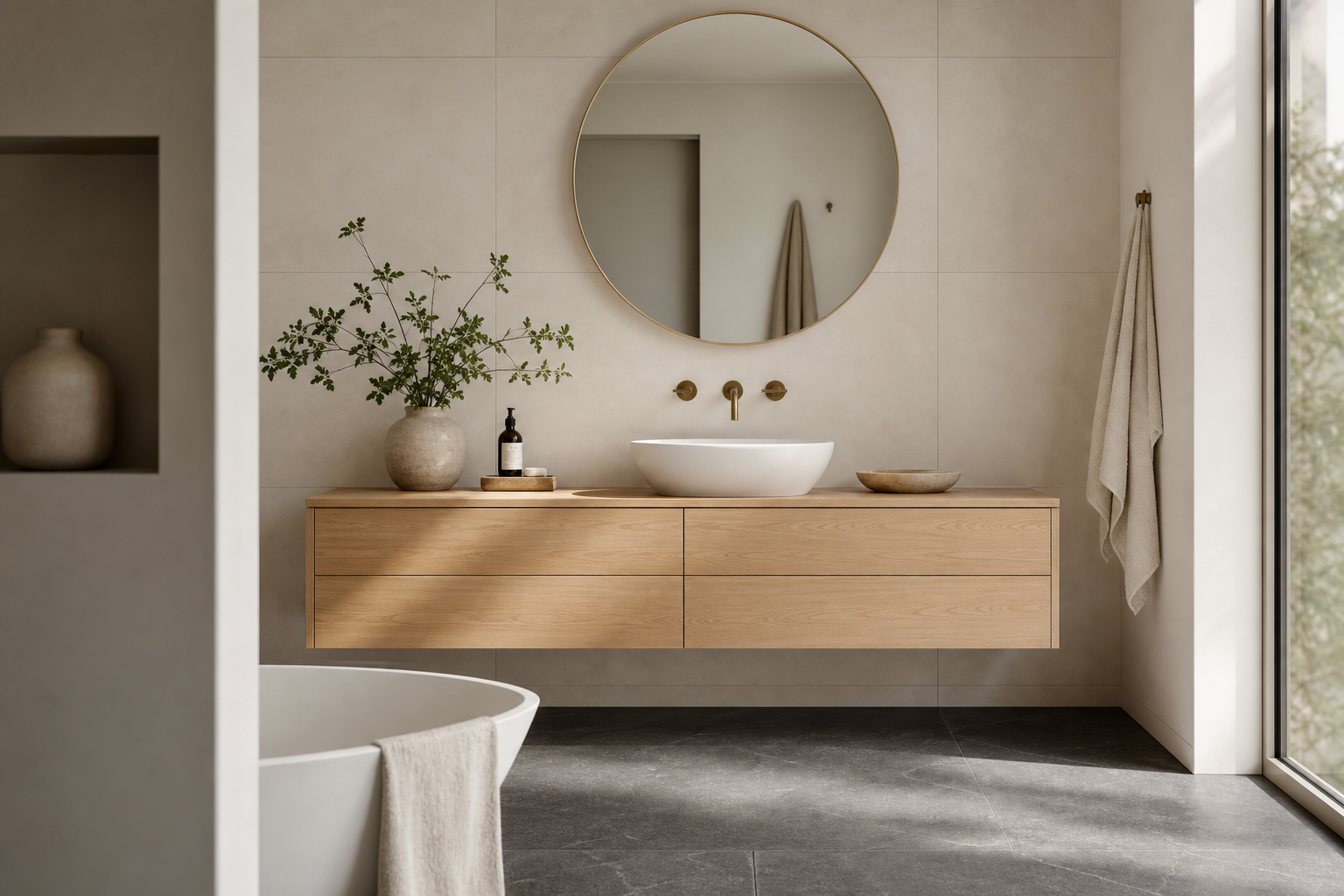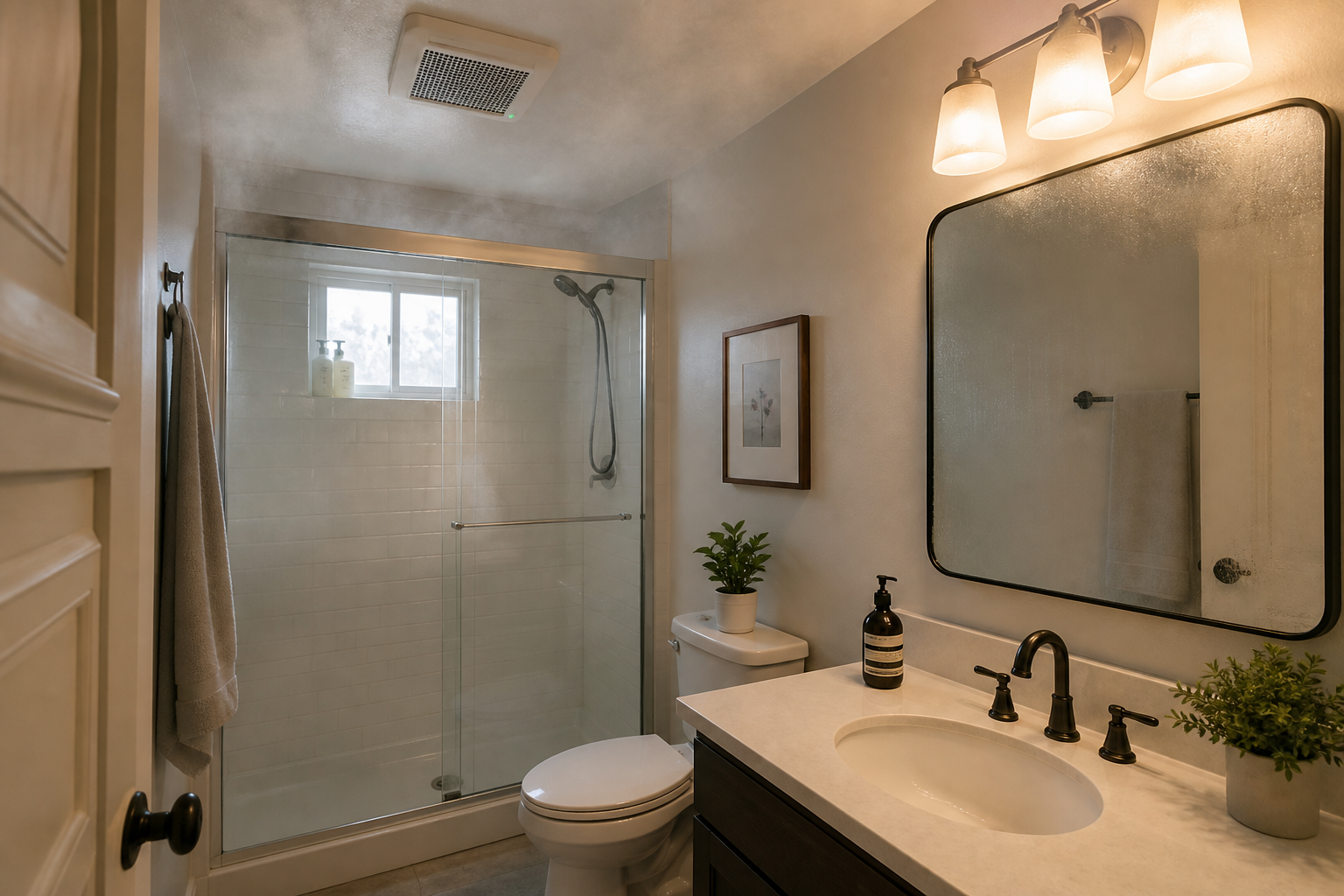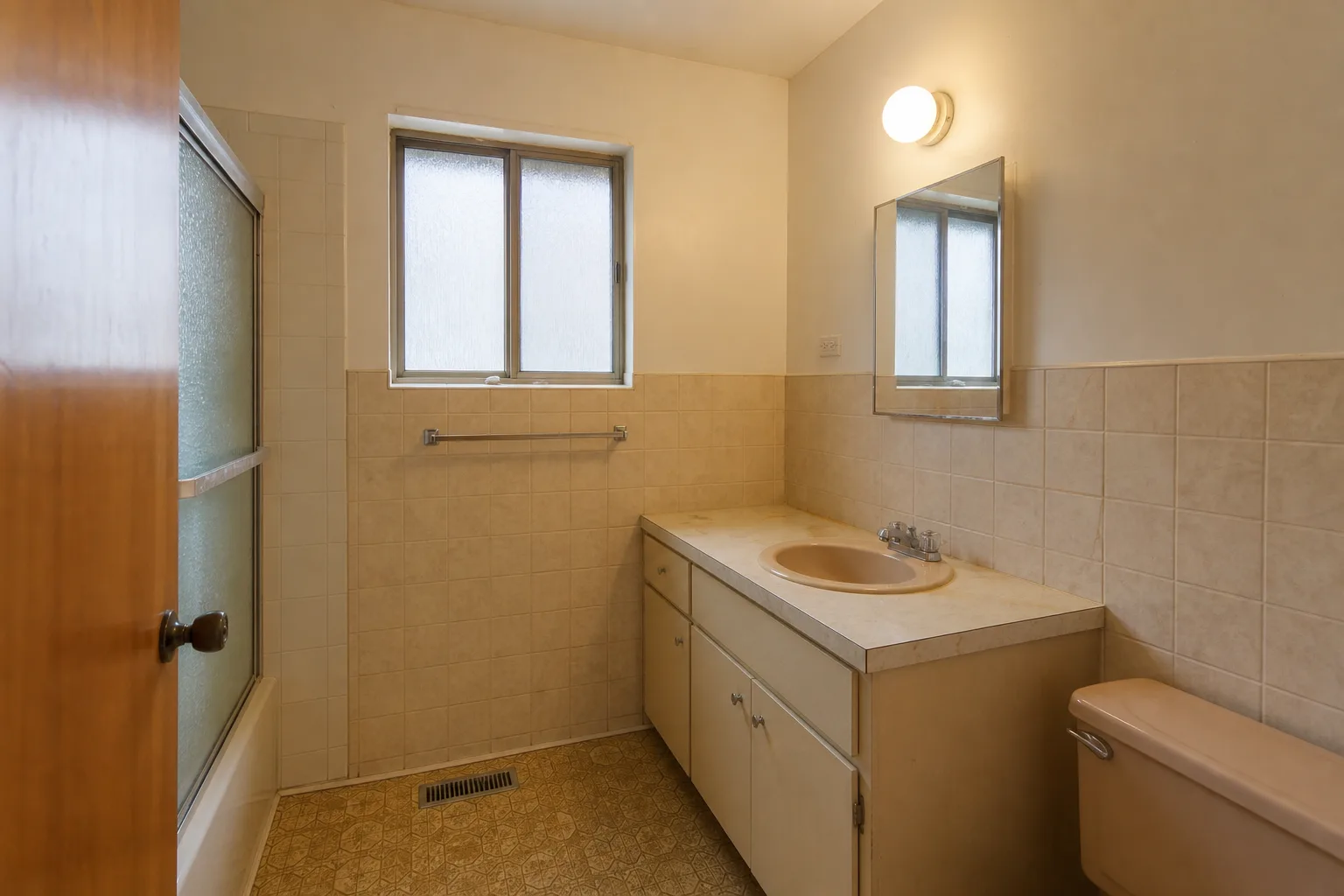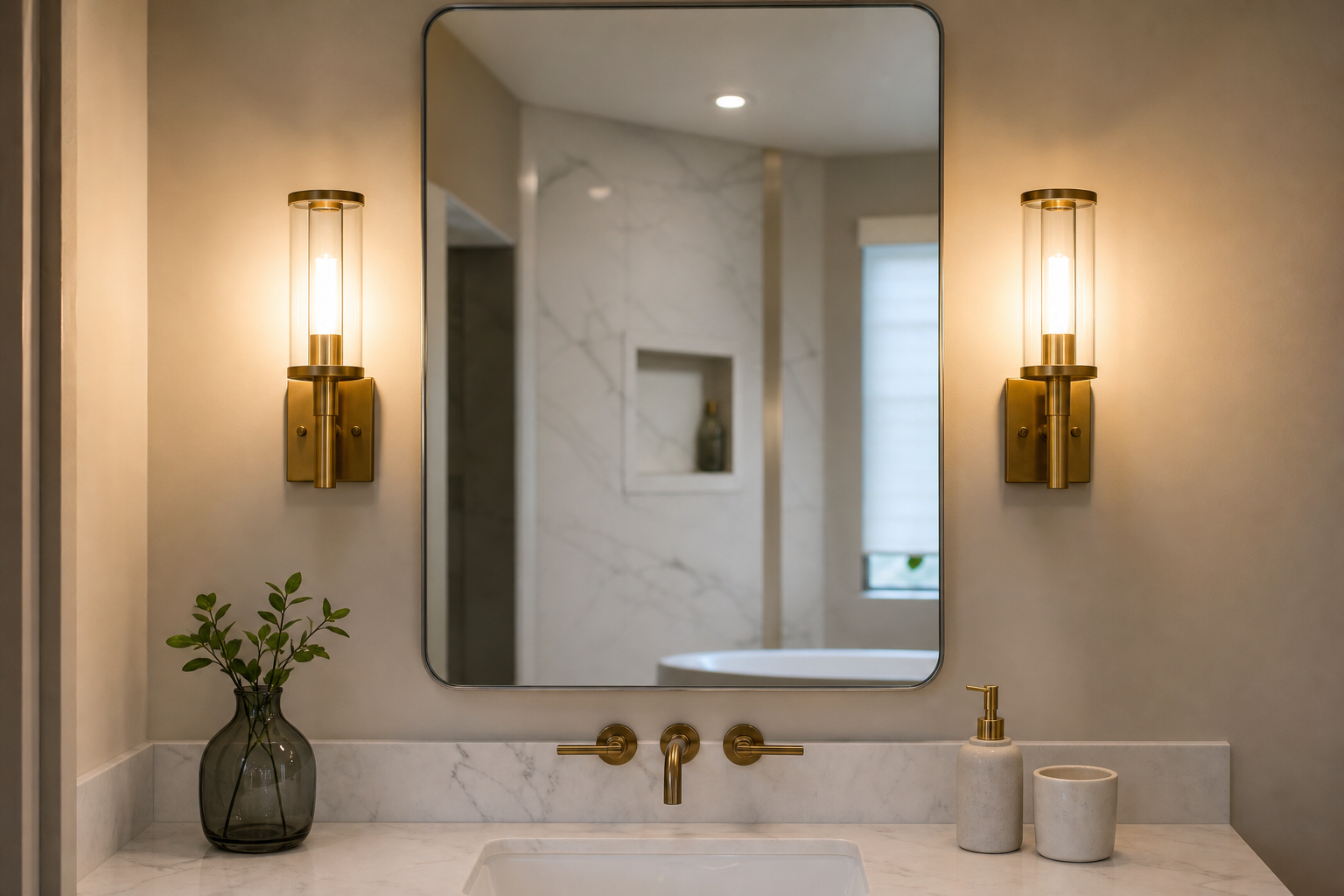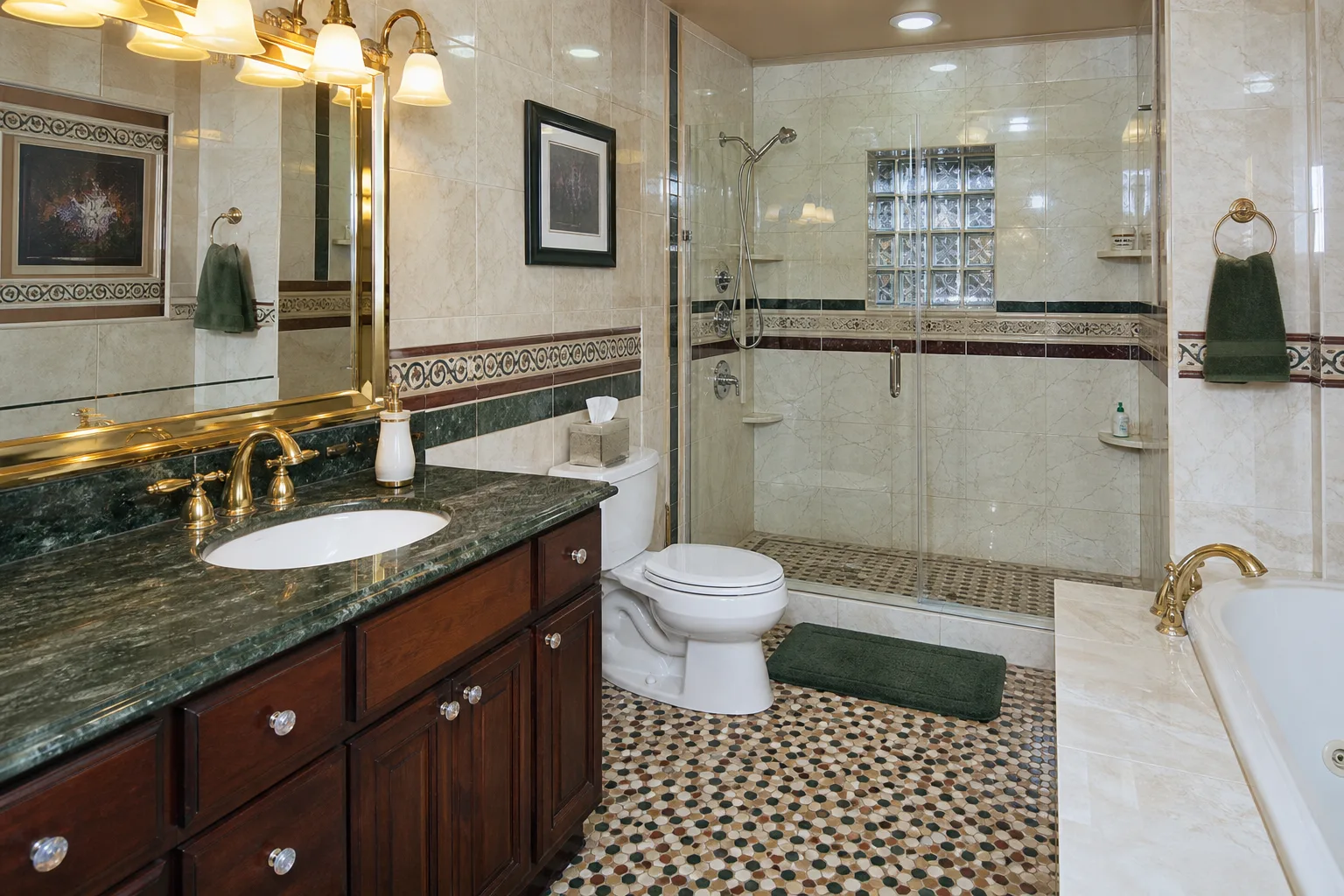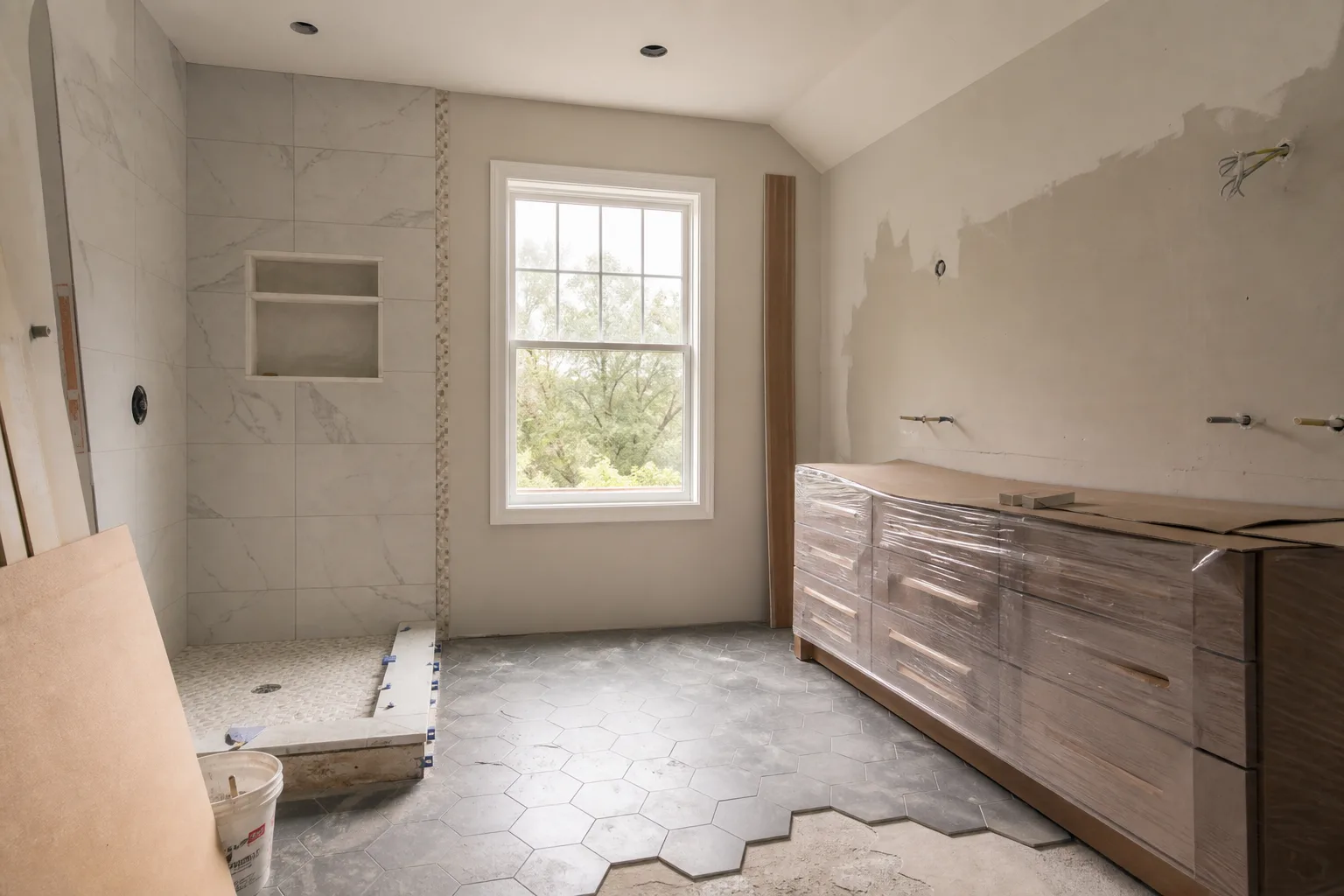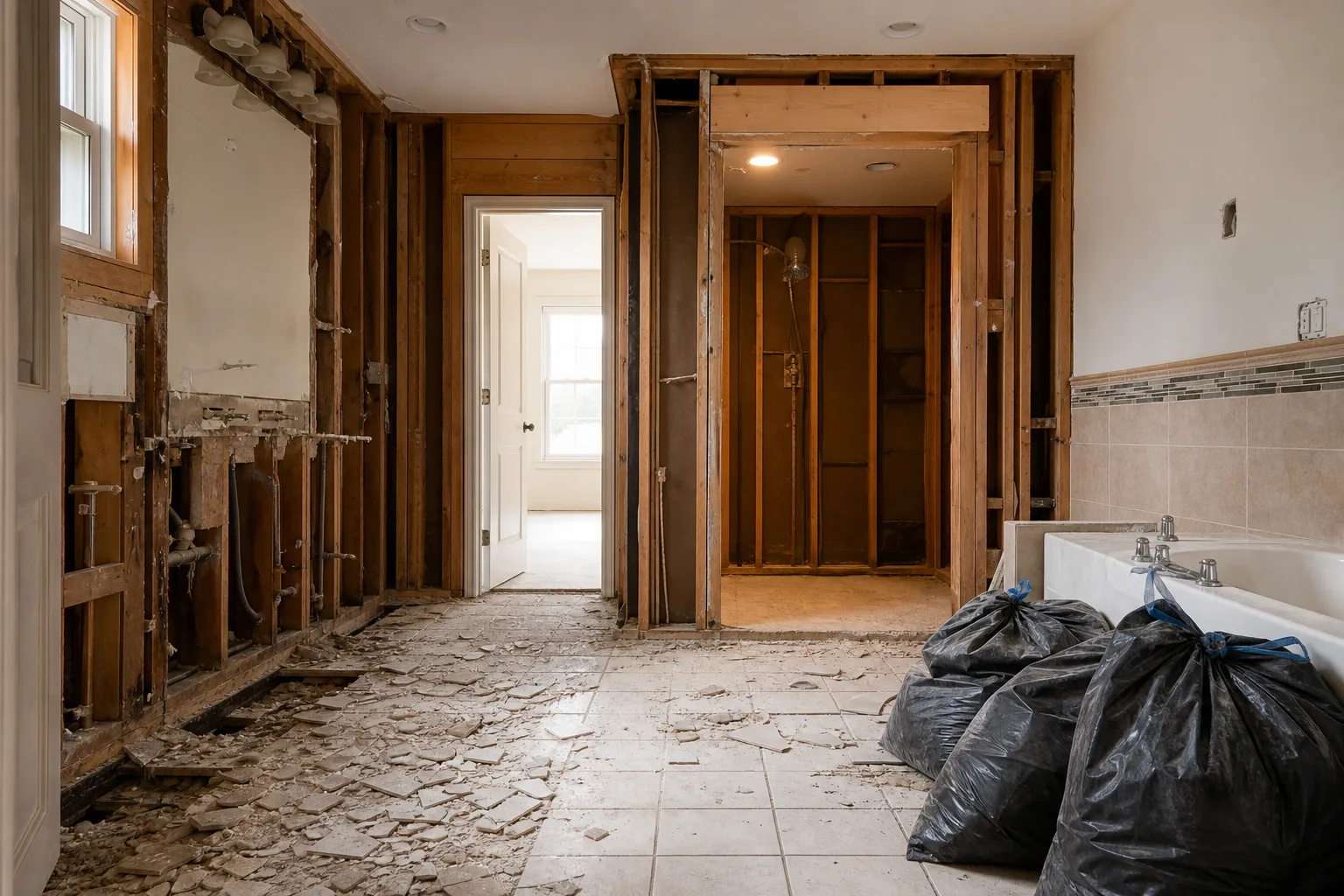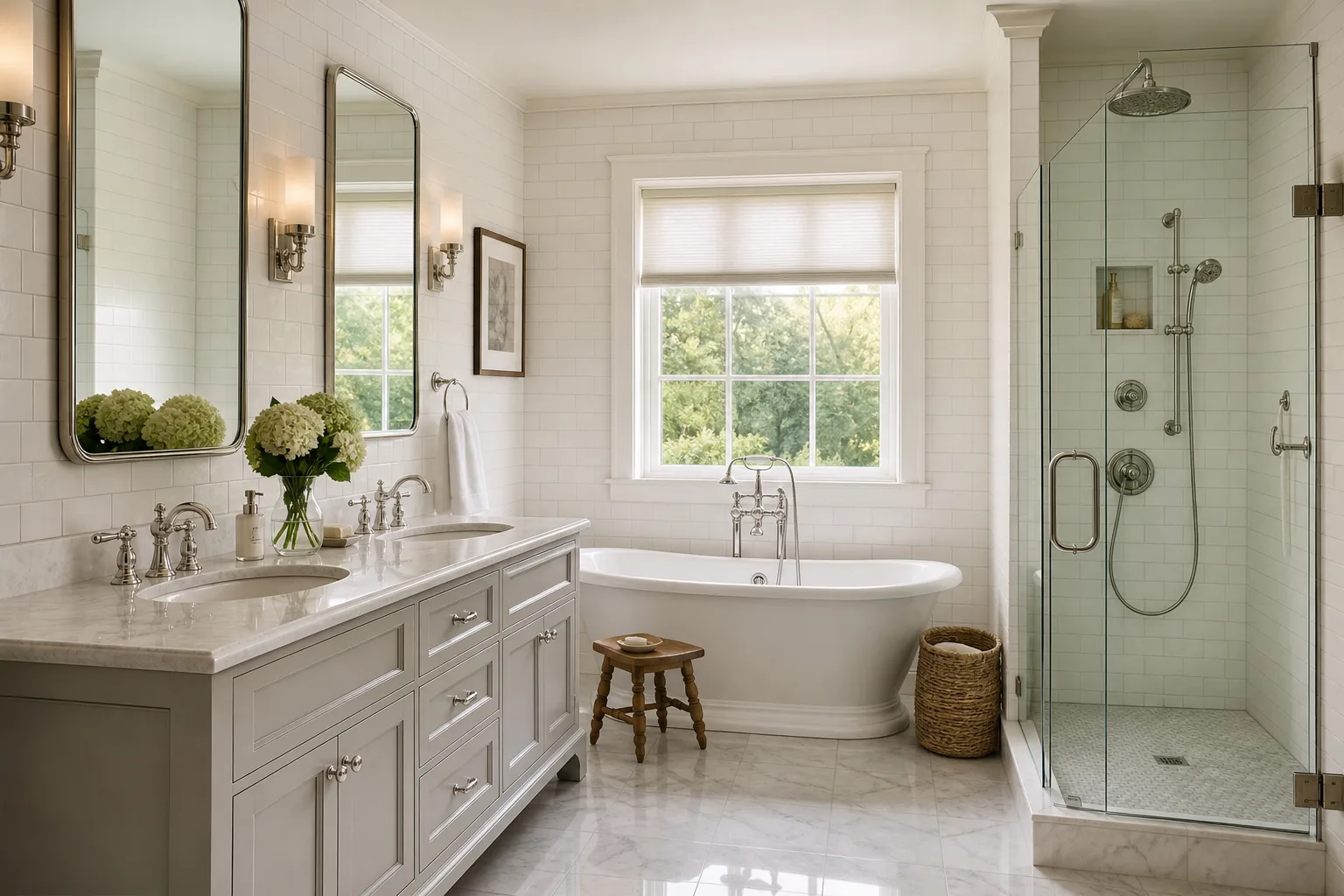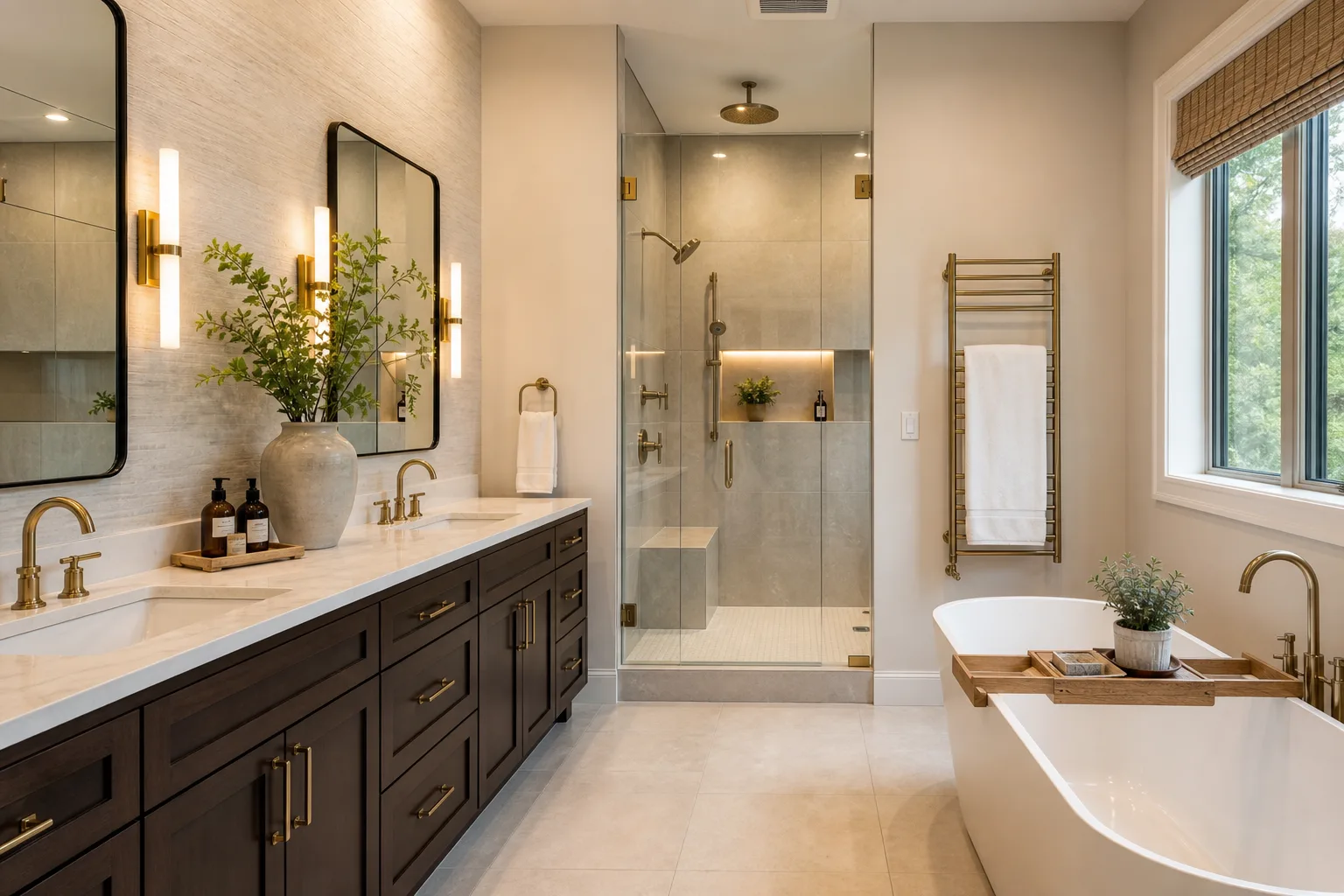
The bathroom you apologize for probably isn't failing on taste. The tile is fine. The fixtures work. But the room makes every morning slightly harder than it should be, and you have learned to route around the problems so automatically that you stopped noticing them years ago. You open the door a different way to avoid hitting the vanity. You wait for your partner to finish at the sink before you can get to the toilet. You brush your teeth from an angle because standing directly in front of the mirror puts the light behind you. These are not aesthetic failures. They are layout failures, and they accumulate into a room that quietly drains the first ten minutes of every day.
This is the article for naming what your layout is actually doing. Because before any renovation decision makes sense, the honest question is: what problem are we solving?
The Door Is the First Clue
Door placement and swing direction are the single most commonly ignored source of bathroom friction, because they are invisible when you look at a design on paper and obvious the moment you live with them.
A bathroom door that swings inward and lands within a foot of a toilet requires anyone entering the room to navigate around it. A door that opens directly in front of the vanity means the mirror is unavailable while someone else is coming in or leaving. A pocket door that sticks, or a barn door that provides inadequate acoustic privacy, becomes a daily irritation that erodes the room's comfort faster than any outdated tile choice.
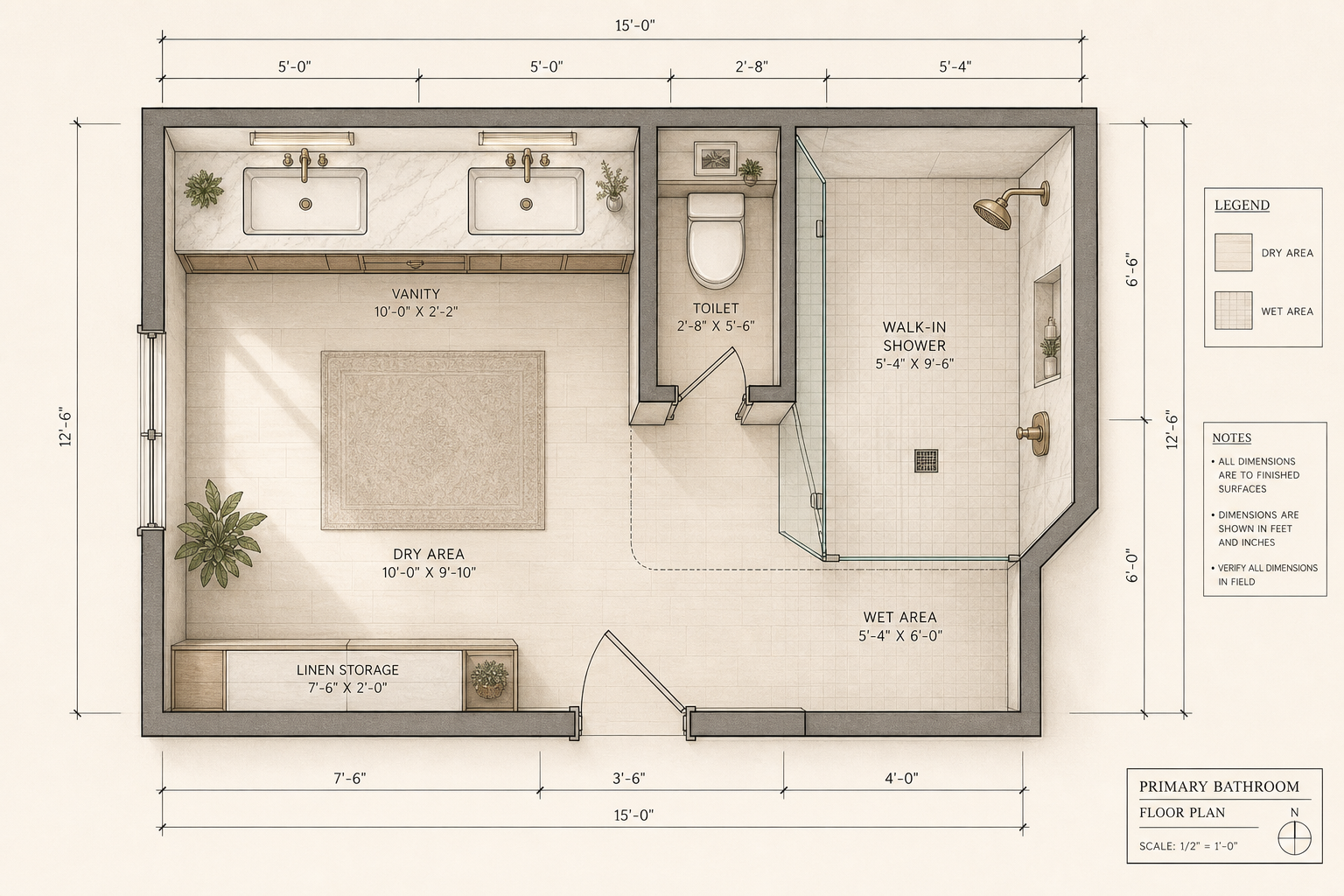
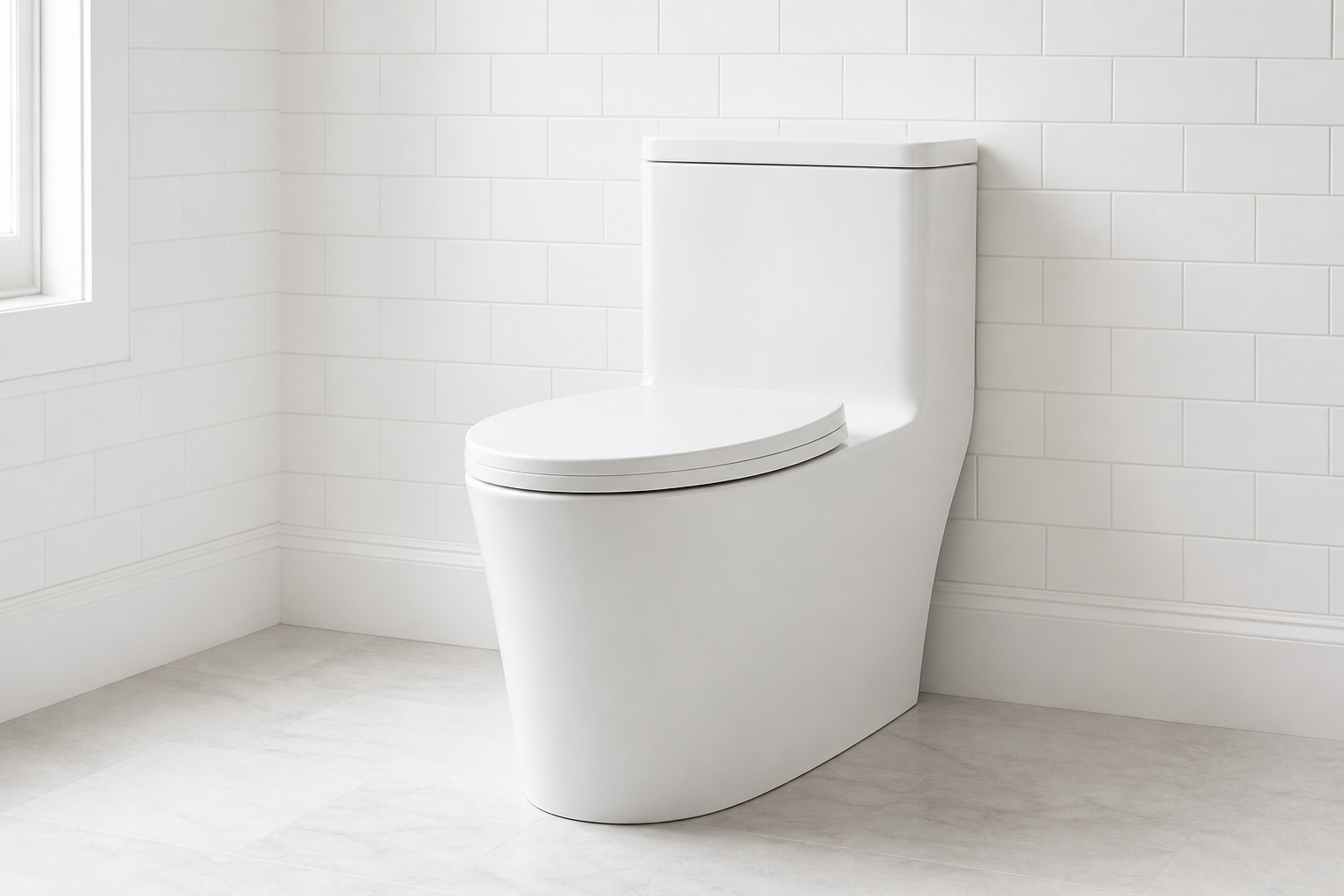
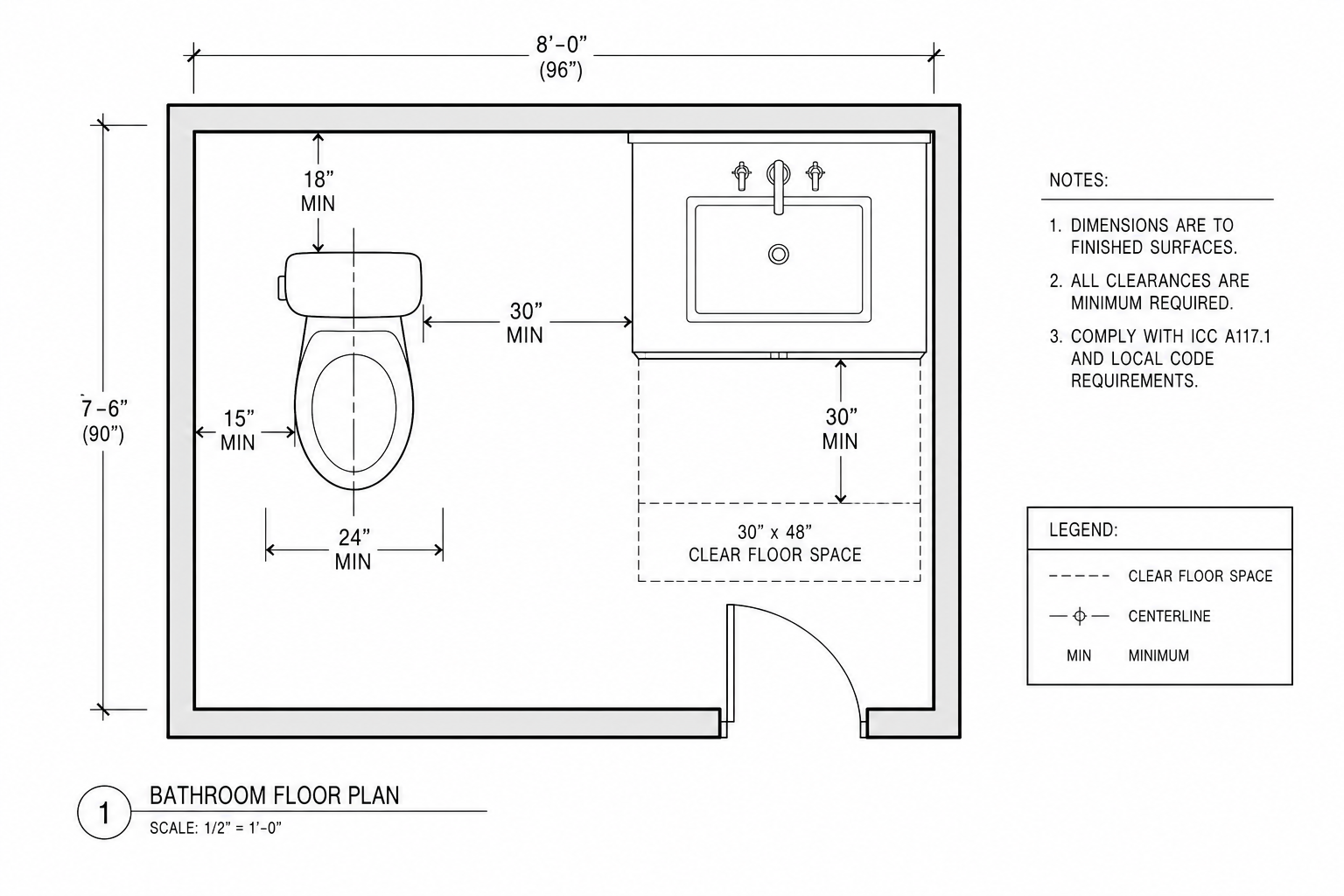
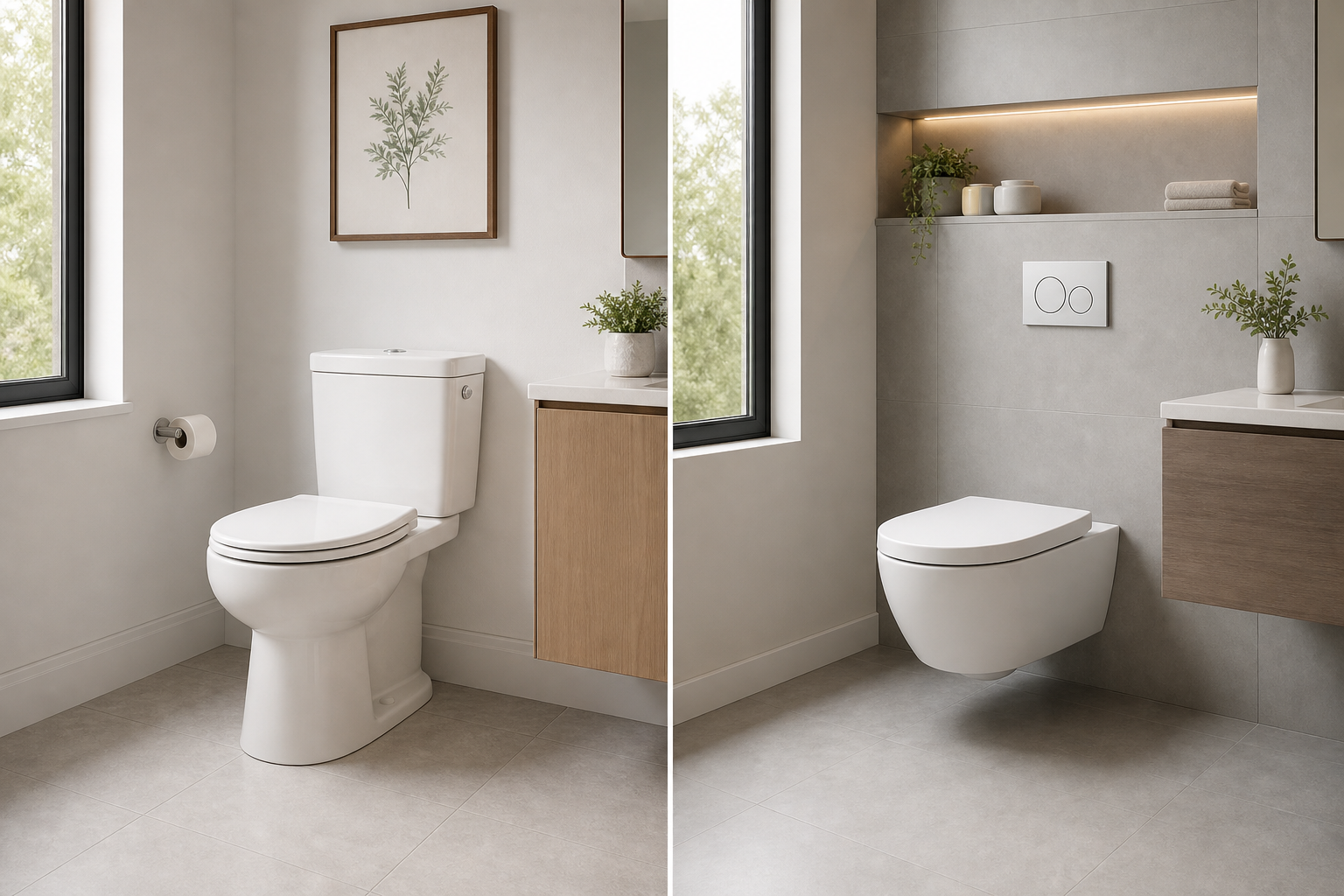
The IRC code minimum requires 21 inches of clear floor space in front of the toilet and 15 inches from the toilet centerline to any side wall. The NKBA recommends 30 inches in front of the toilet and 18 inches to any obstruction. That extra clearance is not surplus space for its own sake. It is the difference between using the toilet and maneuvering to use the toilet; a small distinction that registers every single morning.
When looking at your current layout, or evaluating a proposed one, ask where every door in the room lands at full swing and whether that arc overlaps with any fixture you would use simultaneously. It almost always does. Fixing it costs very little at the planning stage and a great deal after tile is set.
Where Two People Actually Collide
The primary bathroom is, for most households, a shared space used during the same window of the day. Morning routines overlap. People need the mirror at the same time. One person showers while another uses the sink. The room was designed as a single-user space and is operated as a two-user space, and that tension shows up as elbows, waiting, and one person retreating to the guest bath to get ready.
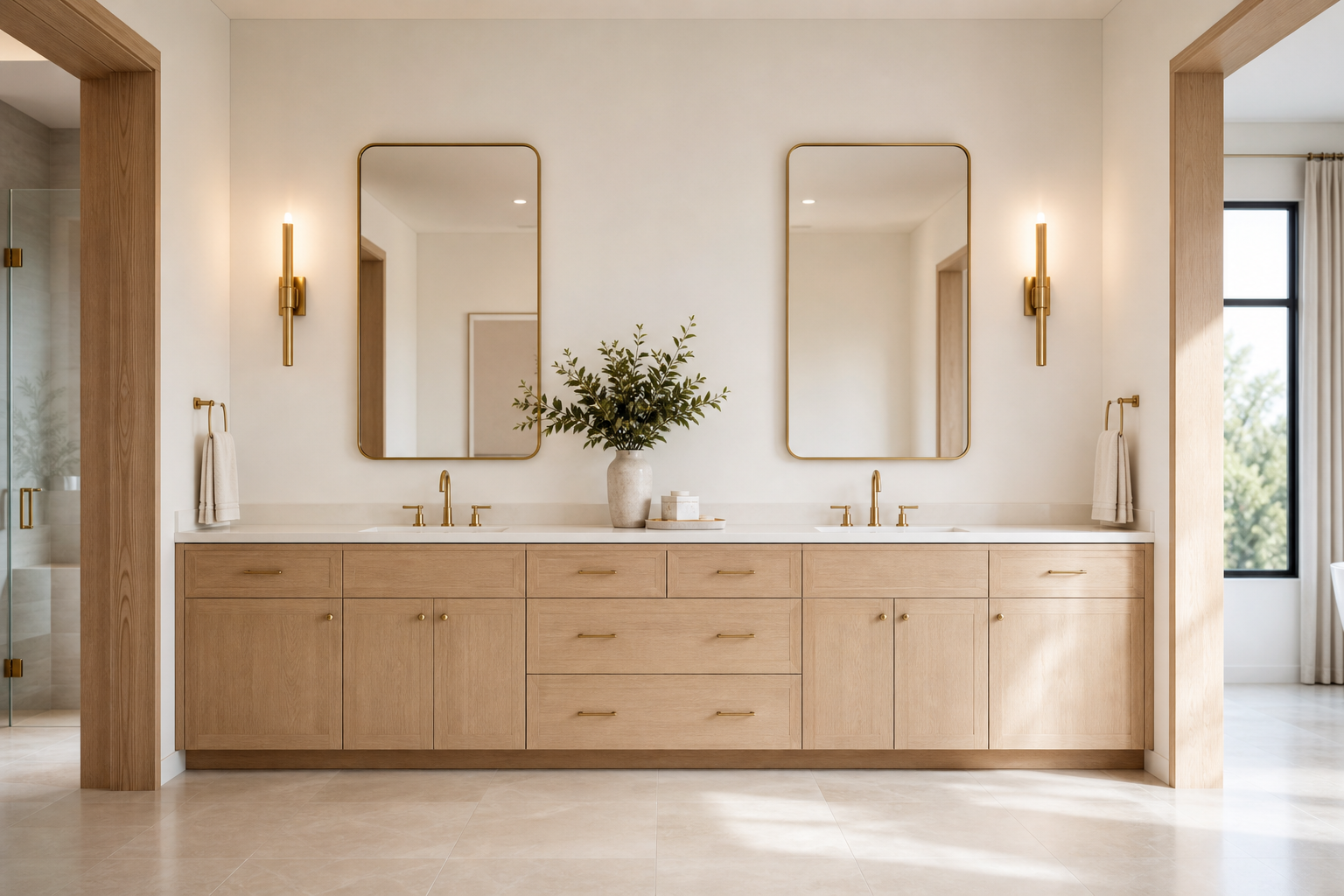
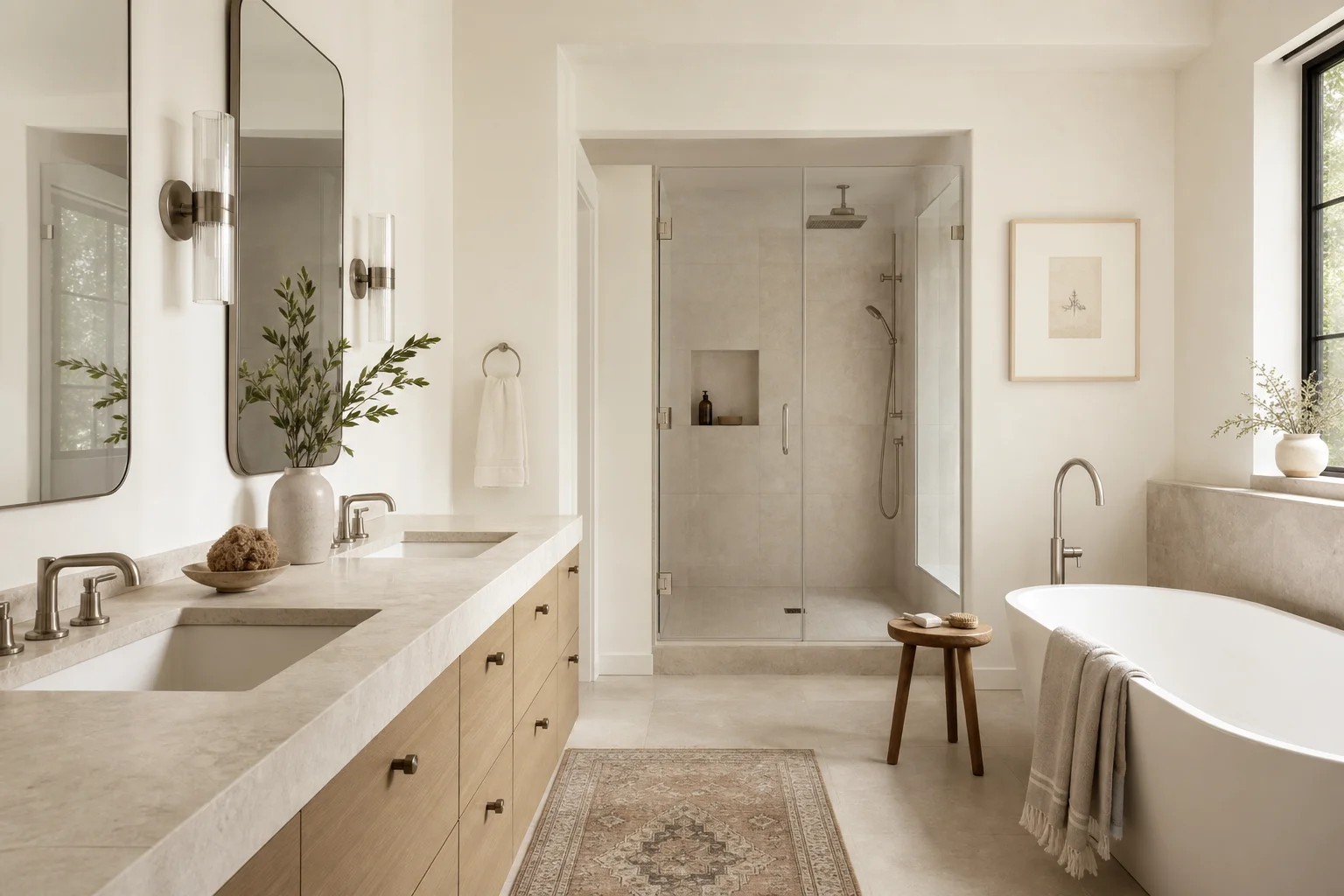
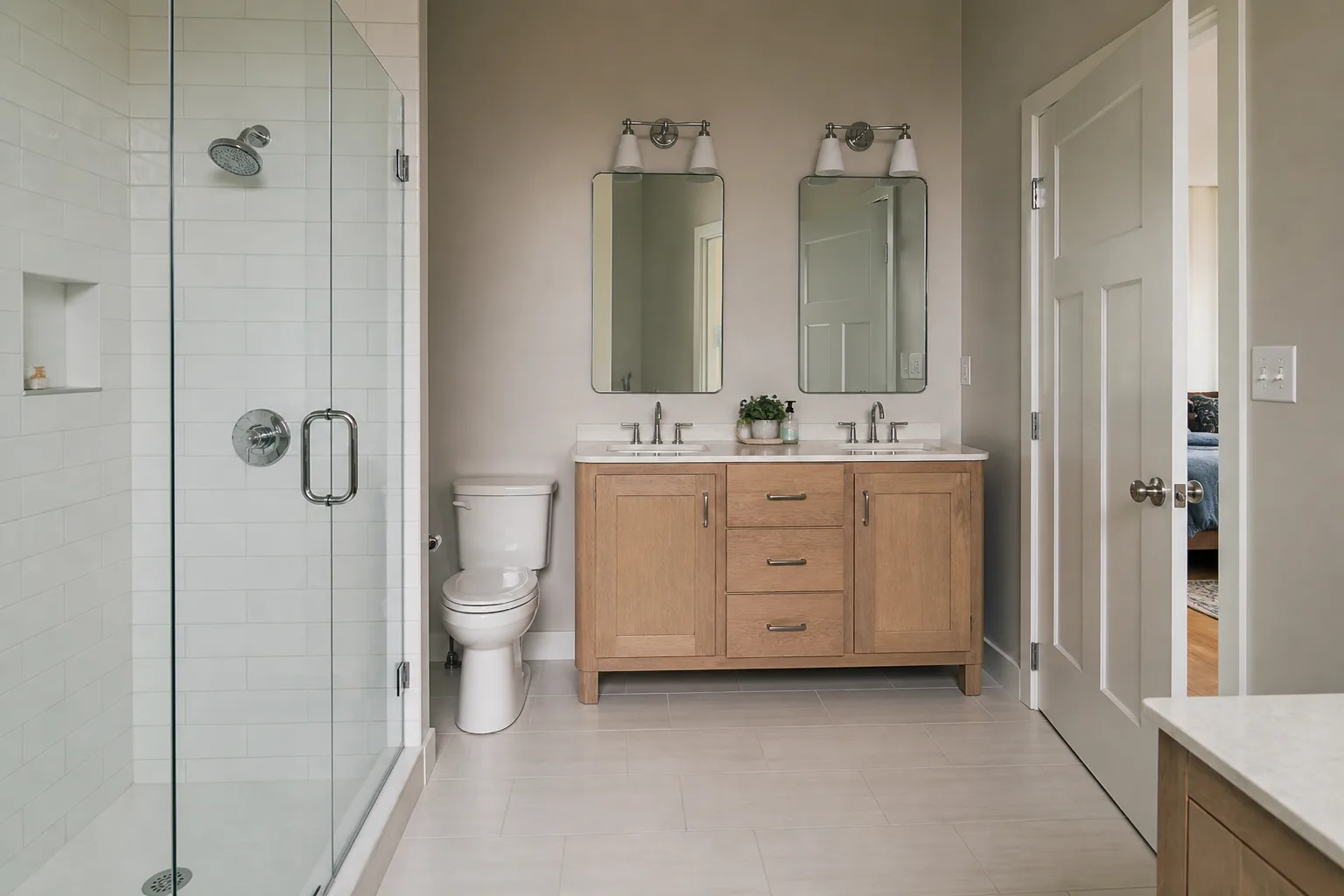
The NKBA recommends 36 inches center-to-center spacing between double lavatories for exactly this reason. At 30 inches (code minimum), two adults using adjacent sinks simultaneously create elbow interference. At 36 inches, they do not. That six-inch difference costs nothing in a layout that plans for it and requires relocating a drain in a layout that doesn't.
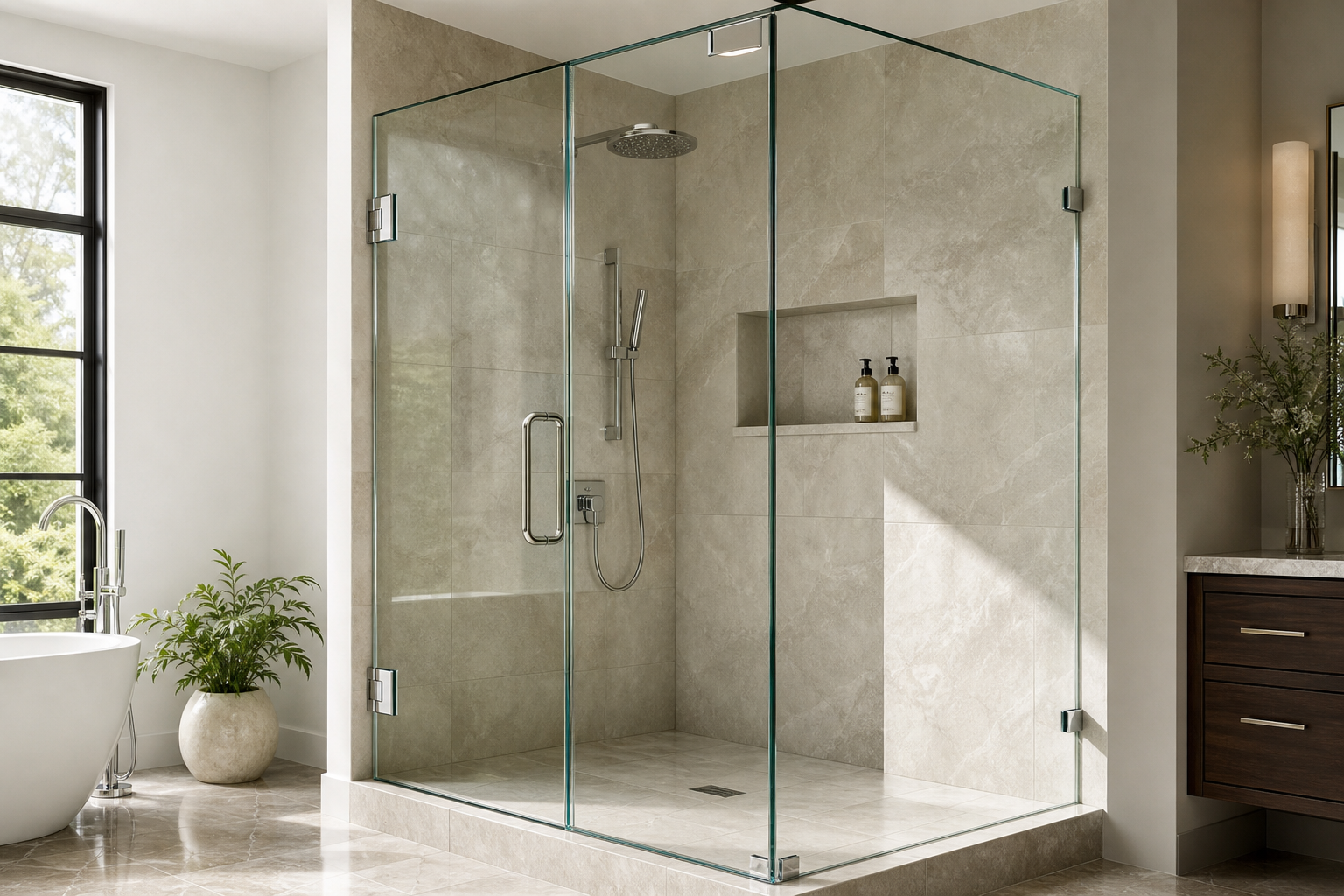
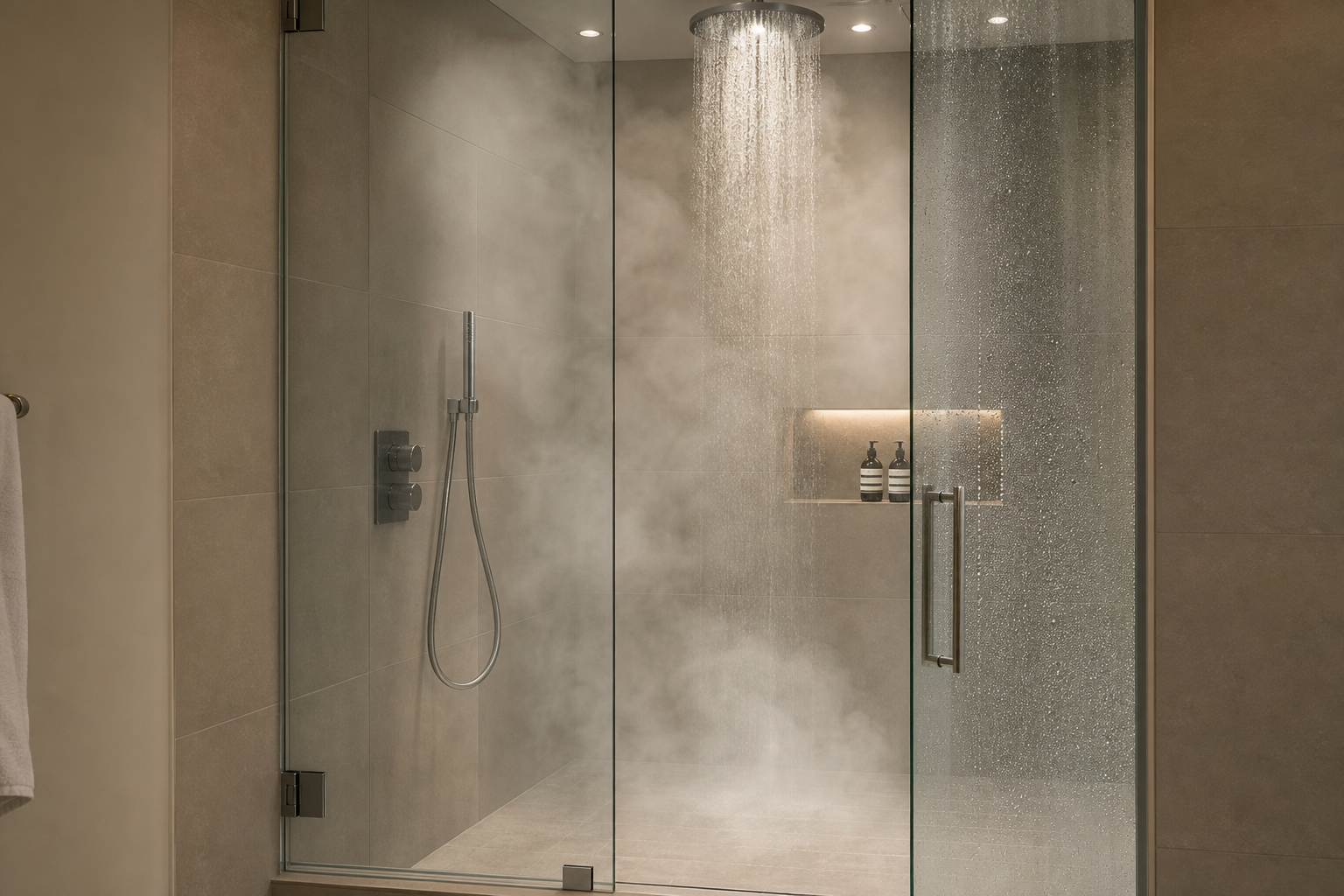
The deeper question for a shared primary bath is whether the wet zone (shower, tub) and the dry zone (vanity, toilet) can operate independently. In a well-laid-out room, one person can shower while the other gets ready at the mirror, without the shower steam fogging the mirror or water tracking into the vanity area. In a poorly laid-out room, the two activities block each other and the whole choreography defaults to taking turns.
If your current bathroom runs on taking turns when it should have enough square footage for parallel use, the layout is failing more than the aesthetics are.
The Mirror Is Probably in the Wrong Place
Not physically wrong, necessarily. But functionally wrong relative to where the light is coming from and how tall the people using it are.
A mirror mounted to center at 60 inches from the floor works for someone 5'8". For a household with meaningful height variation, a mirror that begins lower and extends higher (or a pair of mirrors at slightly different heights) serves both users better than a centered compromise that serves neither perfectly.
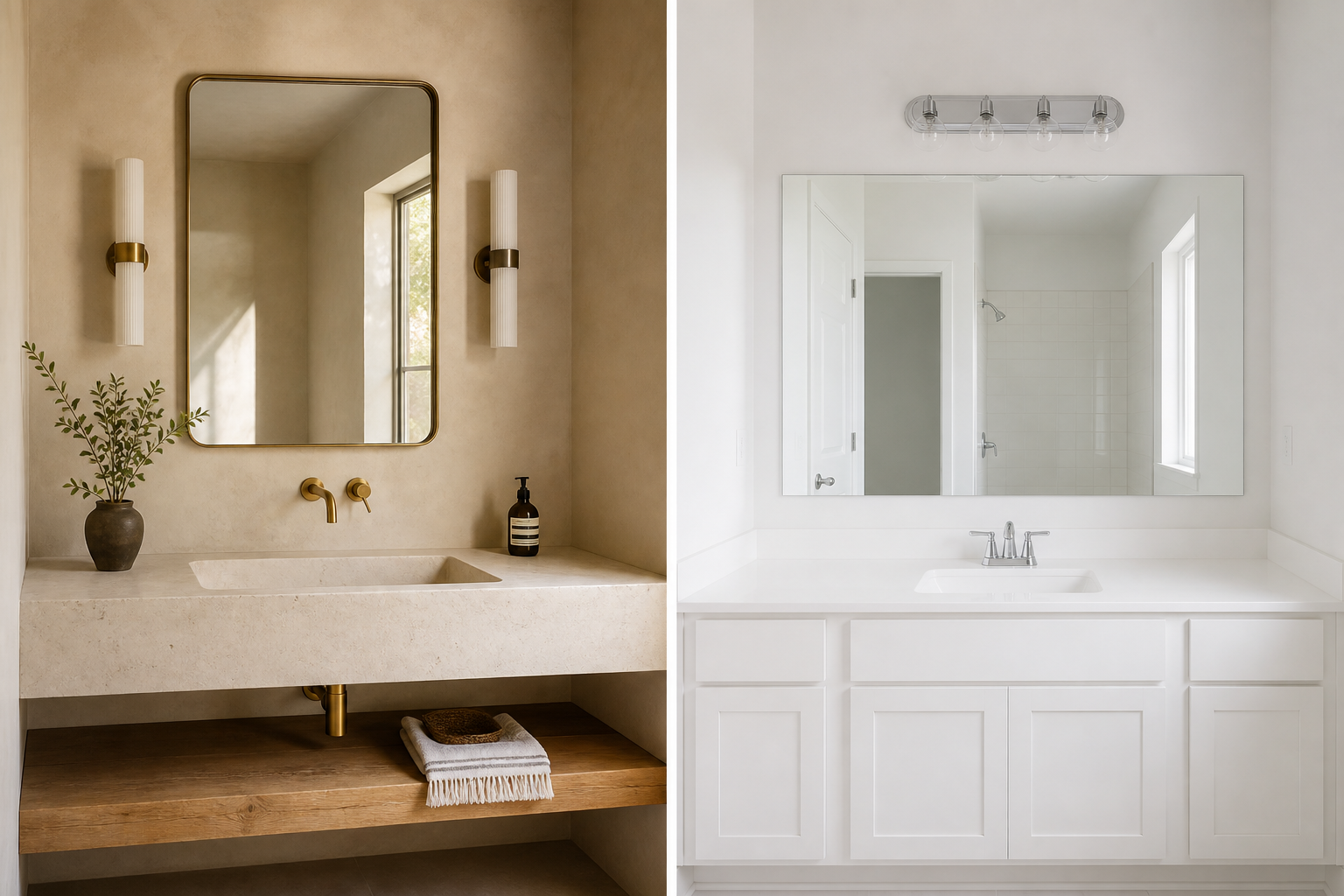
The more common problem is the light source relationship. A vanity mirror with light coming from above (single overhead fixture) puts the face of the person using it in partial shadow, making grooming tasks harder and the image in the mirror less reliable. The room looks fine in photographs. It functions poorly in the 7am test.
The right question before choosing a mirror is: where is the light relative to the face of the person using it? If the answer is "above," the mirror will never work as well as a room where the light arrives from the sides. That is a fixture placement problem, not a mirror problem, and it is worth solving before mirror selection begins.
Vanity Height Is a Guess Most People Never Correct
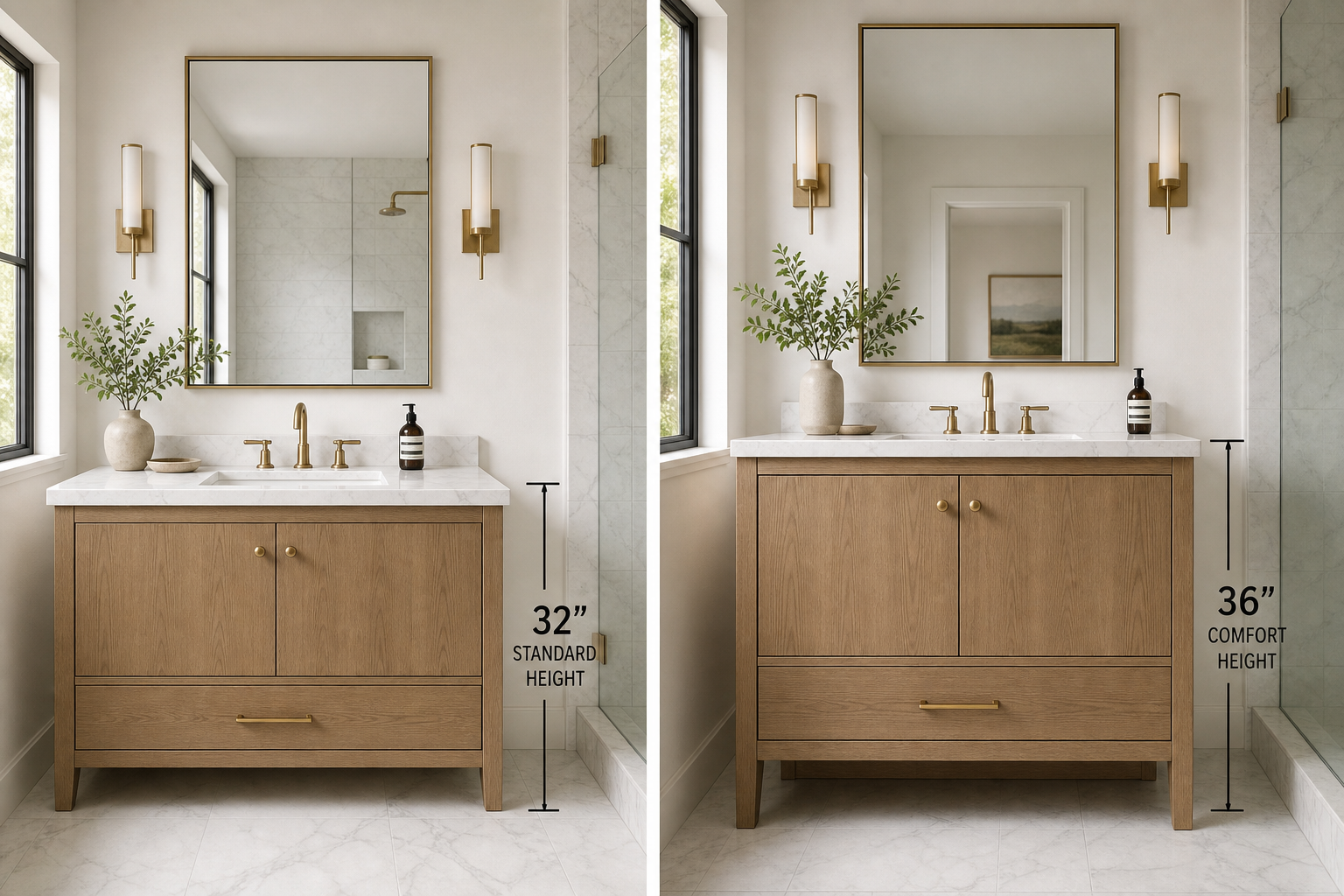
Standard vanity height in residential construction is 32 to 34 inches, inherited from decades of building practice. The NKBA's current guidelines recommend 32 to 43 inches, reflecting the reality that different households have different users.
At 32 inches, a person who is 6 feet tall hunches to wash their face every morning. Over years, this is not a minor inconvenience; it is accumulated discomfort that makes the room feel inhospitable. At 36 to 38 inches (increasingly common in custom primary baths), the posture is comfortable for most adults. At 40 to 43 inches (uncommon but appropriate for taller households), the room stops fighting the people who use it.
In a renovation, vanity height is one of the easiest things to adjust at the design stage and one of the hardest to change afterward. If the people who use the bathroom every day are taller than average, the default 32-inch height is an inherited assumption worth questioning explicitly.
Storage Is Where Layouts Lie to Themselves
Most bathroom layouts make storage look adequate on a floor plan. Medicine cabinet over the mirror, maybe a linen closet in the hallway, vanity drawers below. In the lived room, the flat surfaces become landing zones for everything that has no designated home, and the morning routine involves moving things off the counter to get to other things on the counter.
The problem is almost never the amount of storage. It is the location of storage relative to where things are actually used. Towels used after a shower should be reachable from inside or immediately outside the shower, not across the room. Hair tools used at the mirror should have storage at the mirror, not under the sink. Medications taken with water need storage where water is; not in a bedroom closet.
When evaluating a bathroom layout, trace a complete morning routine and note every moment something is in the wrong place: the thing you pick up here but use over there, the step you take to retrieve something that should be within arm's reach. Each of those moments is a storage-location failure, and most of them can be solved in a renovation without adding significant square footage.
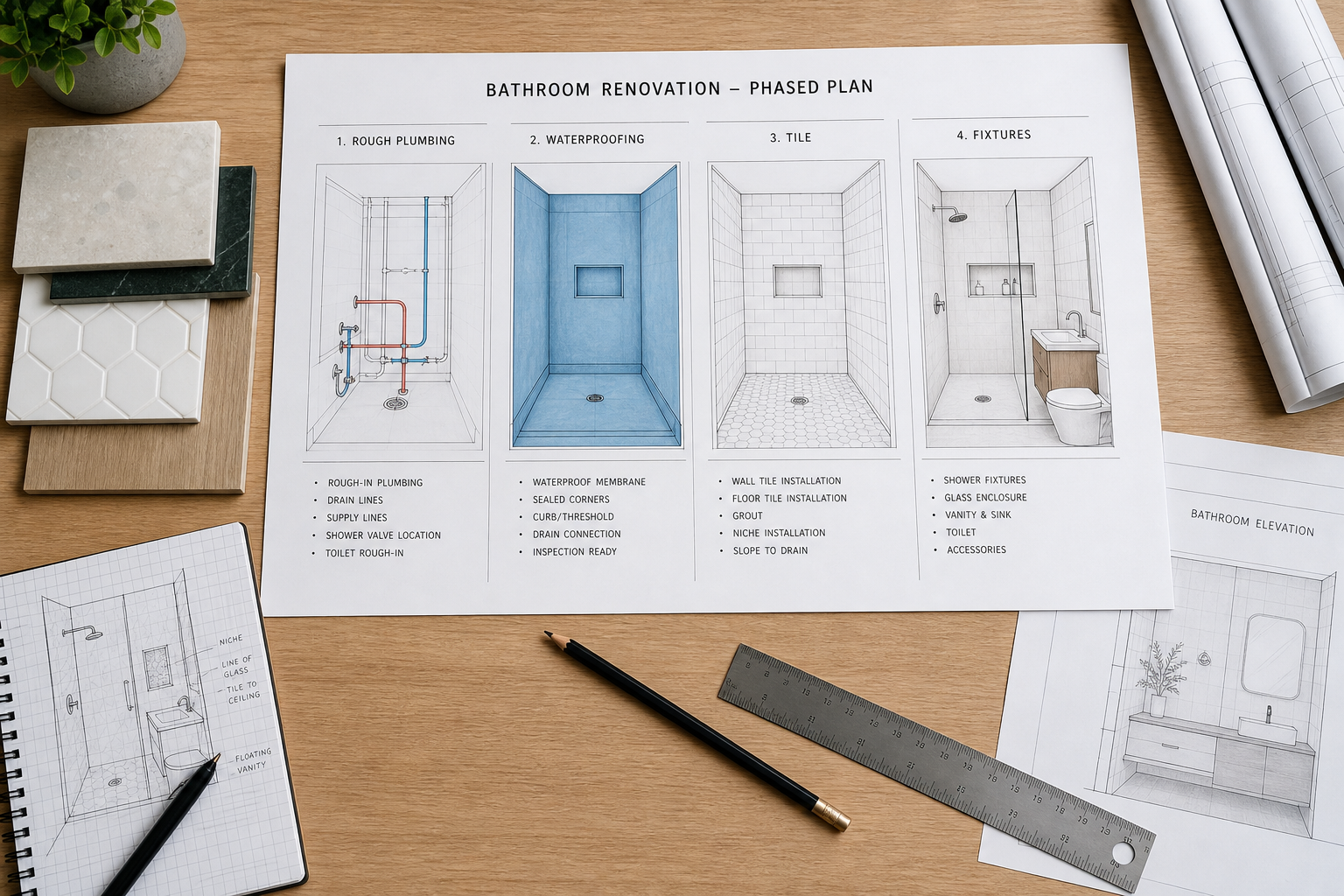
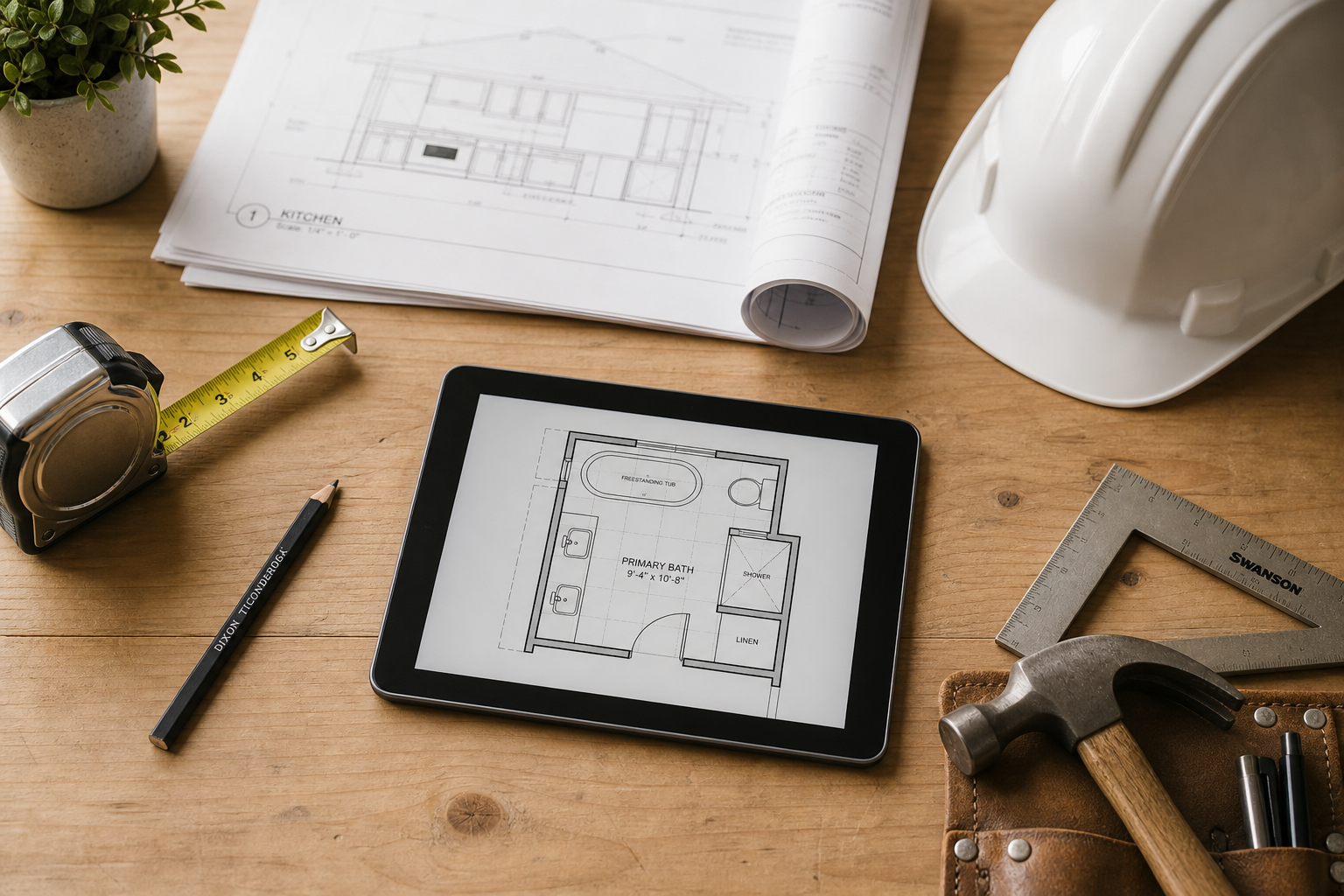
The first drawing we produce for any bathroom remodel is a clearance diagram: door swing arcs, fixture front clearances, double-sink spacing, and pathways marked before any tile or material decision is made. Correcting a layout problem before demo costs nothing. Correcting it after tile is set costs more than most budgets planned for. Most of the friction people experience in their daily bathroom routines traces directly to a decision that could have been caught on that first drawing.
What a Good Layout Feels Like
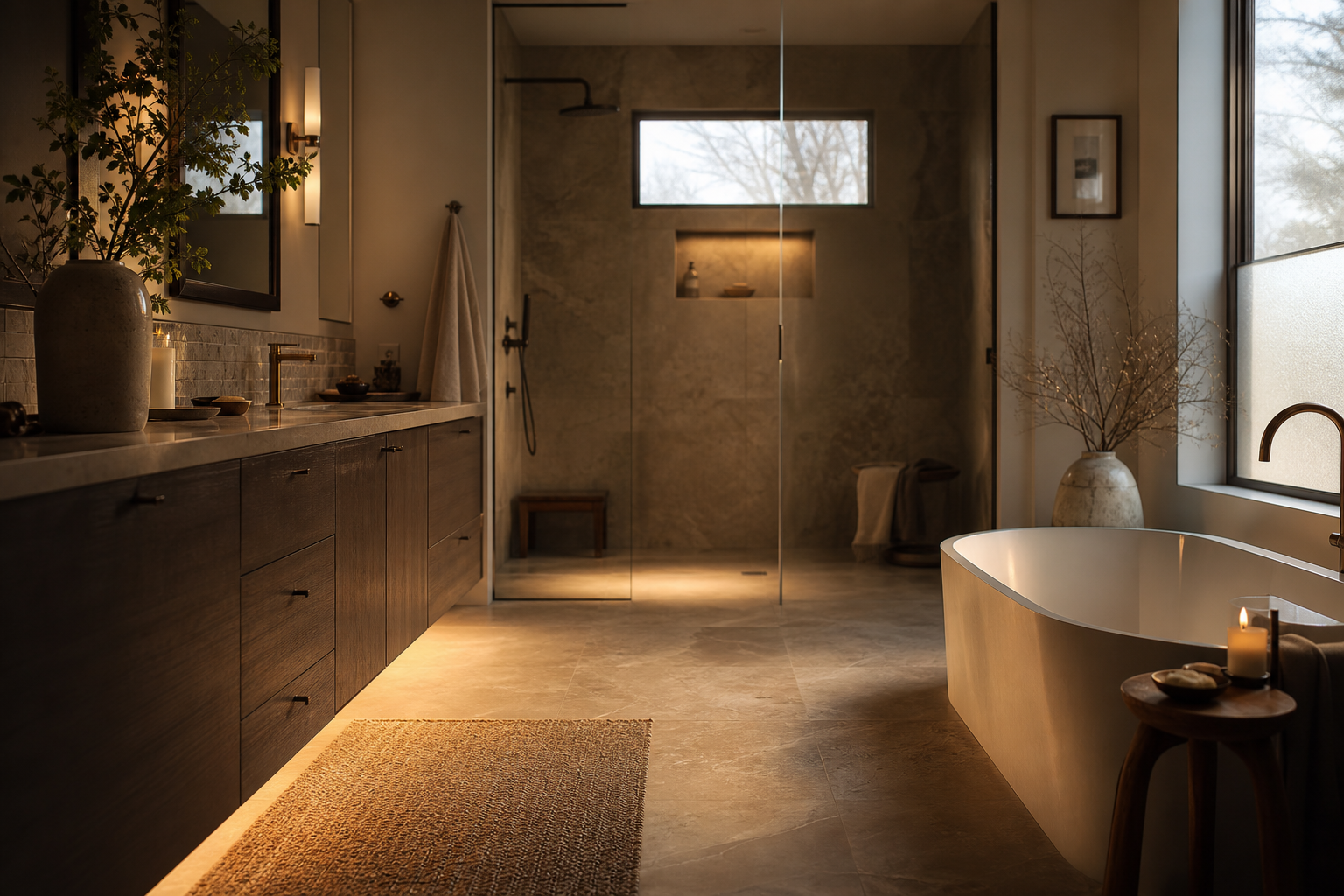
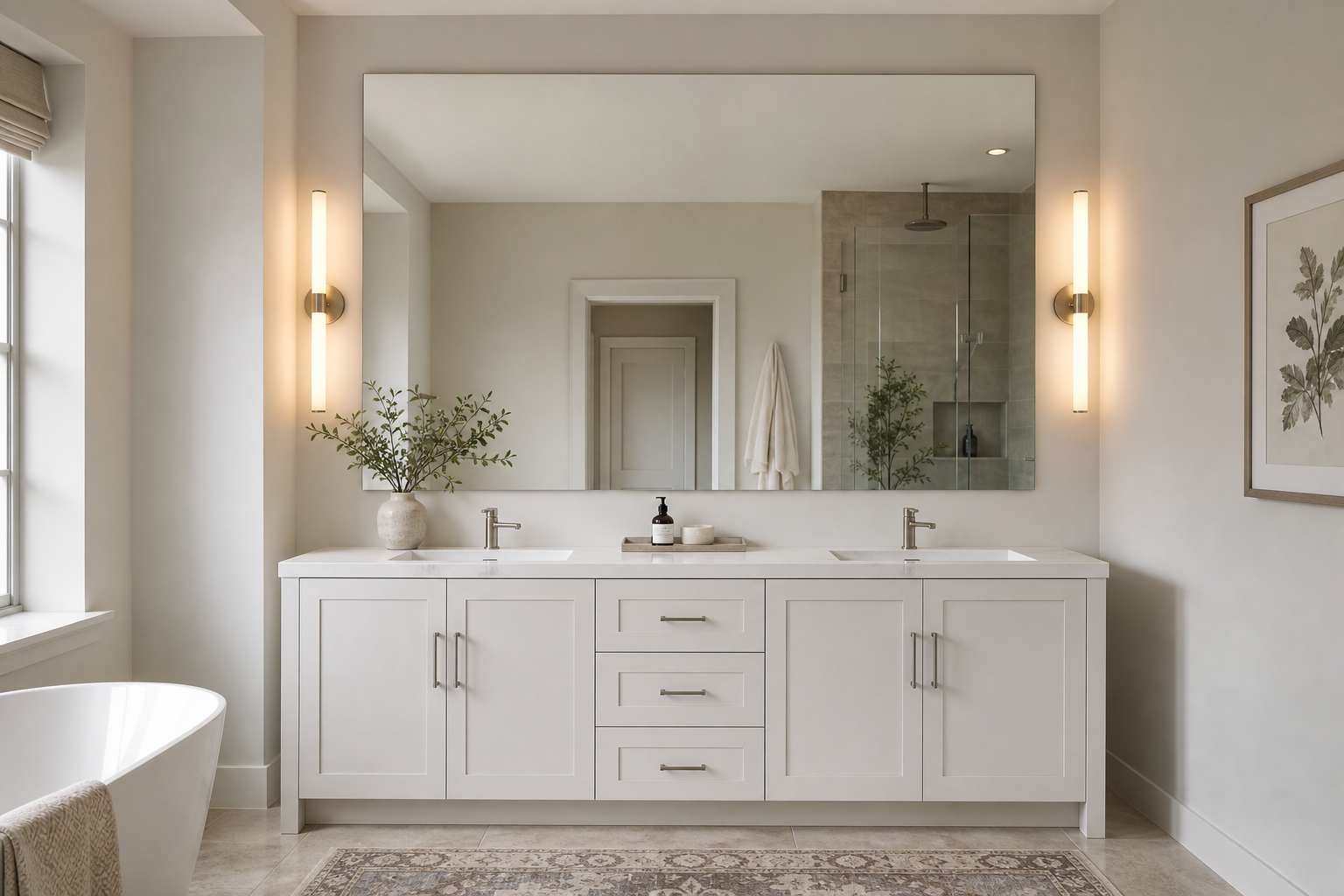
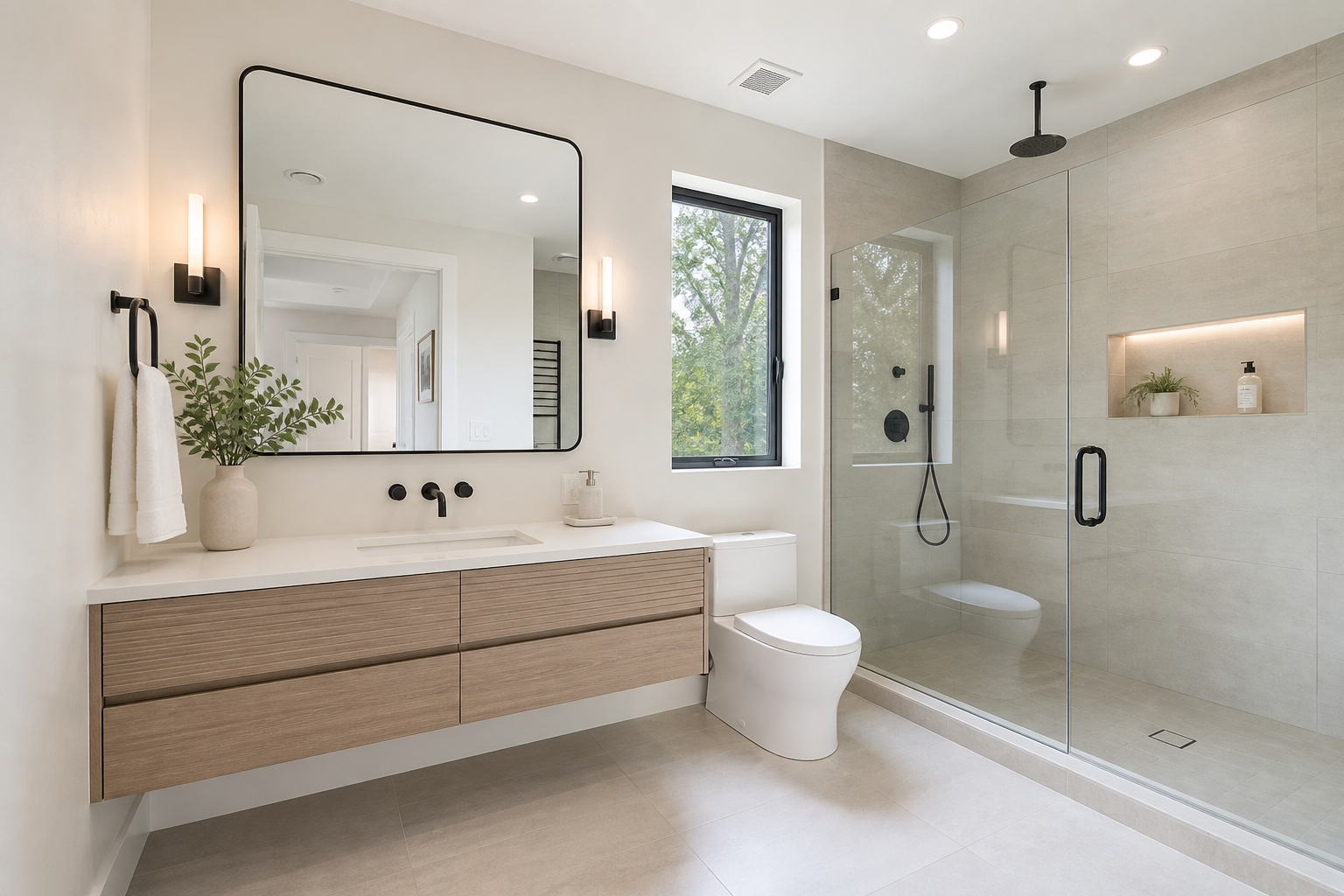
A bathroom that is laid out correctly disappears in the morning. You are not aware of the clearances because you never bump into anything. You are not aware of the door swing because it never interrupts movement. The mirror shows your face the way it actually looks because the light arrives from the right direction. Two people can use the room at the same time without coordinating. The things you need are where you need them.
This is the bar a layout should be held to before anything aesthetic is decided. The room should work so well physically that aesthetics become the real conversation, rather than a distraction from the fact that the room makes getting ready harder than it needs to be.
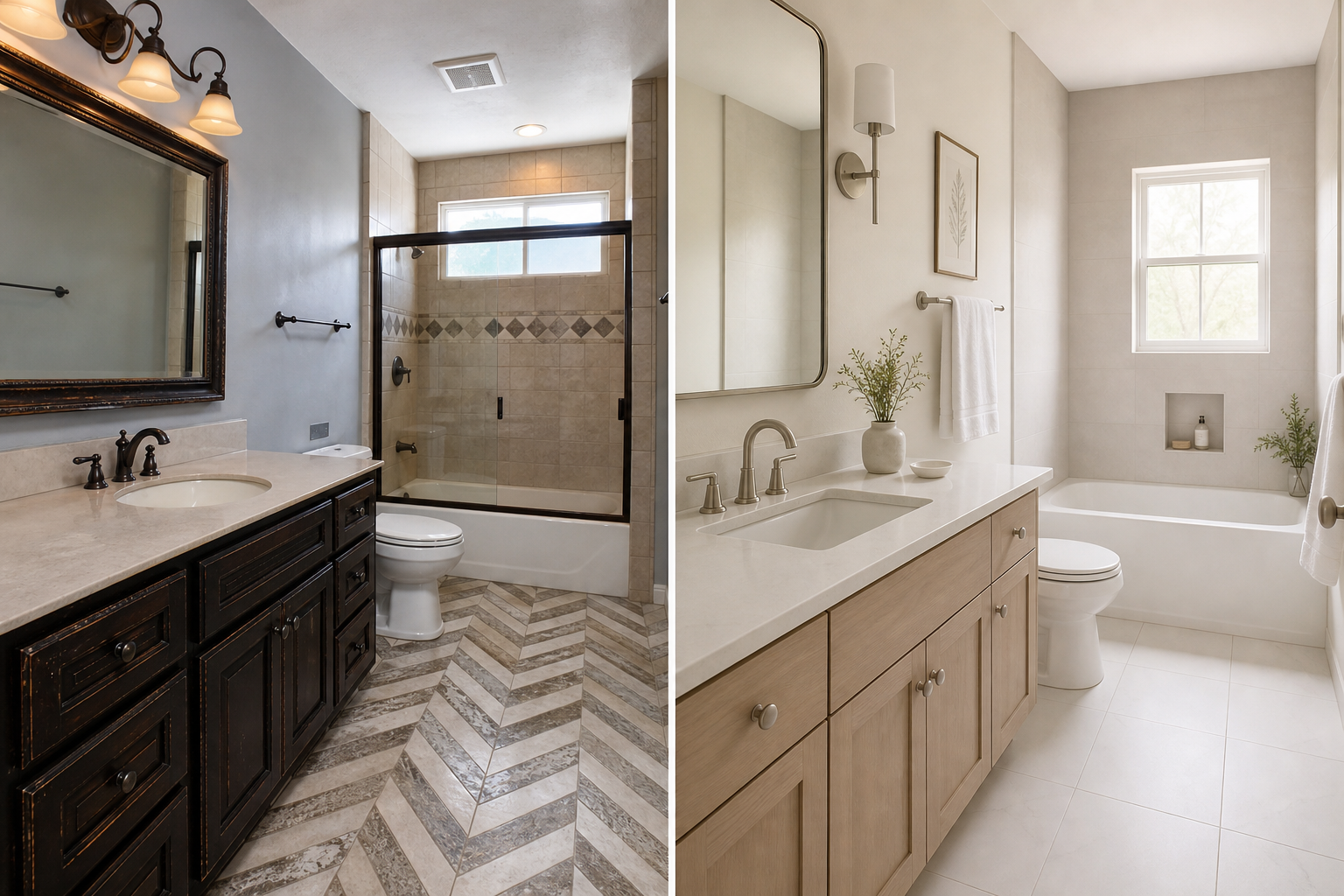
A renovation that improves the tile but leaves the layout intact will leave the friction intact. A renovation that solves the layout first, and then makes the room beautiful, produces a room that gets better to live with over time rather than one that looks better while feeling the same.