Grout color is the decision that most directly determines how a bathroom looks in year five, not year one. The tile selection gets hours of attention. The faucet finish gets compared against three samples. The grout color often gets chosen in the last ten minutes of a showroom visit, matched to a chart under fluorescent light, with no consideration of what that color will look like after six hundred showers, a winter of wet boots, and the slow accumulation of soap residue that no weekly wipe fully removes.
This is not a question of taste alone. Grout color interacts with tile color, joint width, grout type, water chemistry, and cleaning habits to produce a surface that either improves with age or degrades visibly from month one. The mechanism is straightforward: light grout shows every contaminant that enters the joint. Dark grout hides organic soiling but reveals mineral deposits. Matched grout suppresses the grid but makes any discoloration read as tile failure rather than grout failure. Each choice optimizes for a different aging trajectory, and most bathrooms are specified for the trajectory that photographs best on installation day.
What Grout Color Actually Controls
Grout fills the space between tiles. In a bathroom, that space is exposed to water, soap, body oils, shampoo residue, cleaning products, and airborne dust every day. Cement-based grout is porous. Even with a penetrating sealer applied after installation, the grout matrix continues to absorb contaminants over time because sealers degrade and reapplication schedules are rarely maintained in residential bathrooms.
The color you choose determines how those contaminants read visually.
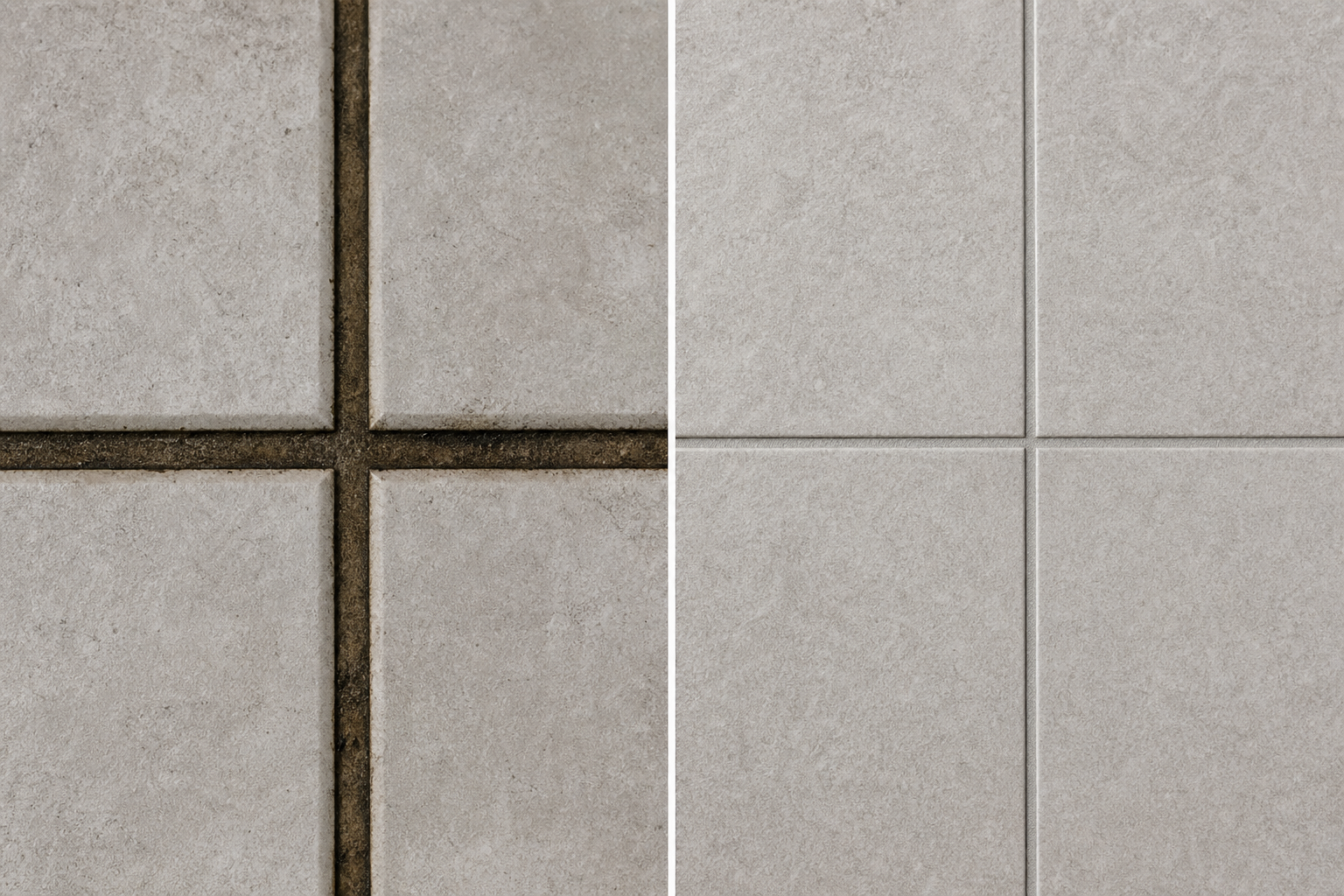
White or near-white grout on a white tile floor produces a monolithic surface at installation. The grout lines nearly disappear. The room reads larger, brighter, and more continuous. This is the look that sells white-on-white bathroom design. It is also the look that shows the first hint of gray at the joint within weeks of regular use, visible darkening at the perimeter of the shower within months, and a distinctly dingy grid within one to two years unless the household maintains an aggressive cleaning and resealing schedule.
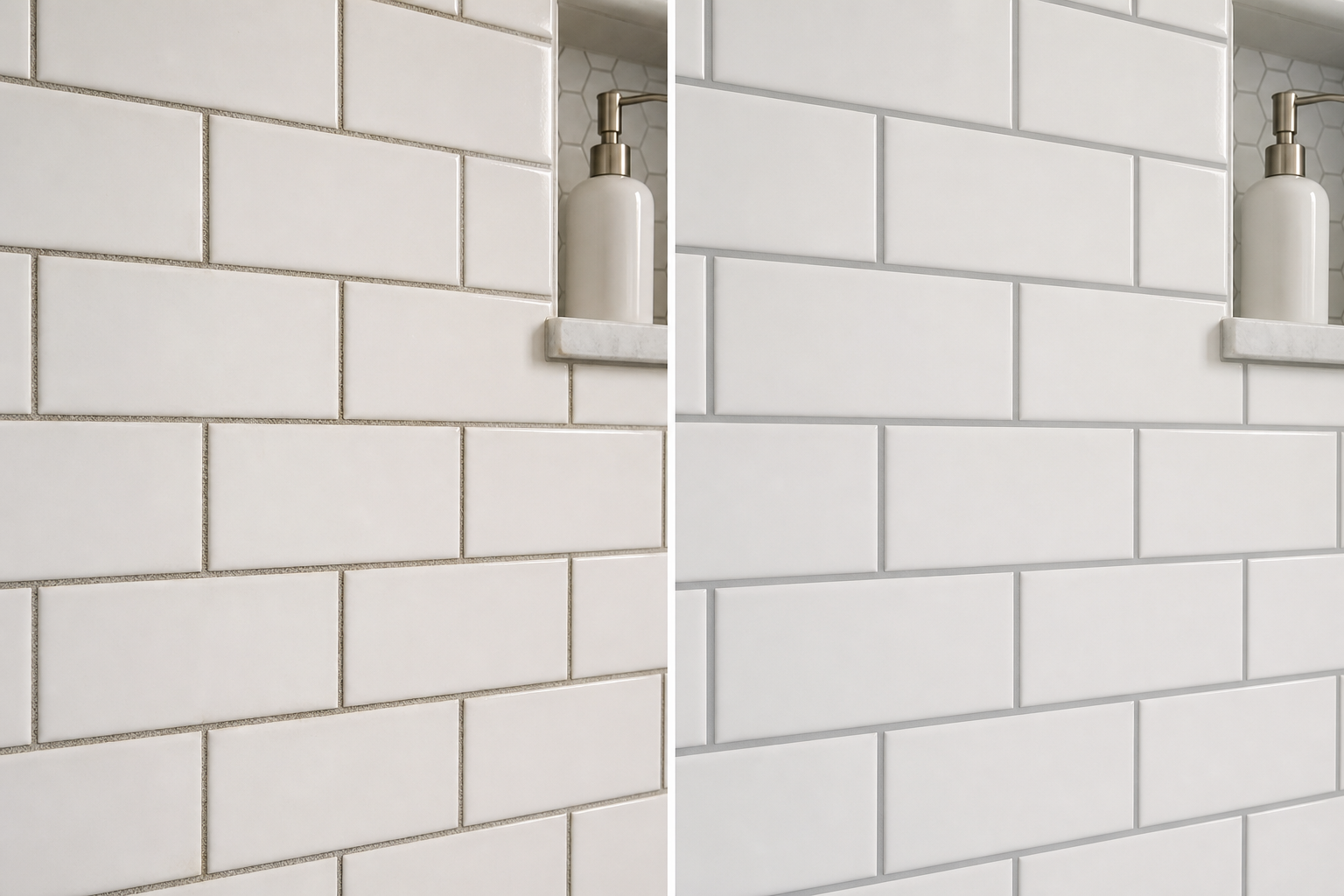
Medium gray grout on the same white tile produces a visible grid from day one. The contrast is deliberate. The room reads as tiled rather than slabbed. But that same gray grout absorbs soap scum, body oils, and mineral deposits without visible change because the starting color already accommodates those tones. A medium gray cement grout in a shower may look substantially the same at year five as it did at month three. The LATICRETE grout guide states this directly: neutral gray, dark gray, or medium colored grouts are less likely to show soil than light-colored grout, while white or lightly colored grout joints show soil readily and appear dirty in a shorter period of time.
Charcoal or black grout on white tile produces high contrast that emphasizes tile geometry. Hexagonal, herringbone, and stacked bond patterns read more dramatically with dark grout framing each unit. Dark grout hides organic staining better than any other tone. The trade is mineral deposits: in areas with hard water, calcium and magnesium leave white or gray streaks on dark grout that read as prominently as darkening reads on white grout. The failure mode shifts from organic soiling to limescale, not from visible to invisible.
The Year-One Versus Year-Five Calculation
Most grout color decisions optimize for installation day photography. The question that matters more is what the joint looks like after the household has lived with the room through a full cycle of seasons, cleaning habits, and water chemistry.
White cement grout in a shower discolors predictably. Industry guidance from tile suppliers and installation professionals consistently places the visible graying or yellowing of white cement grout in shower applications at six to eighteen months, even with regular sealing. Soap scum absorbs into the porous matrix. Body oils darken the joint. Water minerals leave deposits that cleaning removes from the tile face more easily than from the recessed joint. The tile still looks white. The grout no longer does. The room reads as tired even when the tile is intact.
Epoxy grout changes the aging equation but not the color logic. Epoxy grout is non-porous. Its color is bound in a resin matrix rather than absorbed from the surface. White epoxy grout in a shower stays white because contaminants sit on the surface rather than entering the joint. Medium gray epoxy grout stays medium gray for the same reason. The maintenance advantage of epoxy is real and documented: the non-porous matrix resists staining and mold growth without requiring periodic resealing. But epoxy grout costs more, demands faster cleanup during installation, and requires a skilled installer because the working time is shorter than cement grout. Color selection still matters because epoxy does not eliminate the visual effect of joint width, pattern, or contrast with the tile body.
The practical recommendation that emerges from both manufacturer guidance and field experience: if the design requires white or light grout in a wet area, specify epoxy. If the budget or installer skill set limits the project to cement grout, specify a medium neutral tone that already accommodates the contaminants the joint will collect. Choosing white cement grout in a shower because the inspiration photo showed it is specifying for year one and accepting year five as a separate problem.
How Grout Color Interacts With Tile Pattern
Grout color does not operate independently of layout. The same grout color produces different visual effects depending on how the tile is arranged.
On a straight-stack grid of subway tile, grout color defines the horizontal and vertical lines of the pattern. White grout minimizes the grid and produces a continuous wall surface. Gray grout makes each tile unit readable as a separate rectangle. Charcoal grout turns the grid into the dominant design element, with the tile face becoming the field and the joint becoming the frame.
On a herringbone or chevron pattern, grout color controls whether the pattern reads as texture or as geometry. Matched grout lets the angular layout provide the visual interest while the joint recedes. Contrasting grout makes each tile edge explicit and amplifies the zigzag rhythm. This is effective when the pattern is the design intent. It is visually noisy when the pattern was chosen for subtle texture and the grout color makes every joint shout.
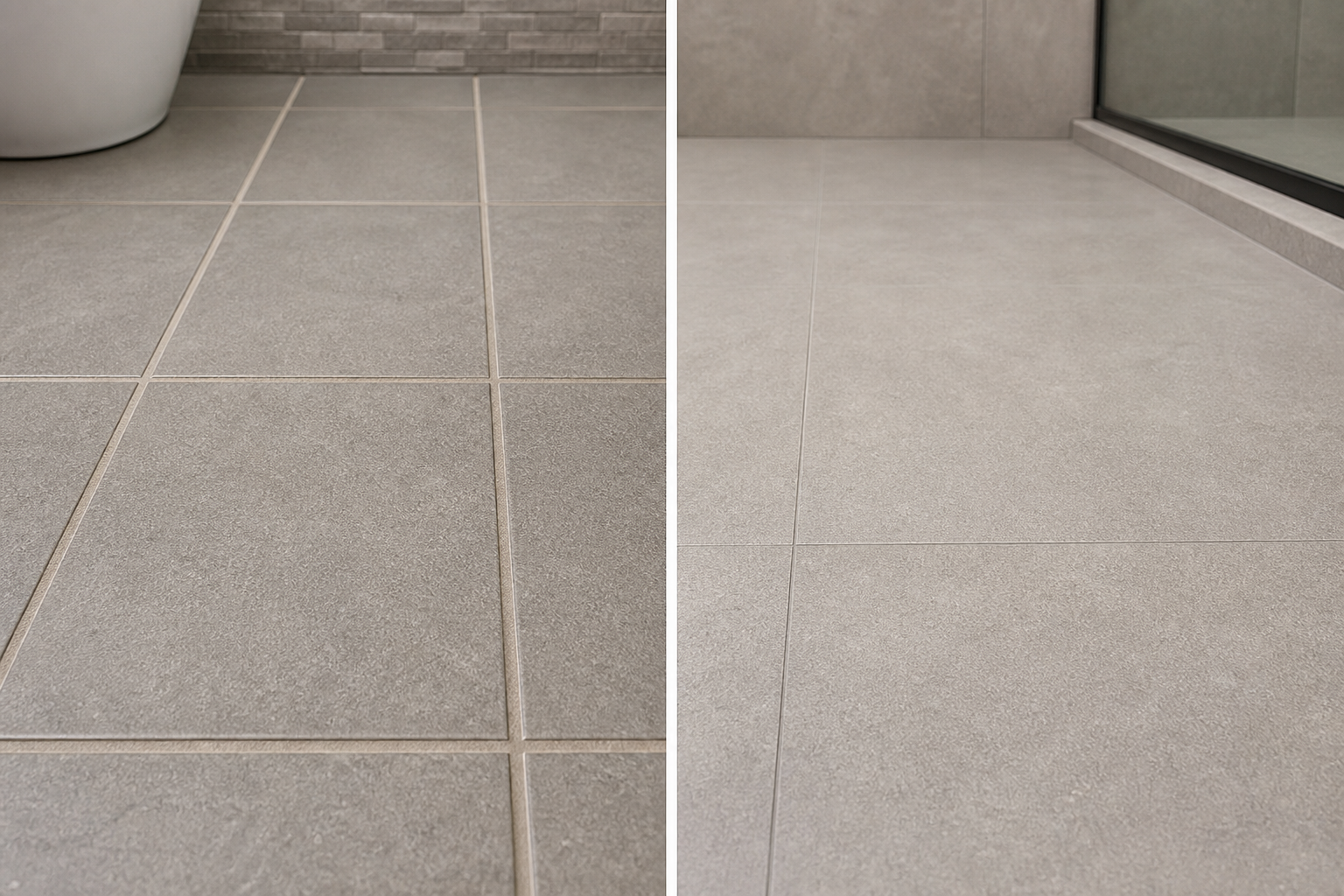
On large-format rectified tile with narrow joints, grout color matters less because there is less grout visible per square foot. A matched grout color on 24-by-48-inch porcelain with 1/16-inch joints nearly disappears at standing distance. The same matched grout on 3-by-6-inch subway tile with 1/8-inch joints still produces a visible, continuous grid because the joint frequency is higher. Specifying matched grout on small-format tile expecting a seamless look produces a different result than the same specification on large-format tile.
The design mistake is choosing grout color based on a photo of large-format tile and applying it to small-format tile in the same room. The visual weight of the joint scales with joint frequency, not just joint color.
Wet Areas Versus Dry Areas
Bathroom grout color decisions should be segmented by exposure, because the aging mechanisms differ by zone.
Shower walls and floors receive direct water contact, soap, shampoo, and the highest concentration of body oils in the room. Grout in these zones ages fastest and shows soiling most visibly. This is where epoxy grout or medium-toned cement grout earns its specification. White cement grout in a shower is a maintenance commitment, not a finish selection.
Vanity backsplash zones receive splatter and humidity but not direct standing water. Cement grout in a medium neutral tone performs adequately here with periodic sealing. White grout is manageable if the household accepts more frequent cleaning.
Toilet and general wall zones outside the wet envelope receive humidity and dust but minimal direct water contact. Grout color choice here is primarily aesthetic. The aging timeline is slow enough that most color choices perform similarly over five years.
Floor tile at the bathroom entry receives street dirt, wet feet, and cleaning product residue. Medium to dark grout hides foot traffic soiling. White grout at a bathroom entry shows every particle within days. If the design calls for white floor tile with minimal visual grid, epoxy grout or a very light gray that reads as white at installation but accommodates slight darkening is the realistic specification.
The Contrast Decision
Beyond maintenance, grout color controls contrast, and contrast controls what the eye notices.
High contrast (dark grout on light tile, or light grout on dark tile) emphasizes tile alignment. Any variation in joint width, any lippage between adjacent tiles, any inconsistency in the grid reads immediately because the contrasting joint draws the eye to every irregularity. The Ceramic Tile Education Foundation and multiple installation guides note that dark grout is unforgiving of misalignment. This is not a reason to avoid dark grout. It is a reason to ensure the installation quality matches the contrast level. High-contrast specifications demand tighter installation tolerances.
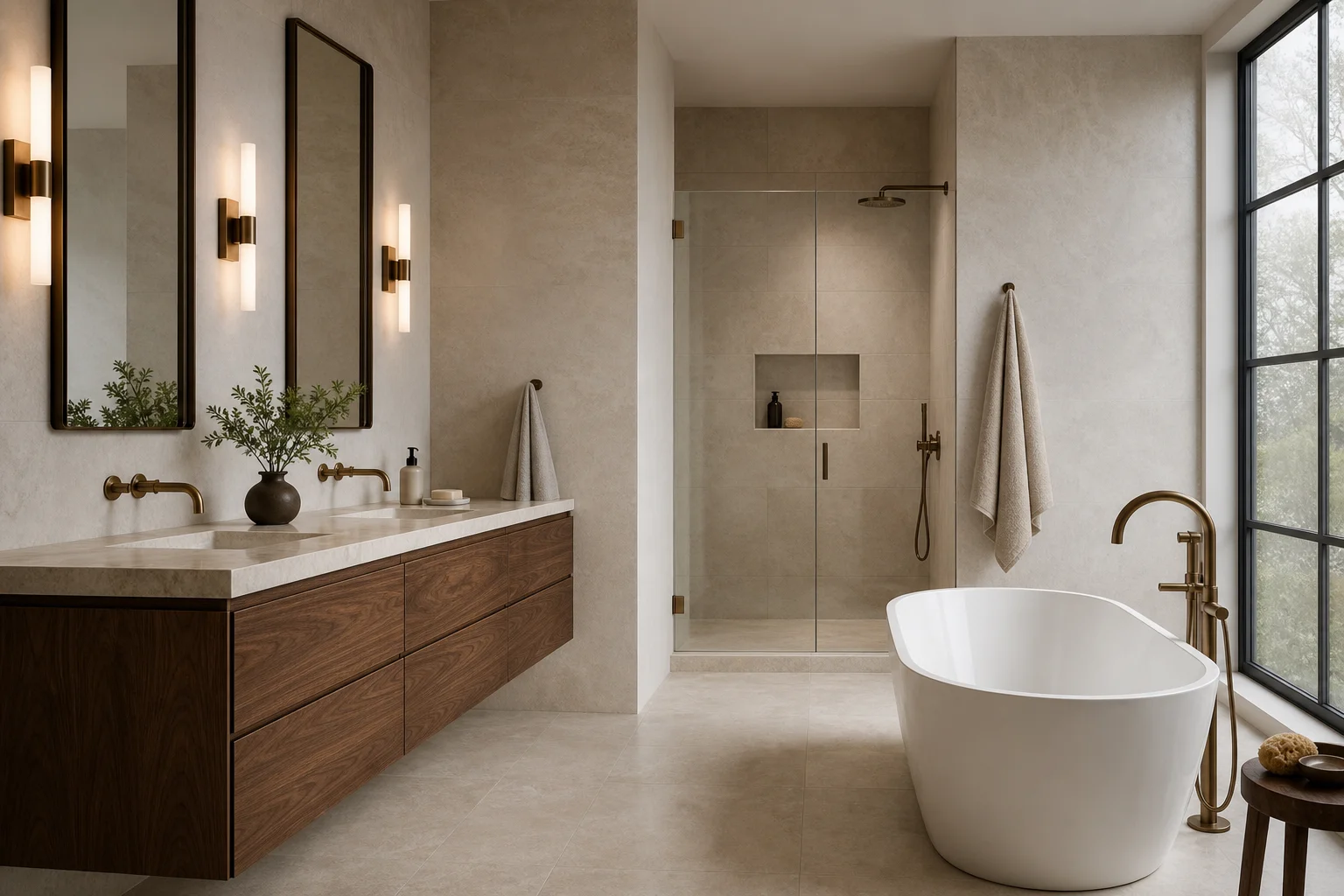
Low contrast (matched or near-matched grout and tile) hides installation variation and produces a calmer surface. It also hides tile replacement boundaries if a cracked tile needs swapping years later. The joint does not frame each unit, so a single replaced tile does not announce itself through a surrounding grid of contrasting lines.
Mid contrast (light gray grout on white tile, medium gray on gray tile) splits the difference. The grid is visible but not dominant. Soiling is less visible than on white grout. The room reads as intentional without the bold graphic quality of charcoal joints.
One opinion worth stating directly: medium gray grout on white subway tile is the most forgiving specification in residential bathroom design. It provides enough contrast to read as deliberate, hides the soiling that white grout displays within months, avoids the limescale visibility problems of charcoal grout in hard water areas, and ages gracefully on cement grout without requiring epoxy. It is not the look in every inspiration photo. It is the look most bathrooms still want at year five.
Sample Under Actual Conditions
Grout color chips on a card are nearly useless for this decision. The chip is flat, dry, and viewed under showroom lighting. The installed grout is recessed between three-dimensional tile units, wet half the time in a shower zone, and viewed under bathroom lighting at 6 a.m. and 10 p.m.
The mechanism that makes sampling matter: grout reads darker when wet, lighter when dry, and different again when viewed at an oblique angle with light raking across the joint. A gray that looked perfect on a dry sample can read as green-gray when wet beside a warm white tile body. A white that matched the tile face on the card can read as yellow-white once installed in a joint that collects soap residue.
We present grout samples in the installed conditions, wet and dry, alongside the tile selection, not separately. That means placing grout samples in the actual joint width against the actual tile, spraying them with water, and viewing them under the lighting that will exist in the finished room. The decision made under those conditions survives year five. The decision made from a card in the showroom does not.