Radiant floor heating earns its cost in a primary bathroom with a stone or large-format tile floor because stone is cold and the payoff is felt daily. It does not earn its cost in a powder room, a bathroom with small floor area, or a room where the floor will be covered by bath mats. The decision is arithmetic plus daily use, not a luxury default.
That opinion will disappoint homeowners who expected a simple yes or no. Radiant heat is one of the most requested bathroom upgrades in cold-climate remodeling, and it deserves the request. It also deserves an honest accounting of where the cost converts to daily comfort and where it converts to a feature nobody notices because the room is too small, too infrequently used, or too covered to benefit.
What Radiant Floor Heating Actually Does
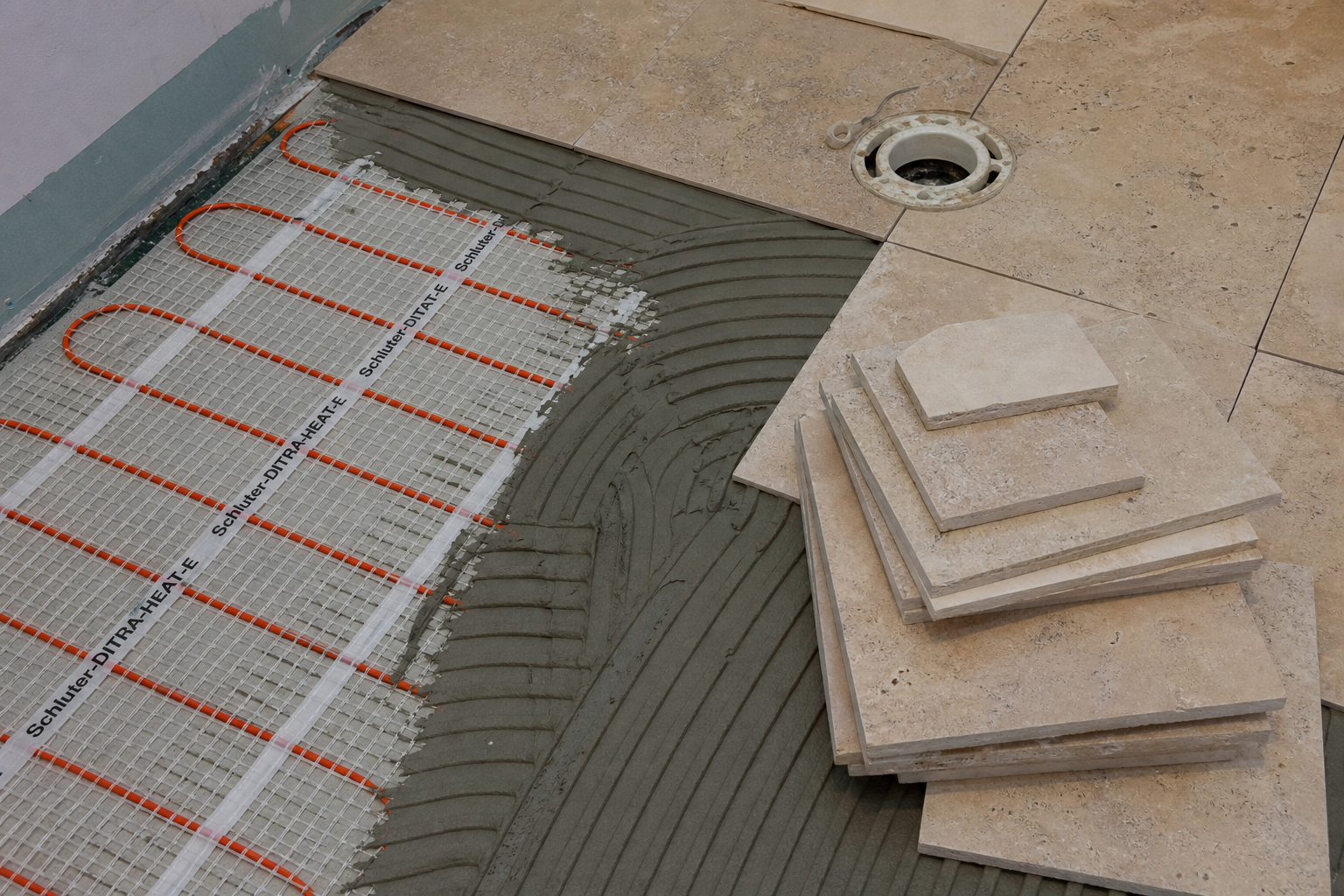
Electric radiant systems use resistance cables, usually pre-attached to mats, installed on the subfloor or a decoupling membrane and embedded in thinset beneath tile. Hydronic systems circulate hot water through PEX tubing from a boiler or water heater. Both raise the floor surface temperature above ambient, typically to the mid-eighties Fahrenheit at the surface when operating, so bare feet contact warmth rather than cold tile.
The mechanism is radiant heat transfer: the warmed floor emits infrared energy that heats objects and bodies in contact with or near the surface. It is not primarily heating the air. That distinction matters because the comfort benefit is localized to the floor and lower body, which is exactly where bathroom cold is most felt.
Both electric and hydronic systems provide even, silent heat with no fan noise and no visible equipment beyond a thermostat. Gerbec Kitchen and Bath notes that the end result is the same regardless of system type; the difference is installation complexity, upfront cost, operating cost, and which projects each system fits.
Electric vs. Hydronic: The Bathroom Decision
For a single bathroom remodel, electric radiant heat is the practical default in nearly every case. The mats are thin, typically adding less than an eighth of an inch to the floor buildup. Installation happens during a standard tile renovation without boiler work, manifold placement, or significant floor height change. Response time is fast: most systems reach operating temperature in thirty to sixty minutes.
Hydronic systems make financial sense at scale. When a whole home or a large addition is already receiving a hydronic loop, adding a bathroom zone is incremental. When the project is one fifty-square-foot bath with no existing boiler infrastructure, hydronic requires pumps, manifolds, mixing valves, and coordination between plumber, electrician, and tile installer for equipment that cannot be amortized across enough floor area to justify the complexity.
Nationwide Builders' 2026 cost analysis puts electric bathroom installation at roughly seven hundred to two thousand dollars for most standard bathrooms, with hydronic single-bathroom installation at two thousand to six thousand dollars because of mechanical equipment requirements. FPT Tile and Marble notes a break-even point around two hundred square feet: above that, hydronic's lower operating cost can justify the higher upfront investment. Below that, electric wins on simplicity and total cost.
The Pacific Northwest housing stock includes many homes where a bathroom sits above a finished ceiling or on a slab, making hydronic retrofit even less attractive. Electric mats installed during a tile replacement require access only to the bathroom floor surface and an electrical circuit.
Where Radiant Heat Earns Its Cost
The payoff calculation starts with floor area and daily contact.
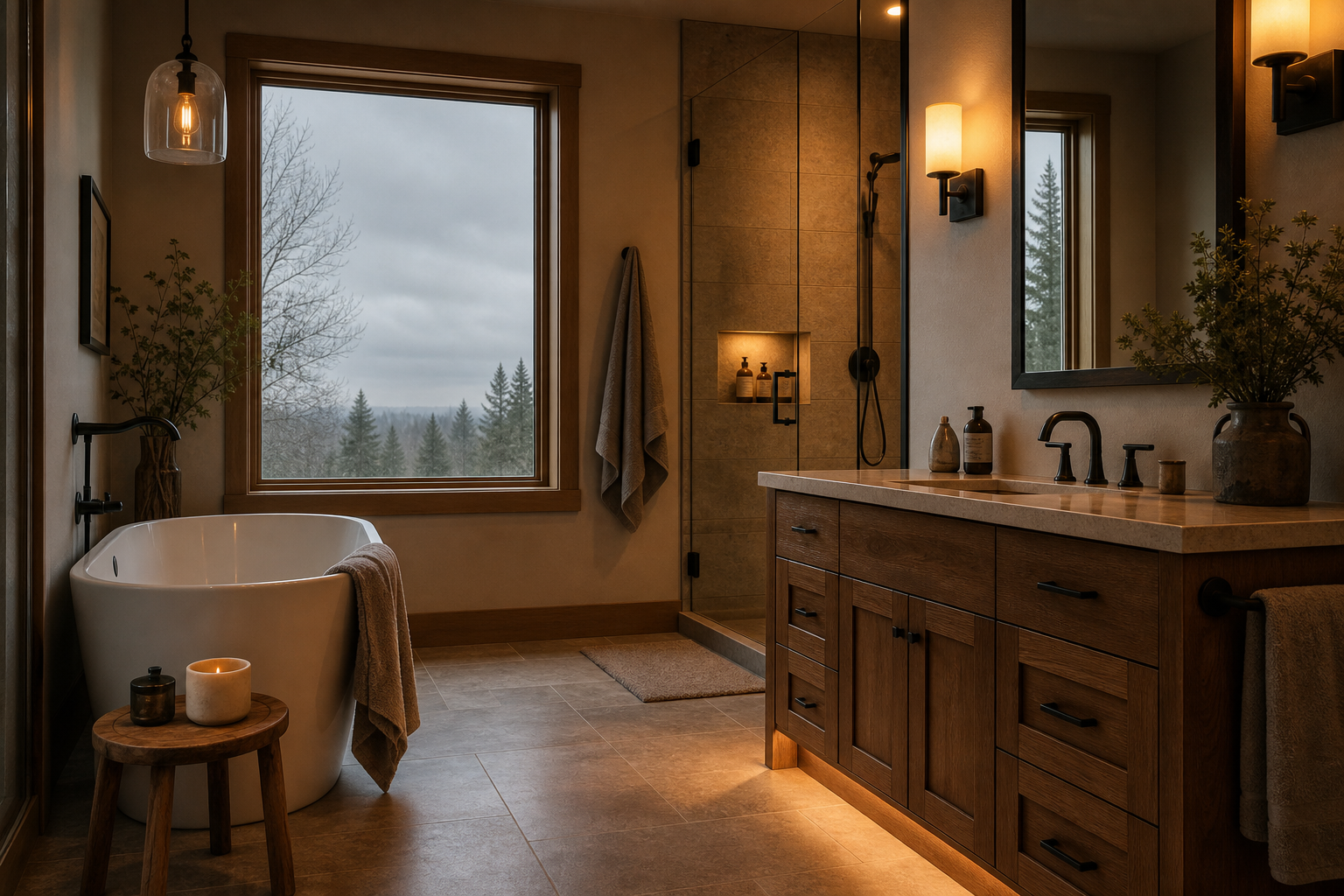
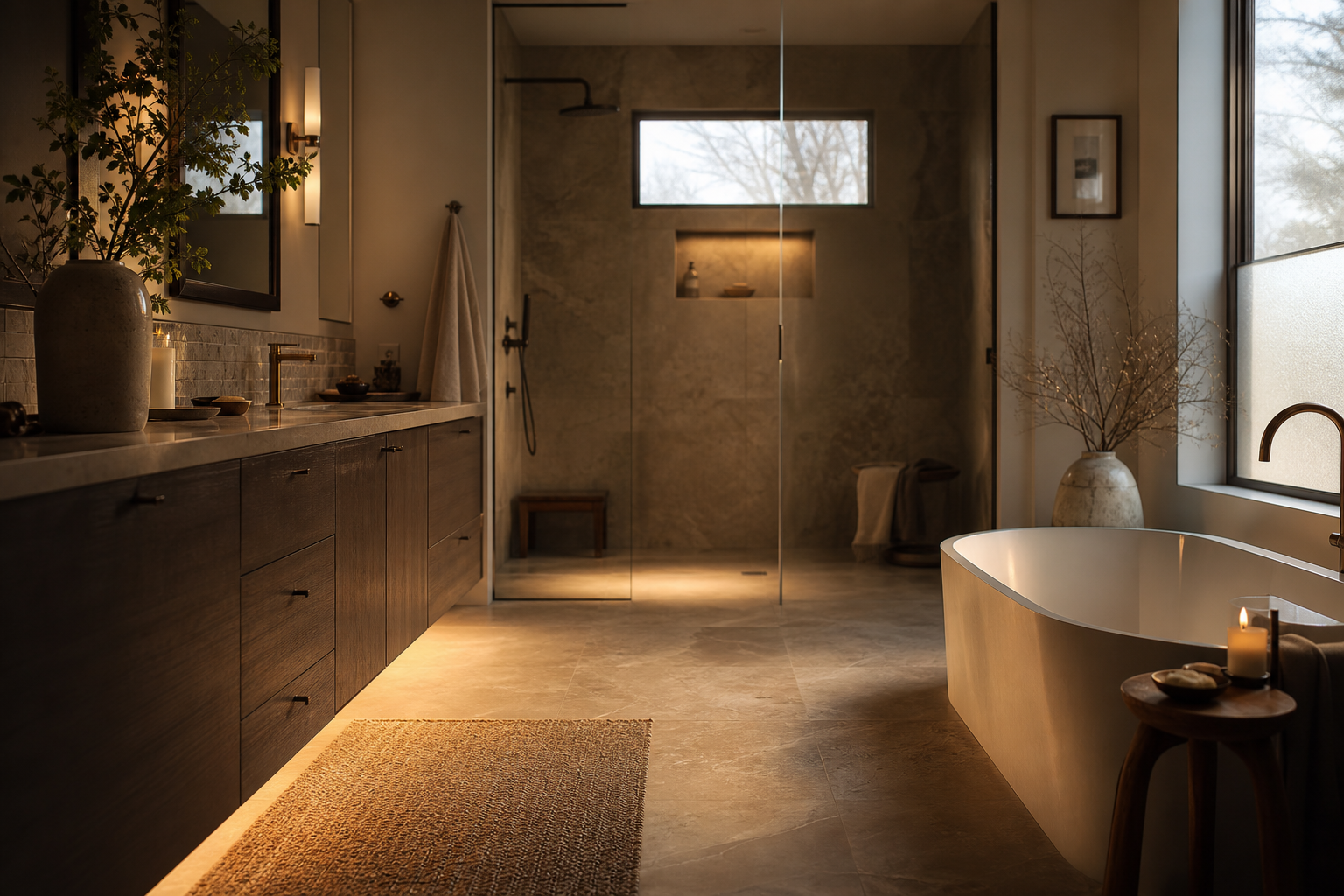
A primary bathroom where two people stand on tile every morning, barefoot, in a climate with four to six months of cold weather, receives daily return on investment. The sensation of warm stone underfoot at six a.m. is not subtle. It changes the character of the morning. Over ten years, that daily contact converts a fifteen-hundred-dollar installation into a feature that cost roughly forty cents per use day.
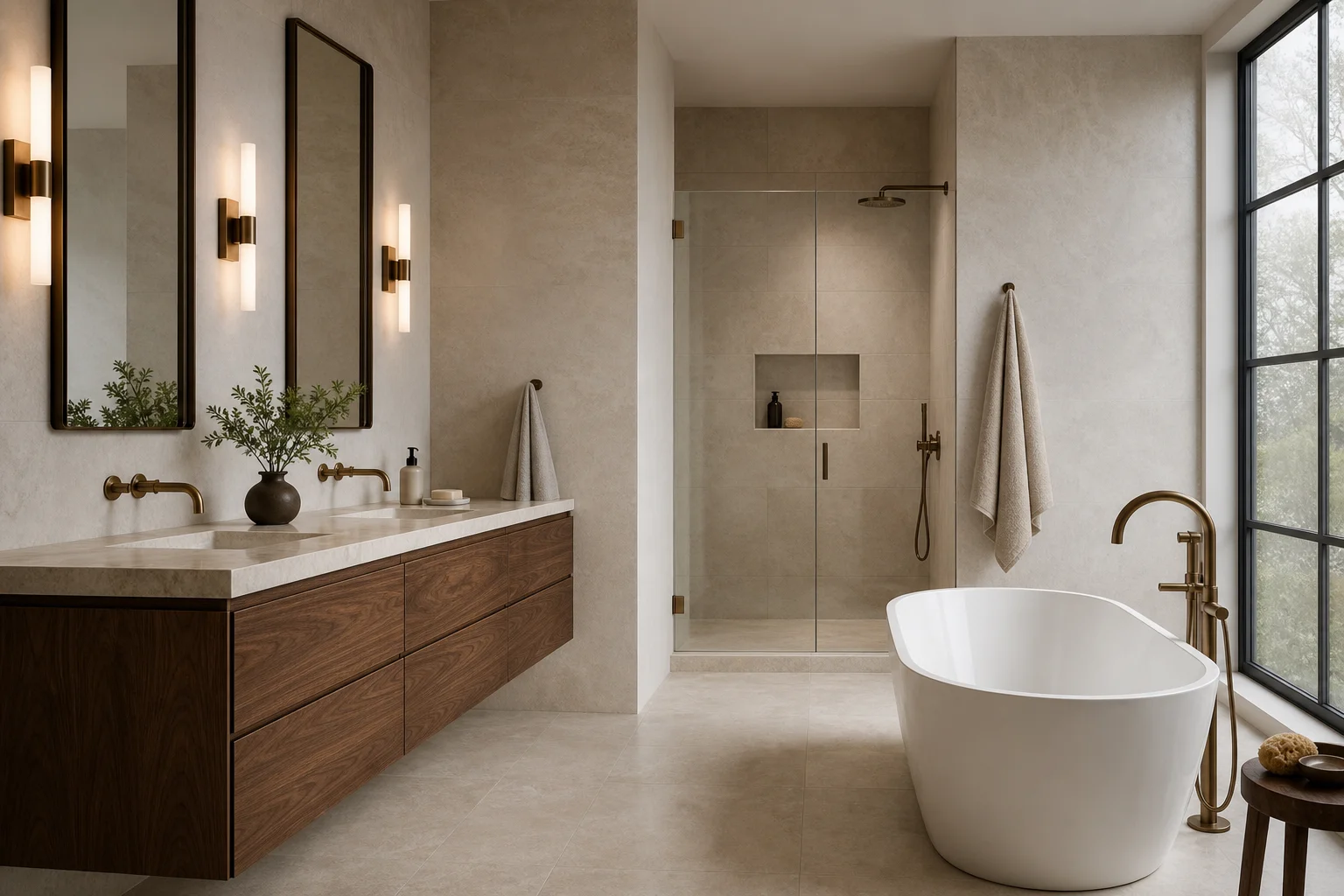
Stone and large-format porcelain amplify the benefit because these materials conduct heat away from skin aggressively when unheated. Bowmans Bathrooms notes that porcelain, ceramic, and natural stone are ideal floor finishes for underfloor heating because they conduct and store heat efficiently. The same thermal mass that makes them cold when unheated makes them excellent radiators when warmed.
Large-format tile reduces grout lines, which is aesthetically desirable but also means more continuous cold surface underfoot. Radiant heat addresses the full expanse.
We specify radiant floor heating for every primary bath with stone or large-format tile floor. For secondary baths under sixty square feet, we run the numbers and present them before specifying.
Where Radiant Heat Does Not Earn Its Cost
Powder rooms are the clearest exclusion. A guest bath used occasionally, often with shoes on, with a floor area of twenty to thirty square feet, does not generate enough bare-foot contact to justify seven hundred to twelve hundred dollars in heating mat, thermostat, and electrical work. The feature would work. Nobody would notice.
Small secondary baths fall into a gray zone. A thirty-square-foot bath with a shower used daily by one person might justify heat if that person is barefoot and the floor is stone. The same room with vinyl flooring and a household that always uses bath mats probably does not.
Bathrooms where the floor will be largely covered by rugs, bath mats, or built-in cabinetry reduce the effective heated area. Radiant heat works through tile and thinset. It does not work through thick carpet or insulated matting placed over most of the floor. Specifying heat and then covering sixty percent of the floor with textiles wastes capacity.
Half-baths with no shower have lower humidity and less reason to stand barefoot at the sink. The cold contact is brief. The ROI timeline extends.
Garage-adjacent or mudroom-adjacent baths where users typically keep footwear on are poor candidates regardless of floor material.
The thirty-square-foot threshold in our claim is a practical floor, not a code. Below that area, the mat cost, thermostat, dedicated circuit, and installation labor produce a per-square-foot cost that most households would redirect toward a larger mat in the primary bath or toward a higher-capacity ventilation fan that serves the whole moisture problem.
Installation Details That Determine Success
Radiant heat fails in specification, not in concept. Three details matter.
First, a thermal break under the heating element. Without insulation board beneath the mat, heat travels down into the subfloor and basement or crawl space as readily as up into the tile. WarmlyYours and multiple installation guides recommend insulation board to direct heat upward. Skipping it wastes energy and reduces surface temperature.
Second, electrical capacity. A typical bathroom mat draws ten to fifteen watts per square foot. A hundred-square-foot bath may need a dedicated fifteen-to-twenty-amp circuit. Older homes with full panels sometimes require an upgrade. The cost of the panel upgrade belongs in the ROI calculation.
Third, testing before tile. Electric cable is fragile during installation. The system must be tested for continuity before thinset covers it, again after thinset, and once more after grout. A break in the wire after tile is set is expensive to locate and repair. Professional installation includes this testing protocol. DIY installation frequently skips it.
Floor height change is minimal with electric mats but not zero. Transition strips at the bathroom door may be needed if the adjacent hallway floor is significantly lower. Planning the transition during design prevents a trip hazard at the threshold.
Operating Cost Is Modest but Not Zero
WarmlyYours, analyzing data from over three hundred thousand installations, estimates electric floor heating costs roughly seven to thirty-six cents per hour depending on room size and local electricity rates. A fifty-square-foot bathroom running two hours daily might add seventeen to twenty-nine dollars per month at average US electricity rates. A programmable thermostat that heats the floor before wake time and turns off during unused hours reduces that figure substantially.
Hydronic operating cost is lower per BTU where natural gas is available, but the savings do not justify hydronic installation in a single small bathroom. They matter at whole-home scale.
Neither system is designed to be the sole heat source for a drafty, exterior-wall bathroom with poor insulation. Radiant heat is comfort heating for the floor surface. A room that needs structural warmth still needs a heat source for the air volume. In well-insulated primary baths, the floor heat often provides enough perceived warmth that the room feels comfortable without supplemental air heat during use.
The Specification Decision
Treat radiant heat as a line item with a defined trigger, not as a default upgrade on every bath.
Specify electric radiant heat when: the bathroom is a primary or daily-use bath; the floor area exceeds roughly thirty square feet; the finish is stone, porcelain, or ceramic tile; the household uses the floor barefoot; and the budget includes mat, thermostat, insulation board, dedicated circuit, and professional installation with continuity testing.
Decline or defer when: the room is a powder room or guest bath with infrequent barefoot use; the floor area is below thirty square feet; the finish is vinyl or material with lower thermal conductivity; most of the floor will be covered; or the electrical panel cannot accommodate the load without a costly upgrade that shifts the ROI unfavorably.
Run the numbers for secondary baths between thirty and sixty square feet. Present the installed cost and estimated monthly operating cost against daily use patterns. Let the household decide with arithmetic, not aspiration.
The feature is one of the few bathroom upgrades appreciated every day of winter. It is also one of the few that can be wasted entirely in the wrong room. The discipline is matching the specification to the bath that will actually use it.