The consequence of unpermitted renovation work is not the inspector who never came. It is the real estate attorney who reviews disclosures before closing, the insurance adjuster who excludes an unpermitted addition from coverage, and the buyer's inspector who flags work that cannot be verified as code-compliant. The enforcement happens years later, in a different transaction, with higher stakes than a permit fee.
This is the structural misunderstanding behind most decisions to skip a permit. Homeowners reasonably evaluate the risk as: did an inspector show up and cite me? When the answer is no, the unpermitted work feels resolved. It is not resolved. The liability is not extinguished by the absence of enforcement in the moment it was created. It is deferred to the moment when the house changes hands, a claim is filed, or a discovery dispute requires documentation of what was built.
Those moments arrive less predictably, but they arrive more consequentially.
What A Permit Actually Is
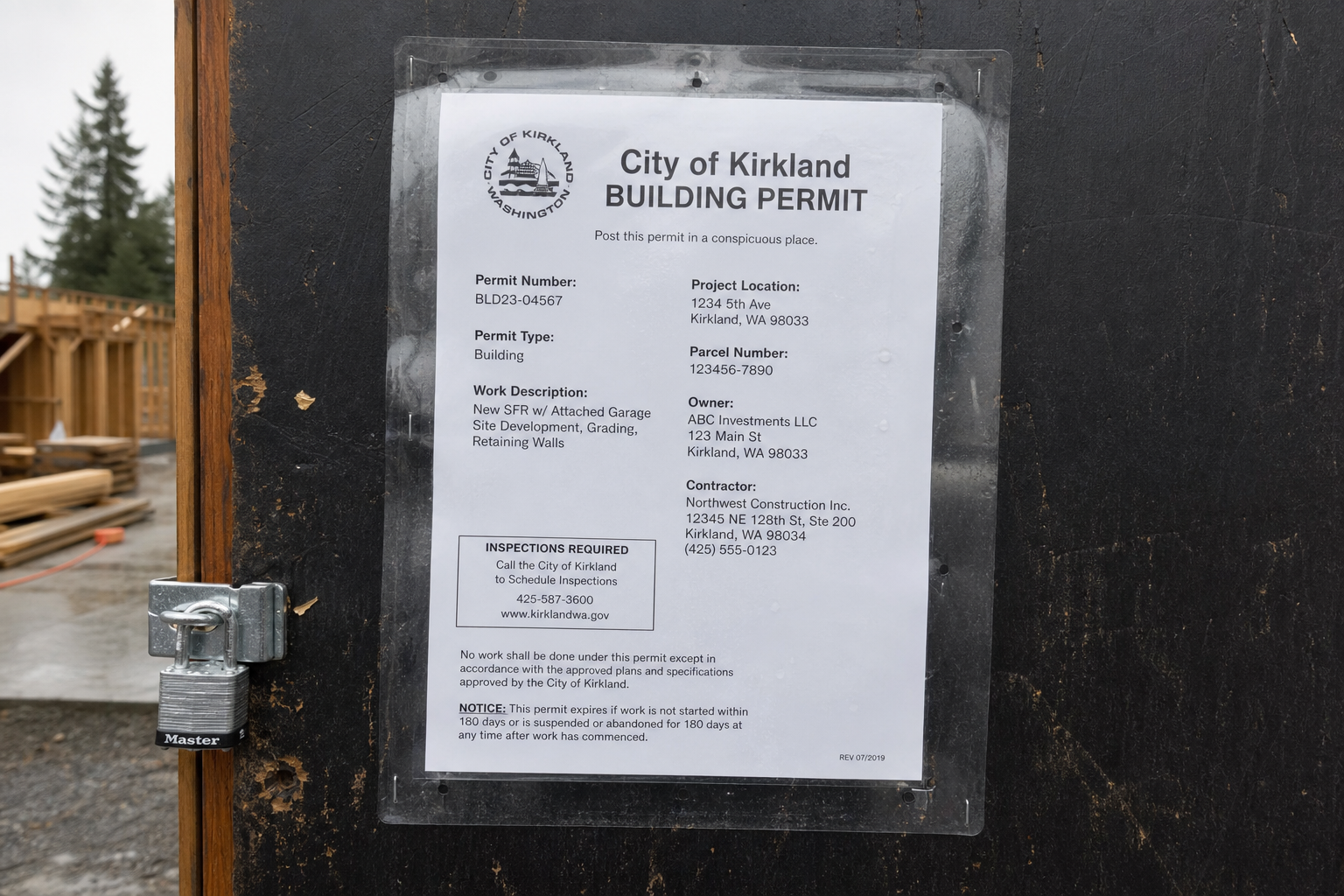
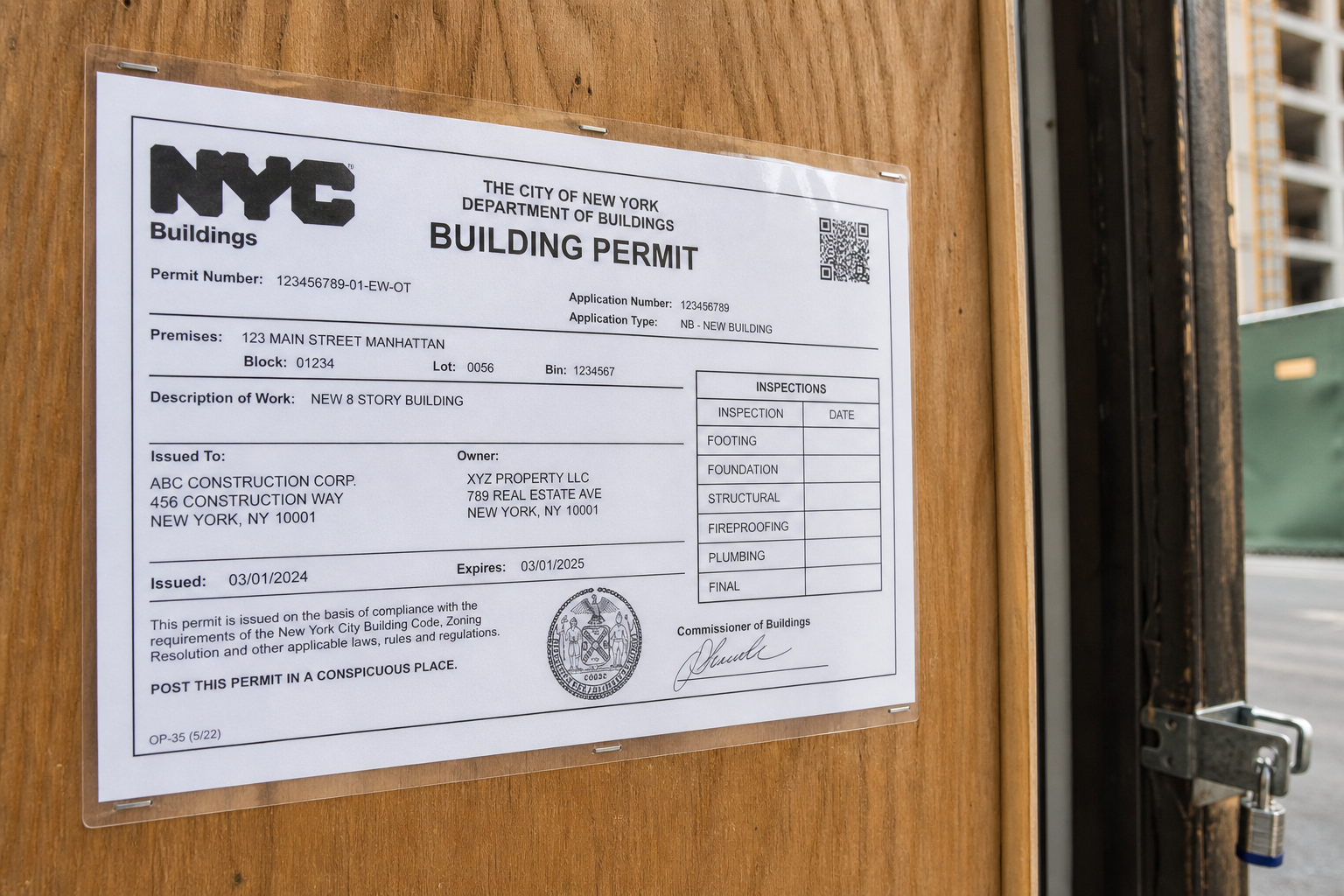
A building permit is a formal record that work was proposed to the local jurisdiction, reviewed for compliance with applicable codes, and inspected at key stages of construction. The permit creates a documented chain of evidence that the work as described was built as designed and inspected as required.
When a contractor finishes a permitted bathroom renovation, the jurisdiction's record shows the permit application, the approved plans, the inspection history, and the final sign-off. That record exists independently of the homeowner's memory and independently of whatever the contractor's paperwork says. It is searchable by any subsequent owner, insurance company, or attorney who needs to know whether the work was done with regulatory oversight.
An unpermitted renovation creates no such record. The work exists physically but not administratively. There is no official confirmation that a licensed professional reviewed the plans, no inspector signed off on the framing before the walls closed, no record that the electrical rough-in met code, no documentation that the plumbing was pressure-tested. The work may have been done perfectly, by a skilled contractor, using quality materials. There is simply no way for anyone who was not present during construction to verify that.
That verification gap is not a minor procedural issue. It is the source of every downstream consequence of unpermitted work.
The Disclosure Problem
When a homeowner sells a house, they typically complete a disclosure form that asks a version of this question: do you know of any improvements or alterations that were made to the property without required permits?
In most jurisdictions, the legal obligation to disclose unpermitted work is explicit. The consequence of failing to disclose is potential fraud liability, which can survive closing. A buyer who discovers unpermitted work after closing that was not disclosed has grounds for a claim against the seller that can take years to resolve and cost far more than the original permit fee.
A homeowner who did not know the work was unpermitted because the contractor told them it was handled, or because they simply did not ask, is in a difficult position at disclosure time. They cannot truthfully certify they are unaware of unpermitted work if they have evidence suggesting work was done without pulling permits. And buyers' inspectors today routinely check permit history as part of a standard inspection.
The permit history of a property is typically public record, searchable through the jurisdiction's online permit portal. A buyer's inspector who sees a fully renovated bathroom on a property with no corresponding permit record will note it. The buyer's real estate attorney will note it. The lender's appraiser may note it. What began as a contractor's decision to skip the permit application becomes a negotiating problem, a price reduction, a delayed closing, or a deal that falls apart.
The practical cost of undisclosed unpermitted work at sale is often far greater than the cost of the permit would have been. The National Association of Realtors has documented that unpermitted additions and renovations are among the most common sources of disputes between buyers and sellers, precisely because they involve a mismatch between what the house appears to offer and what can be verified.
The Insurance Problem
Homeowner's insurance policies contain language that varies by insurer and policy, but most include provisions that limit or exclude coverage for losses related to property improvements that do not comply with applicable building codes.
A bathroom renovation that expanded the square footage, relocated plumbing, or modified electrical service without permits represents work that, if unpermitted, may not be compliant with the code requirements that were in force at the time of construction. If that work subsequently contributes to a loss, the insurer has grounds to review whether the work was performed and inspected in accordance with code.
The typical scenario is not dramatic. It is a water damage claim in a bathroom that was renovated three years earlier without permits. The adjuster notes the renovation during the inspection. They request documentation of the permit and inspection history. There is none. The claim may be reduced, disputed, or denied based on the insurer's assessment that the uncertified work contributed to the loss condition.
A more consequential scenario arises when unpermitted work involves structural modifications or electrical work. A fire that starts in a circuit modified without permit, in a house where the work cannot be shown to have been inspected, creates an insurance dispute that is substantially harder to resolve than a water damage claim. The insurer's obligation is to pay for losses not caused by code violations. The absence of permit records makes it difficult to demonstrate the work was not a code violation.
This is not an edge case or a theoretical risk. Insurance companies employ adjusters whose job is to identify whether claimed losses involve conditions that limit coverage. Unpermitted work is a condition that limits coverage, and it is not a condition that remains hidden from a thorough claim investigation.
The Structural Quality Problem
There is a reason building codes require inspections at specific stages of construction. Framing is inspected before walls close because the framing cannot be reviewed after. Plumbing rough-in is inspected before the floor is poured because the pipes cannot be accessed after. Electrical rough-in is inspected before the walls are finished because the wiring cannot be checked after.
These inspection points exist because the work behind the walls is the work that matters most for long-term safety and performance, and it is irreversible once covered. The permit system is designed to ensure that a qualified inspector sees the work at the moment when problems can still be corrected without demolition.
Unpermitted work skips these inspections. That does not mean the work was done badly. It means there is no way to know. A bathroom that was renovated without permits and then tiled over has walls that cannot be opened without significant disruption. Whatever is behind those walls was installed by whoever the contractor was, without oversight, and is now inaccessible. If that work was done correctly, the absence of permits is a paperwork problem. If that work was done incorrectly, the absence of permits is a safety and liability problem that can take years to manifest.
The framing behind a shower wall that was built without a permit may or may not have been properly waterproofed. The tile may or may not be over an appropriate substrate. The drain may or may not have been correctly connected. Nobody who was not on site during construction can answer these questions for a subsequent owner. The permit record would not guarantee perfection, but it would document that an inspector looked at the assembly before it was covered. Without it, the subsequent owner has only the appearance of the finished surface, which as discussed elsewhere, tells you nothing about what is behind it.
What It Costs To Retroactively Permit Work
Homeowners who discover they have unpermitted work often ask whether they can permit it after the fact. The answer varies by jurisdiction and by what was built, but the general answer is yes, with significant complications.
A retroactive permit, sometimes called a permit to legalize or a permit for existing construction, typically requires opening walls and exposing the work that was originally covered so that an inspector can verify it was done correctly. If the work was done correctly, the inspection passes and the permit is issued. The cost is the permit fee plus the cost of opening and patching the walls.
If the work was not done correctly, the cost is the permit fee, the opening, the remediation of the non-compliant work, and the patching. In a worst case, where the non-compliant work has damaged the structure over time, the retroactive permitting process uncovers damage that then requires additional repair beyond simply correcting the original work.
This is the deeper irony of unpermitted renovation: the reasoning is often that the permit process is expensive and slow. The retroactive permit process is more expensive, slower, and introduces the possibility that work once hidden behind tile must now be rebuilt entirely. The savings from skipping the permit exist only if the work was done correctly and is never scrutinized, a condition that is not guaranteed for any work and becomes less likely as houses change hands and documents are requested.
We pull permits for every project we build. The permit is the document that tells the next owner the work was inspected and compliant. For a household that plans to sell in the next twenty years, it is part of the asset they are building.