A bathroom remodel in a home more than fifteen years old has a meaningful chance of revealing a problem inside the wall that was not visible, was not priced, and will not wait. The contractor will find it on day three of demo and bring you a change order. What happens next depends entirely on whether you planned for this or whether you are staring at a number you were not prepared to see.
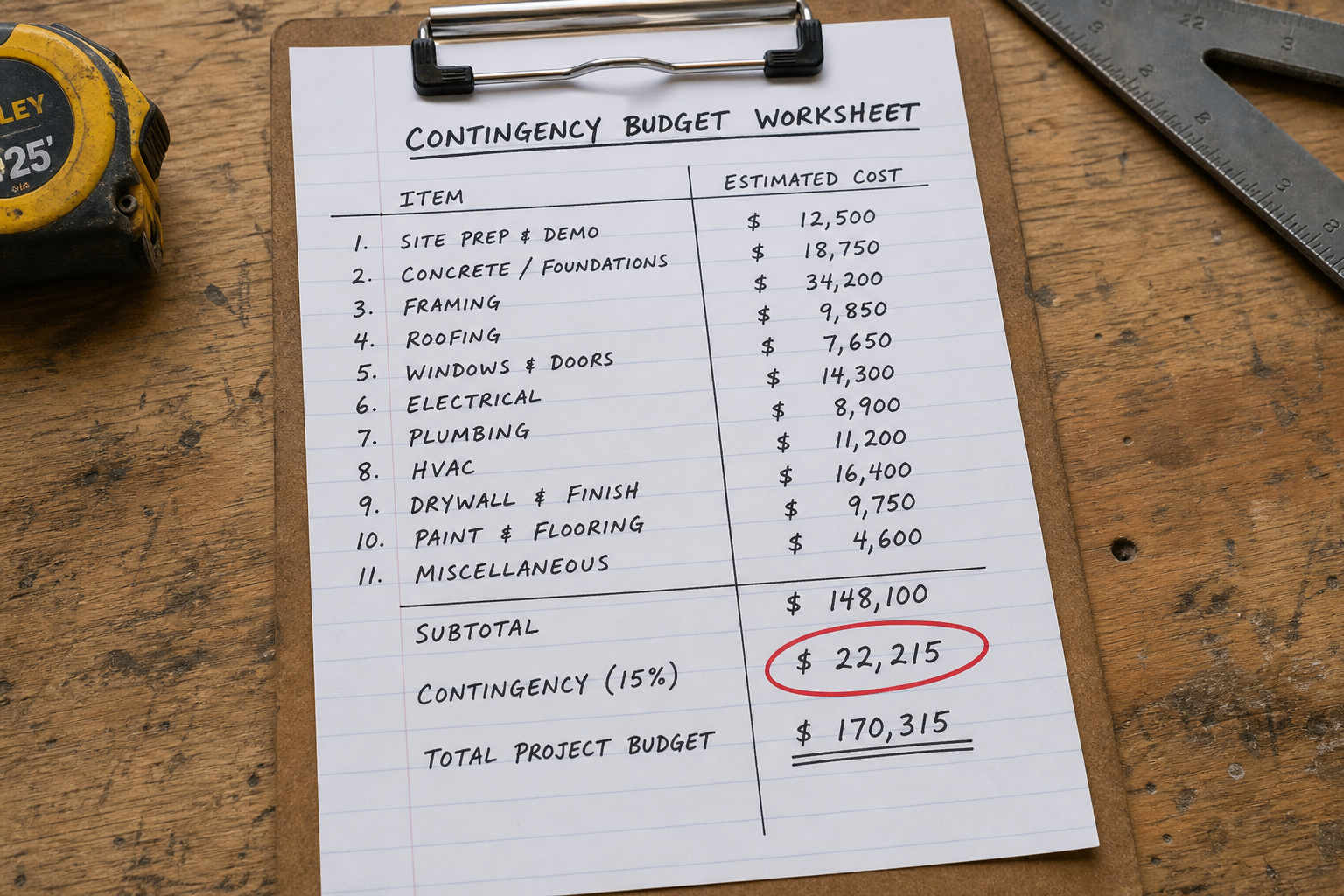
The contingency is what separates those two versions of the same moment. Industry standard guidance runs from 10 percent for newer homes with no visible moisture history to 20 percent for homes over 25 years old or any home with known or suspected water damage. Some experienced contractors working in older Pacific Northwest housing stock suggest 15 to 20 percent as the appropriate floor. These are not conservative estimates; they reflect what is actually found behind walls.
What Contingency Actually Covers
The contingency is not a buffer for homeowner indecision. It is not a slush fund for upgrading the tile halfway through. It is structural protection against conditions that cannot be diagnosed before walls open.
The most common categories, in rough order of frequency:
Subfloor damage around the toilet flange. The wax ring seal between the toilet base and the drain flange degrades over years. The degradation is slow; the water seeps in quantities too small to notice at any individual flush. Over five to fifteen years, it saturates the subfloor around the flange. The toilet does not rock. The floor does not feel soft. Nothing announces it. Demo reveals it. Localized patch repair runs $300 to $800. Full subfloor replacement in the toilet zone runs $1,500 to $3,500. Joist sistering, when joists have been wet long enough to weaken, adds $400 to $1,200 per joist.
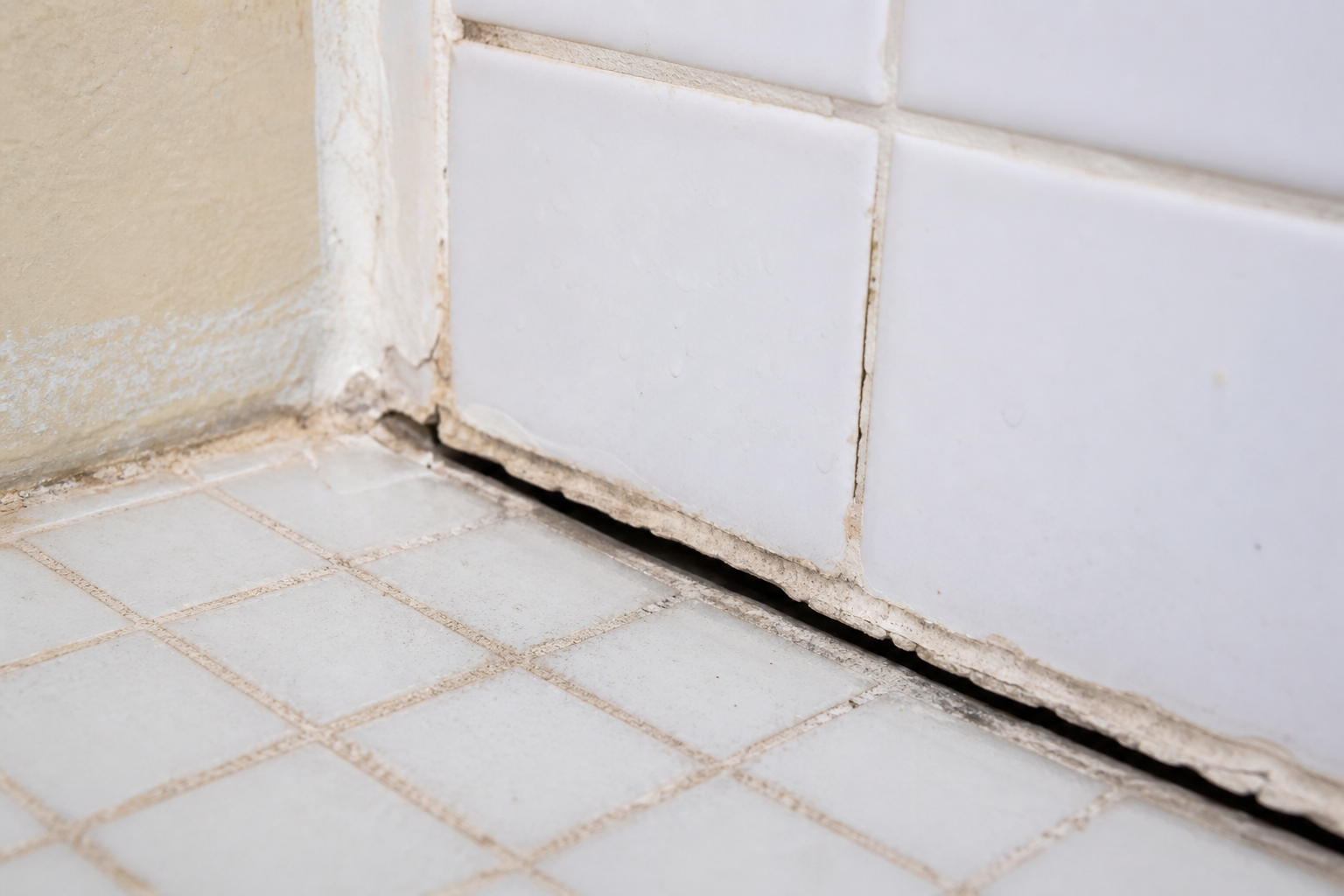
Shower assembly damage. A liner that failed three years ago has been running water into the subfloor with every use since. By the time demo confirms what the slow drain and the faint smell were suggesting, the damage extends under the shower floor and into the framing of the nearest wall. Mold remediation plus framing repair plus subfloor work runs $1,500 to $5,000 depending on extent. This is the repair the contingency exists for.
Old plumbing. Homes built before the 1980s in many markets still have galvanized steel supply lines. Galvanized corrodes from the inside out; the pipe looks fine from the exterior and is substantially narrowed by corrosion from within. A full bathroom remodel is the right time to repipe supply lines rather than tile over a plumbing system with a failing timeline. Partial replumbing in a bathroom runs $1,500 to $4,000 depending on the scope of work and access.
Mold remediation. Found in the wall cavity behind the shower, behind the tub surround, or in the framing above a slow drain. Localized remediation within the bathroom is $500 to $2,000. More extensive spread into adjacent cavities scales from there.
Code-required upgrades triggered by permit. When a permit is pulled for a bathroom remodel, inspectors check the work being done and the conditions they find. Electrical that does not meet current code may require upgrading. Ventilation that terminates in the attic must be rerouted outdoors. A GFCI circuit that does not exist must be added. These are not costs the contractor invented; they are real requirements that surface when permits open the conversation with an inspector.
Why Some Estimates Do Not Include It
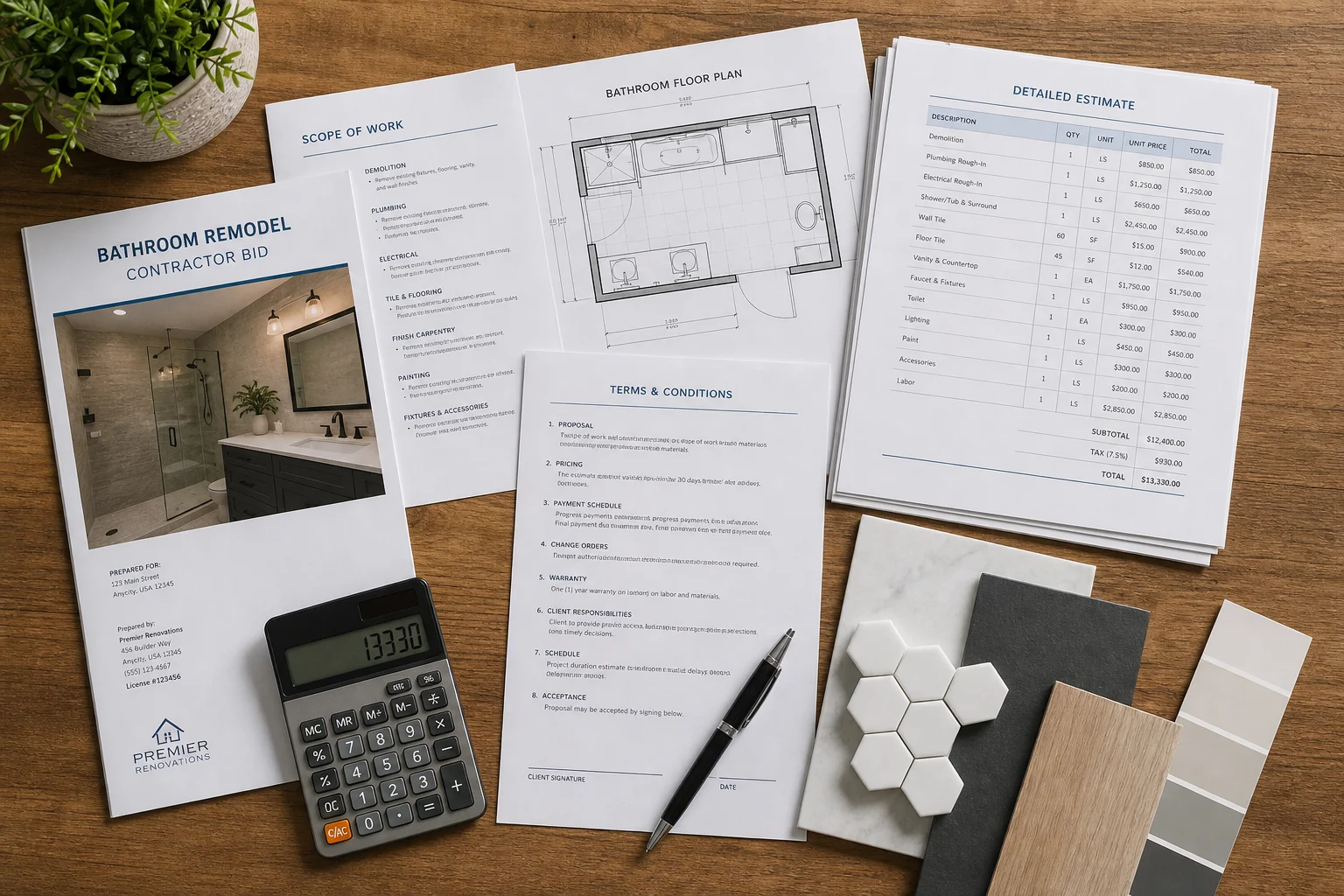
A contractor who presents a contingency as a visible line item in the estimate is telling you the truth about how remodeling works. A contractor whose estimate has no mention of contingency and a round total has either absorbed the concept into their margin, omitted it to look competitive, or genuinely has not thought carefully about what your specific home might contain.
The lowest estimate in a bid comparison often omits contingency thinking because acknowledging it would raise the number above competitors who also omitted it. The homeowner selects the lowest number. Demo reveals a subfloor problem. The contractor submits a change order. The homeowner feels surprised and possibly deceived, even though the condition was always there; it just was not priced.
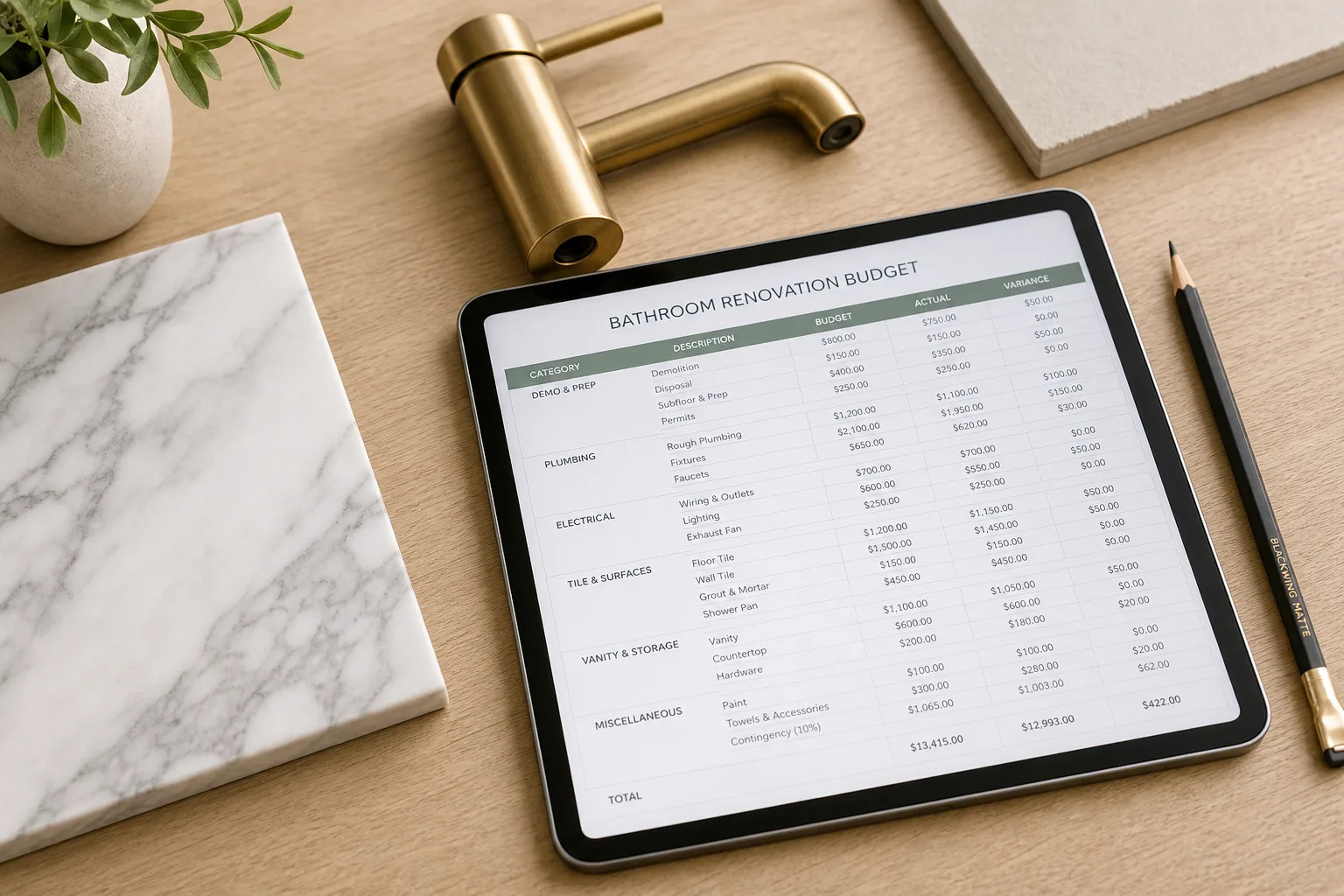
The correct way to think about contingency in an estimate comparison is to add 15 percent to every estimate before comparing them. If Contractor A is at $60,000 and Contractor B is at $52,000, the real comparison for a 20-year-old home with no moisture history is $69,000 versus $59,800. The gap narrows. If Contractor A explicitly shows a $9,000 contingency line in their $60,000 and Contractor B shows nothing, they are offering roughly the same total; only Contractor A is being transparent about where the money sits.
What Happens to Unused Contingency
In a well-run project, unused contingency goes back to the homeowner. There is no contractual reason it should not; the contingency was set aside for conditions that did not materialize. A contract should specify how contingency is handled: whether it is held by the homeowner and drawn against on an approved change-order basis, or whether it is included in the contract price and reconciled at the end.
The better arrangement, from the homeowner's perspective, is to hold the contingency yourself and release it only against documented change orders with agreed pricing. This way the money is yours until a specific, priced condition requires it. It is not sitting in the contractor's account available for other purposes.
What This Means Before You Sign
Before signing a bathroom remodel contract, ask two questions. First: is there a contingency provision in this contract, and how is it handled? Second: given this home's age and what you have seen on site, what is your realistic assessment of what we might find?
A contractor who answers both questions specifically and with numbers is thinking about your project rather than the bid. A contractor who says variations of "we will deal with it if it comes up" is not wrong that problems are dealt with when they arise; they are just declining to help you be prepared for them.
You will both deal with it. The only question is whether you have the money when it is time to do so.
When we build a scope for a primary bathroom remodel, the contingency is a named line item with a number we can explain. We discuss with every client what we have typically found in their home's vintage and neighborhood, and we set the contingency at a level that reflects the specific conditions rather than a generic percentage. That conversation is uncomfortable when it raises the total; it is also the conversation that protects the project when something real turns up in the wall.