Most bathroom upgrades do not return their cost at resale, and the ones that do are almost never the ones that improve daily life the most.
This is the central frustration of bathroom renovation as a financial decision. The upgrades that generate the most satisfaction over years of use, a properly waterproofed shower assembly, a correctly sized and ducted exhaust fan, a solid subfloor preparation that prevents the floor from flexing, a shower valve rough-in placed for actual use, are invisible to buyers and produce no measurable return at sale. The upgrades that buyers notice and assign value to, fresh tile, updated fixtures, clean grout lines, a functional shower that reads as modern, are cosmetic or near-cosmetic. They return a fraction of their cost. The hidden work returns nothing.
Understanding this split is the most useful thing a homeowner can know before making renovation decisions driven by resale expectations.
What the Data Actually Shows
The JLC Cost vs Value report, produced annually by Zonda Media in partnership with the Journal of Light Construction, is the most comprehensive published data set on renovation return rates in the United States. It surveys contractors and real estate professionals across hundreds of markets to calculate the average resale value added by specific renovation categories relative to their average cost.
Bathroom data in the 2024 and 2025 reports shows a consistent pattern. A mid-range bathroom remodel, defined as a cosmetic update of an existing full bathroom including new tile, updated vanity, new toilet, new fixtures, and fresh paint without layout changes, returns 66 to 73 percent of cost at resale in national averages. An upscale bathroom remodel, which includes higher-end materials, a layout change, or expanded scope, returns 37 to 55 percent of cost. The mid-range number is better. The upscale number is substantially worse.
The pattern reverses the intuition that more expensive renovations produce better returns. They do not. Upscale bathroom renovations cost significantly more per square foot, use materials buyers cannot reliably value, and in many markets exceed the price ceiling that the neighborhood supports regardless of the renovation quality. A homeowner who installs a $45,000 bathroom in a house that comparable sales suggest should sell for $550,000 does not typically receive $45,000 in incremental sale price. They may receive $8,000 to $12,000.
The National Association of Realtors Remodeling Impact Study, conducted periodically in partnership with the National Association of the Remodeling Industry, reinforces this. The study surveys NAR members on how much resale value specific renovations add, as estimated by the real estate professionals who participate in the transactions. Bathroom renovations consistently appear in the top half of the return rankings among interior projects, but the absolute return figures remain partial. A bathroom renovation that costs $25,000 adds an estimated $13,000 to $17,000 in resale value in median survey responses.
The data converges on a range: bathroom renovations return between 40 and 70 percent of cost at resale, with the return rate inversely related to the cost of the renovation. The more you spend, the lower the percentage you recover.
The Upgrades Buyers Assign Value To
Buyers evaluate a bathroom under time pressure and with incomplete information. A buyer touring a house for forty-five minutes does not know whether the shower membrane was installed correctly. They know whether the tile looks clean and current, whether the fixtures look dated or modern, whether the vanity has been updated or still holds its original builder-grade hardware, and whether the room smells of mildew.
The upgrades that return value at resale are the ones buyers can perceive and assign a mental value to during that brief evaluation.
Fresh tile throughout the shower and floor is consistently the highest-return upgrade in bathroom renovations. Tile reads immediately as new or dated. A buyer looking at a shower with cracked grout, mismatched caulk, or a tile pattern that was popular fifteen years ago forms an immediate mental discount. A buyer looking at a shower with clean, current tile and consistent grout lines assigns the bathroom a mental premium. The tile does not need to be expensive to produce this effect. It needs to look intentional and clean.
Updated fixtures, including shower valve trim, faucets, and towel bars, have a similar effect at lower cost. Builders-grade chrome from a decade ago reads as aged even when it is functionally sound. Replacing fixture trim to a current finish, brushed nickel, matte black, or warm brass, produces a visual update that buyers register. The plumbing behind the wall does not change. The impression of freshness does.
Vanity replacement is the highest-visible-cost upgrade that returns relatively well, because buyers evaluate storage and counter quality as functional rather than purely aesthetic. A vanity that looks dated, is poorly built, or has a surface that shows wear reads as a near-term replacement cost to a buyer. A vanity that looks current and solid reads as a completed item.
A functional shower that reads as modern and clean is the baseline expectation in any market. A bathroom that fails this baseline, because the shower has visible deterioration, because the tub surround is separating, because the floor has soft spots, will receive a discount that is typically larger than the cost of addressing those issues. Buyers fear the unknown. Deferred maintenance in a wet environment suggests hidden damage and produces offers that reflect that uncertainty.
The Upgrades That Return Nothing at Resale
The upgrades that do not return value at resale are largely the upgrades that protect the house and improve daily quality of life.
A properly installed waterproofing membrane is the clearest example. A shower waterproofed with a bonded sheet membrane, correctly installed at every corner, transition, and penetration, will last for decades without moisture reaching the wall assembly behind the tile. A buyer cannot see the membrane. An inspector cannot confirm it without destructive testing. The cost of a quality waterproofing installation adds nothing to the sale price, because no buyer can distinguish it from an installation with no membrane at all. It prevents the discovery of rot and mold during an inspection that would otherwise collapse the transaction, but prevention is not the same as return.
Subfloor preparation follows the same logic. A bathroom floor installed over a subfloor that was properly leveled, checked for deflection, and reinforced where necessary is a floor that will not flex, crack grout, or produce squeaks under tile. The work is invisible. The buyer steps on the floor and notices that it does not flex. They do not assign a dollar value to the absence of a problem. A floor that actually flexes under load receives a mental discount, but the solid floor does not receive a corresponding mental premium.
Exhaust ventilation sized correctly for the room and ducted directly to the exterior represents a similar situation. A bathroom with a properly installed 110-CFM fan ducted through the exterior wall will dry after a shower, prevent mildew growth, and maintain air quality across the life of the bathroom. A bathroom with an undersized fan recirculating air into the attic will develop mildew, deteriorate finishes faster, and may produce visible moisture damage over time. The correctly installed ventilation produces no line item in a buyer's mental calculation. The deterioration from the poor installation does produce a line item, but only after the damage becomes visible.
Shower valve rough-in location affects daily use substantially. A valve placed for comfortable reach by the actual household rather than for installation convenience makes every shower slightly more functional. The buyer cannot evaluate this during a tour. The valve is behind the trim. They see the trim.
This is a difficult truth for homeowners who are renovating carefully. The work that most demonstrates construction quality is the work that buyers cannot see. It protects the investment, prevents inspection failures, and produces a house that holds up. It does not produce a premium above comparable homes where the same work was done carelessly or cheaply.
The Mid-Range vs. Upscale Problem
The data is clear that mid-range bathroom renovations outperform upscale renovations in return percentage, but the implication is counterintuitive. The better investment is often the renovation that costs less and looks good, not the renovation that costs more and looks exceptional.
The reason is the ceiling. In any neighborhood, comparable sales establish a price range for houses of a given size and configuration. A renovation that pushes the bathroom quality above the ceiling of that range produces improvements that buyers either cannot evaluate or cannot pay for in competitive offers. The neighborhood limits what buyers can finance and what lenders will support. A bathroom worth $15,000 more than the neighborhood ceiling produces no buyer premium for that $15,000.
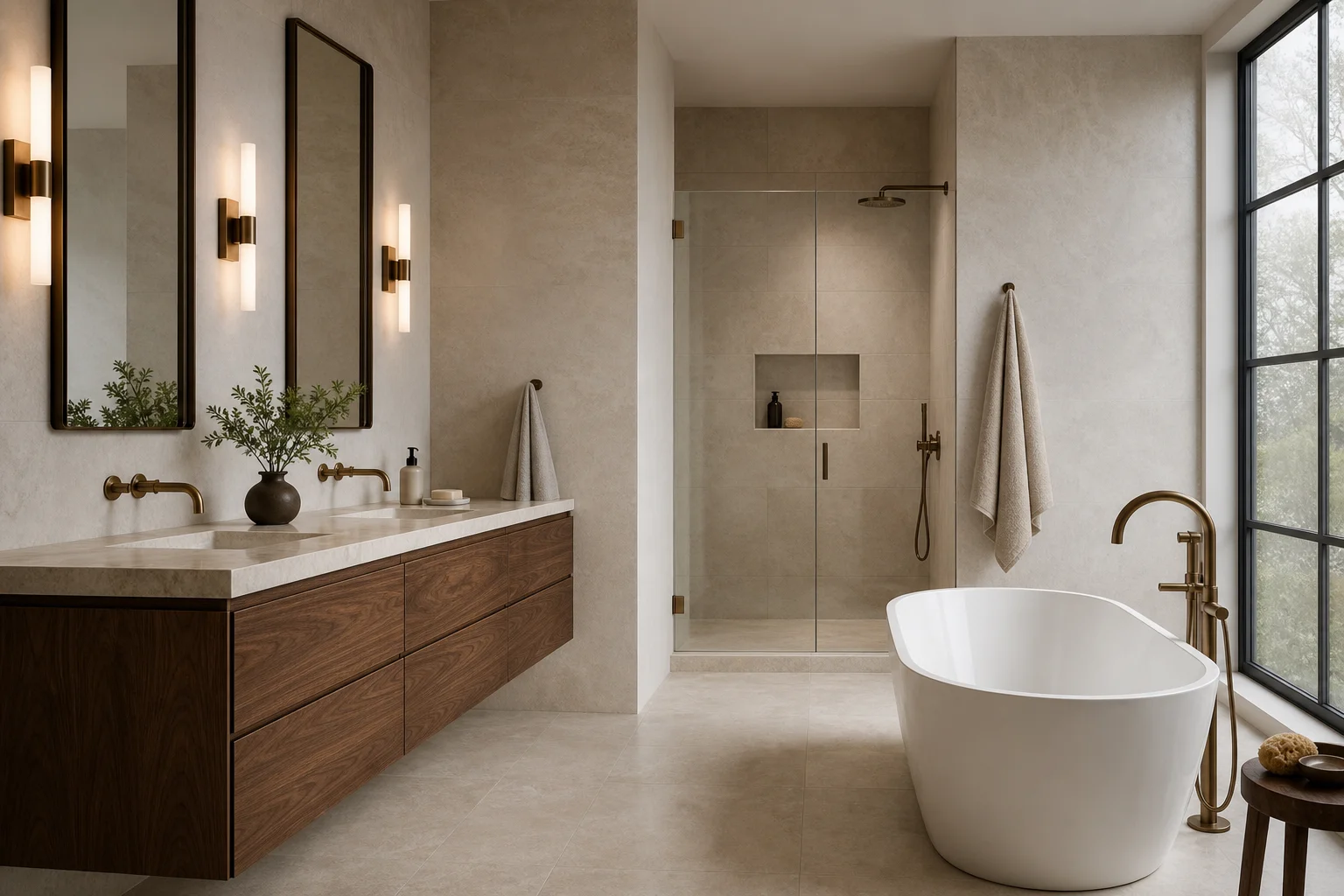
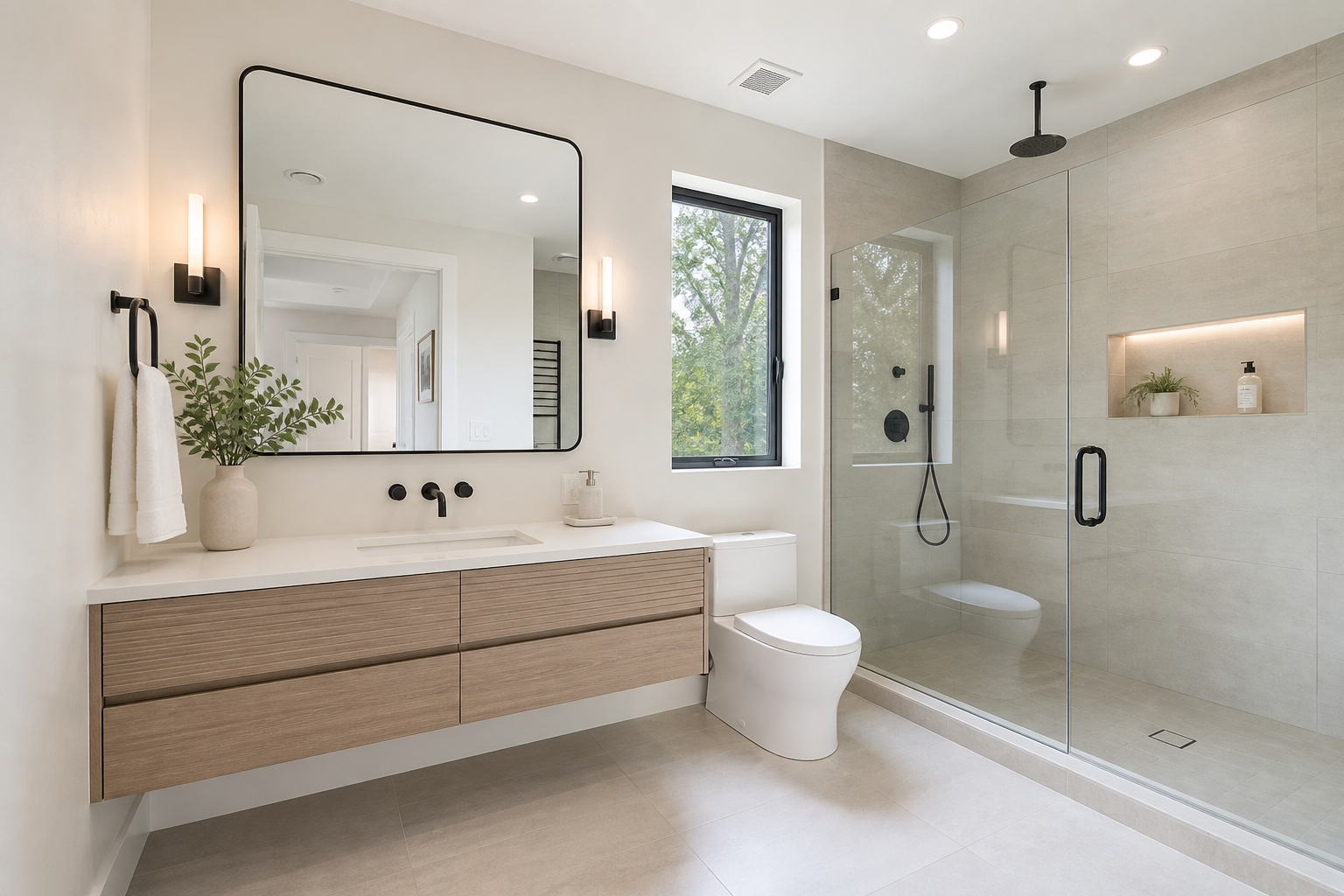
The implication for a homeowner renovating for sale is to renovate to the level of quality the neighborhood supports, not above it. Fresh tile that reads as clean and current. Updated fixtures that match. A vanity that looks new. A shower that functions and reads as recently redone. This package, executed competently in materials that suit the neighborhood price range, produces the best return available. Adding marble countertops, custom cabinetry, heated floors, and a frameless glass enclosure in a neighborhood where buyers expect a $350,000 sale price does not add value proportional to its cost.
The homeowner who is staying in the house has different math entirely. The marble and the heated floor and the frameless glass are purchases made against a decade or more of daily use. They are real and valid reasons to spend money on a bathroom. They are not investments that return at sale.
The Correct Frame for the Decision
The correct way to think about bathroom renovation and resale value is not to identify which upgrades return dollar-for-dollar. None of them do. The correct frame is to distinguish between the work that prevents losses and the work that produces visible appeal, and to budget both categories deliberately.
The hidden work prevents losses. A waterproofing failure discovered at inspection can produce a sale price reduction two to five times the cost of correct installation. A soft floor produced by subfloor problems can fail inspection or produce a buyer request for credit that exceeds the cost of the fix. An exhaust fan that has been recirculating air into the attic may produce mold remediation costs at inspection that are large and negotiated aggressively. Doing the hidden work correctly is not a return on investment. It is risk reduction, and the risk it reduces is material.
The visible work produces appeal. It competes against comparable homes in the market, creates a positive first impression, and shortens the time the house sits. A bathroom that looks dated creates hesitation. A bathroom that reads as updated and functional removes it. The return is partial, and the exact dollar return depends on the market, the neighborhood ceiling, and how the renovation compares to competing inventory.
We are direct with clients who are renovating for sale: the hidden work has no resale return but prevents the discovery problems that collapse deals at inspection. The visible work has a partial return and must be done well enough to attract buyers without being overspecified for the neighborhood.